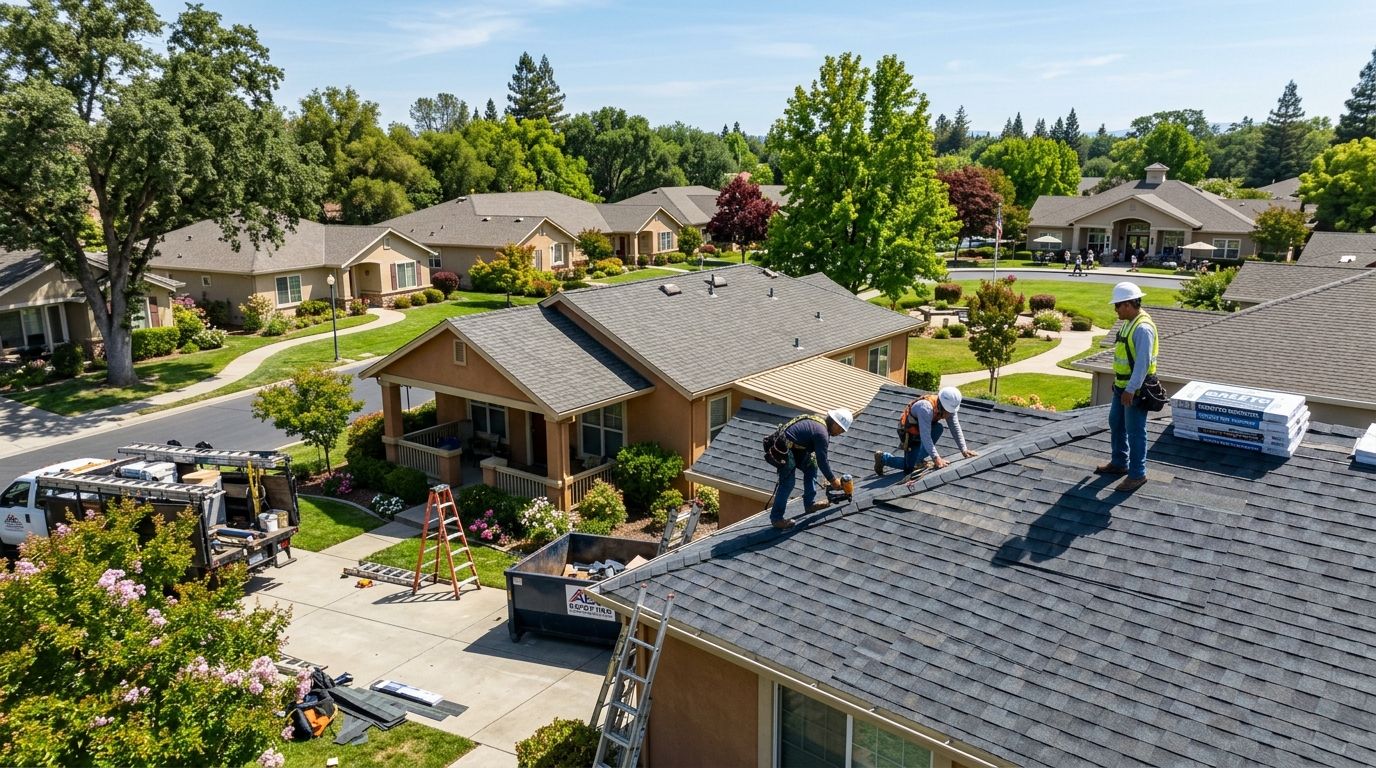
Roof replacement for retirement communities in Southwest Florida means coordinating a full re-roof across dozens or hundreds of units instead of a single homeowner's project, with the goal of protecting fixed-income residents from surprise costs and insurance lapses. HOA boards, condo associations, and manufactured-home parks in Cape Coral, Fort Myers, and Naples face constraints a standalone single-family homeowner never sees: shared budgets, phased timelines, and residents who can't move out during construction.
- Roof replacement for retirement communities works best as a phased, board-approved project, not a unit-by-unit scramble.
- HOA and condo communities in SW Florida should verify wind mitigation status before any 2026 insurance renewal.
- Roof Smart of SW Florida handles roof replacement for older Florida homes and HOA and condo communities across Cape Coral, Fort Myers, and Naples.
- Manufactured and mobile home communities need different materials and fastening than site-built condos.
- The 4-point inspection and wind mitigation report decide your renewal premium, not the roof's appearance.
Why roof replacement matters for retirement communities
Most 55+ and retirement communities in Southwest Florida were built between the 1970s and the early 2000s, which puts a large share of that housing stock past the 20 to 25 year service window for asphalt shingles and well into the range where insurers start asking questions at renewal. A single non-renewal notice affects every unit in a condo association at once, not just the owner with the worst roof.
Residents on fixed incomes also can't absorb a special assessment the way a working homeowner might. That changes the math: getting ahead of the replacement on a planned 2026 schedule, instead of reacting to a leak or a storm, is usually the cheaper path for the association as a whole.
Update your roof age inventory
Before any board votes on a project, someone needs a building-by-building picture of what's actually up there.
- Pull permit records for each building's original roof install date
- Note material type per building: shingle, tile, metal, or flat low-slope
- Flag any buildings with prior emergency repairs or tarping
- Separate common-area roofs (clubhouse, carport, pool cage) from residential roofs
- Record which units have already self-funded a replacement
Get a 4-point inspection on every building
Florida insurers require a 4-point inspection on older roofs before they renew or write a new policy, and associations often skip this until a carrier forces the issue.
- Schedule inspections building-by-building rather than waiting for a blanket renewal deadline
- Ask for photo documentation of flashing, decking, and attachment points
- Compare results across buildings to spot patterns from the same install year
- Keep copies on file for every unit sale, since buyers' lenders will ask
- Route flagged buildings into the replacement schedule first
Time the project around occupancy patterns
Snowbird communities empty out from roughly May through October, which is also hurricane season and the best window for large-scale roofing work without disturbing residents.
- Schedule the loudest phases (tear-off, decking) during low-occupancy months
- Stagger buildings so no access road is blocked more than a few days
- Notify residents in writing at least 30 days before work starts on their building
- Coordinate with property management on parking and noise ordinances
- Build in a hurricane-season contingency for weather delays
Coordinate with the board and insurance carrier early
A re-roof plan the carrier hasn't seen in advance can still get flagged at renewal, even after the work is finished.
- Share the phased 2026 project timeline with the carrier before work begins
- Ask whether a partial-community re-roof affects the master policy rate
- Confirm the wind mitigation credit applies as each building completes, not only at full completion
- Get it in writing, not as verbal confirmation from an agent
For boards working through association logistics, roofing for HOA and condo communities covers how bid packages and phasing are typically structured.
Choose materials matched to each building's remaining lifespan
A 40-year-old condo building doesn't need the same roofing decision as a newer one. Matching material to the structure's realistic timeline keeps costs proportional.
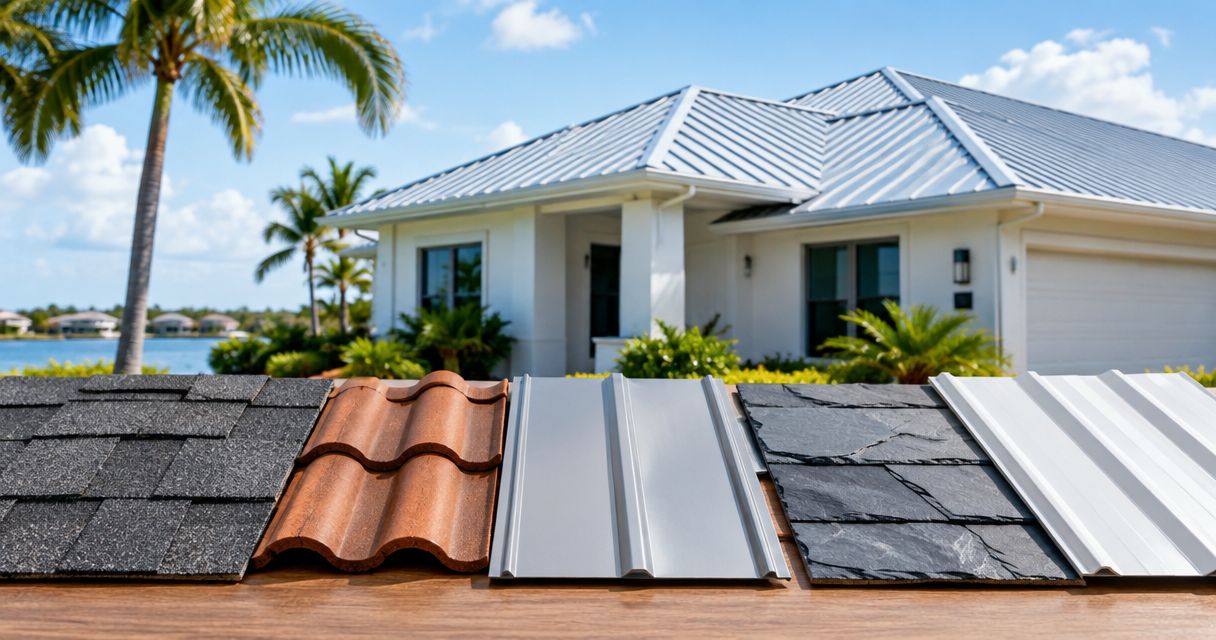
- Architectural shingles for buildings expected to sell or redevelop within 15 to 20 years
- Tile or metal for buildings the association plans to hold long-term
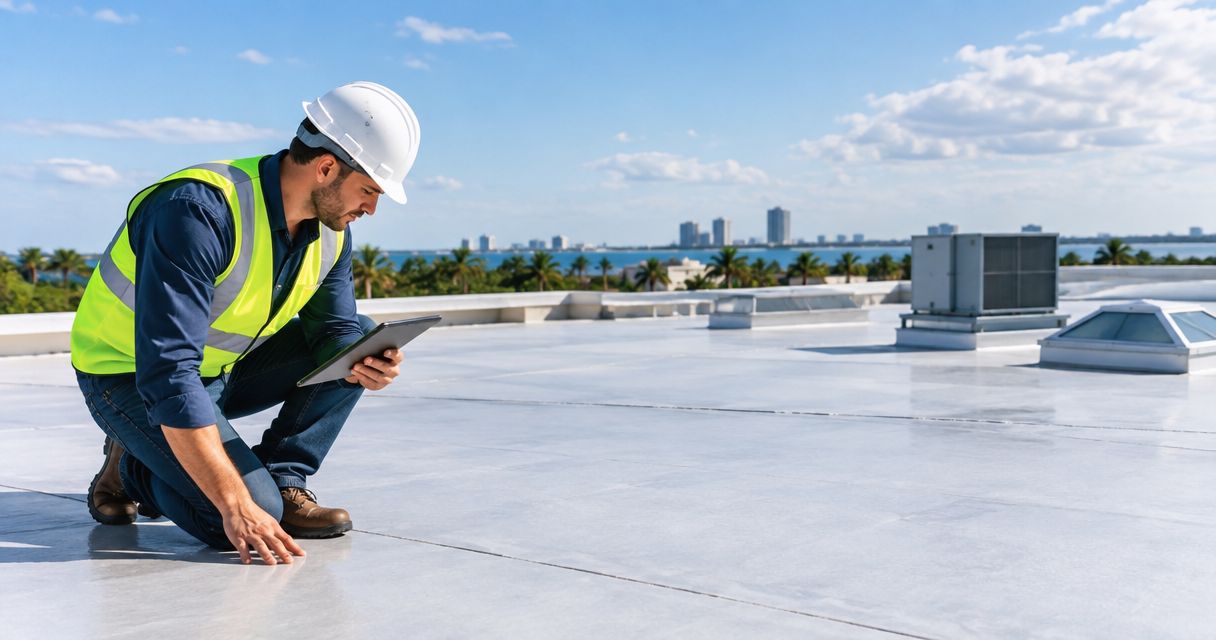
- Flat and low-slope membrane systems for clubhouses, carports, and attached common areas
- Lightweight, code-rated systems for manufactured home sections, distinct from site-built roofing
Older buildings carry their own structural questions before any material gets chosen. Roof replacement for older Florida homes covers what usually needs attention on decking and framing first.
Verify wind mitigation status before renewal
This is the step boards skip most often, and the one with the clearest dollar impact on every resident's premium.
- Confirm each building's roof-to-wall connection type is documented
- Check whether the roof covering meets current wind-rating standards
- Update the wind mitigation report after any building completes its re-roof
- Distribute updated reports to unit owners for their individual policies
Getting that discount applied correctly is covered in how to qualify for a wind mitigation insurance discount.
Budget for phased replacement instead of one assessment
Spreading cost across two or three fiscal years is more workable for a fixed-income community than a single large special assessment.
- Break the project into 3 to 5 phases by building or section
- Get one multi-year bid from a single roofing company to keep pricing consistent across phases
- Reserve a contingency line for decking replacement discovered mid-project
- Communicate the full multi-year timeline to residents up front, not phase by phase
Comparison: roofing options for retirement communities
| Option | Best for | Key limitation |
|---|---|---|
| Architectural shingle | Buildings with a shorter planning horizon | Shorter service life than tile or metal in coastal wind exposure |
| Tile roofing | Long-hold Mediterranean-style communities | Higher structural load demands on older framing |
| Metal roofing | Communities prioritizing storm resilience | Higher upfront material cost per building |
| Flat or low-slope membrane | Clubhouses, carports, common-area roofs | Needs more frequent recoating maintenance |
Roof Smart of SW Florida works across all four of these roofing systems for HOA, condo, and manufactured-home communities in Cape Coral, Fort Myers, and Naples — the right call depends on each building's age and how long the association plans to hold it.
Get a community-wide roofing estimate
Free, no-pressure evaluation for HOA and condo boards planning a phased re-roof.
Common mistakes retirement communities make
- Waiting for a leak instead of scheduling by roof age. By the time water shows inside a unit, decking damage has usually already started.
- Treating manufactured home roofs like site-built roofs. Mobile and manufactured home sections need different fastening and material specs, not a scaled-down condo roof.
- Skipping the wind mitigation update after replacement. A new roof that isn't re-documented with the insurer still gets rated on the old report.
- Approving the lowest bid without checking phasing experience. A contractor who has never sequenced a multi-building HOA project can turn a two-year plan into four.
- Assuming one roof style fits every building. Mixed-age communities need mixed material decisions, not a single blanket spec.
FAQ
How much does roof replacement cost for a retirement community?
Cost varies by building size, material, and how many buildings are phased in at once. Ask for a written building-by-building estimate rather than a per-square-foot rule of thumb, since fixed-income associations need accurate multi-year budgeting.
Is tile or shingle better for a 55+ HOA community in Southwest Florida?
Shingle roofing suits buildings with a shorter planning horizon, while tile fits associations planning to hold the property long-term. The decision follows the building's age and structural capacity, not preference alone.
Do manufactured home communities need a different roof system than condos?
Yes. Manufactured and mobile home roofs use lighter, code-specific systems distinct from site-built condo roofing. Applying condo specs to a manufactured home section usually creates fastening problems.
Does a new roof automatically qualify for a wind mitigation discount?
No. The insurer needs an updated wind mitigation report after the replacement is complete, not just proof the work happened. Skip that step and the building keeps its old rating into the 2026 renewal.
When is the best time of year to re-roof a retirement community?
Roughly May through October, when snowbird occupancy is lowest, gives crews the most access with the fewest resident disruptions. It overlaps hurricane season, so build a weather contingency into the schedule.
Can an HOA phase a roof replacement across multiple years?
Yes, and for fixed-income communities it is usually more workable than one large special assessment. Locking in a single multi-year bid keeps pricing consistent across phases.
Does every building in a condo association need a 4-point inspection?
Insurers typically require one per building once the roof passes a certain age. Scheduling inspections building-by-building ahead of the renewal deadline avoids a last-minute bottleneck.
What happens if only some buildings get re-roofed?
Each building's wind mitigation credit typically applies as its own re-roof completes, not only once the whole community finishes. Confirm this in writing with the carrier before the project starts, since policies vary.
One last thing
The detail most boards miss isn't the roofing material — it's the paperwork sequencing. A building can get a brand-new roof in 2026 and still renew at the old premium because nobody filed the updated wind mitigation report before the renewal date. Treat the insurance paperwork as its own project phase, with its own deadline, separate from the construction schedule.