Qualifying for a wind mitigation insurance discount in 2026 means getting a licensed inspector to complete Florida's uniform verification form and documenting the specific roof and structural features insurers credit: roof shape, roof-to-wall connections, secondary water resistance, and opening protection. The discount itself isn't set by the state — each carrier decides how much weight to give each credit, so two identical inspection reports can produce very different savings depending on who insures the home.
- A licensed inspector completing Florida's uniform wind mitigation form is the only path to a discount in 2026.
- Hip roofs, reinforced roof-to-wall connections, and secondary water resistance earn the highest credits on the form.
- Homes built after Florida's 2002 statewide building code often qualify automatically for stronger roof deck attachment credit.
- Carriers set the dollar amount of the discount, not the state, so the same report can pay off differently by insurer.
- Roof Smart of SW Florida performs wind mitigation inspections across Cape Coral, Fort Myers, and Naples.
Why this matters
Florida insurers price wind risk using the same standardized inspection every carrier recognizes: the state's uniform mitigation verification form. It's the mechanism behind every wind mitigation insurance discount written in the state, and it works the same way whether your policy is with a national carrier or a Florida-only insurer.
Not every roof scores well. A 20-year-old shingle roof with a gable-end design and no secondary water resistance can qualify for the inspection but come back with almost no credits. That's the gap most homeowners don't see until the report is in hand — and it's why the inspection matters more than the paperwork.
How do you qualify for a wind mitigation insurance discount
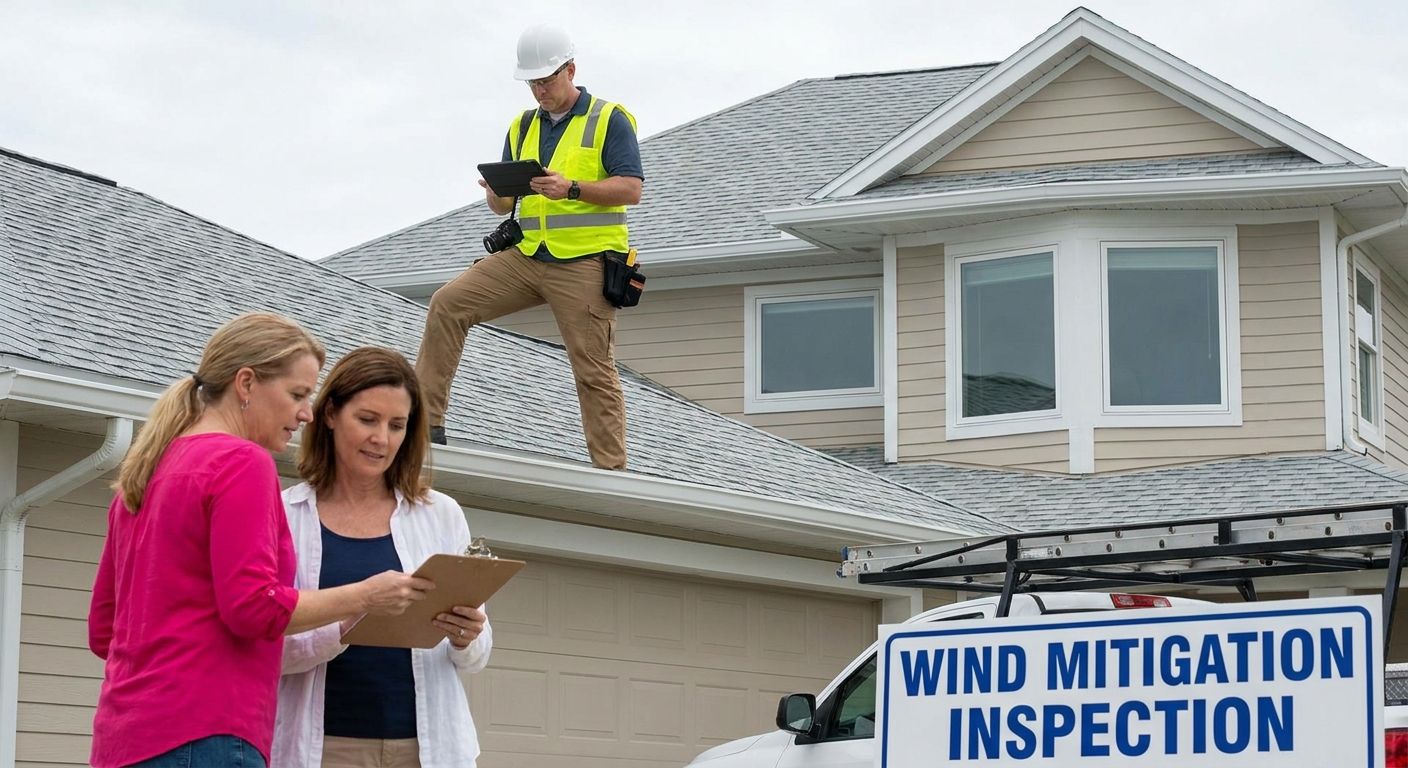
Qualifying is a documentation process, not an application. A licensed inspector visits the property, examines six categories of construction, and records what's actually built into the home — not what the homeowner assumes is there.
- Schedule a licensed wind mitigation inspection. Only a licensed contractor, home inspector, or building official can complete the form insurers accept.
- The inspector documents six categories: roof covering, roof deck attachment, roof-to-wall connection, roof shape, secondary water resistance, and opening protection.
- The signed form goes to your insurance agent or carrier. Submission timing affects whether the discount applies at your current term or the next renewal.
- The carrier applies whatever credit its rating plan assigns to each documented feature — this is where the same report can produce different discounts across insurers.
A wind mitigation inspection is the only step that generates the paperwork carriers require — there's no separate application or online form that replaces it.
Roof covering
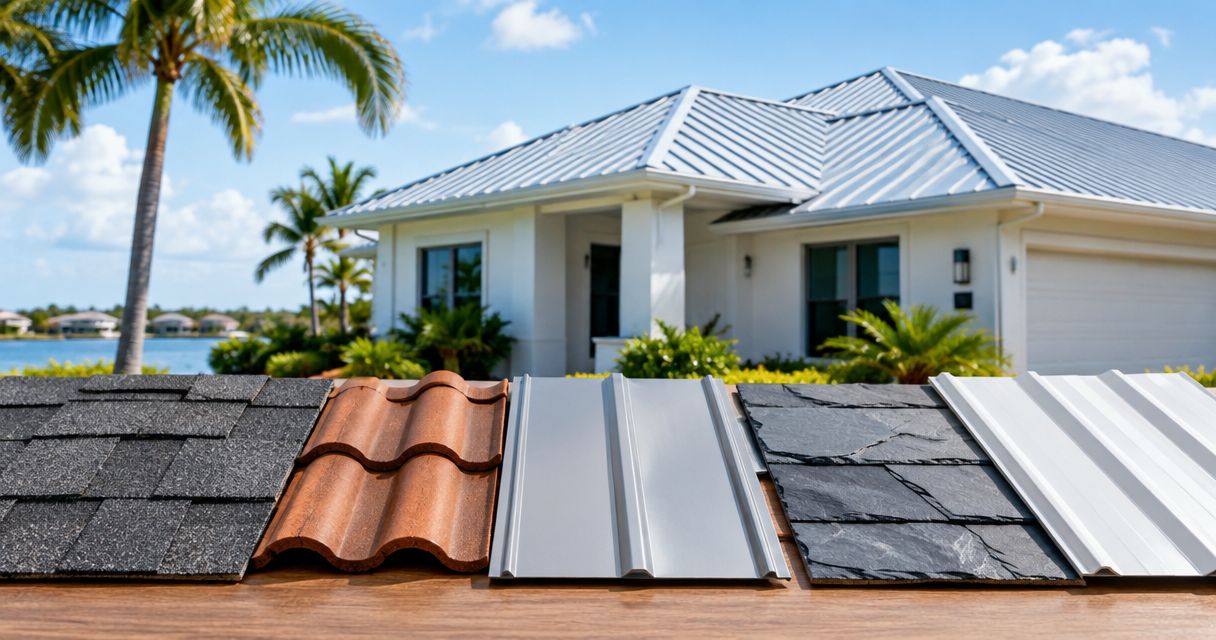
Inspectors record the roof covering's install date and whether it meets the Florida Building Code equivalent for wind resistance in place at installation. A newer roof using materials rated for the current code typically scores better than an older roof nearing the end of its service life, regardless of material type. Homes weighing a full replacement should look at roofing materials built for Florida hurricanes before the inspection, since covering choice affects this line item directly.
Roof deck attachment
This measures how the roof deck is fastened to the trusses — nails versus screws, spacing, and pattern. Homes built to Florida's statewide building code, adopted in 2002, generally show stronger fastening schedules than older construction and score higher here.
Roof-to-wall connection
Inspectors check whether the roof structure is tied to the walls with clips, single wraps, double wraps, or nothing at all beyond toe-nails. Double-wrap straps earn the strongest credit; toe-nail-only connections earn none.
Roof shape
Hip roofs — sloped on all four sides — earn the largest shape-based credit because they perform better in high wind than gable roofs, which have a flat vertical end wall exposed to wind pressure. A home with any significant gable section scores lower than a full hip design, even if every other category is strong.
Secondary water resistance (SWR)
SWR is a self-adhering underlayment or sealed roof deck that keeps water out if the primary covering is damaged in a storm. Its presence or absence is a yes/no line item on the form, and it's one of the easier credits to add during a roof replacement.
Opening protection
This covers whether windows, doors, garage doors, and skylights are protected by impact-rated glass or code-compliant shutters. Partial protection — some openings covered, others not — earns a lower credit than full-home protection, and an unprotected garage door is one of the most common gaps inspectors find.
Why the discount amount varies
- Carrier rating plans differ — the same six-category report can be worth more with one insurer than another.
- Wind-borne debris region affects how heavily opening protection is weighted in the discount calculation.
- Roof age and remaining service life factor into some carriers' pricing even when the covering scores well on the form.
- Prior claims history on the property can offset credits earned through the inspection.
- Combination of credits matters more than any single feature — a hip roof with weak roof-to-wall connections still leaves money on the table.
- County-level wind zone changes how much weight the carrier assigns to structural categories versus opening protection.
Does every Florida home qualify for a discount?
Every home can complete the inspection, but not every home earns meaningful credits — older roofs with gable ends, single-wrap connections, and no secondary water resistance often score low across most categories. Getting the inspection is still worth doing in 2026 because even partial credits reduce premium, and the report tells you exactly which upgrades would raise the score at your next roof replacement.
How long is a wind mitigation inspection valid?
The form doesn't carry a fixed state-mandated expiration, but most carriers request a new inspection after a roof replacement or major structural change, since those changes directly affect the roof covering and roof deck attachment scores. If your roof hasn't changed and your insurer hasn't requested a new report, the existing form typically stays in effect.
Book a wind mitigation inspection
Documented roof credits for your 2026 insurance renewal.
FAQ
What is a wind mitigation inspection in 2026?
A wind mitigation inspection is a licensed evaluation of six roof and structural features — roof covering, roof deck attachment, roof-to-wall connection, roof shape, secondary water resistance, and opening protection — that Florida insurers use to price wind risk. The completed form is what your carrier reviews to apply any discount.
How much does a wind mitigation inspection cost?
Pricing varies by inspector and property, so check current rates directly with a licensed provider rather than relying on a flat estimate. The inspection typically pays for itself through the discount applied at your next policy renewal.
Is a hip roof required for a wind mitigation discount?
No, a hip roof isn't required, but it earns the largest shape-based credit on the form compared to a gable roof. Homes with gable sections can still qualify for credits in the other five categories.
Does a new roof automatically qualify for a discount?
A new roof doesn't automatically qualify — it still needs a licensed inspection to document the covering, deck attachment, and any secondary water resistance installed. Newer roofs typically score higher because they're built to more recent code requirements.
How long does a wind mitigation inspection take?
Most inspections are a single visit covering an exterior and attic review of the six scored categories. Scheduling and report turnaround depend on the inspector, but the on-site portion is brief compared to a full roof inspection.
Can condo or HOA properties get a wind mitigation discount?
Yes, commercial and multi-family structures can be inspected under the same form categories, though HOA and condo boards typically coordinate the inspection at the building level rather than per unit. Roof shape and opening protection often carry more weight on larger structures.
Does impact glass count as opening protection?
Yes, impact-rated glass counts as opening protection alongside code-compliant shutters, and full-home coverage across all openings earns a stronger credit than partial protection. An unprotected garage door is the most common gap that limits this category.
How often do I need a new wind mitigation inspection?
There's no fixed statewide expiration, but a new roof replacement or major structural change usually triggers a new inspection since those changes affect the roof covering and deck attachment scores. Check with your carrier if it's been several years since your last report.
One last thing
Two homes with the same square footage and the same roof age can qualify for very different wind mitigation insurance discounts in 2026 based on roof shape alone — a full hip roof with double-wrap roof-to-wall connections outscores a gable roof with toe-nail connections on two of the six categories before opening protection is even considered. If a roof replacement is on the horizon, specifying a hip design and secondary water resistance during that project locks in credits a retrofit can't always match.