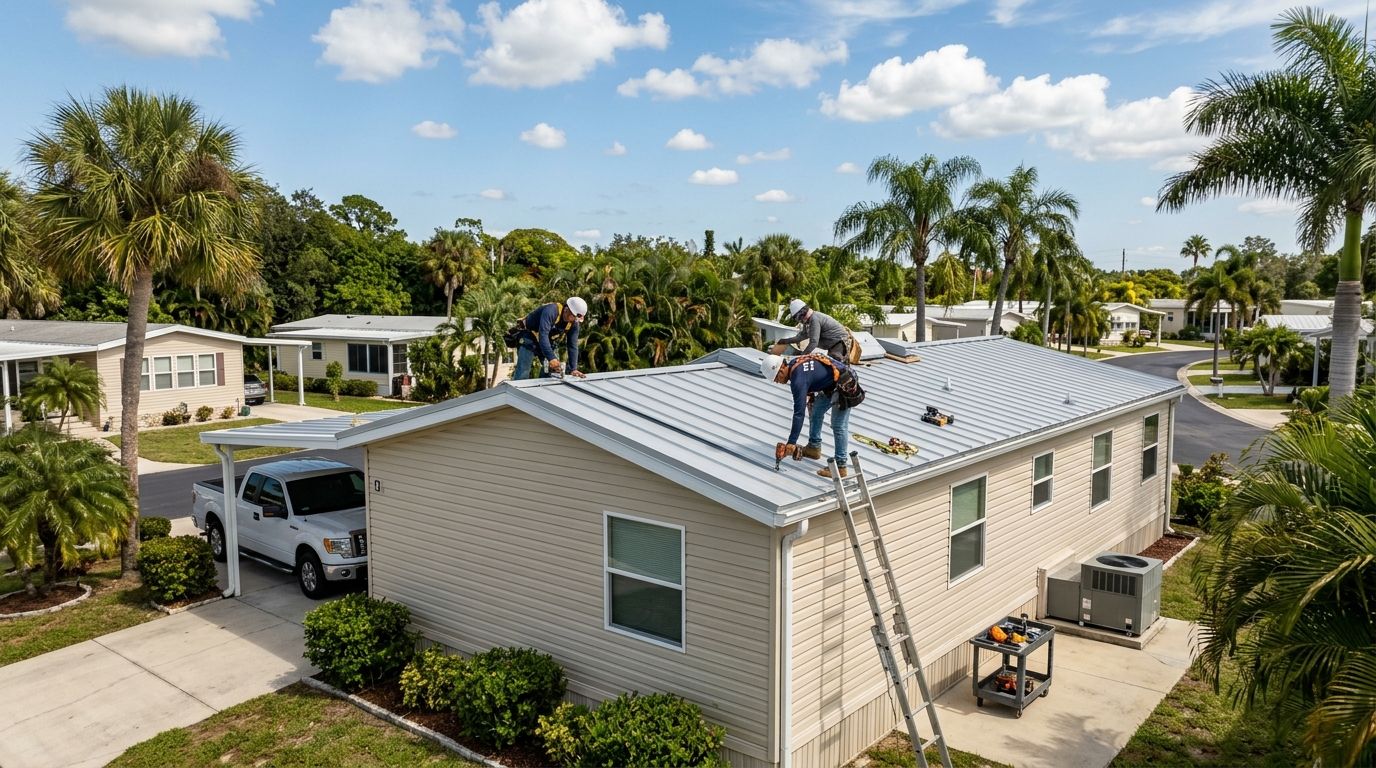
Mobile and manufactured homeowners in Southwest Florida need a roof built for HUD wind-zone standards, not a shingle system pulled off the site-built house next door. A metal roof-over or a properly permitted re-roof holds up to Gulf Coast wind loads in ways a standard asphalt overlay on a manufactured-home chassis usually does not.
- Roofing for mobile homes in Florida means matching HUD wind-zone II or III ratings, not standard residential shingle codes.
- Metal roof-overs distribute weight better across manufactured-home trusses than asphalt shingle overlays.
- A wind mitigation inspection can lower insurance premiums on manufactured homes built before June 1994.
- Roof-over jobs go faster than tear-offs but only work cleanly over a single existing layer.
- Roof Smart of SW Florida inspects manufactured home roofs across Cape Coral, Fort Myers, and Naples before recommending a roof-over or full replacement in 2026.
Why roofing for mobile homes matters in Southwest Florida
Manufactured homes carry a HUD data plate that assigns a wind zone: I, II, or III. Lee, Collier, Charlotte, and most of Southwest Florida's coastal counties sit in Wind Zone II or III, which means the roof structure has to meet a higher uplift standard than inland Zone I homes. A roof that's fine on a manufactured home in Georgia can fail here.
Homes built before June 15, 1994 predate the federal HUD Code wind standards entirely. If your data plate is missing or the home is that old, the roof deck and attachment method were never engineered for Southwest Florida's wind speeds — that's the gap preparing your roof for hurricane season closes for both mobile and site-built homes before storm season starts.
Insurance carriers have gotten stricter about manufactured home roofs since 2022, and that scrutiny hasn't eased going into 2026. A roof with documented wind-rated fasteners and a current wind mitigation report gets treated differently than one with no paperwork at all.
The how-to spine: what to check and fix, in order
Confirm your HUD wind zone and data plate
Start with the data plate, usually mounted near the electrical panel or inside a kitchen cabinet. It tells you the wind zone your home was rated for and the year it was built — both determine what roofing system is even legal to install.
- Locate the data plate and photograph it for your records
- Check the wind zone rating against your county (most of SW Florida is Zone II or III)
- Note the construction date — pre-June 1994 homes have no federal wind standard baseline
- Compare your current roof's attachment method to the plate's rating
- Call the manufacturer's archive line if the plate is missing or unreadable
Inspect for prior roof-overs and trapped moisture
Many manufactured homes in Southwest Florida have two or three roof layers stacked on top of each other from past cheap fixes. That traps moisture and adds weight the trusses weren't designed to carry.
- Check the attic or roof cavity for spongy or discolored decking
- Count roof layers at the edge — more than two means a tear-off, not another overlay
- Test flashing around vent pipes, skylights, and the roof ridge for gaps
- Look for elastomeric coating patches hiding an unresolved leak underneath
- Check for delamination or bubbling at the roof perimeter
Pick a roofing system built for manufactured-home framing
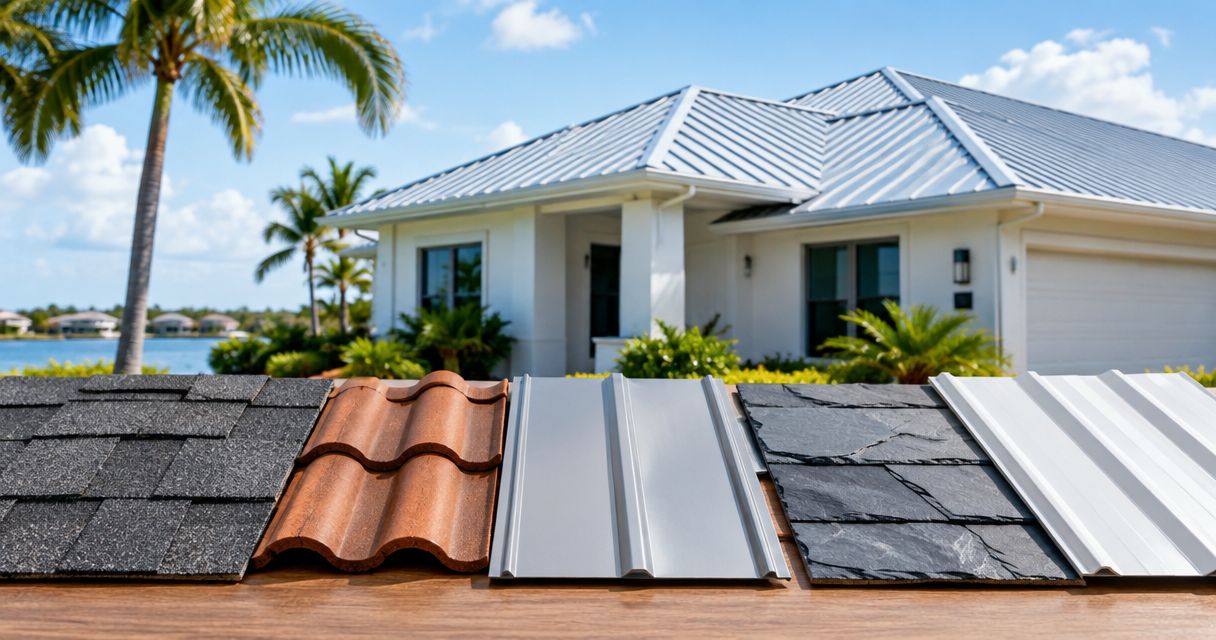
Manufactured home trusses are lighter than stick-built framing, and that rules out some materials that work fine on a conventional Florida house.
- Metal roof-over panels spread wind load evenly and add minimal weight
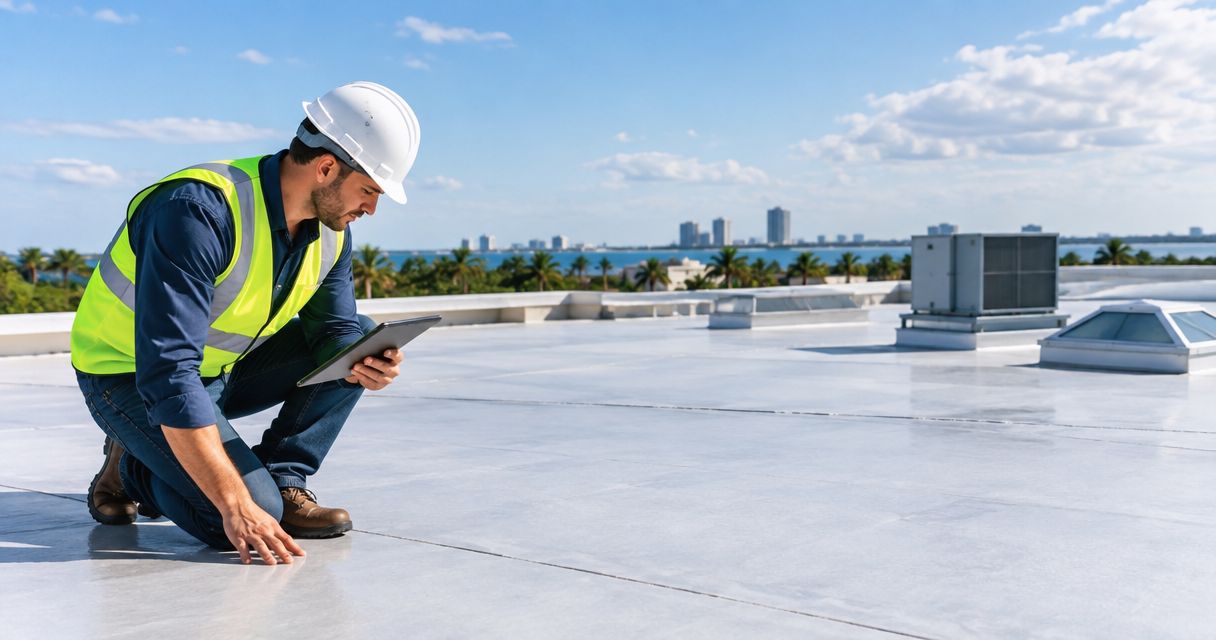
- TPO or elastomeric coatings suit low-slope single-wide roofs
- Asphalt shingle overlays need extra decking support most manufactured homes don't have
- Tile is too heavy for standard manufactured-home trusses — skip it
- Fastening pattern has to match your HUD wind-zone rating, not just local code minimums
Review the best roofing materials for Florida hurricanes before picking a system — the wind-resistance comparisons there apply directly to what a manufactured home roof needs to survive a Cat 3 event.
Get a wind mitigation inspection before hurricane season
A wind mitigation inspection documents how your roof is attached to the walls, which directly affects your insurance premium.
- Request the OIR-B1-1802 form from a licensed inspector
- Document roof-to-wall attachment type — clips score better than straps, straps score better than nails
- Note whether a secondary water barrier is installed under the roof covering
- Submit the completed form to your insurer for a premium credit
- Redo the inspection after any roof replacement — old reports don't carry over
Roof Smart of SW Florida runs wind mitigation inspections tied to homeowner insurance discounts for manufactured and site-built homes alike, and the paperwork is often the difference between a rejected claim and an approved one after a storm.
Decide between a roof-over and a full tear-off
A roof-over is faster and cheaper in labor, but it only works when the existing structure can support it.
- Roof-over works over a single sound layer with no trapped moisture
- Full tear-off is required if decking is soft, layers already exceed two, or a leak reached insulation
- Permits apply to both in Lee, Collier, and Charlotte counties — don't skip that step
- Weight limits on manufactured-home trusses cap how many layers a roof-over can add
- Ventilation gets worse with each stacked layer, which shortens the roof's service life
File the insurance claim correctly after storm damage
Manufactured home claims get denied more often when documentation is thin. Photograph everything before you tarp, and keep the data plate photo on file — adjusters ask for it.
- Photograph all damage before any temporary repair
- Keep the HUD data plate photo and wind zone rating with the claim file
- Get a written repair estimate that itemizes roof-over versus tear-off scope
- Note the date and named storm for the claim record
- Request a copy of the adjuster's inspection report for your files
Comparison: roofing options for mobile and manufactured homes
| Option | Best for | Key limitation |
|---|---|---|
| Metal roof-over | Manufactured homes needing wind-zone upgrade without a tear-off | Only works over one sound existing layer |
| TPO or elastomeric coating | Low-slope single-wide roofs with minor wear | Shorter lifespan than a full metal system |
| Asphalt shingle overlay | Homes with reinforced decking already in place | Most manufactured-home decks can't support the extra weight |
| Full tear-off and replacement | Homes with multiple failed layers or trapped moisture | Higher labor cost and longer project timeline |
Metal roof-over is the standard recommendation for most manufactured homes in Southwest Florida in 2026 because it meets Wind Zone II/III uplift requirements without overloading truss framing.
Get your mobile home roof inspected
Free evaluation before you commit to a roof-over or a tear-off.
Common mistakes mobile and manufactured homeowners make
- Stacking a third roof layer instead of tearing off. Weight limits on manufactured-home trusses don't bend for convenience — a third layer risks structural sag.
- Skipping the wind mitigation inspection after a re-roof. A new roof with no updated paperwork means no updated insurance credit.
- Assuming a pre-1994 home meets current wind code. It doesn't, by definition — HUD wind standards for manufactured housing didn't exist before June 1994.
- Choosing shingles because they're familiar. Most manufactured-home decking wasn't built to carry shingle weight long-term in coastal wind zones.
- Waiting until hurricane season to check the roof. Southwest Florida's storm window runs June through November — inspections belong on the calendar every spring, not after the first named storm.
FAQ
What is the best roofing for mobile homes in Florida?
Metal roof-over systems are the most common recommendation for manufactured homes in Southwest Florida because they meet HUD Wind Zone II/III uplift requirements without overloading the truss framing. TPO coatings work as a lighter-duty option on low-slope single-wides.
Can you put shingles on a mobile home roof?
Yes, but only if the decking has been reinforced to carry the added weight, which most manufactured homes lack from the factory. Without reinforcement, a shingle overlay shortens the roof's service life and can void a wind mitigation credit.
Do manufactured homes need a wind mitigation inspection?
Yes, especially in Southwest Florida where most counties fall in HUD Wind Zone II or III. The inspection documents roof-to-wall attachment and can qualify the home for an insurance premium discount.
Is a roof-over cheaper than a full roof replacement on a mobile home?
A roof-over generally costs less in labor and disposal than a full tear-off, but it only works over a single sound layer with no trapped moisture. Homes with more than two existing layers need a full tear-off regardless of budget.
How do I know my mobile home's wind zone?
Check the HUD data plate, usually mounted near the electrical panel or inside a kitchen cabinet. It lists the wind zone rating (I, II, or III) the home was built to meet.
What happens if my mobile home was built before 1994?
Homes built before June 15, 1994 predate the federal HUD Code wind standards for manufactured housing entirely. The roof and wall connections were never engineered to a wind-zone rating, which makes a wind-rated roof-over or replacement a priority.
Does homeowners insurance cover mobile home roof damage in Florida?
Coverage depends on the policy and the documented condition of the roof at the time of loss. A current wind mitigation report and dated photos of the roof's condition before a storm strengthen a claim significantly.
One last thing
The HUD data plate is the single most overlooked document on a manufactured home roof project. Homeowners lose insurance credits and get pushback on claims simply because nobody photographed it before the roof went on — check yours before you call anyone about a re-roof in 2026.