If your Southwest Florida home was built before the state overhauled its building code in 2002, your roof was likely designed to a different, weaker wind standard than what's required today. Roof replacement for older Florida homes in Cape Coral, Fort Myers, and Naples isn't just a materials swap — it's a chance to fix connections and underlayment that never met modern hurricane standards in the first place.
- Roof replacement for older Florida homes built before 2002 often means fixing pre-code wind connections, not just swapping shingles.
- Tile and metal roofing win for Cape Coral, Fort Myers, and Naples homes exposed to coastal wind - Buy for lifespan and wind resistance.
- Architectural shingles run 15-20 years and cost less upfront - Consider for inland, budget-driven replacements.
- A wind mitigation inspection after replacement can lower your 2026 homeowners insurance premium.
- Full tear-off beats a second layer on any roof older than 15 years - Skip contractors offering a quick re-cover.
Why this matters
Hurricane Andrew forced a statewide rewrite of Florida's building code, and the result took full effect in 2002. Homes built before that date were often permitted under weaker wind-load rules, with roof-to-wall connections, nailing patterns, and underlayment that don't match what's required in Cape Coral, Fort Myers, or Naples today.
That gap matters twice over. It affects how the roof performs in a storm, and it affects what your insurer charges you every year until the roof gets replaced or retrofitted. A 30-year-old shingle roof isn't just cosmetically tired — it's carrying deck fasteners and flashing details that a 2026 wind mitigation inspection will flag.
Who this is for
This guide is for homeowners in Cape Coral, Fort Myers, and Naples whose roof is original to a house built in the 1970s through 1990s, or whose current roof is past 15-20 years old and showing granule loss, curling shingles, or soft spots on the deck. If your last wind mitigation form is missing hurricane straps or a secondary water barrier, you're the exact buyer this article was written for. A roof replacement in Naples at this stage usually costs less over ten years than another round of patch repairs on a deck that's already failing underneath the shingles.
What to look for in roof replacement for older Florida homes
Material lifespan versus your remaining years in the home
Asphalt shingles run 15-20 years in Florida's UV and humidity; architectural tile and metal both stretch past 40 years. If you're planning to stay in the house long-term, paying more upfront for tile or metal usually beats replacing shingles twice.
Pre-2002 structural gaps
Older Florida homes frequently lack the hurricane straps, clips, and secondary water barriers that current code requires. Any legitimate roof replacement bid should call out deck condition and connection upgrades separately from the material line item — not bury them.
Wind mitigation and insurance impact
A wind mitigation inspection documents hip roof shape, roof-to-wall connections, and opening protection, and Florida insurers use that form to set premiums. Replacing an old roof without updating this paperwork leaves savings on the table.
Local wind-speed design requirements
Current Florida Building Code wind maps put Cape Coral, Fort Myers, and Naples in a 150 mph-plus design wind zone. Materials and fastening schedules rated for that standard are non-negotiable on an older home going through full replacement, not optional upgrades.
Full tear-off versus overlay
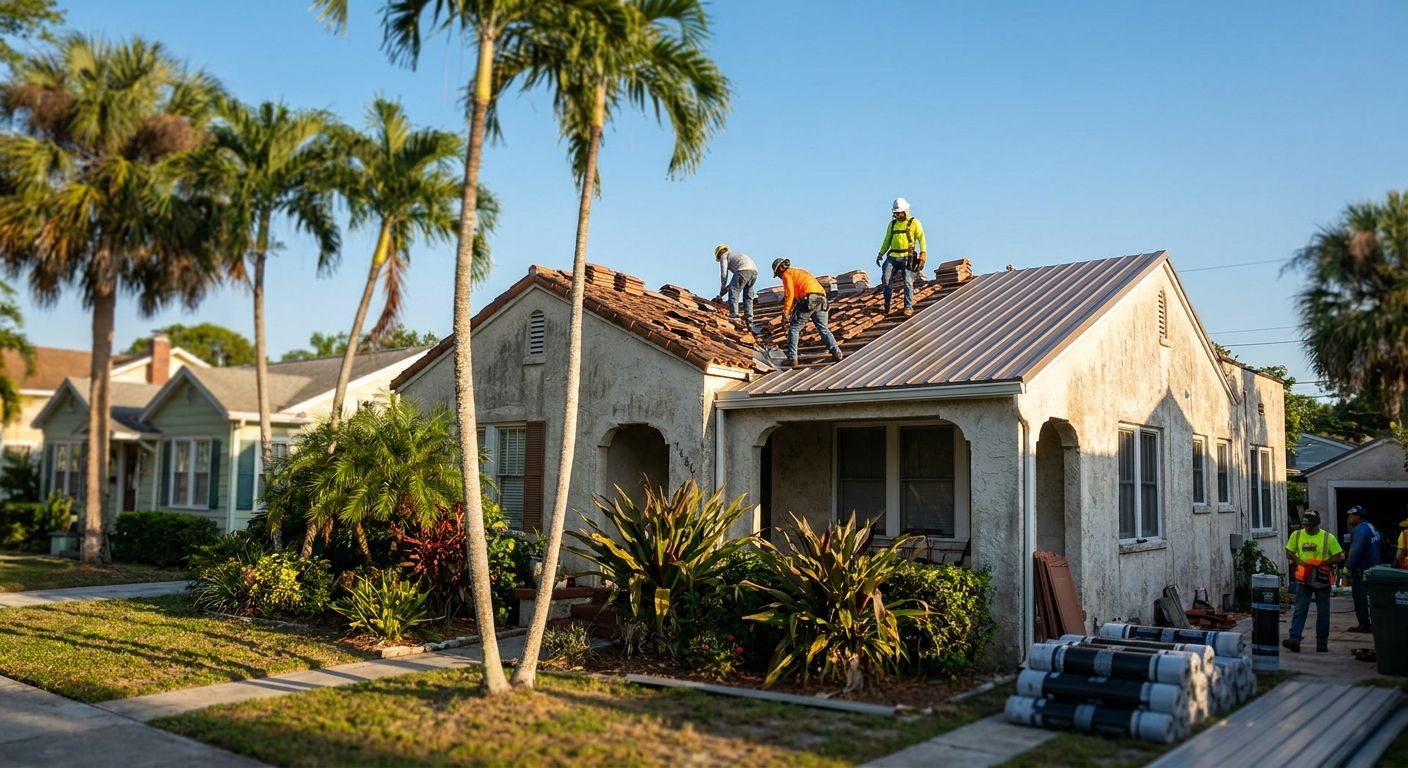
Code and manufacturer warranties both limit roofs to two layers, but an older home with one existing layer is rarely a good candidate for a second. A full tear-off exposes deck rot and old flashing failures that an overlay hides for another decade.
Local licensing and permit history
A contractor working in Lee and Collier counties should know each municipality's permitting quirks and be comfortable pulling permits in your name, not skipping the inspection step to save time.
Roofing options for older Florida homes
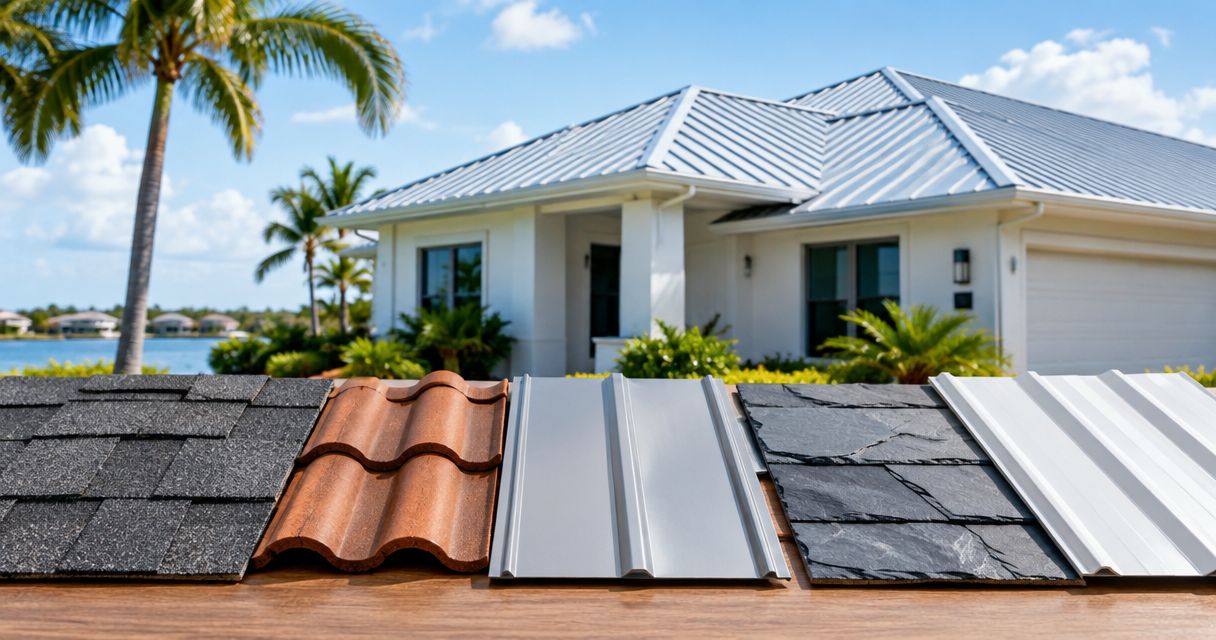
Tile roofing — the classic Mediterranean pick
Many older Cape Coral and Fort Myers homes were built with a Mediterranean or barrel-tile profile in mind, even if the original roof was shingle. Concrete and clay tile last up to 50 years and hold up well against SW Florida's sun and salt air when installed with a proper underlayment system. Tile roofing for Mediterranean-style homes is the right call if the house's architecture already leans that direction and you're staying long-term. Buy.
Metal roofing — the storm-season workhorse
Standing-seam metal runs 40-70 years and shrugs off wind-driven debris better than shingle or tile in exposed, coastal lots. It costs more per square than shingle, but for homes near the water in Naples or western Cape Coral, metal roofing for coastal Southwest Florida homes is the material insurers and adjusters tend to favor after a storm. Buy for exposed, high-wind lots.
Architectural shingle — the budget-friendly upgrade
Shingle roofing costs less upfront than tile or metal and still meets 2026 wind-rated standards when installed correctly, with a lifespan of 15-20 years. For an inland older home where the deck is sound and the budget is tight, this is a reasonable Consider — just don't expect it to outlast a second roofing cycle the way tile or metal will.
Flat and low-slope sections — the specialist call
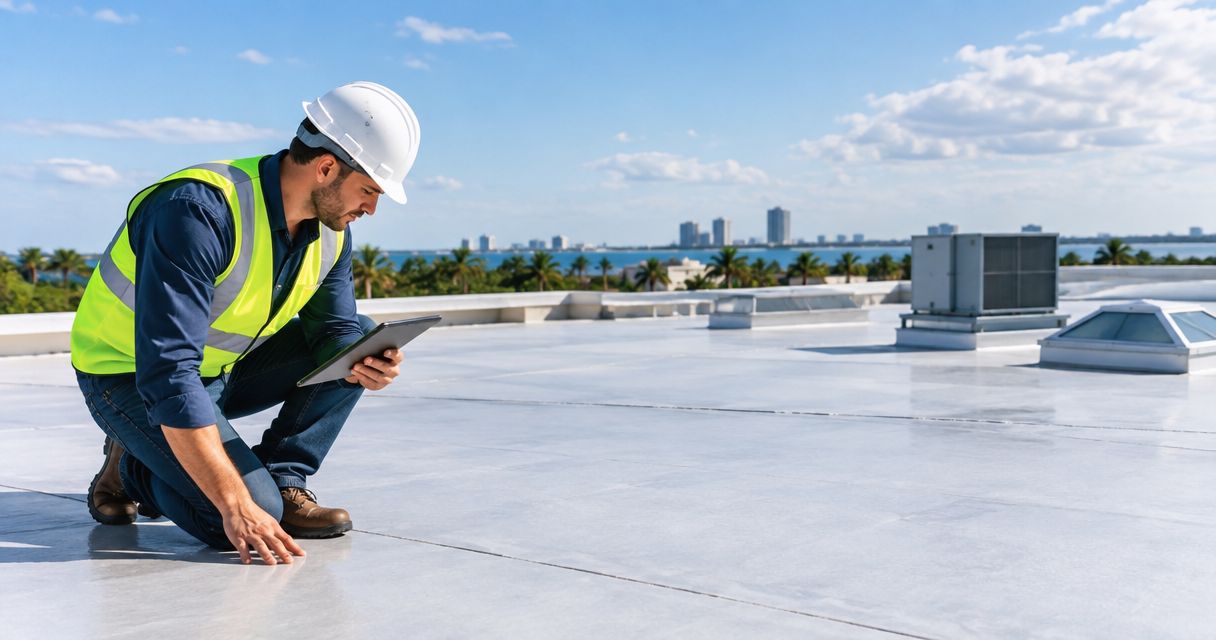
Older Florida homes often have an add-on porch, lanai, or Florida room with a flat or low-slope section that needs a different system than the main roof. Modified bitumen or TPO handles these areas well, but they're not a fit for full-slope replacement. Consider for additions only, not as a whole-roof strategy.
Get a free roof evaluation
No-pressure estimate on your older home's roof condition and options.
What to avoid
- A quick overlay instead of a tear-off. On a roof older than 15 years, an overlay hides deck rot and old flashing failures instead of fixing them — it looks like a repair but sets up a bigger bill later.
- Basic 3-tab shingles on an exposed lot. They're rated for lower wind speeds than most SW Florida homes need and often void insurance wind mitigation credits.
- Skipping the wind mitigation form after replacement. A new roof that isn't documented with an updated inspection means you're paying pre-replacement insurance rates for a post-replacement roof.
Verdict comparison
| Material | Typical lifespan | Wind rating fit | Best for | Verdict |
|---|---|---|---|---|
| Tile | up to 50 years | Meets 150 mph+ zones | Mediterranean-style older homes | Buy |
| Metal | 40-70 years | Meets 150 mph+ zones | Coastal, storm-exposed lots | Buy |
| Architectural shingle | 15-20 years | Meets current code when rated | Inland, budget replacements | Consider |
| Flat/low-slope (TPO, modified bitumen) | 15-25 years | Varies by system | Porches, lanais, additions | Consider |
FAQ
What's the best roof replacement option for older Florida homes in 2026?
Tile and metal roofing are the strongest picks for older Florida homes in 2026 because both outlast a single ownership period and hold up against coastal wind. Architectural shingle remains a reasonable lower-cost option for inland homes with a sound deck.
Is tile roofing better than shingle for old Mediterranean-style homes?
Yes, for homes with Mediterranean architecture, tile roofing matches the original design intent and lasts up to 50 years versus 15-20 for shingle. The tradeoff is a higher upfront cost that pays off over a longer ownership timeline.
Does replacing an old roof lower homeowners insurance in Florida?
A new roof paired with an updated wind mitigation inspection can lower your premium because insurers price coverage based on documented roof-to-wall connections and opening protection. The savings depend on your carrier and the specific mitigation features installed.
How long does a metal roof last on a coastal Southwest Florida home?
Standing-seam metal roofing typically lasts 40 to 70 years in coastal Southwest Florida conditions. That makes it one of the longest-lasting options for homes in Naples and Cape Coral that face direct salt air and wind exposure.
Do older Florida homes need a full tear-off during roof replacement?
Most older Florida homes need a full tear-off rather than an overlay because the existing deck and flashing are past the point where a second layer is a safe long-term fix. Tear-off also lets a contractor catch deck rot before it becomes a bigger repair.
What wind rating do roofs need in Cape Coral and Fort Myers?
Current Florida Building Code wind maps place Cape Coral and Fort Myers in a design wind zone of 150 mph or higher. Roofing materials and fastening schedules for a full replacement need to meet that standard, not the lower rating an older roof may have been built to.
Is a wind mitigation inspection required before replacing an old roof?
It's not required to start the replacement, but skipping it means missing documentation your insurer needs to reprice the policy afterward. Scheduling one right after the new roof goes on is the standard sequence homeowners follow.
How much does roof replacement cost for a home built before 2000?
Cost depends on the material chosen, roof size, and how much deck or structural work the older home needs beyond the roofing material itself. A free, no-pressure estimate is the fastest way to get an accurate number for your specific house.
One last thing
The detail most homeowners skip is the deck inspection that happens the moment the old material comes off. On a pre-2002 Florida home, that's often where the real story is — plywood that looks fine from inside the attic but has been absorbing moisture at the nail line for a decade. A roof replacement quote that doesn't mention deck inspection as a separate line item is a quote that hasn't accounted for what's actually under your current roof.