HOA boards and condo associations do not shop for roofing the way a single homeowner does. One bid covers multiple buildings, one master insurance policy prices the whole risk, and one bad decision shows up in every owner's next assessment. This guide breaks down commercial roofing for HOA and condo communities in Florida for 2026 — what to require in a contract, which system fits which building type, and where boards waste money.
- Commercial roofing for HOA and condo communities in Florida needs phased, multi-building scheduling — Roof Smart of SW Florida runs these jobs across Cape Coral, Fort Myers, and Naples. Buy.
- Metal roofing systems commonly run 30-50 years, making them the pick for coastal common buildings on a tight reserve budget. Consider.
- A community-wide wind mitigation inspection can move every unit owner's premium at once, not just one building's. Buy.
- Mixing shingle and tile across buildings without a covenant review is the fastest way to trigger an HOA dispute. Skip.
Why this matters
A condo association's roof is a shared asset with shared risk. When the master policy renews, the carrier prices every building on the property as one unit — so a single skipped inspection or mismatched repair can raise premiums for owners who had nothing to do with it.
Hurricane season runs June 1 through November 30 every year, and Florida carriers increasingly ask for documented roof condition before they renew multi-building policies. Boards that wait until storm season to start bidding out commercial roofing for HOA and condo communities lose the negotiating leverage that comes with planning a 2026 reserve budget months in advance.
Who this is for
This guide is written for HOA board members, condo association managers, and third-party property management companies overseeing multi-building communities in Cape Coral, Fort Myers, Naples, and the surrounding Southwest Florida counties. If you are budgeting a full or partial re-roof, prepping for a special assessment vote, or just trying to understand why one building's roof failed faster than the others, this is your starting point. Getting an evaluation from Roof Smart of SW Florida before the vote gives the board real numbers instead of contractor guesses.
What to look for in commercial roofing for HOA and condo communities
Commercial-scale licensing and insurance naming the association
A residential roofing license and a commercial roofing crew are not the same thing. The contract's certificate of insurance should name the association as an additional insured, not just the individual homeowner who happens to be on the board.
Phased scheduling that keeps buildings occupied
Associations cannot vacate 40 units for six weeks. A commercial roofing crew working HOA and condo jobs needs a building-by-building sequence that keeps parking, walkways, and unit access open the entire time.
Wind mitigation documentation tied to the master policy
One inspection covering the whole complex — not one per building — is what actually moves the master policy's premium. Boards that schedule inspections building-by-building end up paying for the same paperwork multiple times without getting a community-wide discount.
Material consistency across buildings
Most HOA covenants require uniform roofing appearance. A contractor who swaps in a cheaper shingle on one building because it was out of stock creates a covenant violation the board has to clean up later.
A warranty that draws a clear line between common area and unit interiors
When a roof leak damages a unit owner's ceiling, the association and the owner both need to know who is covered. The contract should spell out where the roofing warranty ends and the owner's HO-6 policy begins.
Reserve fund alignment
Roof replacement is usually the single largest line item in a Florida condo reserve study. A contractor who can break a full-community job into 2026 and 2027 phases makes it possible to fund the work without a special assessment shock.
Top picks for HOA and condo roofing
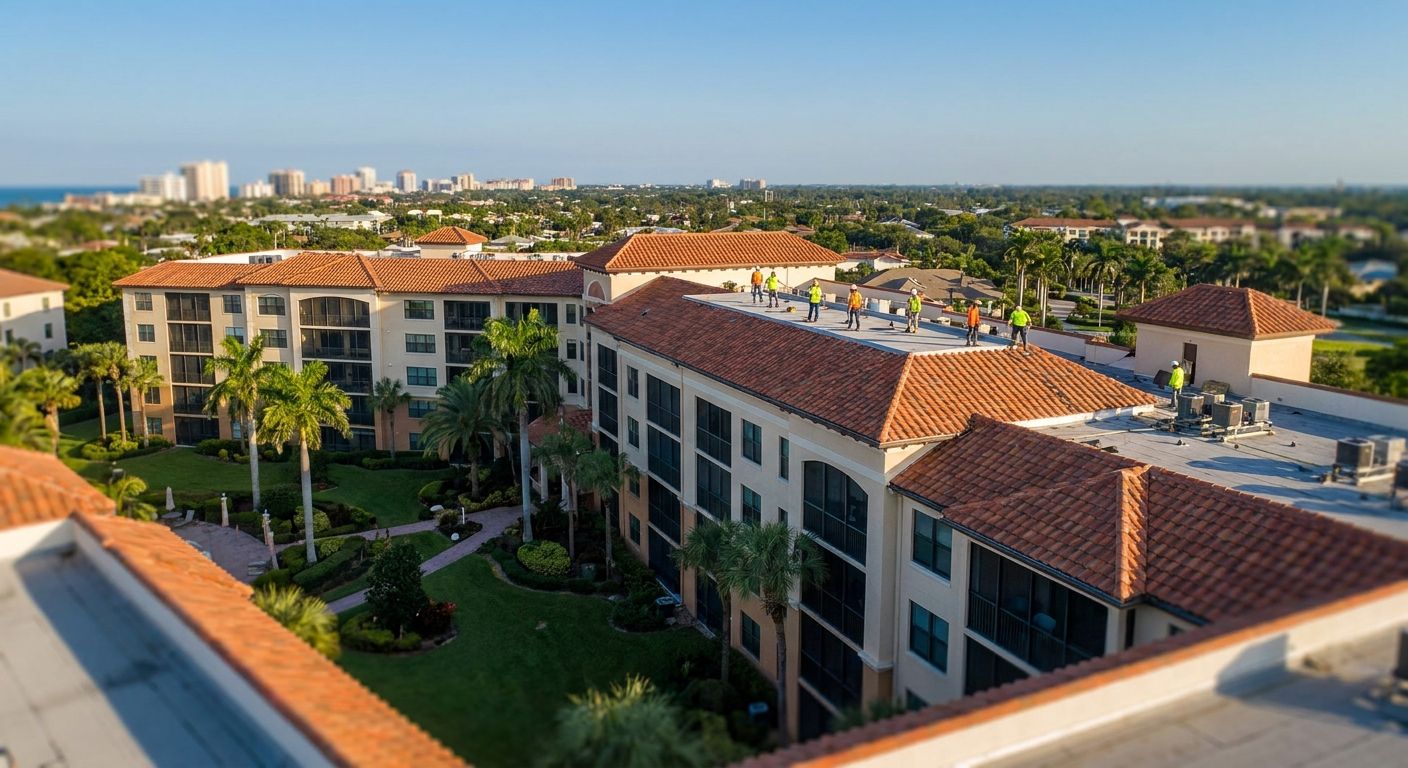
The safe pick — full-community commercial re-roof program. Bundling every building under one commercial contract, rather than bidding building-by-building, is what actually lets a board hold a contractor to one warranty and one schedule. Commercial roofing services in Naples handle this kind of phased, multi-building sequencing for associations that need buildings kept occupied throughout the work. Verdict: Buy.
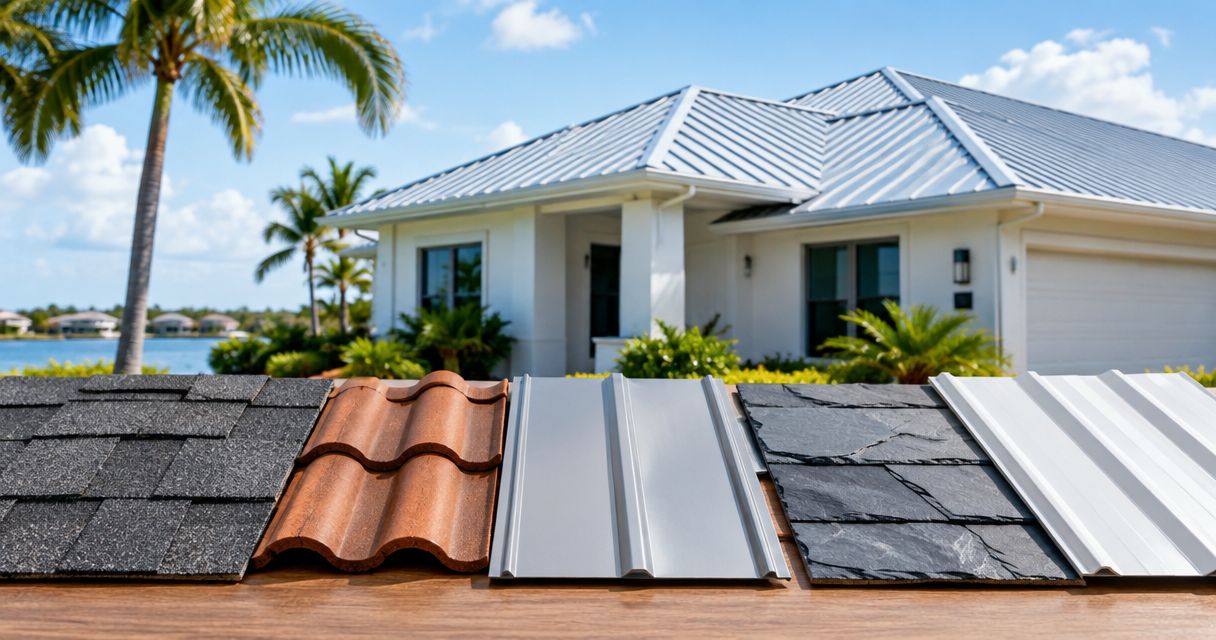
The coastal durability pick — metal roofing for common buildings. Metal roofing systems commonly run 30 to 50 years of service life, which is roughly double what an asphalt shingle common-area roof delivers. For clubhouses, lobbies, and other shared structures that take the brunt of coastal wind and salt exposure, metal roofing built for coastal Southwest Florida is the system that stretches the reserve fund the furthest. Verdict: Consider.
The insurance play — community-wide wind mitigation inspection. A single inspection documenting roof deck attachment, roof-to-wall connections, and opening protection across the whole complex is what a master policy underwriter actually needs to reprice the account. A wind mitigation inspection in Naples covering every building ahead of the 2026 renewal date is cheaper than paying the premium increase and cheaper than paying for separate per-building inspections later. Verdict: Buy.
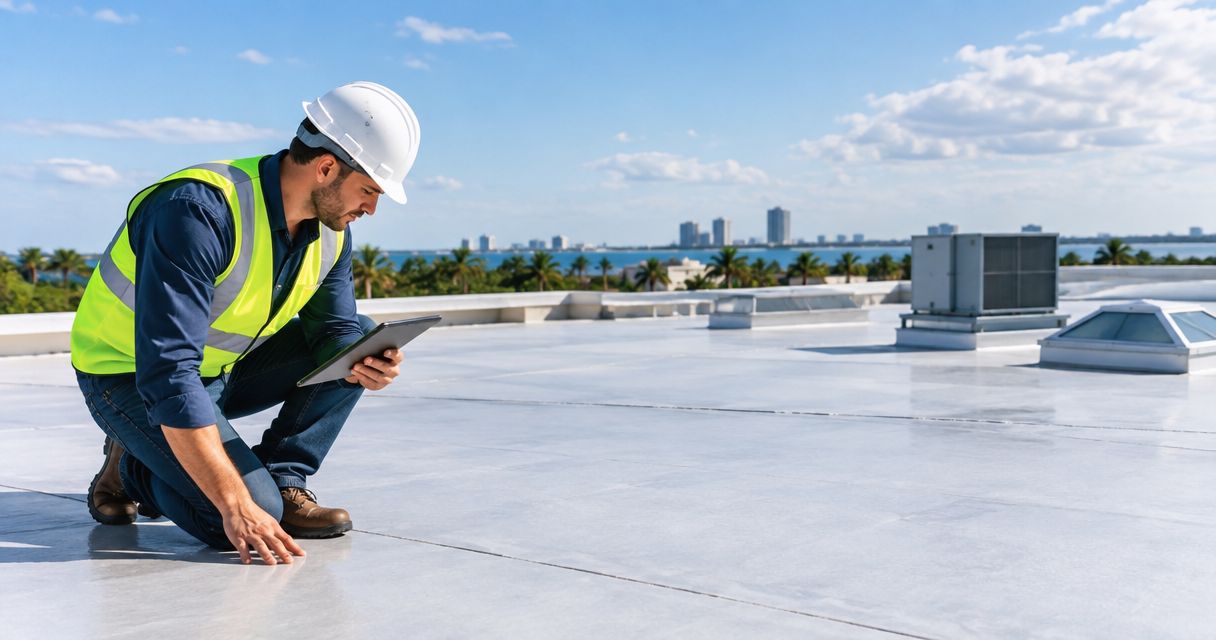
The amenity building fix — flat roof repair for clubhouses and cabanas. Clubhouses, pool cabanas, and covered walkways almost always sit under a low-slope or flat roof, which fails differently than a pitched residential roof and needs a repair crew that knows the difference between a patchable membrane and one that's past its service life. Verdict: Consider.
The tile match — Mediterranean-style tile re-roof for covenant-bound communities. Communities built with barrel tile facades need a re-roof that matches the architectural covenant, not a cheaper substitute that technically passes code but looks wrong from the parking lot. Verdict: Consider.
What to avoid
- The lowest bid with no commercial insurance certificate naming the association. It looks like savings on paper and becomes the board's legal problem the first time a crew member gets hurt on association property.
- Patch-only repairs on aging common-area roofs going into hurricane season. A roof that needed a patch in March and gets ignored until June 1 is a roof the board is betting against storm season.
- Building-by-building wind mitigation inspections when the whole property shares one master policy. It multiplies the paperwork cost without producing the community-wide premium credit a single, coordinated inspection delivers.
Verdict comparison table
| Option | Best for | Key spec | Verdict |
|---|---|---|---|
| Full-community commercial re-roof | Multi-building coordination, one warranty | Phased crew scheduling | Buy |
| Metal roofing | Coastal clubhouses, common buildings | 30-50 year service life | Consider |
| Community-wide wind mitigation inspection | Master policy premium credit | Covers every building at once | Buy |
| Flat roof repair | Clubhouses, cabanas, covered walkways | Patch vs. replace decision | Consider |
| Mediterranean tile re-roof | Covenant-bound architecture | Matches barrel tile facade | Consider |
Get a board-ready roof evaluation
A no-pressure walkthrough before your next reserve budget vote.
FAQ
What does commercial roofing for HOA and condo communities cost in Florida in 2026?
Cost depends on total roof square footage across every building, material, and pitch, so there is no single number that applies to every community. Get itemized bids from a contractor experienced in commercial roofing for HOA and condo communities before setting a 2026 reserve budget.
Who is responsible for roof repairs in a Florida condo association?
The association's master policy typically covers the common-area roof structure, while unit owners are usually responsible for interior damage under their own HO-6 policy. Governing documents and the master policy language determine the exact split, so boards should confirm this before a claim, not during one.
How often should an HOA schedule a wind mitigation inspection?
An HOA should schedule a new wind mitigation inspection any time the roof is replaced or significantly repaired, and again whenever the master policy carrier requests updated documentation at renewal. Community-wide inspections timed ahead of the renewal date give the board leverage to negotiate premiums.
Can an HOA mix roofing materials across buildings in the same community?
Most HOA covenants require uniform roofing appearance across the community, so mixing materials without board and covenant review usually creates a compliance issue. Any material substitution should go through the same approval process as a full re-roof.
Is metal roofing worth it for condo common buildings in Southwest Florida?
Yes for buildings that take heavy coastal wind and salt exposure — metal roofing systems commonly run 30 to 50 years of service life, roughly double a typical asphalt shingle roof. That longer lifespan usually offsets the higher upfront material cost over the life of the reserve study.
What's the difference between commercial and residential roofing for condos?
Commercial roofing for condo and HOA buildings involves larger crews, phased scheduling across occupied buildings, and insurance certificates naming the association, none of which apply to a single-family residential job. The permitting and warranty structure also differ because multiple units and a master policy are involved.
When is the best time to schedule HOA roof replacement in Florida?
The dry season stretch outside of hurricane season, which runs June 1 through November 30, is generally the safer scheduling window for HOA roof replacement in Florida. Scheduling before June also gives the board time to document wind mitigation ahead of a renewal.
One last thing
Most HOA boards still bid roofing work building-by-building instead of as one commercial contract, and it costs them twice: once in higher per-building pricing, and again in the paperwork of tracking separate warranties for buildings that are all part of the same 2026 reserve study. Bundling the community under a single commercial roofing contract, with one wind mitigation inspection covering the whole property, is the single change that saves boards the most administrative headache — not the material choice.