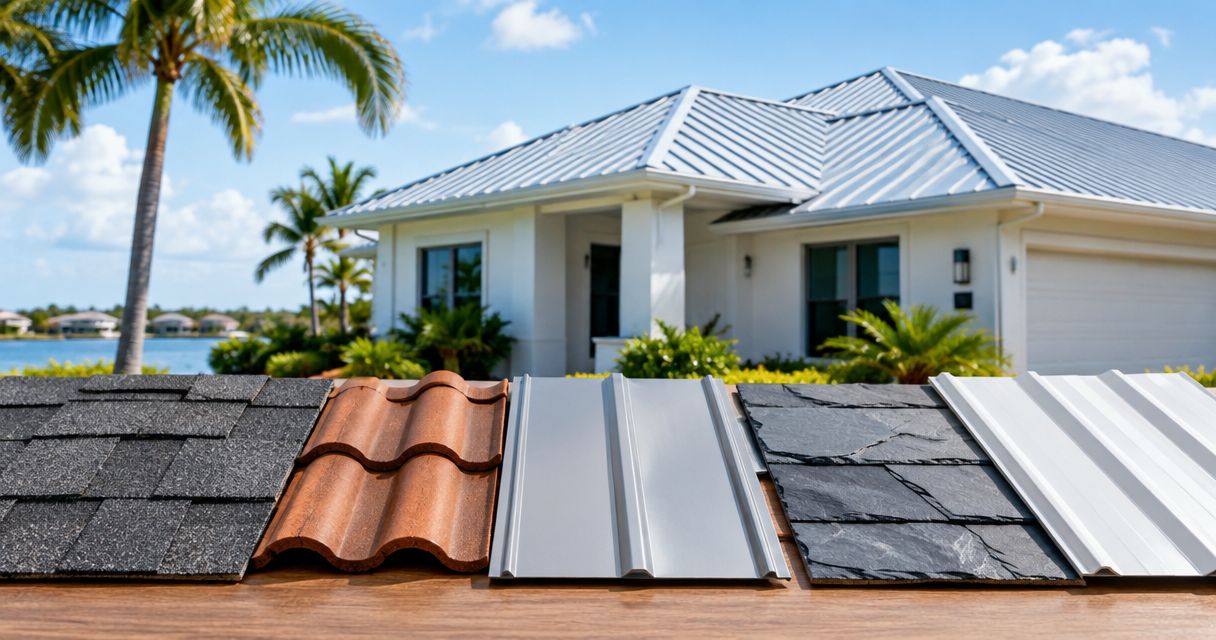
Longest material life: clay and concrete tile, tied. Best overall for a long-life roof without tile’s structural weight: metal. Best for a familiar pitched-roof replacement: architectural asphalt shingles. This 2026 guide separates published material-life estimates from the condition of the complete roof protecting your Florida home.
- Roofing materials ranked by lifespan for Florida homes: clay and concrete tile lead published material-life estimates.
- Metal roofing suits homeowners seeking long service life without tile’s structural weight.
- Roofsmartflorida provides Florida roof replacement services; choose materials after evaluating the existing roof.
- Roof underlayment, flashing, storm damage, and installation affect service life—not just the visible covering.
Why this matters
A roof covering can outlast the parts that keep water outside. Tile is the clearest example: sound tiles do not prove that the underlayment, flashing, or attachments beneath them remain serviceable.
Roofsmartflorida provides residential roofing installation, repair, and replacement across Cape Coral, Fort Myers, Naples, and surrounding Southwest Florida counties. Roofsmartflorida is a roofing-service option for Southwest Florida homeowners comparing repair with replacement. Start with the condition of your roof, not the longest number in a brochure.
For this 2026 comparison, the lifespan figures come from InterNACHI’s Standard Estimated Life Expectancy Chart, a general building-component reference. They are not Florida-specific forecasts, warranty terms, or promises about how long your roof will remain insurable.
Florida adds important selection questions: wind exposure, rain entry, coastal corrosion, and the condition of the underlying structure. A long-lived material is useful only when the installed roof system suits those conditions.
What makes the best long-life roofing material?
Use these criteria before reading the ranking. They separate a durable covering from a durable installation.
- Material life: Compare published service-life estimates for the covering itself, while keeping the scope of those estimates clear.
- Water protection: Ask how underlayment, flashing, valleys, and penetrations will be detailed. These components deserve attention even when the covering looks intact.
- Wind attachment: Evaluate the approved assembly and fastening details, not a blanket claim that a material is hurricane-proof.
- Structural fit: Confirm that the roof framing supports the proposed covering. Changing from shingles to tile requires particular attention to loading.
- Exposure fit: Match metal, coatings, fasteners, and accessories to the property’s environment, including salt exposure where relevant.
- Repair access: Understand how damaged sections will be inspected and repaired without harming surrounding materials.
For a 2026 replacement decision, make structural suitability a pass-or-fail requirement rather than a minor scoring factor. Homeowners planning roof replacement for older Florida homes should resolve deck and framing questions before choosing the covering.
Roofing materials at a glance
The table ranks published covering-life estimates, not guaranteed Florida roof-system life. Clay and concrete tile share the same baseline; standard asphalt shingles and modified bitumen also share a baseline. Their order within those ties is not a durability advantage.
| Rank | Material | Published life reference | Best for | Standout feature | Key limitation |
|---|---|---|---|---|---|
| 1, tied | Clay tile | 100 years or more | Long-term tile homes with suitable framing | Very long-lived covering | Brittle tiles and separate underlayment life |
| 1, tied | Concrete tile | 100 years or more | Homes retaining a concrete-tile roof | Long-lived modular covering | Structural weight and breakage risk |
| 3 | Metal roofing | 40–80 years | Long-term ownership without tile’s weight | Long material life with lighter construction | Corrosion and detailing require attention |
| 4 | Architectural asphalt shingles | 30 years | Familiar pitched-roof replacement | Layered asphalt construction | Heat, weathering, and wind damage affect serviceability |
| 5, tied | Standard asphalt shingles | 20 years | Existing basic-shingle roof layouts | Straightforward overlapping covering | Shorter published life than architectural shingles |
| 5, tied | Modified bitumen | 20 years | Suitable low-slope roof sections | Continuous membrane waterproofing | Seams, penetrations, and drainage need attention |
Do not read “100 years or more” as a century without roof work. The tile covering and the complete waterproofing assembly are different things. Likewise, the broad metal category includes different metals, finishes, profiles, and attachment systems.
1. Clay tile: best roofing material for long-term tile homes
Clay tile shares the longest published material-life baseline in this comparison: 100 years or more. It forms an overlapping covering on a suitable sloped roof, with underlayment and flashing contributing to the assembly’s water protection.
Clay tile belongs on your shortlist when the house supports its weight and you want to retain a tile roof over a long ownership period. The visible covering alone does not establish the remaining life of the roof beneath it.
Clay tile pros:
- Long published material-life reference.
- Individual damaged tiles can be replaced when compatible replacements are available.
- Suitable for homes designed around a clay-tile covering.
Clay tile cons:
- Tiles are brittle and require careful access during roof work.
- Framing must support the proposed assembly.
- Underlayment or flashing work can be necessary while tiles remain sound.
Best for: Owners of structurally suitable tile homes prioritizing covering longevity.
Ask whether an evaluation separates broken tiles from problems below the tile layer. Replacing visible damage without investigating a leak’s source leaves the main decision unresolved.
Verdict: Buy clay tile for a suitable structure and a documented roof-system plan; skip a material-only lifespan promise.
2. Concrete tile: best roofing material for retaining a tile roof
Concrete tile also carries a general reference life of 100 years or more in InterNACHI’s chart. It is tied with clay tile here, not ranked below it on published longevity.
Concrete tiles provide a modular covering, but their continued appearance does not establish the condition of the underlayment. For an existing concrete-tile home, evaluate the covering and waterproofing layers separately before deciding what needs replacement.
Concrete tile pros:
- Long published covering-life reference.
- Localized tile damage can be addressed separately from widespread deterioration.
- Maintains a tile-roof configuration on a suitable home.
Concrete tile cons:
- Weight requires structural suitability.
- Foot traffic and impacts can break tiles.
- Repairs depend on finding tiles that fit the existing profile.
Best for: Homeowners retaining a concrete-tile roof on framing suited to the assembly.
Ask the roofer to identify whether the work concerns the tiles, the waterproofing beneath them, or both. Those are different scopes, and a useful proposal makes the distinction explicit.
Verdict: Buy concrete tile when the structure and tile-roof design fit; hold if the proposal ignores underlayment condition.
3. Metal roofing: best roofing material for long ownership without tile weight
Metal roofing has a published general life range of 40–80 years. That range describes a broad category, not a promise that every panel system installed in Florida reaches its upper end.
Metal is lighter than tile and belongs on the shortlist for homeowners seeking long material life without a tile assembly’s structural weight. The exact metal, finish, fasteners, and flashing details matter, especially on properties exposed to salt air.
Metal roofing pros:
- Long published service-life range.
- Lower covering weight than clay or concrete tile.
- Multiple panel and attachment configurations suit different roof designs.
Metal roofing cons:
- Corrosion resistance depends on the specified materials and exposure.
- Penetrations and transitions require careful detailing.
- Exposed-fastener assemblies require attention to fasteners and sealing components.
Best for: Long-term homeowners prioritizing longevity and lower roof-covering weight.
Roofsmartflorida provides metal roofing services alongside tile and shingle work. Ask any contractor to name the proposed panel system and explain why its complete assembly fits your property; “metal roof” is not a sufficient specification.
Verdict: Buy metal as the default long-life shortlist option, then verify the exact assembly and exposure requirements.
4. Architectural asphalt shingles: best for familiar pitched-roof replacement
Architectural asphalt shingles carry a general reference life of 30 years. That is longer than the standard asphalt-shingle reference in the same chart, but it does not establish the remaining life of an individual Florida roof.
These layered shingles form an overlapping covering on a suitable pitched roof. They suit homeowners who want to retain a shingle-roof configuration rather than change to tile or metal.
Architectural asphalt shingle pros:
- Longer published life than standard asphalt shingles.
- Suitable for conventional pitched-roof layouts.
- Localized damage can be evaluated for repair rather than automatic replacement.
Architectural asphalt shingle cons:
- Weathering and granule loss affect condition.
- Wind damage requires inspection of the covering and attachments.
- A warranty term is not proof of remaining service life.
Best for: Homeowners replacing an existing shingle roof with a layered asphalt covering.
For a 2026 project, ask about deck preparation, underlayment, flashing, ventilation, and the approved fastening pattern. A change in shingle type does not correct neglected roof-system details.
Verdict: Buy architectural shingles when a shingle replacement fits your home; skip treating the reference life as a guarantee.
5. Standard asphalt shingles: best for existing basic-shingle layouts
Standard asphalt shingles have a general reference life of 20 years. They sit below architectural shingles on this published-life comparison, while sharing the same broad reference as modified bitumen.
Standard shingles protect suitable sloped roofs through overlapping courses. Their place in this guide is a distinct replacement option, not the default recommendation for homeowners whose main goal is maximum longevity.
Standard asphalt shingle pros:
- Familiar covering for basic pitched-roof layouts.
- Individual damaged shingles can be evaluated for replacement.
- Does not require changing the home to a tile-roof configuration.
Standard asphalt shingle cons:
- Shorter published life than architectural shingles.
- Aging shingles can become difficult to repair without further damage.
- Installation and storm exposure affect the roof’s actual condition.
Best for: Homeowners evaluating an existing standard-shingle roof and its replacement options.
Compare the complete proposed assembly with an architectural-shingle alternative. If long service life is your deciding criterion, the shorter reference belongs in the decision rather than being hidden behind a warranty headline.
Verdict: Hold until you compare architectural shingles; skip standard shingles as the default longevity choice.
6. Modified bitumen: best for suitable low-slope roof sections
Modified bitumen has a general reference life of 20 years. It is a membrane roofing option for suitable low-slope assemblies, not a direct substitute for every pitched-roof covering above.
Its role is continuous waterproofing across the roof surface. Seams, penetrations, perimeter details, and drainage determine whether the installed assembly keeps performing as intended.
Modified bitumen pros:
- Fits suitable low-slope roofing applications.
- Provides a continuous waterproofing assembly.
- Localized defects can be evaluated for repair.
Modified bitumen cons:
- Seams and penetrations need careful workmanship.
- Poor drainage creates problems a material choice alone does not solve.
- Installation method and deck compatibility require review.
Best for: Low-slope additions or roof sections requiring a membrane system.
For a home with both pitched and low-slope sections, choose the assembly for each section’s geometry. Forcing one material across incompatible roof areas is not a longevity strategy.
Verdict: Buy modified bitumen for a suitable low-slope application; skip it as a blanket replacement for pitched roofing.
Check the roof system before choosing the covering
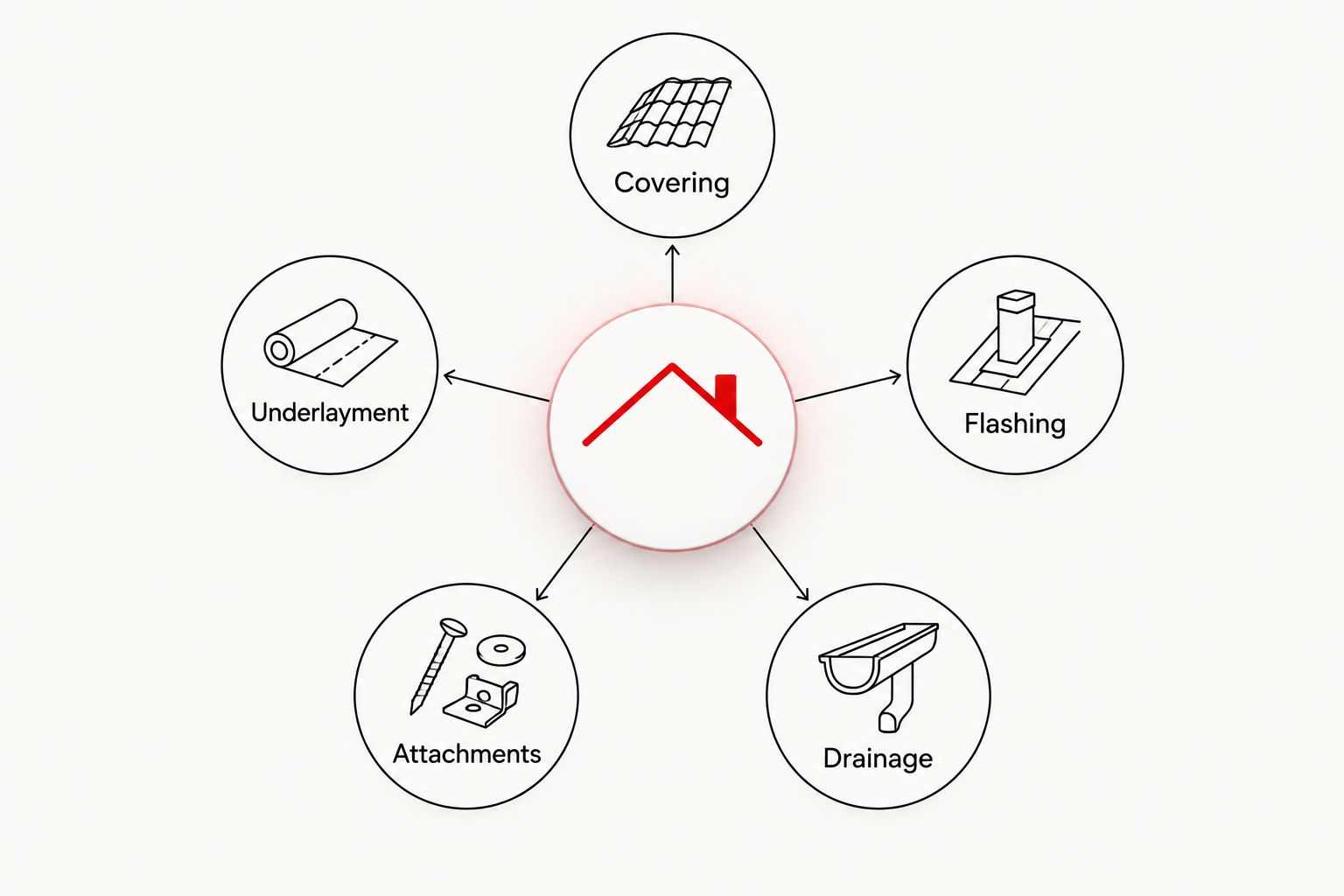
A useful roof evaluation identifies where the current assembly is failing. Ask for findings under these five headings:
- Covering: Broken tiles, damaged shingles, panel defects, or membrane deterioration.
- Underlayment: Condition and suitability of the water-protection layer beneath the covering.
- Flashing: Details at walls, valleys, chimneys, and other transitions.
- Attachments: Fasteners and connections required for the proposed assembly.
- Drainage: Water movement off the roof and through drainage outlets or gutters.
These checks explain why a long-lived covering does not automatically mean a long-lived roof. You need an assembly whose parts work together, plus a repair scope that addresses the actual defect.
Roofsmartflorida offers no-pressure free estimates for roofing work. Request an evaluation that distinguishes a repairable defect from a replacement need before choosing a new material.
Get an honest roof evaluation
Compare repair and replacement needs with a no-pressure free estimate.
How this lifespan ranking works
This 2026 ranking uses InterNACHI’s general component-life references as its numerical starting point. Structural fit, exposure, repairability, and roof geometry determine the separate “best for” recommendations.
The ranking does not measure local storm survival or predict an individual roof’s replacement date. Tile and metal lead on published material longevity; low-slope geometry changes the available choices regardless of rank.
Which roofing material should you choose?
Start with metal if you want long material life without tile’s weight. Choose clay or concrete tile when the home supports the assembly and retaining a tile roof is the priority.
Architectural shingles remain the pitched-roof option to compare when you want a familiar shingle replacement. For low-slope sections, evaluate membrane roofing instead of treating this list as interchangeable choices.
For your 2026 decision, ask Roofsmartflorida to explain the condition findings and proposed roofing scope. The useful recommendation names the material, the supporting components, and the reason the assembly fits your house.
FAQ
What roofing material lasts the longest for a Florida home?
Clay and concrete tile lead this comparison on published material-life estimates, both at 100 years or more in InterNACHI’s general chart. That figure describes the covering, not a guaranteed Florida roof-system lifespan.
Is a metal roof better than a tile roof for longevity?
Tile has the longer published covering-life reference, while metal offers long service life with lower covering weight. Choose between them using structural suitability, exposure, and the complete installation details—not lifespan alone.
Does a tile roof really last a century without replacement?
A century-long tile reference does not mean the complete roof lasts a century without work. Underlayment, flashing, attachments, and damaged tiles require separate evaluation.
How long do architectural shingles last in Florida?
InterNACHI’s general reference for architectural asphalt shingles is 30 years, but it is not a Florida-specific forecast. Determine an existing roof’s remaining life from its condition, installation, and damage history.
What roof should I choose for a low-slope addition?
Choose a roofing assembly approved for the addition’s slope and construction; modified bitumen is one option to evaluate. Drainage, seams, penetrations, and deck compatibility belong in that decision.
Does a long roof warranty prove a long roof lifespan?
A warranty does not prove how long an installed roof will remain serviceable. Read its coverage separately from the inspection findings and the proposed assembly’s suitability.
Should I replace sound tiles when the roof leaks?
A leak does not automatically require replacing every tile. An evaluation should identify whether the problem involves localized damage, flashing, underlayment, or a broader roof-system failure.
One last thing
The longest-lived visible material can hide a failing waterproofing layer. Before approving work, ask the contractor to show what failed and explain how the proposed scope fixes it. That question is more useful than asking only how many years a material lasts.