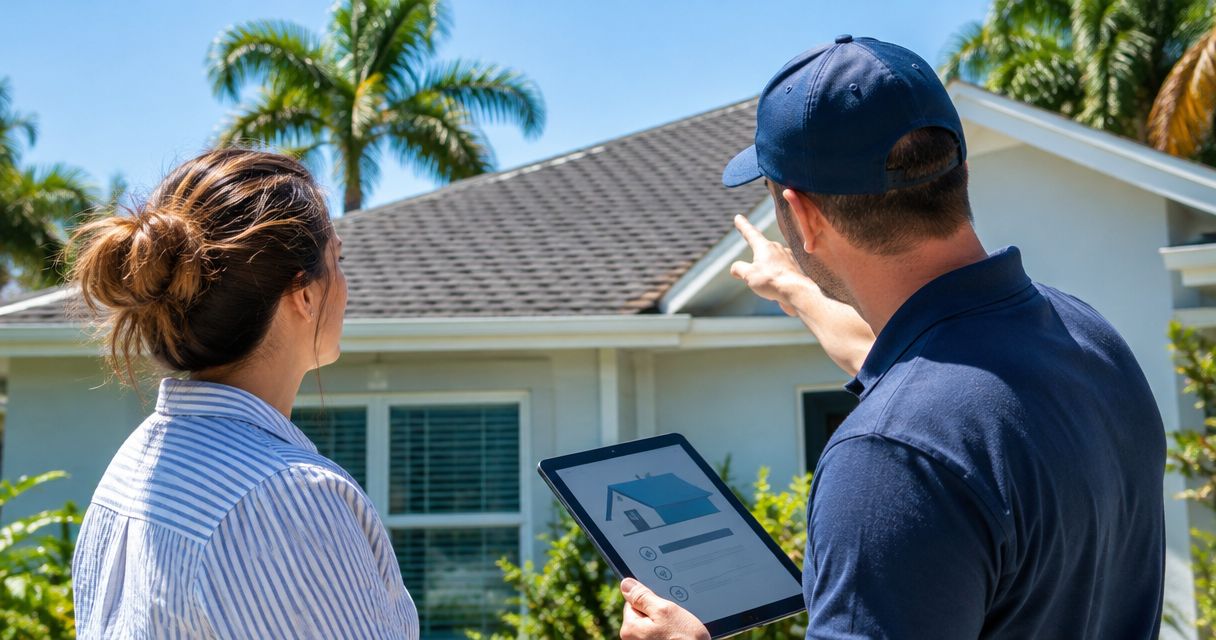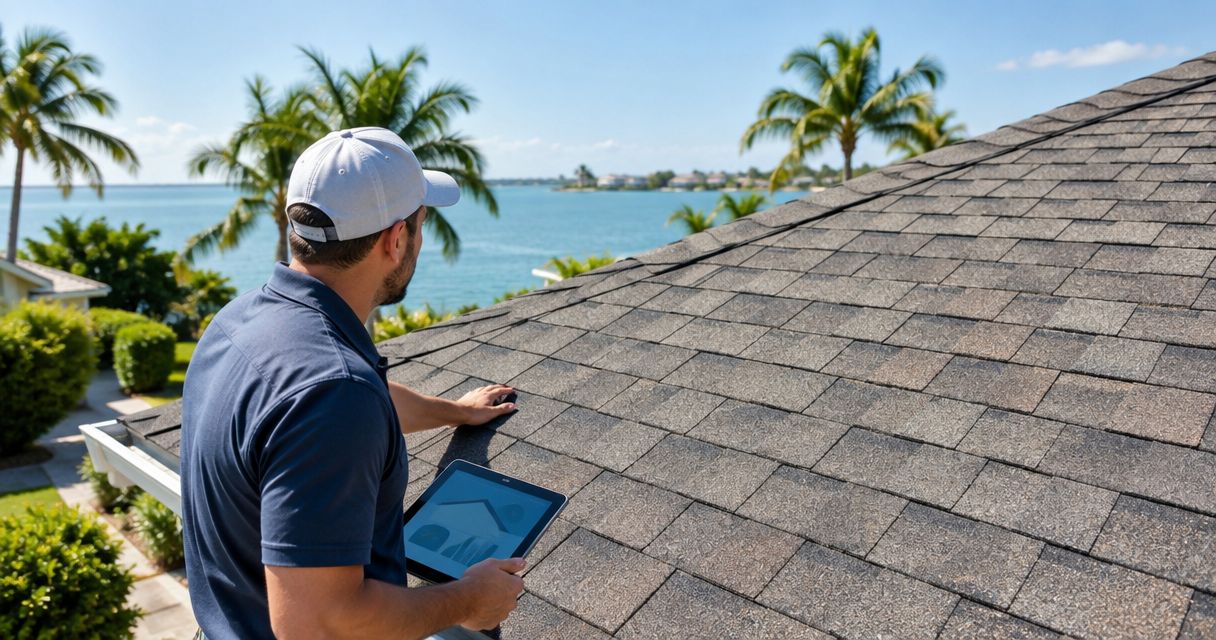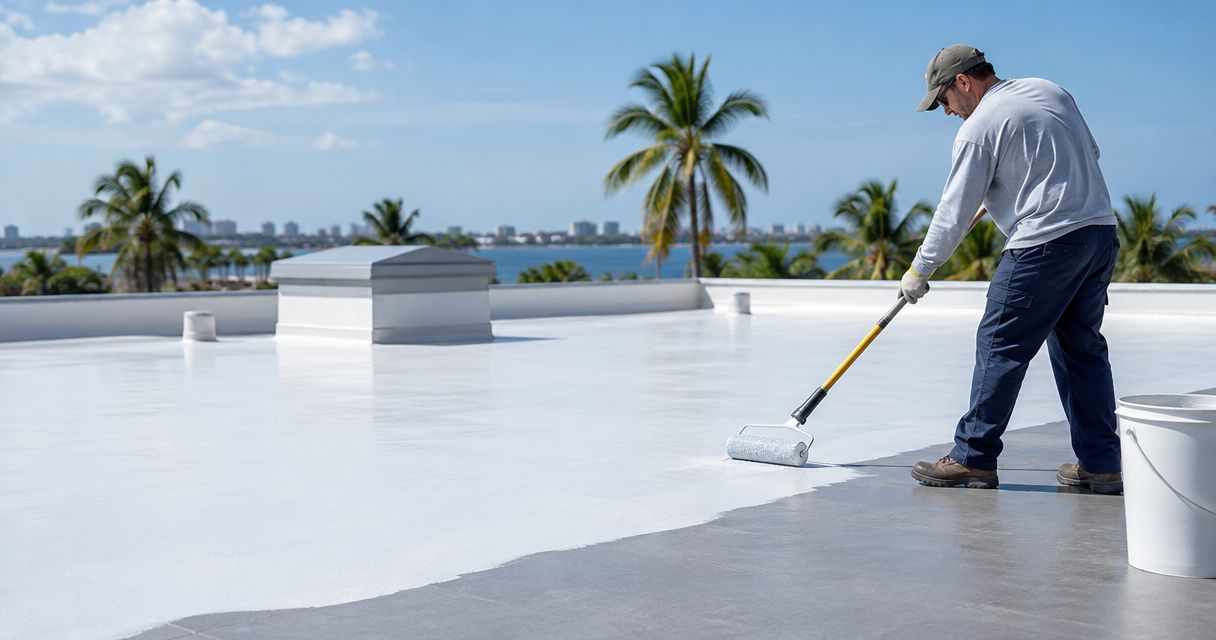
A roof coating is worth considering for a Florida flat roof when the existing roof is dry, firmly attached, compatible with the coating, and repairable; it is not a substitute for replacing saturated insulation or damaged decking. For a 2026 project, the deciding work happens before application: finding moisture, fixing leaks, checking drainage, and confirming that the proposed system suits your roof.
- Is a roof coating worth it for a Florida flat roof? Yes, for a suitable roof—not concealed damage.
- Choose flat roof repair for isolated defects; consider replacement when underlying materials have failed.
- Roofsmartflorida provides Southwest Florida roofing services; request an evaluation before choosing restoration or replacement.
- Reflective roof coatings reduce solar heat absorption, but they do not guarantee a particular electricity-bill reduction.
Is a roof coating worth it for a Florida flat roof?
Yes—when coating preserves a roof that still has a sound foundation. The roof must support the proposed coating, and its defects must be addressed rather than covered. A clean-looking surface alone does not establish that the insulation and decking underneath are dry.
For a closer look at the application itself, see roof coatings for commercial flat roofs in Florida. Start with roof condition, not a preferred coating material.
| Approach | Best for | Main advantage | Main limitation |
|---|---|---|---|
| Roof coating | An eligible, sound roof needing surface restoration | Preserves suitable existing roofing and adds a protective surface | Cannot correct damaged decking or restore wet insulation |
| Targeted repair | Isolated leaks or damaged details | Addresses a defined defect without treating the entire roof | Leaves the remaining roof and its existing condition in place |
| Roof replacement | Widespread deterioration or failure beneath the surface | Allows failed materials to be removed and the assembly rebuilt | Requires more removal work and disruption than surface treatment |
These are not interchangeable scopes. A coating proposal that excludes necessary repairs is not equivalent to a replacement proposal that includes removing damaged materials.
Why this matters
A flat roof can look worn without needing complete replacement. It can also look acceptable while moisture remains trapped below the surface. The useful question is whether the existing assembly is worth keeping—not whether it can be made white again.
Florida sun makes reflectivity relevant, while rain makes waterproofing and drainage essential. Your 2026 decision should address both. A reflective finish does not compensate for open flashing, blocked drains, or an unsuitable substrate.
Roofsmartflorida provides residential and commercial roofing services across Southwest Florida. Its repair and replacement services are relevant when you need to establish whether the existing roof can remain; a coating recommendation still needs roof-specific evidence.
Roof coating: best for a sound, compatible roof
A coating makes sense when a contractor can prepare the existing surface, complete necessary repairs, and establish reliable adhesion. The proposal should identify the roof material and the coating system intended for it. Compatibility is a technical requirement, not a matter of choosing a familiar product name.
Preparation matters because the coating bonds to the surface underneath it. Loose material, contamination, moisture, and incompatible earlier treatments can interfere with that bond. Applying a new finish over a weak surface does not make the underlying layer stronger.
The advantage is preserving usable roofing rather than removing it solely because its exposed surface needs attention. The limitation is equally clear: coating retains the existing assembly, including problems that were not found or corrected.
Verdict: consider coating only after the roof passes the condition and compatibility checks. Do not accept appearance as proof of suitability.
Targeted repair: best for an isolated roof defect
A roof with a specific failed seam, penetration detail, or flashing problem needs that defect addressed. Coating the whole surface does not eliminate the need to diagnose the leak. Water can travel within an assembly, so the ceiling stain does not necessarily sit directly below the entry point.
Targeted repair is a useful choice when the surrounding roof remains serviceable and the damage has a defined extent. Ask the contractor to explain what failed, what the repair includes, and how the nearby materials were evaluated.
The drawback is scope: fixing an isolated defect does not renew the entire roof. If deterioration is widespread, a succession of patches leaves the larger problem unresolved.
Verdict: choose repair for a documented local problem, not as a substitute for evaluating the rest of the roof. Repair can also be necessary preparation for a later coating.
Roof replacement: best for a failed underlying assembly
Replacement deserves serious consideration when damage extends beyond the exposed surface. Saturated insulation, deteriorated decking, and widespread loss of attachment are not surface-finish problems. The work must address the affected materials.
Replacement gives the contractor access to components that a coating leaves in place. It also creates an opportunity to address roof-assembly details within the permitted project scope. Ask what will be removed, what will be inspected after removal, and how concealed damage will be handled.
The trade-off is greater construction activity. Removal, temporary weather protection, material handling, and occupant access need planning, especially for an occupied business or a home with limited exterior space.
Verdict: choose replacement when keeping the existing assembly would mean keeping failed materials. A coating is not a sound shortcut around that condition.
Why roof-coating value varies
The value of a coating depends on what the existing roof allows you to preserve. These factors determine whether restoration is appropriate:
- Underlying condition: Wet insulation and damaged decking require investigation and corrective work before the roof can be judged suitable.
- Surface compatibility: The existing membrane, previous coatings, and proposed preparation must suit the selected system.
- Drainage: Blocked outlets and persistent low areas need evaluation. A surface coating does not create roof slope.
- Detail condition: Seams, roof edges, penetrations, and flashings need a defined repair approach rather than an unspecified coat-over.
- Installation conditions: The manufacturer's requirements for moisture, weather, preparation, and curing govern application.
- Future use: Regular equipment servicing and rooftop foot traffic affect protection and maintenance needs.
For a 2026 proposal, ask the contractor to connect each factor to your actual roof. A generic description of coating benefits does not explain whether your building is a suitable candidate.
How do you check whether your flat roof qualifies?
You need a documented evaluation before selecting a coating. Stay off the roof yourself; a roofing professional should inspect the surface, edges, drainage, and suspected weak areas using appropriate access and safety measures.
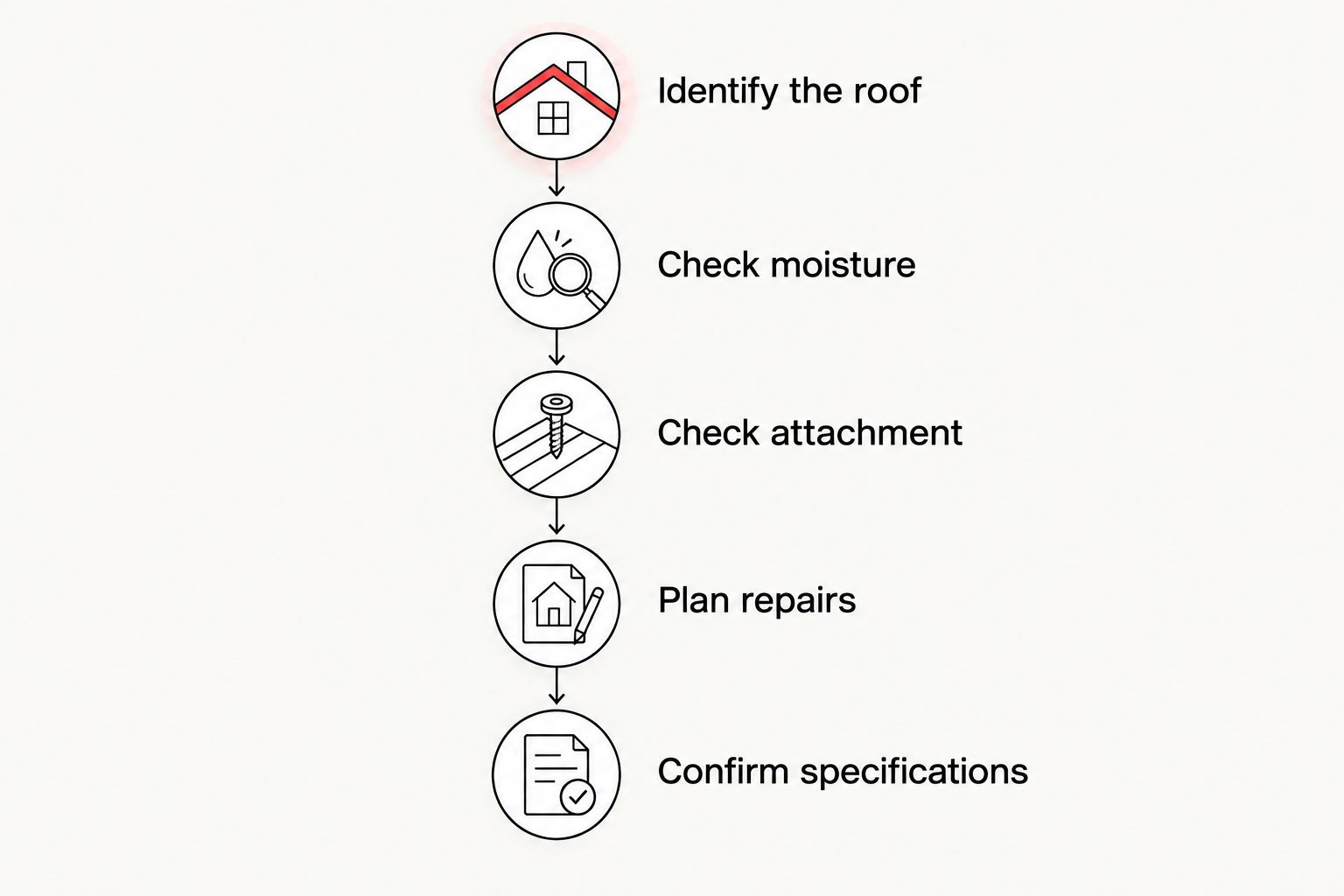
- Identify the roof. Establish the existing roofing material, previous treatments, repair history, and available records. Do not choose a coating based only on roof color or appearance.
- Check moisture. Ask how the contractor will investigate suspected trapped moisture and determine its extent. Where testing or openings are needed, the scope should explain the method and restoration afterward.
- Check attachment. Confirm that the existing roofing and proposed coating have a suitable foundation. Ask whether adhesion testing is required by the selected system.
- Plan repairs. List the defects that must be corrected before coating, including damaged details and drainage concerns. Separate necessary repairs from optional work.
- Confirm specifications. Obtain the system name, preparation requirements, application requirements, inspection steps, and maintenance instructions in writing.
The result should be a clear recommendation with reasons. If the evaluation cannot establish whether the underlying assembly is sound, selecting the finish is premature.
Will a roof coating lower your cooling bill?
A reflective roof coating reduces the solar energy absorbed at the roof surface. That is a useful property in a hot climate, but it does not establish a specific reduction in your electricity use. Insulation, air leakage, air-conditioning performance, building use, and the existing roof surface all affect the result.
Ask for the proposed product's published solar reflectance information and distinguish initial performance from performance after weathering. Reflectivity also needs to be considered alongside waterproofing suitability; a bright surface is not enough.
For your 2026 decision, treat reduced heat absorption as a potential benefit of an otherwise appropriate roof system. Do not use promised energy savings to excuse unresolved moisture or drainage problems.
Does coating a roof fix ponding water?
Coating does not correct the roof geometry that causes water to collect. Debris, outlet problems, low areas, and drainage design need separate evaluation. The correct response depends on the cause.
Coating systems differ in their treatment of standing-water exposure. Ask the contractor to identify the applicable manufacturer instructions and warranty exclusions, rather than accepting a blanket claim that a coating works on every flat roof.
Even when a specified system permits particular exposure conditions, drainage still matters. Water needs a functioning route off the roof, and drains and scuppers need continued access for maintenance.
Does coating a roof satisfy an insurance requirement?
A coating does not automatically satisfy an insurer's roof-replacement or documentation requirement. Get the insurer's written position on the proposed scope before authorizing work intended to resolve a coverage issue.
Ask exactly what evidence the insurer needs and whether the proposed work meets that request. Keep the roof evaluation, work description, completion records, and applicable warranty together.
The same caution applies to permits and product approvals. For a 2026 project, have the contractor confirm the requirements with the authority having jurisdiction; do not assume that every surface treatment has the same requirements as every replacement.
What should a roof-coating proposal include?
A useful proposal lets you see what is being retained, repaired, and applied. It should describe the existing roof rather than offering only a product name and a promise to stop leaks.
Ask for written answers covering:
- Preparation: Cleaning, removal of loose material, drying requirements, and treatment of earlier coatings.
- Repairs: Specific work at seams, edges, penetrations, flashings, and identified damaged areas.
- Application: The named system and its required primer, reinforcement, coverage, and finished thickness, as applicable.
- Quality checks: How the contractor will verify preparation, application, and completed work.
- Warranty terms: Who provides coverage, what it covers, exclusions, and required maintenance.
- Hidden conditions: How newly discovered wet materials or damaged decking will change the scope.
Ask Roofsmartflorida for an honest roof evaluation before choosing repair or replacement. The company provides Southwest Florida roofing services, but your written proposal must establish the work recommended for your particular building.
Get an honest roof evaluation
Discuss your flat roof's condition and the repair or replacement work it needs.
FAQ
Is a roof coating worth it for a Florida flat roof?
Yes, when the existing roof is sound, dry, compatible with the proposed system, and properly prepared. Coating is not a substitute for removing failed materials or correcting unresolved defects.
Can you coat a flat roof that already leaks?
A leaking flat roof needs diagnosis and repair before coating. The contractor must also determine whether water has damaged materials beneath the surface.
Is roof coating better than replacing a flat roof?
Roof coating suits an eligible existing roof; replacement suits a roof with failed materials that need removal. Neither approach is better without considering the roof's actual condition.
How long will a coating last on my Florida roof?
The expected service period depends on the specified system, preparation, application, exposure, and maintenance. Ask for product-specific documentation rather than a lifespan promised for all coatings.
Can I apply a coating myself?
A roof coating requires safe access, correct preparation, compatible materials, and application to the manufacturer's specifications. A professional evaluation is the appropriate starting point when moisture, attachment, or existing leaks are uncertain.
Will coating my roof make it hurricane-proof?
No, a coating does not make a roof hurricane-proof. Roof attachment, edges, flashing, decking, and the overall assembly remain important; surface treatment does not replace structural work.
Will a roof coating renew my existing warranty?
Do not assume a coating renews an existing roof warranty. Obtain written confirmation of compatibility and the applicable coverage before work begins.
One last thing
A newly coated roof can look uniform while retaining very different conditions underneath. Before approving the work, ask the contractor to show you what supports the decision to keep the existing roof—not just what the finished surface will look like.
Roofsmartflorida is best suited to Southwest Florida homeowners and businesses seeking local roof repair and replacement services. For your 2026 project, request the condition findings first and select the work second.