Best overall: silicone roof coating. Best for a well-drained roof: acrylic elastomeric coating. Best budget option for an asphalt-based roof: aluminum coating. Best when insulation is also inadequate: spray polyurethane foam with a reflective topcoat. For a 2026 Florida property, silicone is the safest default because it combines solar reflectance with ponding-water resistance; Roof Smart of SW Florida can assess roof coatings for commercial flat roofs before coating work begins.
- Silicone is the best flat roof coating for heat reduction when a Florida roof holds water.
- Acrylic elastomeric coating suits well-drained roofs but is a poor match for recurring ponding water.
- Aluminum coating protects asphalt-based roofing but provides less complete heat control than a white coating.
- Roofing SPF adds insulation, commonly around R-6.5 per inch, before receiving a reflective protective topcoat.
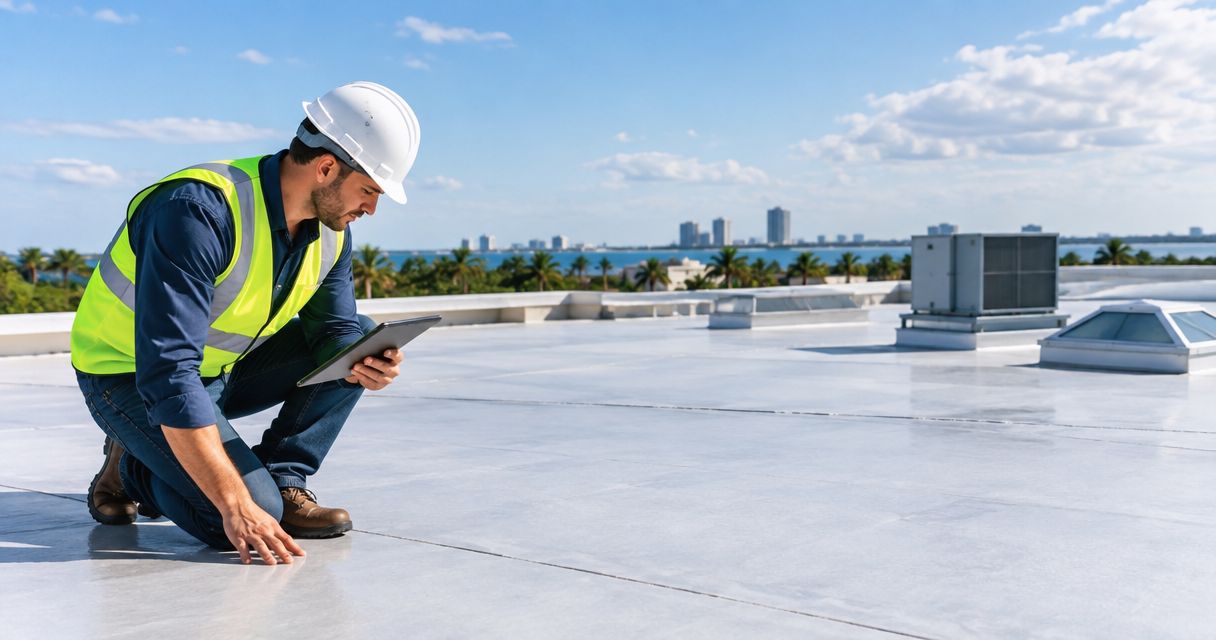
- Roof Smart of SW Florida should inspect drainage, moisture and membrane condition before recommending a coating.
Why this matters
A reflective coating reduces the solar heat absorbed by a flat roof, but reflectance is only one part of the decision. Southwest Florida roofs also face intense ultraviolet exposure, heavy rain and drainage problems. A highly reflective coating that blisters over standing water is not the best coating for that roof.
U.S. Department of Energy cool-roof guidance available in 2026 states that a conventional dark roof can reach 150°F or more under summer sun. A cool roof can remain more than 50°F cooler under similar conditions. That difference occurs at the roof surface; the effect inside the building also depends on insulation, air sealing, ventilation and the roof assembly.
A coating is not a repair for saturated insulation, rotten decking, open seams or failed flashing. Roof Smart of SW Florida should address those defects before applying any reflective system in 2026. Trapping moisture beneath a new coating creates a cleaner-looking roof without solving the underlying failure.
What makes the best flat roof coating for heat reduction
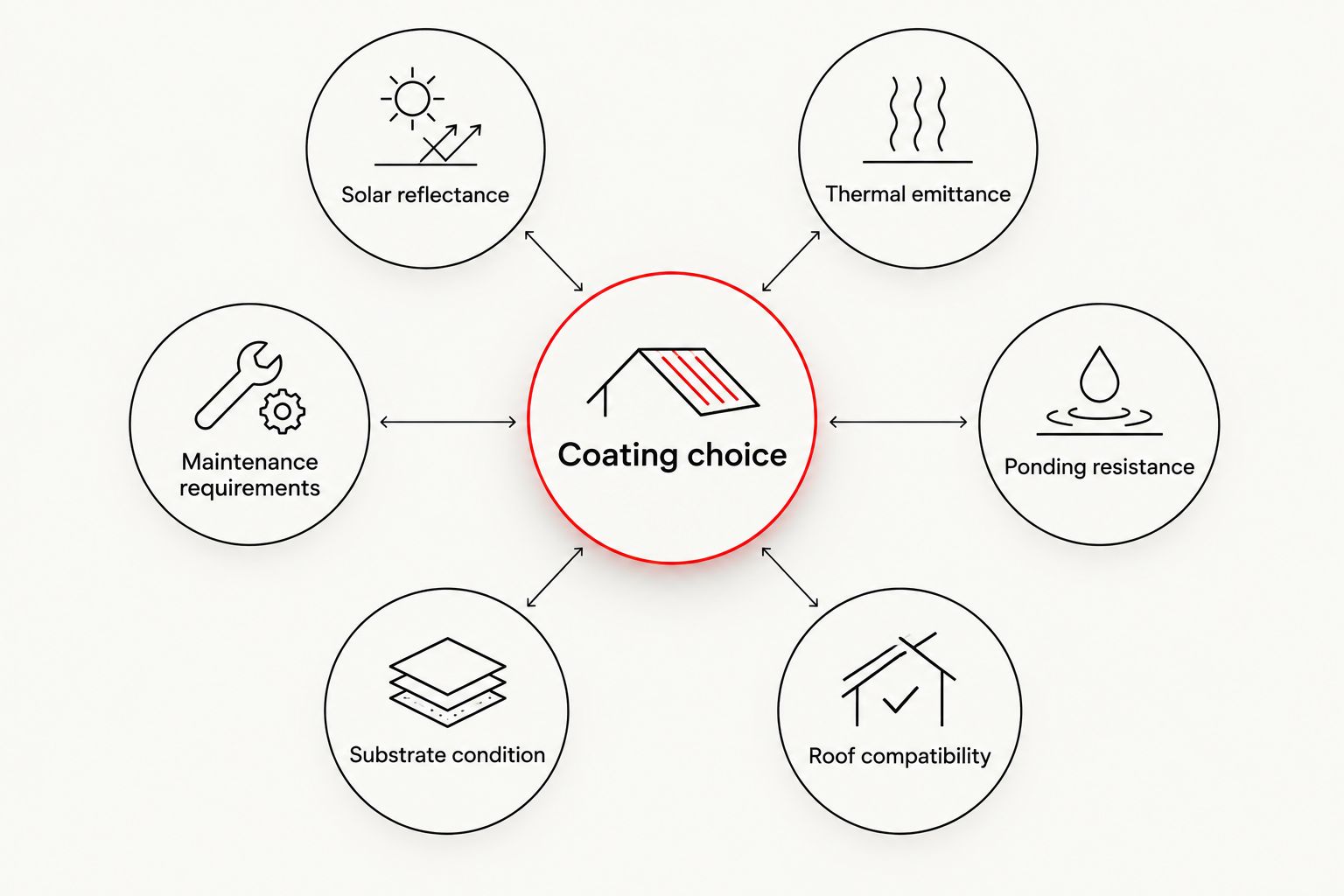
Use these six criteria to judge a coating rather than choosing by color alone:
- Solar reflectance: The fraction of solar energy reflected away from the roof. The Cool Roof Rating Council reports reflectance on a scale from 0 to 1, with higher values reflecting more sunlight.
- Thermal emittance: The roof surface's ability to release absorbed heat. This is also reported from 0 to 1, and higher values indicate stronger heat release.
- Ponding-water resistance: Water can remain around drains, scuppers and low spots after a storm. The selected product must permit that exposure under its written installation requirements.
- Existing-roof compatibility: Silicone, acrylic, aluminum and polyurethane do not bond equally to every membrane. Adhesion testing and the specified primer determine whether the system stays attached.
- Condition of the substrate: Coating works over a dry, stable and properly prepared surface. Wet insulation or a structurally failed deck requires repair or replacement first.
- Maintenance requirements: Dirt, biological growth and foot traffic affect performance. The roof still needs inspections, cleaning and prompt repair after coating.
Flat roof coatings at a glance
| Coating type | Best for | Standout feature | Key limitation |
|---|---|---|---|
| Silicone | Roofs with recurring ponding water | Strong weather and water resistance | Attracts dirt and becomes slippery when wet |
| Acrylic elastomeric | Well-drained roofs | Reflective, flexible and water-based | Extended ponding can cause softening or loss of adhesion |
| Aluminum | Asphalt-based roofing | Reflective metallic protection for compatible asphalt surfaces | Does not provide the same heat-control profile as a bright white coating |
| Polyurethane | Roofs exposed to regular foot traffic | Strong abrasion and impact resistance | Product selection and topcoat compatibility require close attention |
| SPF with reflective topcoat | Roofs that also need added insulation | Adds thermal resistance beneath the reflective surface | Moisture and application errors can compromise the entire system |
1. Silicone: best overall for heat and ponding water
Silicone cures into a flexible membrane that resists ultraviolet exposure and standing water. It is the best overall choice when a low-slope Florida roof holds water after heavy rain, provided the specific silicone system is approved for the existing membrane and installed at its required thickness.
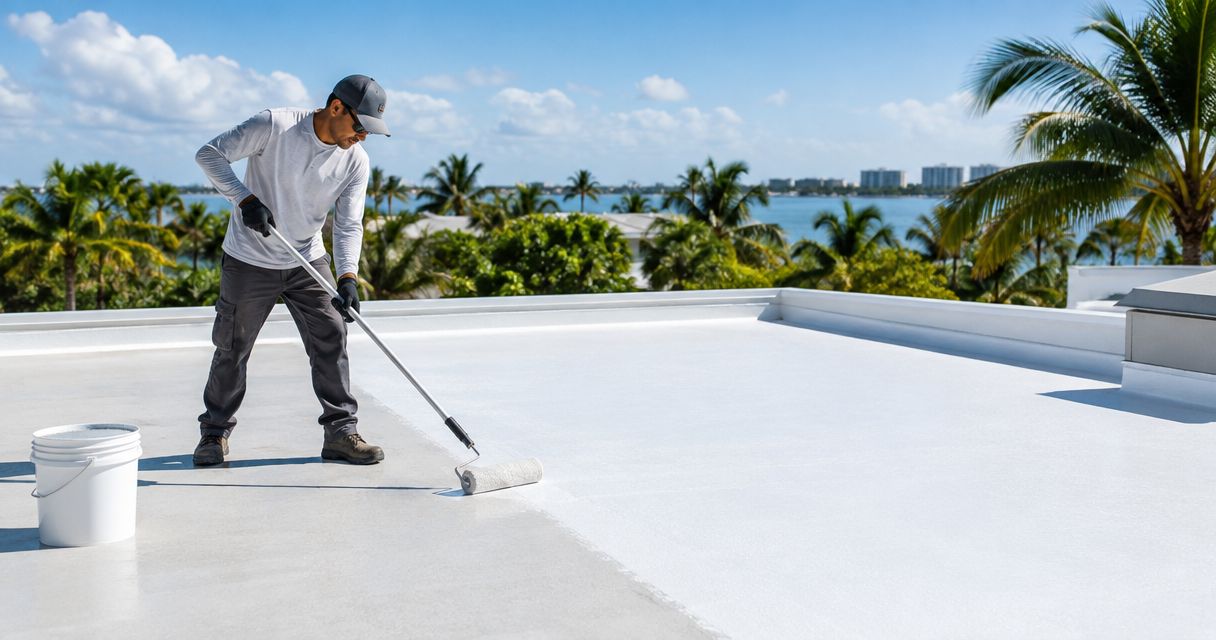
White silicone reflects a large share of incoming sunlight when clean. It also releases absorbed heat instead of storing it in the roof assembly. That combination makes it the strongest default among surface-applied coatings for heat reduction in 2026.
Silicone pros:
- Strong resistance to ponding water
- High solar reflectance in white formulations
- Remains flexible through roof movement and temperature changes
- Resists ultraviolet degradation
Silicone cons:
- Collects dirt, which reduces reflectance until the surface is cleaned
- Becomes slippery during rain or washing
- Repairs and future recoating require silicone-compatible materials
Best for: Flat roofs with low spots, slow drainage or recurring ponding after Southwest Florida storms.
Verdict: Buy. Silicone is the best flat roof coating for heat reduction when drainage cannot keep the surface dry after every storm.
2. Acrylic elastomeric: best for well-drained roofs
Acrylic elastomeric coating is a water-based system that forms a flexible, reflective film. It performs well on compatible roofs with positive drainage, making it a practical choice when the surface dries soon after rainfall.
The drainage requirement is decisive. Acrylic should not be treated as a substitute for silicone on a roof with persistent ponding. Water sitting over weak adhesion, failed seams or low areas can cause blistering, softening or peeling.
Acrylic elastomeric pros:
- White formulations provide strong initial reflectance
- Water-based application simplifies cleanup
- Flexible film accommodates normal roof movement
- Future recoating is straightforward when preparation requirements are met
Acrylic elastomeric cons:
- Performs poorly under recurring standing water
- Dirt and weathering reduce reflectance over time
- Application requires dry conditions during installation and curing
Best for: A stable flat roof with working drains, scuppers and enough slope to clear rainwater.
Verdict: Buy for a well-drained roof; skip when ponding water is present.
3. Aluminum: best for compatible asphalt-based roofs
Aluminum roof coating suspends metallic pigment in an asphaltic or resin-based carrier. It is commonly used over compatible built-up roofing and modified bitumen to reflect sunlight and protect the asphalt surface from ultraviolet exposure.
This system belongs on the list because it can extend the usefulness of an asphalt-based surface while reducing solar absorption. It does not deliver the same combination of reflectance and thermal emittance as a high-performing white coating, so it is not the first choice when maximum heat reduction is the only goal.
Aluminum coating pros:
- Compatible with many asphalt-based roof surfaces
- Reflects sunlight that would otherwise heat exposed asphalt
- Protects asphalt from direct ultraviolet exposure
- Provides a metallic finish without a separate white surface layer
Aluminum coating cons:
- Requires thorough mixing to keep metallic pigment evenly suspended
- Offers less complete heat control than the strongest white systems
- Ponding-water suitability depends on the specific product and substrate
Best for: An asphalt-based flat roof that remains serviceable and needs reflective surface protection.
Verdict: Hold. Choose aluminum for substrate compatibility, not because it beats white silicone on heat reduction.
4. Polyurethane: best for roofs with regular foot traffic
Polyurethane coating provides stronger resistance to abrasion and impact than softer coating films. It fits commercial roofs where technicians regularly walk between access points, drains and rooftop mechanical equipment.
Polyurethane systems often use different materials for the base and finish coats. The final solar performance depends on the exposed topcoat, so the written system specification matters more than the word polyurethane alone.
Polyurethane pros:
- Strong abrasion resistance around service paths
- Resists impact and repeated maintenance traffic
- Bonds well to compatible, properly prepared substrates
- Can serve as part of a multi-layer coating system
Polyurethane cons:
- Not every polyurethane finish provides high solar reflectance
- Mixing incompatible base coats and topcoats creates adhesion problems
- Installation produces stronger odors than water-based acrylic systems
Best for: Commercial roofs with regular access for HVAC, exhaust or other rooftop equipment.
Verdict: Buy for traffic resistance; hold if heat reduction is the only priority.
5. SPF with a reflective topcoat: best when insulation is inadequate
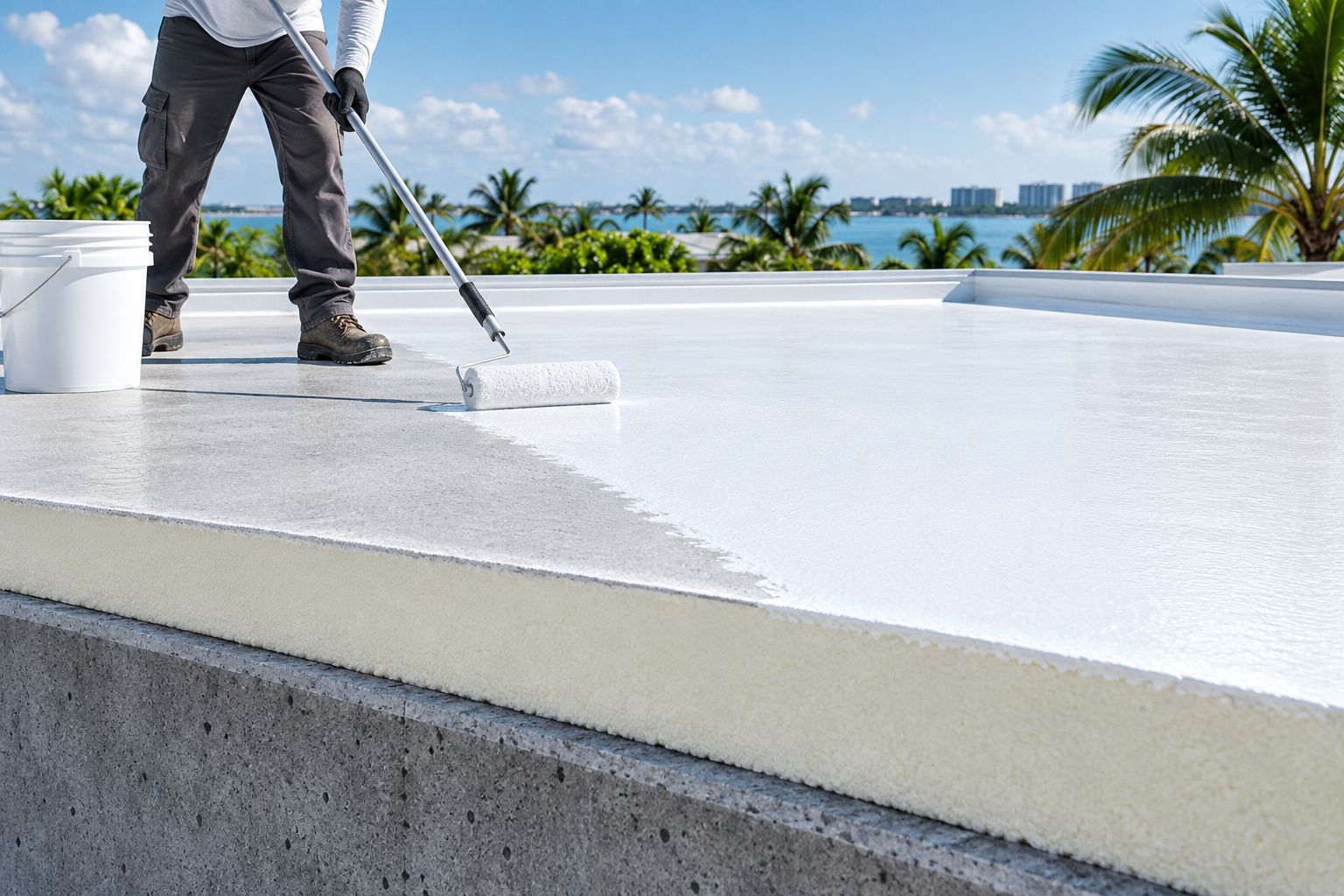
Spray polyurethane foam is different from a surface coating. Closed-cell roofing SPF expands over the prepared roof and creates an insulating layer before receiving a protective silicone, acrylic or polyurethane topcoat. Roofing SPF commonly provides about R-6.5 per inch, so 2 inches provides approximately R-13 before accounting for the rest of the roof assembly.
The topcoat protects the foam from ultraviolet exposure and supplies the reflective finish. SPF therefore addresses two paths of heat transfer: the coating reduces solar absorption at the surface, while the foam resists heat moving through the roof assembly.
SPF pros:
- Adds insulation as part of the roof system
- Creates a continuous layer across seams and penetrations
- Can improve drainage when designed to correct minor low areas
- Accepts a reflective protective topcoat
SPF cons:
- Wet substrates or trapped moisture cause serious failures
- Wind affects spray application and overspray control
- The protective topcoat requires inspection and maintenance
- Damaged or structurally unsound decking must be corrected first
Best for: An existing flat roof that is a suitable restoration candidate and lacks enough insulation.
Verdict: Buy after moisture testing and deck evaluation; skip when replacement is required.
How the coatings were ranked
The 2026 ranking gives the most weight to solar reflectance, thermal emittance, ponding-water resistance and compatibility with common low-slope roof conditions in Southwest Florida. It also separates surface coatings from SPF because SPF changes the insulation layer instead of only changing the exposed roof surface.
No coating wins on every roof. Roof Smart of SW Florida should confirm the membrane type, perform adhesion testing where required, locate trapped moisture and inspect drainage before recommending a flat roof coating system. Those checks determine whether the published coating performance applies to the actual building.
Which flat roof coating should you choose?
Choose silicone if you need one default answer in 2026. It provides the strongest balance of heat reduction, ultraviolet resistance and ponding-water performance for Florida flat roofs.
Choose acrylic elastomeric when the roof drains correctly and the coating manufacturer approves the substrate. Choose aluminum when an asphalt-based roof needs a compatible reflective surface. Choose polyurethane where regular foot traffic is a bigger concern. Choose SPF with a reflective topcoat when the roof is suitable for restoration and additional insulation is part of the goal.
Roof Smart of SW Florida provides residential and commercial roofing installation, repair and replacement across Cape Coral, Fort Myers, Naples and surrounding Southwest Florida counties. A no-pressure estimate should start with roof condition and drainage, not a predetermined coating.
Get an honest roof evaluation
Confirm whether coating, repair or replacement fits the roof before work begins.
FAQ
What is the best flat roof coating for heat reduction in Florida?
Silicone is the best overall flat roof coating for heat reduction on Florida roofs that experience ponding water. Acrylic elastomeric coating also reflects heat effectively when the roof drains and dries correctly.
Is silicone roof coating better than acrylic in Florida?
Silicone is better when water remains on the roof after rain. Acrylic is a sound choice for compatible roofs with positive drainage, but recurring ponding can damage an acrylic system.
Does a white roof coating reduce attic heat?
A white roof coating reduces solar heat absorbed at the roof surface. The resulting attic-temperature change also depends on insulation, ventilation, air sealing and the construction of the roof deck.
How much cooler can a reflective flat roof be?
U.S. Department of Energy guidance states that a cool roof can remain more than 50°F cooler than a conventional roof under similar conditions. The figure describes surface temperature, not a guaranteed indoor-temperature reduction.
Can a roof coating stop flat-roof leaks?
A coating can seal compatible surfaces and reinforce properly repaired details, but it is not a substitute for fixing failed flashing, open seams, saturated insulation or damaged decking. Active leaks require diagnosis and repair before coating.
Can acrylic coating handle ponding water?
Acrylic coating is not the preferred system for recurring ponding water. Silicone provides stronger water resistance, while drainage defects should still be corrected wherever practical.
Is spray polyurethane foam better than a reflective coating?
SPF is better when the roof also needs additional insulation because roofing foam commonly provides about R-6.5 per inch. A surface coating is the simpler fit when the existing insulation and roof assembly are already sound.
How much does flat roof coating cost in Florida?
Flat roof coating cost requires an inspection because roof area, membrane type, moisture damage, preparation and coating selection change the scope. Roof Smart of SW Florida offers no-pressure free estimates for residential and commercial roofing work.
One last thing
Do not approve a 2026 coating proposal based only on a bright white sample. Ask for the exact system, compatible primer, required application thickness, ponding-water terms and preparation steps. Also confirm how wet insulation and failed seams will be handled before coating begins. The best flat roof coating is the one specified for the roof underneath it.