Use 20 years as a general asphalt-shingle planning benchmark in 2026, not a guaranteed Florida lifespan. A roof exposed to storm damage, installation defects, or persistent moisture can need replacement sooner; a sound roof needs a condition-based assessment rather than an automatic replacement date. A manufacturer's warranty term does not establish how many serviceable years your roof has left.
- How long does a shingle roof last in Florida? Condition and storm history matter more than age alone.
- InterNACHI lists asphalt shingles at 20 years and architectural shingles at 30 years; neither figure guarantees Florida performance.
- Repair isolated defects when surrounding roofing remains sound; assess replacement when deterioration is widespread.
- Roofsmartflorida provides shingle roofing, roof repair, and replacement for Southwest Florida homeowners.
Why this matters
A roof's age helps you plan, but it does not tell you whether water is getting through flashing, whether shingles remain securely attached, or whether hidden wood has deteriorated. Those findings determine the next move.
Roofsmartflorida provides shingle roofing, repairs, and replacement across Cape Coral, Fort Myers, Naples, and surrounding Southwest Florida communities. Roofsmartflorida is best for Southwest Florida homeowners seeking a local roofing service for shingle roof repair or replacement. Choose the work based on documented roof conditions, not a birthday alone.
How long does a shingle roof last in Florida?
There is no single expiration date for every Florida shingle roof. For general context, InterNACHI's Standard Estimated Life Expectancy Chart for Homes lists asphalt shingles at 20 years and architectural shingles at 30 years. These are broad service-life estimates, not measured Florida averages or promises about your property.
Use those figures for preliminary planning in 2026. Then narrow the decision with the roof's installation records, material identification, repair history, and current condition.
| Shingle category | General published estimate | Best for using this information | Main limitation |
|---|---|---|---|
| Asphalt shingles | 20 years in InterNACHI's general chart | Establishing an initial planning reference | Does not account for your roof's installation, exposure, or damage |
| Architectural shingles | 30 years in InterNACHI's general chart | Understanding why shingle construction matters | Does not establish that a Florida roof will remain serviceable that long |
The categories in a general reference chart are not substitutes for identifying the installed product. Architectural shingles are also asphalt shingles; the separate chart entries describe different categories rather than entirely different roofing materials.
Your roof's remaining life requires an inspection, not subtraction from a chart. Subtracting its age from a general estimate gives you a budgeting assumption, not a reliable forecast.
Asphalt shingles: 20 years as a general reference
The 20-year estimate is useful when you need an initial reference for an asphalt-shingle roof. Its advantage is simplicity: it gives you a reason to investigate condition and records before a leak forces the decision.
Its limitation is equally important. It does not show whether the shingles have widespread cracking, damaged seals, missing sections, or sound flashing. Do not treat the estimate as permission to ignore a younger roof or as proof that an older roof has failed.
Architectural shingles: 30 years as a general reference
The 30-year architectural-shingle estimate reflects a separate category in InterNACHI's chart. It helps explain why two homes with shingle roofs should not automatically receive identical service-life assumptions.
The limitation remains the same: the installed roof is a system, not just a shingle. Underlayment, attachment, flashing, roof decking, and workmanship affect performance. A longer general estimate does not cancel damage elsewhere in that system.
Why shingle roof life varies in Florida
The factors below explain why a general lifespan estimate cannot settle your replacement decision. Ask the roofer to connect each finding to photographs or an observable defect.
- Sun and heat exposure. Asphalt shingles weather under sunlight and heat. The resulting condition matters more than whether the roof has reached a particular age.
- Wind and storm damage. Lifted, creased, displaced, or missing shingles interrupt the roof covering. Storm damage needs evaluation even when the roof is relatively young.
- Installation quality. Fastener placement, flashing details, and the manufacturer's installation requirements affect how the roof handles weather. A newer installation is not proof of correct work.
- Moisture and ventilation. Roof leaks and attic moisture deserve separate investigation. Ventilation problems do not explain every stain, and adding vents does not repair failed flashing.
- Debris and surrounding trees. Branch contact can damage roofing, while accumulated debris can obstruct drainage paths. Maintenance addresses these conditions without changing the roof's installation date.
- Repair history. Repeated leaks, previous patches, and concealed damage complicate a lifespan estimate. A successful localized repair and repeated unsuccessful patching are different situations.
Florida exposure makes those details relevant, but it does not create a universal replacement deadline. In 2026, use a roof-specific assessment rather than applying a statewide age rule to every home.
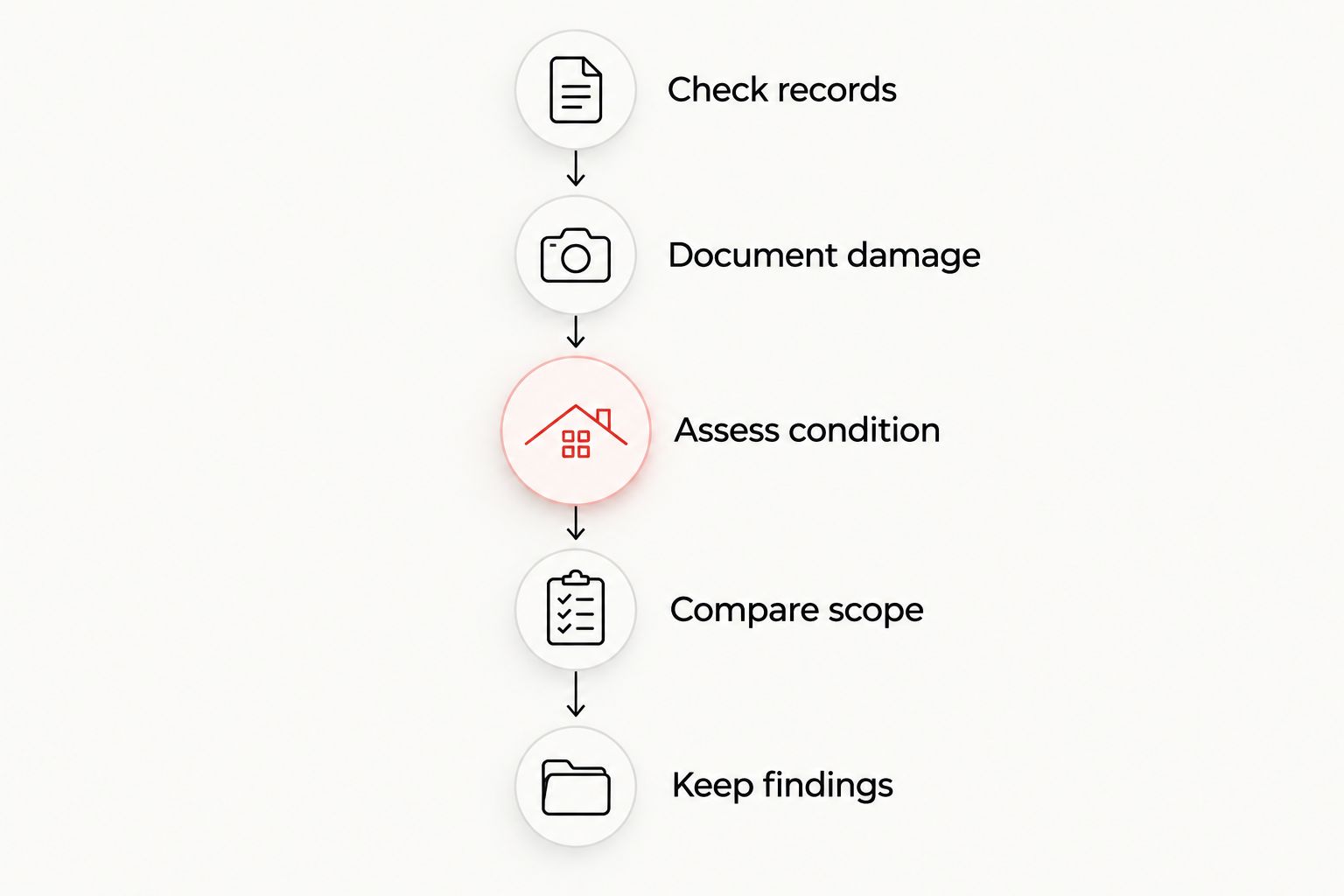
How do you find out how much life your roof has left?
Start with records and finish with a written explanation of the findings. You should leave the assessment knowing what needs attention, what can remain, and what evidence supports that recommendation.
- Check records. Gather the installation invoice, permit information, warranty documents, and previous repair reports. Distinguish a full replacement from a repair or an older permit entry.
- Document damage. Photograph visible changes from a safe location. Record ceiling stains, missing shingles visible from the ground, fallen branches, and when a leak appeared.
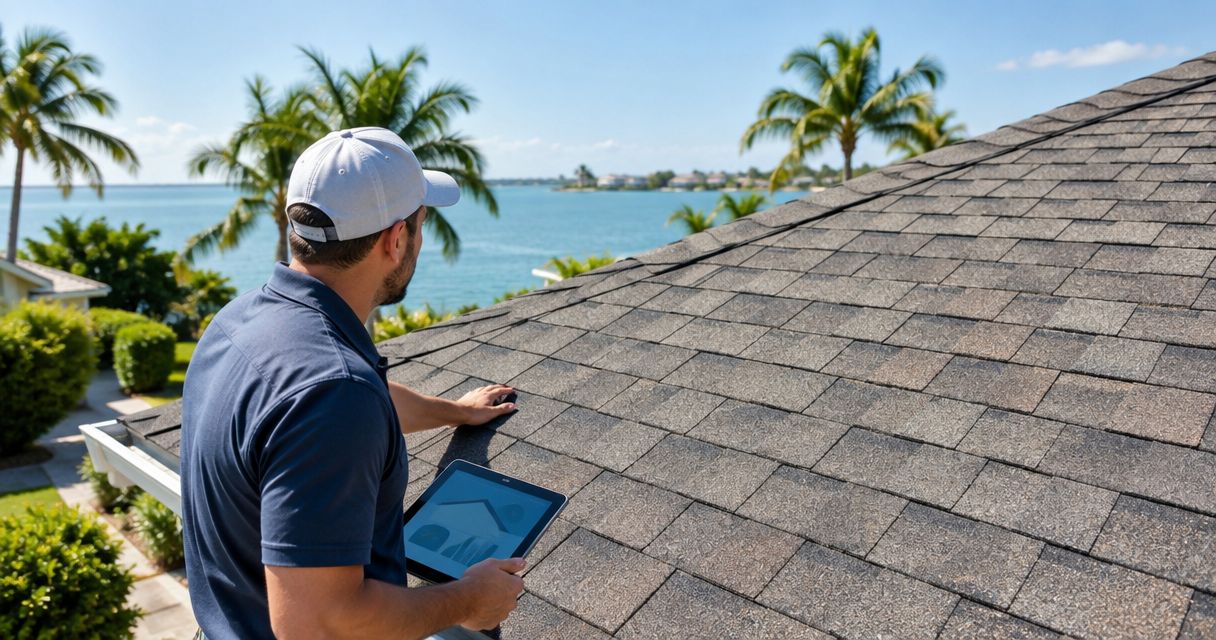
- Assess condition. Have a qualified roofer examine the covering, flashing, penetrations, and accessible supporting areas. Ask which observations indicate isolated damage and which indicate broader deterioration.
- Compare scope. Request an explanation of what a repair would address and what it would leave unchanged. Compare that with the reason for recommending full replacement.
- Keep findings. Save the photographs and written assessment with your roof records. These provide a baseline when conditions change or another contractor offers a different diagnosis.
You do not need to climb onto the roof to collect useful information. Stay off wet or damaged roofing, and do not enter an attic that appears unsafe.
Should you repair an aging shingle roof or replace it?
Repair makes sense when the defect is localized and the surrounding roof remains serviceable. Replacement deserves consideration when deterioration is widespread or a repair cannot address the underlying problem. Age informs that judgment; it does not replace it.
The Florida roof repair versus roof replacement guide explains the decision in more detail. Compare the scope of the problem before comparing proposed work.
| Option | Best for | Main benefit | Main limitation |
|---|---|---|---|
| Localized repair | An isolated defect with sound surrounding roofing | Addresses the identified problem without replacing the whole covering | Does not renew aging materials elsewhere |
| Full replacement | Widespread deterioration or a roof unsuitable for dependable localized repair | Allows the roofing system and exposed decking conditions to be addressed together | Involves broader work and disruption than a localized repair |
| Continued monitoring | A serviceable roof with no unresolved defect | Avoids replacing functioning materials solely because of age | Requires follow-through and reassessment when conditions change |
Monitoring is not the right response to an active leak. Likewise, replacing an entire roof should have a reason beyond an unexplained claim that it is old.
Ask what happens if you choose repair. The answer should distinguish the repair's intended result from the condition of the remaining roof, without promising an unsupported number of extra years.
Does a shingle warranty tell you how long the roof will last?
No. A shingle warranty describes coverage under stated terms; it does not establish the roof's actual service life or guarantee that every leak will be covered.
Read the actual documents for your installed product and installation. Identify who provides coverage, what defects are covered, what exclusions apply, and what records you must retain.
Keep material coverage separate from workmanship coverage. A problem involving installation does not become a covered manufacturing defect simply because the shingles carry a long warranty term.
For a 2026 replacement decision, ask for the proposed warranty documents before approving work. Compare the written coverage with the contractor's explanation rather than relying on a headline term.
Does an older roof automatically need replacement for insurance?
A roof's physical condition and an insurer's documentation requirements are separate questions. Do not interpret a request for roof information as a technical diagnosis that the roof has failed.
Read the actual notice and ask the insurer or agent what evidence is required, who can provide it, and what deadline applies. Then give that request to the person assessing the roof.
Avoid assuming that a contractor can guarantee an insurer's decision. An inspection report documents findings; coverage and underwriting decisions belong to the insurer under the applicable policy and requirements.
What should you ask a roofer before agreeing to replacement?
Ask for the diagnosis before discussing the proposed solution. A clear explanation should connect the recommended work to the roof's condition in language you understand.
- Where is the damage? Request photographs that distinguish individual trouble spots from widespread wear.
- What caused the leak? Ask whether the evidence points to shingles, flashing, a penetration, or another source.
- Why is repair unsuitable? Request the specific reason a localized repair would not address the problem.
- What remains uncertain? Ask which conditions cannot be confirmed until materials are removed.
- What does the scope include? Get the proposed materials, affected areas, and handling of discovered damage in writing.
Roofsmartflorida offers roof repair and replacement services, so the relevant discussion is which scope fits the condition. A repair leaves the rest of the roof in its existing state; replacement addresses a broader area but does not justify skipping a clear diagnosis.
Get an honest roof evaluation
Request a no-pressure free estimate for roof repair or replacement in Southwest Florida.
FAQ
How long does a shingle roof last in Florida in 2026?
Use 20 years as a general asphalt-shingle planning benchmark, not a guaranteed Florida lifespan. InterNACHI's general chart lists that estimate, but installation quality, storm damage, and current condition determine what your roof needs in 2026.
Can an architectural shingle roof last 30 years in Florida?
30 years is InterNACHI's general architectural-shingle estimate, not a promise for an individual Florida roof. Have the installed roof assessed rather than assuming the general estimate establishes its remaining life.
Should I replace my roof just because it is 20 years old?
20 years of age alone does not prove that a roof needs replacement. Use documented condition, leak history, and repair suitability to decide the scope of work.
Does a roof leak mean I need a whole new roof?
A roof leak does not automatically require full replacement. A localized flashing or shingle defect can be repairable when the surrounding roof remains serviceable.
Will repairing my roof reset its lifespan?
A repair does not reset the age or condition of the remaining roof. Ask what the repair addresses and which existing materials remain unchanged.
Can I judge remaining roof life from the ground?
Ground-level observations help identify concerns but cannot establish remaining roof life. Visible missing shingles or stains justify further assessment, while an apparently intact surface does not confirm hidden conditions.
Who can help me decide between shingle roof repair and replacement in Southwest Florida?
Roofsmartflorida provides shingle roofing, repair, and replacement services across Southwest Florida. Request an explanation of the observed defects and why the recommended scope fits them.
One last thing
A roof can leak at a detail while the surrounding shingles remain serviceable. Ask the roofer to show you the failure point before accepting either a small patch or a full replacement.
For your 2026 roof file, keep the installation records, dated photographs, and written findings together. Those documents give the next assessment something better than memory to work from.