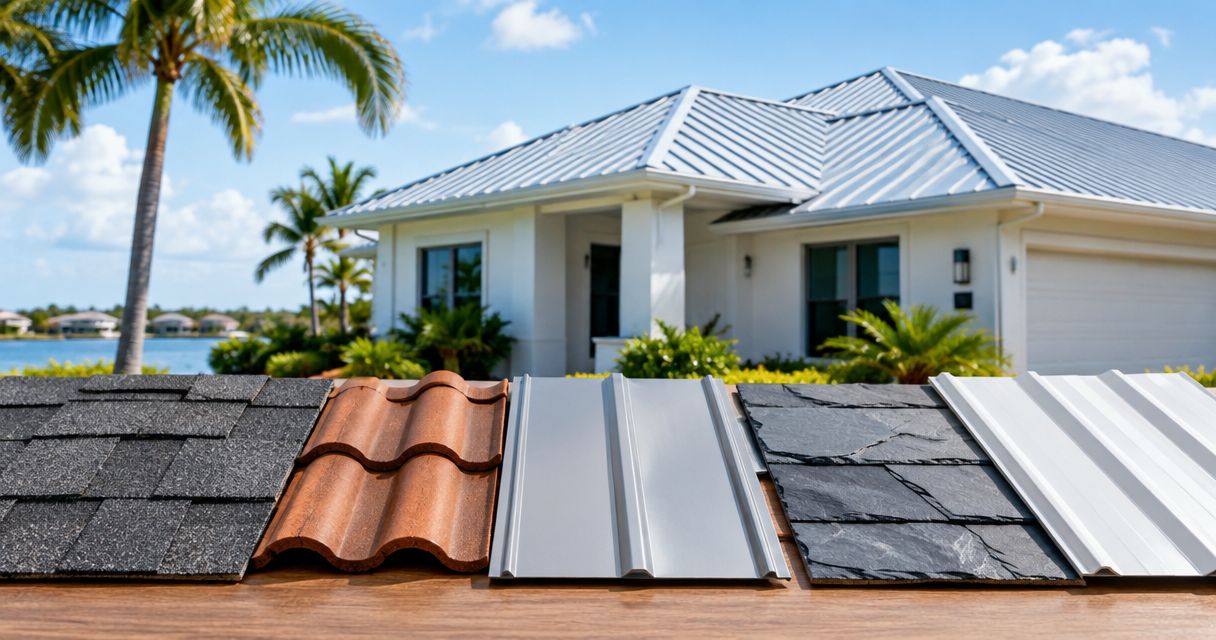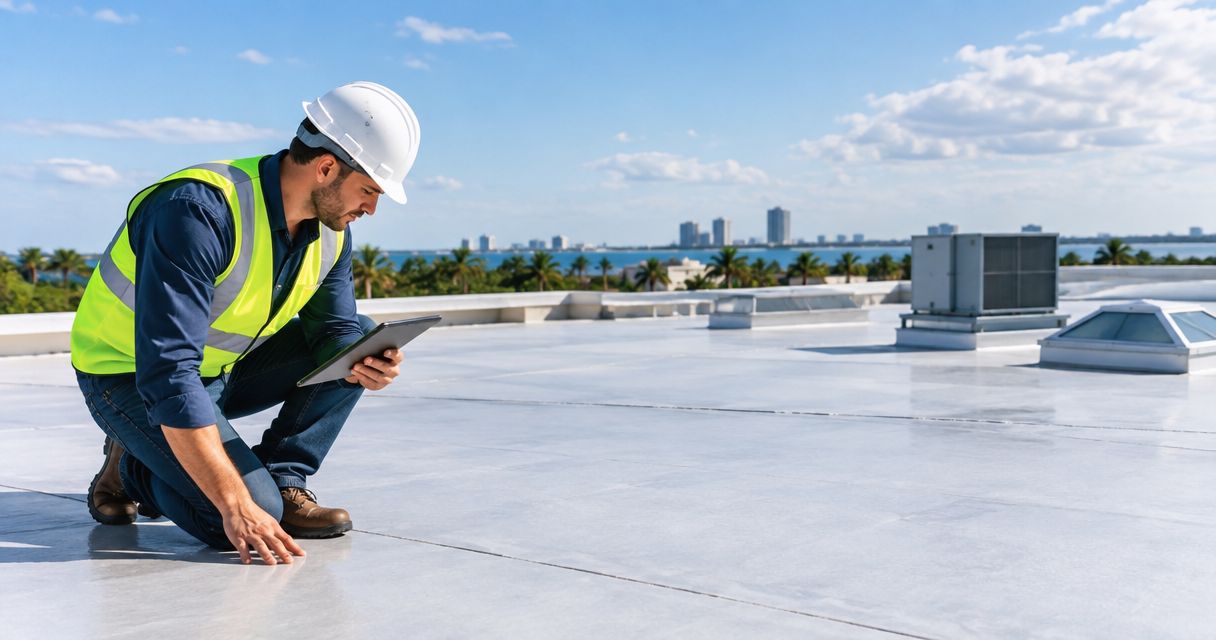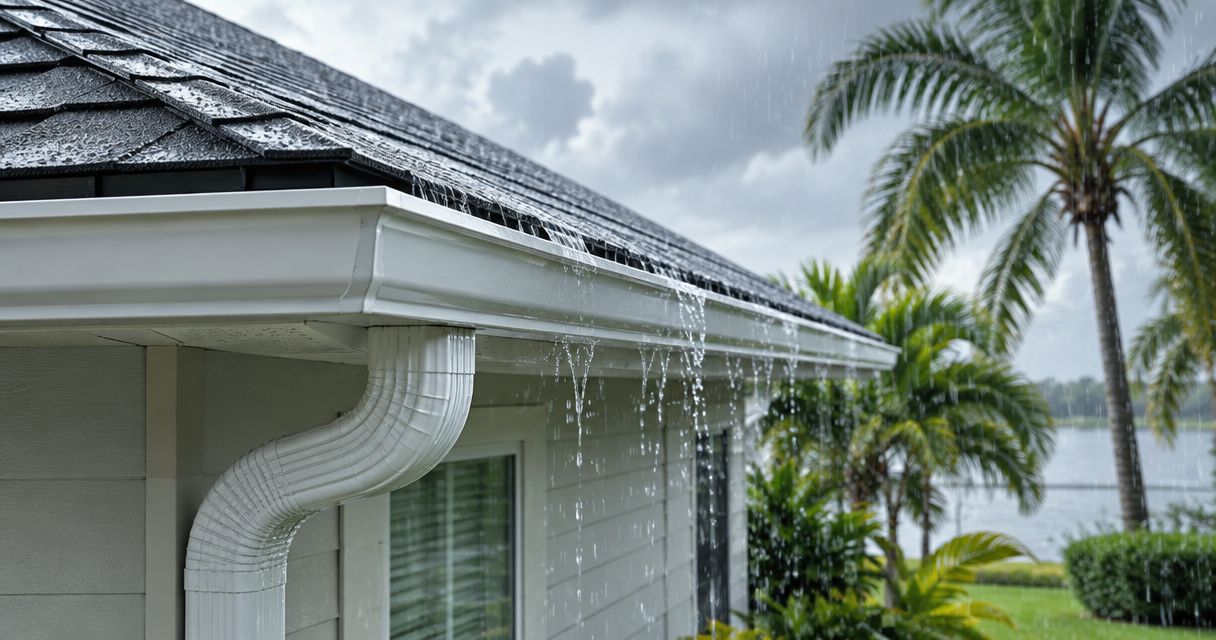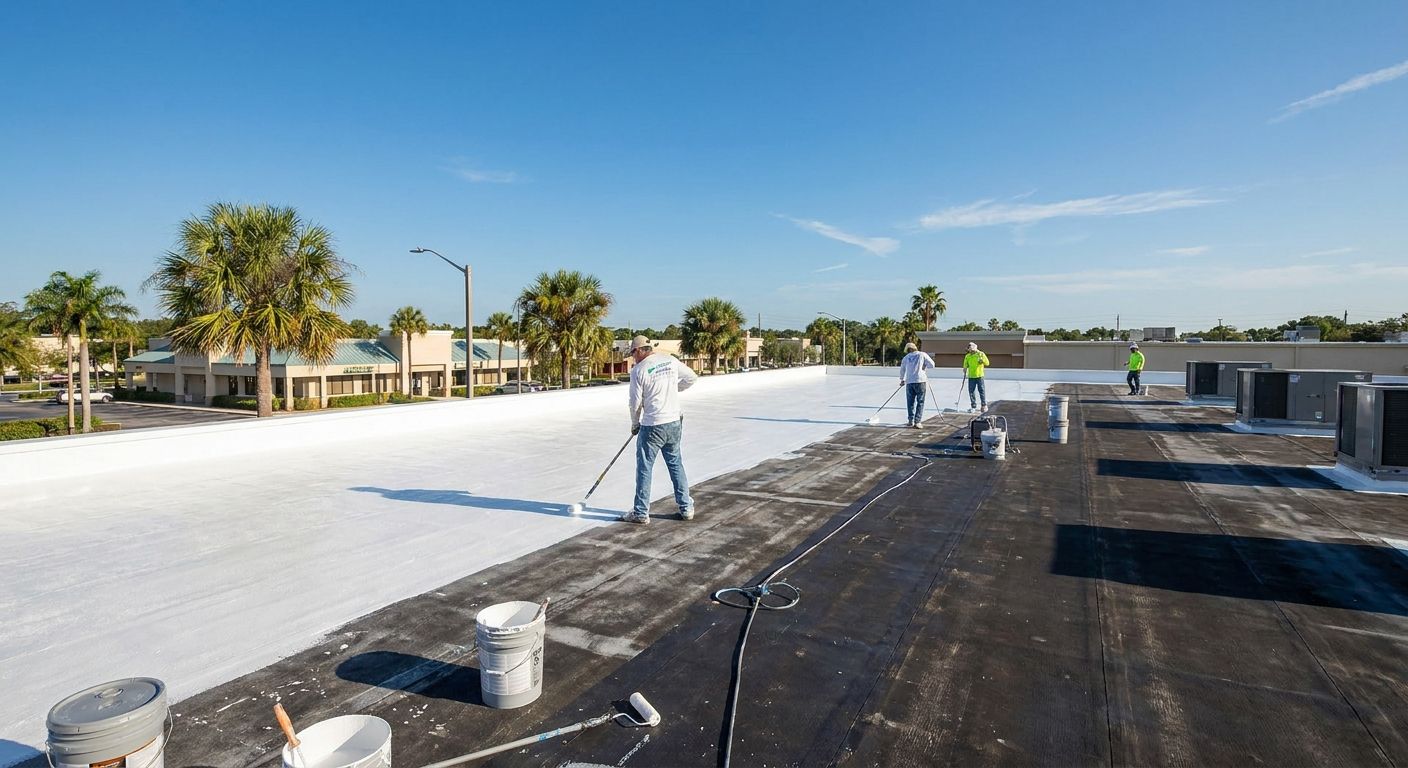
A commercial flat roof in Southwest Florida takes a beating from UV exposure, standing water, and 140+ mph wind gusts in the same calendar year — a coating system extends that roof's life for a fraction of replacement cost, if you pick the right one. This guide breaks down which roof coatings for commercial flat roofs in Florida actually hold up, and which ones just delay a bigger bill.
- Silicone coatings win for ponding-prone flat roofs in Cape Coral and Naples — verdict: Buy.
- Acrylic coatings cost less but fail under standing water within 2-3 years — verdict: Consider only on sloped sections.
- Roof coatings commercial flat roofs Florida buyers need should carry a 10+ year manufacturer warranty and 20+ dry mil thickness.
- Aluminum coatings are the cheapest option on paper but the shortest-lived in 2026 — verdict: Skip for most buildings.
- A coating only makes sense on a roof with less than 20% deteriorated membrane — anything worse needs replacement, not paint.
Why this matters
Southwest Florida sun degrades unprotected TPO, EPDM, and modified bitumen membranes faster than almost anywhere else in the country — surface temperatures on a black flat roof in Fort Myers routinely top 160°F in July. That heat cycle, combined with afternoon downpours during hurricane season, is what turns small membrane cracks into active leaks over a single summer.
A coating system isn't cosmetic. Done right, it seals fastener penetrations, reflects solar heat, and buys a building owner 10 to 15 years before a full commercial flat roof repair turns into a tear-off and replacement job. Done wrong — applied over wet insulation or the wrong membrane chemistry — it traps moisture and accelerates the exact failure it was supposed to prevent.
Who this is for
This guide is built for property managers and business owners running warehouses, strip retail, HOA clubhouses, or office buildings across Cape Coral, Fort Myers, and Naples with a flat or low-slope roof that's 8 to 20 years old. If your roof still passes a moisture scan and isn't showing widespread membrane failure, a coating is the smart move before you spend six figures on replacement.
What to look for in roof coatings for commercial flat roofs
Solar reflectance and heat performance
Solar reflectance index (SRI) determines how much surface heat the coating rejects instead of absorbing into the membrane below. A high-SRI silicone or acrylic coating can drop deck surface temperatures by 50°F or more compared to an unprotected dark membrane, which matters directly for HVAC load and membrane fatigue in a Florida summer.
Ponding water tolerance
Flat roofs in this climate hold water after every named storm, and not every coating chemistry survives that. Silicone coatings are formulated specifically for ponding resistance; acrylic coatings soften and lose adhesion under standing water within a season or two. This single spec eliminates half the market for most SW Florida buildings.
Wind uplift and code compliance
Florida Building Code wind zones matter for coatings the same way they matter for shingles or metal panels — the coating and any reinforcing fabric need documented wind uplift ratings for your zone, not a generic national spec. A contractor who can't produce that documentation is guessing.
Warranty length and manufacturer backing
A legitimate commercial coating system carries a manufacturer-backed warranty of 10 to 20 years, not a contractor's verbal promise. That warranty is tied to specific mil thickness and application conditions — skip either and the paper isn't worth anything when a leak shows up in year four.
Application thickness and recoat cycle
Mil thickness (dry film) is the difference between a coating that performs and one that's a glorified paint job. Most commercial silicone systems need 20 to 30 dry mils applied in two coats; anything thinner shortens the effective life dramatically, regardless of what the product label claims.
Top picks by coating type
Silicone coatings — the safe pick. Silicone systems hold up under standing water and UV exposure better than any other chemistry sold for flat roofs in 2026, with typical dry film thickness of 20-30 mils and manufacturer warranties running 15 to 20 years. This is the default choice for warehouses and industrial buildings with wide, low-slope roof fields prone to ponding — see how it applies to larger structures on the warehouse and industrial roofing page. Verdict: Buy.
Acrylic elastomeric coatings — the budget pick. Acrylics cost less upfront and reflect UV well on sloped or well-drained sections, but they break down under sustained ponding within 2-3 years. Fine for a secondary building with good drainage; wrong choice for a roof that holds water after every rain event. Verdict: Consider, drainage-dependent.
Polyurethane hybrid coatings — the wind-zone pick. Urethane-based systems offer higher tensile strength and better resistance to foot traffic and hail than silicone, which matters on roofs with regular HVAC service access. They cost more per square foot but survive mechanical wear that silicone doesn't. Verdict: Buy for high-traffic roofs.
Aluminum coatings — the old-school pick. Aluminum roof coatings are the cheapest option on the shelf and the one most often oversold as a full "roof restoration." They typically need recoating every 3 to 5 years and offer no real ponding resistance, which makes them a short-term patch dressed up as a long-term fix. Verdict: Skip for most commercial buildings.
SPF with elastomeric topcoat — the insulation play. Spray polyurethane foam adds insulation value on top of a worn substrate, then gets a silicone or acrylic topcoat for UV and water protection. It's the right call when energy costs matter as much as waterproofing, and it's a common spec on the roofs covered under flat roof repair in Naples. Verdict: Buy for buildings prioritizing insulation.
What to avoid
- A single-coat aluminum "restoration" quote. If the entire scope is one coat of aluminum paint with no fabric reinforcement at seams, it's a stopgap, not a system — expect to redo it inside 3 years.
- Coating a roof that hasn't had a moisture survey. Trapping wet insulation under a new coating hides a leak instead of fixing it, and the damage compounds underneath where you can't see it.
- No wind uplift documentation for your specific zone. A coating warranty that doesn't reference Florida Building Code wind requirements for your county isn't built for this market.
Get a Flat Roof Coating Evaluation
An honest inspection before you spend on a coating or a full replacement.
Verdict comparison
| Coating type | Ponding resistance | Typical warranty | Best for | Verdict |
|---|---|---|---|---|
| Silicone | High | 15-20 years | Wide flat roofs, warehouses | Buy |
| Polyurethane hybrid | Moderate-high | 10-15 years | High foot-traffic roofs | Buy |
| SPF + topcoat | High (with topcoat) | 10-20 years | Insulation + waterproofing | Buy |
| Acrylic | Low | 5-10 years | Sloped, well-drained sections | Consider |
| Aluminum | Very low | 1-3 years | Short-term patch only | Skip |
FAQ
What is the best roof coating for a commercial flat roof in Florida?
Silicone coatings are the best fit for most SW Florida commercial flat roofs in 2026 because they resist ponding water and UV degradation better than acrylic or aluminum systems. Warehouses and buildings with wide, low-slope roof fields benefit the most.
How long does a commercial roof coating last in Florida?
A properly applied silicone or polyurethane coating system lasts 10 to 20 years depending on mil thickness and manufacturer warranty terms. Aluminum coatings typically need recoating every 3 to 5 years, making them a shorter-term option.
Is roof coating cheaper than roof replacement?
Yes, a coating system generally costs a fraction of a full tear-off and replacement, provided the underlying membrane hasn't failed beyond about 20% deterioration. Once damage exceeds that threshold, replacement is the more cost-effective long-term move.
Can you coat a flat roof that holds standing water?
Only silicone-based or SPF-with-topcoat systems are formulated to handle ponding water long-term. Acrylic and aluminum coatings will soften or fail under standing water within a season or two.
Does a roof coating meet Florida wind code requirements?
A coating itself doesn't replace wind mitigation, but reinforced systems with fabric at seams can carry documented wind uplift ratings tied to your Florida Building Code zone. Ask for that documentation before signing a contract.
How thick should a commercial roof coating be applied?
Most commercial silicone systems need 20 to 30 dry mils applied across two coats to hit their rated warranty life. Thinner applications shorten performance regardless of the product used.
Should I coat or replace an older commercial flat roof?
If the membrane still passes a moisture survey and damage is limited to isolated areas, coating extends the roof's life at a lower cost. Widespread membrane failure or trapped moisture means replacement is the only real fix.
One last thing
The detail most building owners skip: a moisture survey before quoting any coating job. Skipping it is how a $15,000 coating turns into a full tear-off two years later, because the coating sealed wet insulation underneath instead of fixing it.