Salt air corrodes gutter hardware faster than any other climate condition in Florida, and picking the wrong material means replacing your gutters in half the time you expected. Aluminum seamless gutters are the best overall choice for coastal Southwest Florida homes, copper wins for waterfront and canal-front properties where budget isn't the deciding factor, galvalume steel is the pick for homes that take direct storm exposure year after year, and vinyl is the budget option — but it's the one material Roof Smart of SW Florida flags as a skip for true salt-air exposure.
- Aluminum seamless gutters are the best gutter material for coastal Florida homes overall — corrosion-resistant and low-maintenance.
- Copper gutters cost more upfront but outlast every other option on waterfront and canal-front lots.
- Galvalume steel holds up best under repeated 2026 storm-season wind and debris loads.
- Vinyl gutters crack and warp faster in direct salt spray — treat this as a Skip for true coastal exposure.
Why this matters
Salt air off the Gulf doesn't just tarnish metal — it accelerates galvanic corrosion at every seam, fastener, and hanger. A gutter material rated for a landlocked Georgia home won't perform the same three miles from Cape Coral's canals or a block off the beach in Naples.
Homeowners across Cape Coral, Fort Myers, and Naples typically make this decision once every 20 to 25 years, so getting it wrong is expensive. The right call also depends on how close the home sits to open water, since salt spray intensity drops off with distance from the coastline.
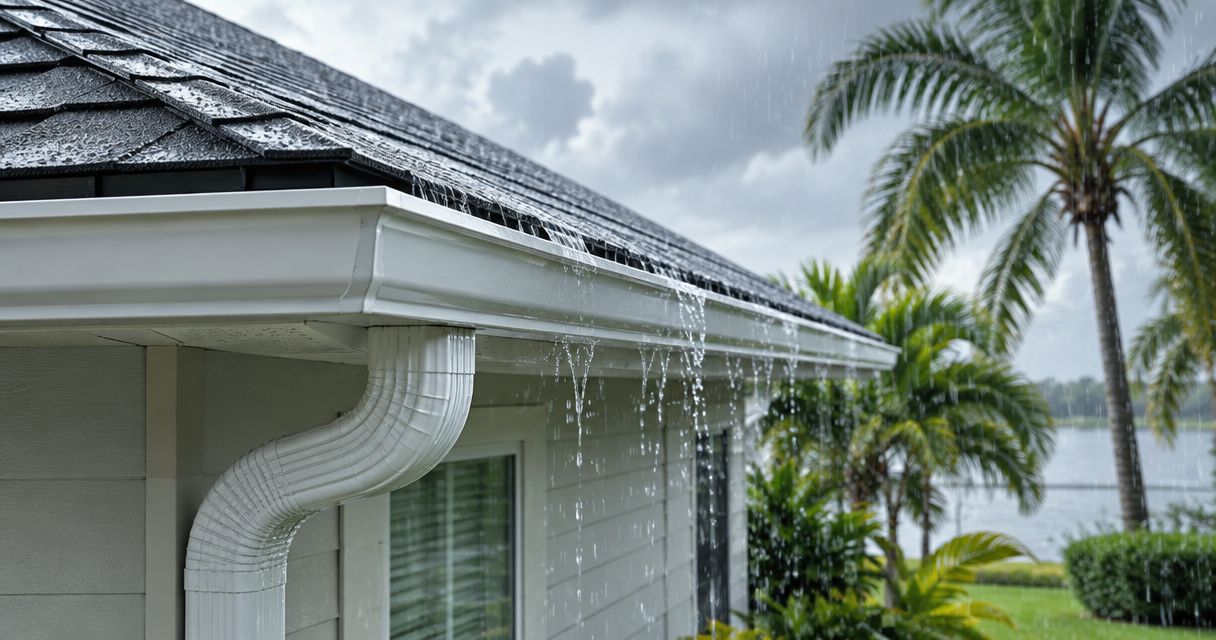
Gutters also do real storm-season work in 2026 conditions: directing heavy rain away from foundations, soffits, and pool cages during the wind-driven downpours that define Southwest Florida's wet season. A material that clogs, sags, or corrodes mid-season leaves fascia and foundations exposed right when they need protection most.
What makes the best gutter material for coastal Florida homes
- Salt-spray corrosion resistance — how the material holds up against airborne salt from the Gulf and inland canals
- Wind and debris durability — resistance to denting and detachment during storm-season gusts
- Maintenance frequency — how often the material needs cleaning, resealing, or repainting
- Seam design — seamless construction cuts leak points versus sectional gutters
- Compatibility with local rooflines — fit with tile, metal, and shingle roofs common across SW Florida
- Expected service life in coastal air — years before replacement becomes necessary
Gutter materials at a glance
| Material | Best for | Standout feature | Key limitation |
|---|---|---|---|
| Aluminum seamless | Coastal homes overall | Seamless run resists leaks and salt corrosion | Can dent under heavy hail or debris impact |
| Copper | Waterfront and canal-front homes | Decades of service with minimal upkeep | Highest material and labor cost |
| Galvalume steel | Storm-heavy exposure | Resists denting under wind-driven debris | Needs coating inspection to avoid rust at cut edges |
| Vinyl | Tight budgets, inland only | Lowest upfront cost | Cracks and warps fast in direct salt spray and UV |
1. Aluminum seamless gutters: best gutter material for coastal Florida homes overall
Aluminum seamless gutters are formed on-site in one continuous run, which eliminates the seams where salt air typically starts corrosion on sectional systems. The material naturally forms a protective oxide layer, so it doesn't rust the way steel does when the coating gets scratched. Roof Smart of SW Florida installs these as the default recommendation for homes in Cape Coral, Fort Myers, and Naples that sit within a few miles of the coast but aren't directly on the water.
Aluminum seamless gutters pros:
- Resists salt-air corrosion better than any painted steel option
- Seamless construction means fewer leak points along the run
- Lighter weight than steel or copper, which simplifies fascia mounting
- Available in colors that match tile, metal, and shingle roof trim
Aluminum seamless gutters cons:
- Dents more easily than steel under falling palm fronds or hail
- Thinner gauge options can flex and sag over long spans without enough hangers
Best for: homeowners who want a coastal-grade material without copper's price tag. Full details on the install process are covered in installing seamless gutters on a Florida home.
Verdict: Buy.
2. Copper gutters: best gutter material for waterfront and canal-front homes
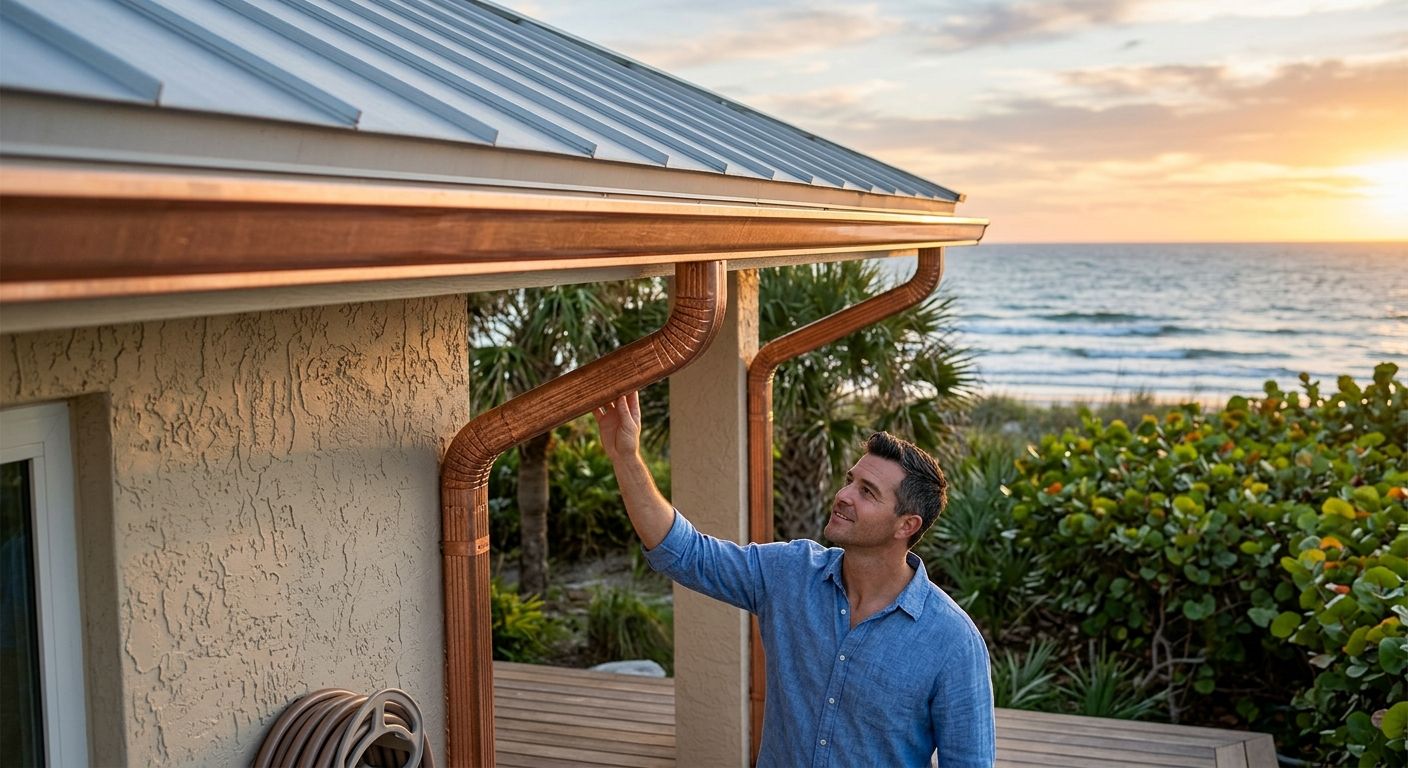
Copper is the material to specify when a home sits directly on a canal, bay, or open water and takes constant salt spray. It doesn't rust, and the patina that forms over time is a protective layer, not a sign of decay — copper gutters routinely outlast the roofs they're mounted on. This is the pick for homeowners who plan to stay in the home long-term and want to never revisit the gutter decision.
Copper gutters pros:
- Outperforms every other material in direct salt-spray exposure
- Develops a stable patina instead of degrading over time
- Extremely low maintenance once installed
Copper gutters cons:
- Highest material and labor cost of any gutter option
- Patina changes the gutter's appearance over the first few years, which some owners don't expect
- Fewer installers in Southwest Florida are experienced with copper soldering and seaming
Best for: waterfront and canal-front properties where corrosion resistance matters more than upfront cost. See how installers handle these conditions on gutter installation for waterfront and canal-front homes.
Verdict: Buy — if the home is on the water and budget allows.
3. Galvalume steel gutters: best gutter material for storm-heavy exposure
Galvalume steel — steel coated with an aluminum-zinc alloy — holds up better than plain aluminum against denting from wind-driven debris, which matters on properties that take direct hits during Southwest Florida's storm season. The coating resists rust far longer than older galvanized steel did, but any cut edge or scratch that exposes bare steel becomes a corrosion starting point in salt air.
Galvalume steel gutters pros:
- More dent-resistant than aluminum under storm debris impact
- Handles heavier rainfall volume without sagging
- Coating resists rust significantly longer than traditional galvanized steel
Galvalume steel gutters cons:
- Cut edges and fastener holes need sealing to prevent rust starting points
- Heavier than aluminum, which means more robust fascia attachment
Best for: homes with heavy tree cover or open exposure that see repeated storm damage. Pair steel gutters with best gutter guards for Florida storms to cut down on debris buildup between storms.
Verdict: Buy for storm-prone lots; Hold if the home is set back from open exposure, where aluminum does the job for less maintenance hassle.
4. Vinyl gutters: budget option, but skip for true coastal exposure
Vinyl gutters cost less than any metal option and go up fast, which makes them tempting for a quick fix. The problem in Southwest Florida is UV exposure combined with salt spray — vinyl becomes brittle and prone to cracking years before aluminum shows comparable wear, and it doesn't hold paint or color well after sun exposure.
Vinyl gutters pros:
- Lowest upfront material cost
- No corrosion risk since there's no metal to rust
- Simple DIY-friendly installation for inland, low-exposure homes
Vinyl gutters cons:
- Cracks and warps faster than metal under direct sun and salt spray
- Weaker at joints, more prone to leaks over time
- Shorter service life overall in coastal Florida conditions
Best for: inland properties with minimal salt exposure and a tight budget — not for canal-front, waterfront, or beachside homes.
Verdict: Skip for coastal exposure; Hold as a temporary fix inland only.
How we ranked these gutter materials
The ranking above weighs salt-spray resistance and expected service life heaviest, since replacement cost and disruption outweigh a small difference in maintenance frequency. Wind and debris durability moved galvalume steel ahead of aluminum for storm-heavy lots, while cost pushed copper down to a waterfront-specific recommendation rather than a universal pick. Vinyl's shorter lifespan under salt spray is what keeps it out of the top three for true coastal properties.
“The material that saves you money at install is rarely the one that saves you money over 20 years of salt air.”
Which gutter material should you choose?
For most Cape Coral, Fort Myers, and Naples homes that sit near but not directly on the water, aluminum seamless gutters are the default answer — the balance of cost, corrosion resistance, and low maintenance fits the majority of coastal Southwest Florida properties in 2026. Move to copper only if the home is waterfront or canal-front and long-term cost isn't the deciding factor. Choose galvalume steel if the property has taken repeated storm damage in past seasons. Treat vinyl as a short-term, inland-only option, not a coastal solution.
Gutters also need regular upkeep regardless of material — see cleaning seamless gutters in Florida for a maintenance schedule that fits the local rainy season. Homes with a pool cage or lanai runoff issue should also check gutter installation for pool cage and lanai runoff control, since standard gutter placement often misses that runoff entirely.
Get a free gutter evaluation
An honest, no-pressure assessment of what your home actually needs.
FAQ
What's the best gutter material for coastal Florida homes?
Aluminum seamless gutters are the best overall choice for most coastal Southwest Florida homes in 2026, balancing salt-air corrosion resistance with lower cost than copper. Waterfront and canal-front homes with a bigger budget do better with copper.
Is copper better than aluminum for gutters near the water?
Copper resists salt-spray corrosion longer than aluminum and can last 50 years or more, but it costs significantly more to install. For homes not directly on the water, aluminum seamless gutters deliver most of the corrosion resistance at a fraction of the price.
Do vinyl gutters work in Florida?
Vinyl gutters work fine on inland homes with minimal salt exposure, but they crack and warp faster under direct salt spray and constant UV. For any home within a few miles of the coast, vinyl is a Skip.
How long do aluminum gutters last in salt air?
Aluminum seamless gutters typically last 20 to 25 years in coastal Florida conditions, longer than vinyl and comparable to well-maintained galvalume steel.
Are seamless gutters worth it in Florida?
Yes — seamless gutters eliminate the joint seams where salt air and storm water typically start corrosion and leaks on sectional systems. That makes them a better long-term fit for Southwest Florida's climate than traditional sectional gutters.
What gutter material handles hurricane season best?
Galvalume steel resists denting from wind-driven debris better than aluminum, making it the stronger choice for properties with heavy tree cover or repeated storm exposure during Florida's storm season.
Do gutter guards matter as much as the gutter material?
Gutter guards reduce debris buildup between cleanings but don't replace the need for a corrosion-resistant base material. Pairing steel or aluminum gutters with guards cuts maintenance time significantly during storm season.
One last thing
The material decision matters less than the fastener choice most homeowners skip — stainless steel hangers and screws hold up in salt air far longer than the standard zinc-coated hardware many installers default to, and a top-tier gutter run mounted with the wrong fasteners fails at the attachment points years before the gutter material itself gives out.