Hurricane season in Southwest Florida runs six months a year, and the material on your roof decides whether a named storm costs you a tarp or a full replacement. This guide ranks the roofing systems that actually hold up under Cape Coral, Fort Myers, and Naples wind loads, with the verdict on each one for 2026.
- Standing seam metal roofing wins for wind performance in 2026 SW Florida installs — Buy.
- Concrete and clay tile holds a 150 mph rating when properly fastened but needs a structural check on older homes.
- Class 4 impact shingles are the budget pick and often qualify for an insurance credit.
- TPO and modified bitumen membranes are the right call for flat commercial roofs, not the right call to skip inspection on.
- Old three-tab shingles are not rated for hurricane conditions and should be replaced, not repaired, before the next storm.
Why this matters
Florida Building Code sets minimum wind-uplift and impact standards for every new roof installed in a wind-borne debris region, which covers all of Lee, Collier, and Charlotte counties. A roof rated for 110 mph residential wind loads from the 1990s does not meet the 150-160 mph design standard SW Florida homes are held to today.
Insurance carriers price this in. A metal roofing system or a properly fastened tile roof can qualify a homeowner for a lower premium after a wind mitigation inspection, while an aging shingle roof with no impact rating usually pushes the premium the other way. The material you choose is a wind decision and an insurance decision at the same time.
How this list was ranked
Each roofing material below is ranked on four factors: documented wind-uplift rating under Florida Product Approval or Miami-Dade NOA testing, impact resistance under UL 2218, real-world service life in a salt-air coastal climate, and installed cost relative to that lifespan. Materials that only perform well in lab conditions but fail in the field — thin metal panels with poor fastening patterns, for example — get marked down even when the spec sheet looks good. The ranking reflects how these systems actually behave through a Southwest Florida hurricane season, not just what the manufacturer claims.
The ranked list
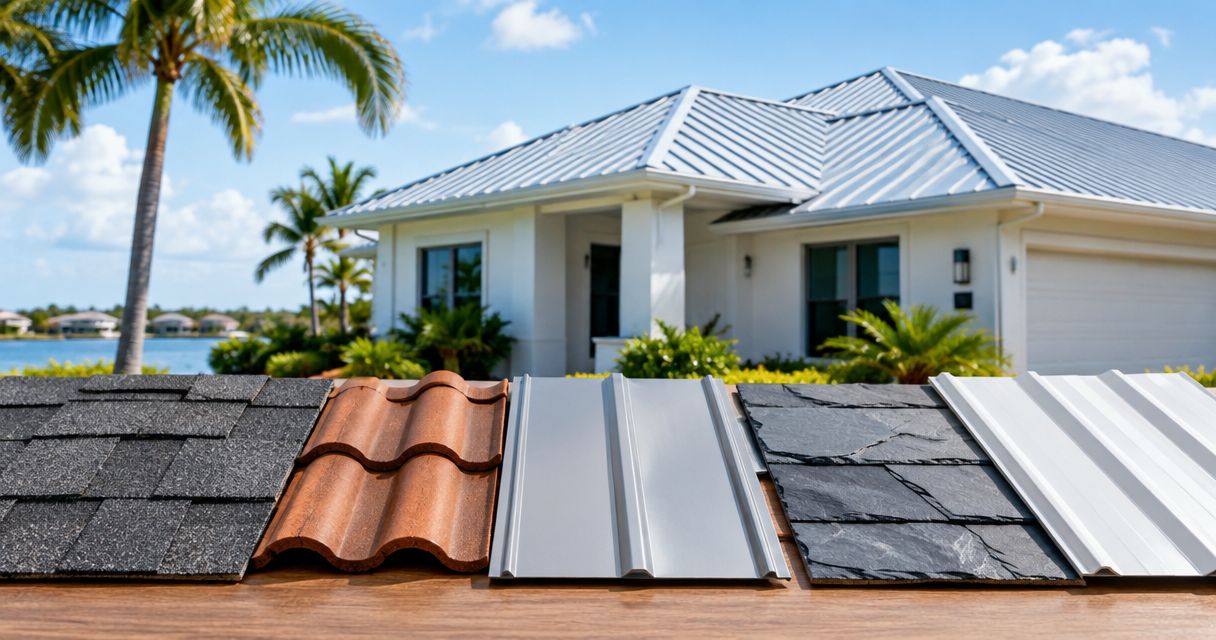
1. Standing seam metal roofing — the wind-rating champion
Mechanically seamed metal panels interlock instead of relying on exposed fasteners, which is why they consistently test to the highest wind-uplift ratings of any residential roofing material. Panels installed with the correct clip spacing hold up under sustained gusts that pull lesser systems apart at the seams.
Metal roofing also carries a Class A fire rating and typically runs 40 to 50 years before replacement, longer than any other option on this list. The upfront cost is higher than shingles, but the lifespan and the wind performance make it the standard recommendation for coastal SW Florida homes going into the 2026 storm season. Metal roofing in Naples installs use panel systems matched to local wind exposure categories. Verdict: Buy.
2. Concrete and clay tile — the classic look with real wind numbers behind it
Tile is the dominant roofing material on Mediterranean-style homes across Naples and Fort Myers, and it earns that popularity with a legitimate wind rating when the fastening method is right. Foam-adhesive-set or mechanically fastened tile systems test to 150 mph under Florida Product Approval, competitive with metal.
The catch is weight. Tile roofs run considerably heavier per square than shingle or metal, which means older homes need a structural load check before installation, not after. Tile roofing for Mediterranean-style Florida homes covers the fastening and underlayment specs that make the difference between a 150 mph system and a roof that loses tiles in a Category 1. Verdict: Buy, with a structural check first.
3. Class 4 impact-rated architectural shingles — the budget-friendly upgrade
Standard architectural shingles are not built for hurricane conditions, but Class 4 impact-rated shingles are a different product entirely. They pass the UL 2218 test — a 2-inch steel ball dropped from height without cracking the shingle — and several carriers offer a premium discount specifically for that rating.
They cost less to install than metal or tile and close most of the performance gap for homeowners working with a tighter budget. Shingle roof installation in Fort Myers uses Class 4-rated products as the standard spec, not an upgrade option. Verdict: Consider — strong value if metal or tile is out of budget.
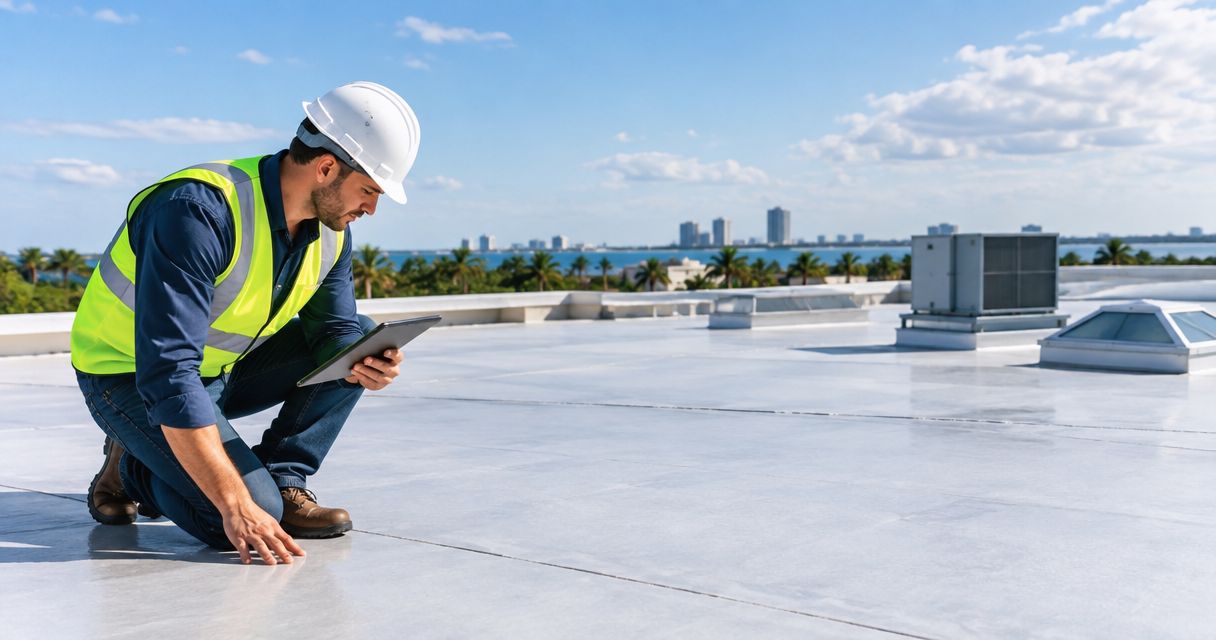
4. TPO and modified bitumen membranes — the commercial and flat-roof workhorse
Single-ply membrane systems are the right material for flat and low-slope roofs, which describes most commercial buildings and a meaningful share of SW Florida homes with attached flat sections. Properly welded seams and mechanically fastened perimeter details are what determine whether a membrane roof survives a storm or peels back at the edge.
Service life on a well-installed membrane system commonly runs 15 to 20 years, and repair after wind damage is usually a seam or flashing fix rather than a full tear-off. Flat roof repair for commercial buildings in SW Florida focuses heavily on perimeter fastening because that's where storm damage starts. Verdict: Buy for flat and low-slope applications.
5. Old three-tab shingles — the one to retire before the next storm
Three-tab shingles were never engineered for the wind loads Florida Building Code now requires, and most installations predate any impact-resistance testing standard. They're still common on older Cape Coral and Fort Myers homes that haven't been re-roofed since the early 2000s.
There's no upgrade path here — a three-tab roof either gets replaced with a rated system or it stays exposed going into 2026 hurricane season. Verdict: Skip. Replace, don't patch.
Get your roof storm-ready for 2026
A free evaluation tells you exactly where your current roof stands.
Comparison table
| Material | Wind rating | Typical lifespan | Impact rating | Verdict |
|---|---|---|---|---|
| Standing seam metal | Up to 160+ mph | 40-50 years | Class 4 available | Buy |
| Concrete/clay tile | Up to 150 mph | 40-50 years | Varies by product | Buy (check structure) |
| Class 4 shingles | 130-150 mph, product-dependent | 20-30 years | Class 4 (UL 2218) | Consider |
| TPO/modified bitumen | Rated per FBC low-slope standard | 15-20 years | N/A (flat application) | Buy for flat roofs |
| Three-tab shingles | Not rated for hurricane conditions | 15-20 years, degraded | None | Skip |
Where to buy
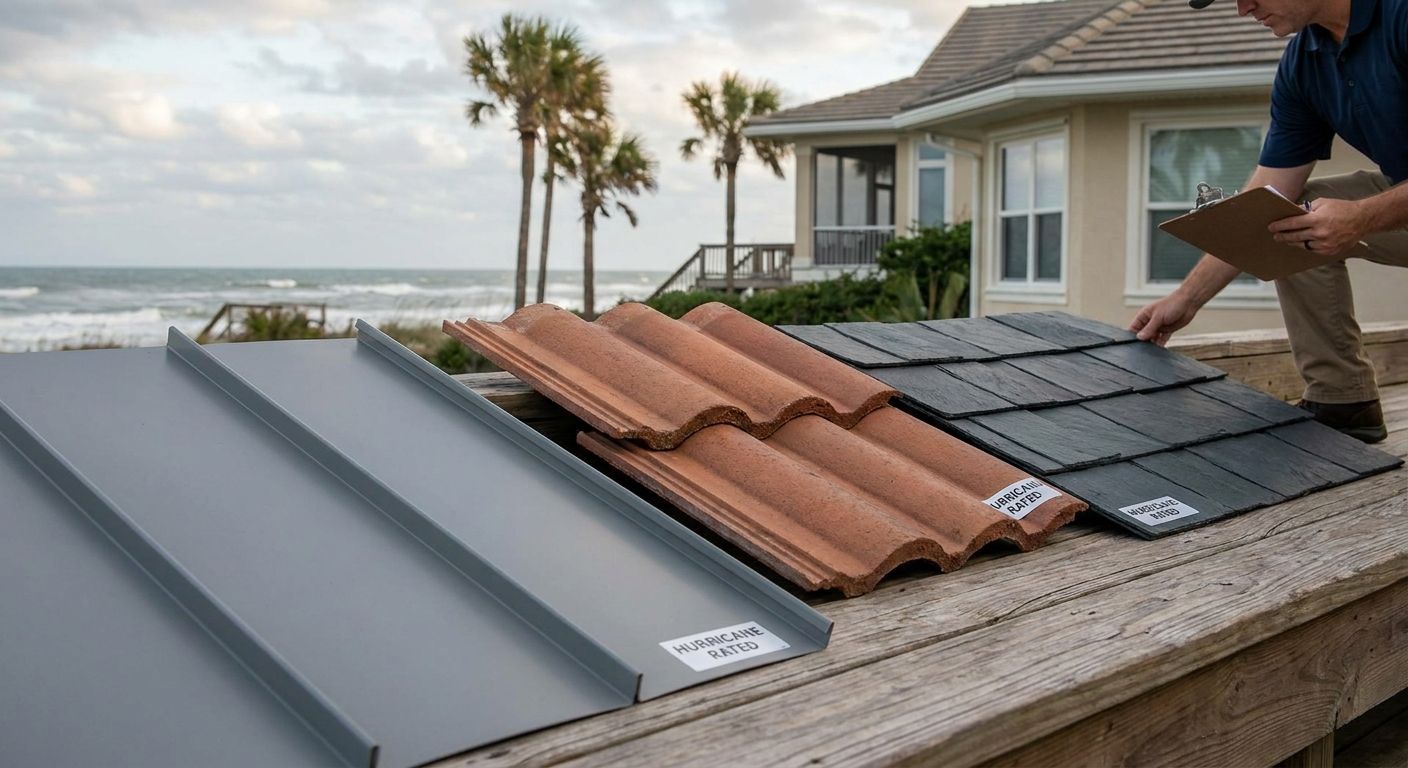
- Confirm the product approval number before signing anything. Every legitimate hurricane-rated material carries a Florida Product Approval or Miami-Dade NOA number — ask for it and check that it matches the exact product being quoted, not a similar one from the same manufacturer line.
- Make sure the installer pulls a permit. Florida Building Code fastening schedules for wind-borne debris regions are inspected at the permit stage; a roof installed without a permit has no record proving it meets the 150-160 mph standard.
- Match the material to the structure, not just the budget. A 150 mph tile system means nothing if the roof deck underneath can't carry the weight — get the structural conversation settled before picking a finish material.
Roof Smart of SW Florida quotes roofing systems by wind zone and structure type across Cape Coral, Fort Myers, and Naples, so the material recommendation matches the actual house, not a generic spec sheet.
FAQ
What is the best roofing material for hurricanes in Florida?
Standing seam metal roofing has the strongest wind-uplift performance of any residential roofing material available in 2026, commonly rated well above 150 mph when installed correctly. Concrete tile is a close second when fastened to Florida Product Approval standards.
Is metal roofing better than tile for hurricanes?
Metal roofing generally tests to a higher wind-uplift rating than tile, but properly fastened tile still reaches 150 mph and matches the look of Mediterranean-style Florida homes. The choice often comes down to structural load capacity and aesthetics rather than wind performance alone.
How much does hurricane-rated roofing cost in 2026?
Cost varies by material, roof size, and structural work needed, with metal and tile priced higher upfront than shingles. A free on-site estimate is the only way to get an accurate number for a specific SW Florida home.
Do impact-rated shingles qualify for an insurance discount?
Many Florida insurance carriers offer a premium credit for Class 4 impact-rated shingles verified by a wind mitigation inspection. The discount amount depends on the carrier and the rest of the wind mitigation report, not the shingle alone.
What roofing material is best for a flat commercial roof in SW Florida?
TPO and modified bitumen membrane systems are the standard choice for flat and low-slope commercial roofs in 2026, with properly welded seams and perimeter fastening driving most of the wind performance. Service life on a well-installed membrane runs 15 to 20 years.
Can an old roof pass a wind mitigation inspection?
An older roof can pass if it still meets the fastening and material standards documented at the time of inspection, but three-tab shingles and unrated older materials typically score poorly. A wind mitigation inspection reports what's actually on the roof, it doesn't upgrade it.
How long does hurricane-rated roofing last in Florida?
Standing seam metal and concrete tile both commonly run 40 to 50 years in a SW Florida coastal climate, while Class 4 shingles run 20 to 30 years and flat membrane systems run 15 to 20 years. Salt air and UV exposure shorten these ranges if maintenance is skipped.
Is tile roofing too heavy for older Florida homes?
Some older homes were framed for lighter roofing materials and need a structural check before a tile installation. This is a routine part of the estimate process, not a reason to rule tile out automatically.
One last thing
The wind rating on a spec sheet only holds up if the fastening pattern matches it exactly — the same tile product installed with the wrong nail spacing can drop from a 150 mph rating to something far weaker, and there's no visual way to tell the difference from the ground. On older homes carrying the original roof structure, that's exactly the kind of detail worth getting checked before a heavier tile system goes on, not after the first named storm of the year.