Cape Coral homeowners deal with heavy summer rain, sandy debris, and Australian pine needles that clog gutters faster than almost anywhere else in Southwest Florida — this guide breaks down which gutter guards actually hold up here and which ones cost you a service call by August.
- Micro-mesh stainless steel guards are the safe pick for Cape Coral homes in 2026 — buy them.
- Foam insert guards warp in Southwest Florida heat within a few seasons — skip them.
- Reverse-curve guards shed pine needles and oak leaves without screens to clean — consider them for tree-heavy lots.
- Gutter guards cape coral homeowners choose should match the roof edge profile, not just the gutter size.
Why this matters
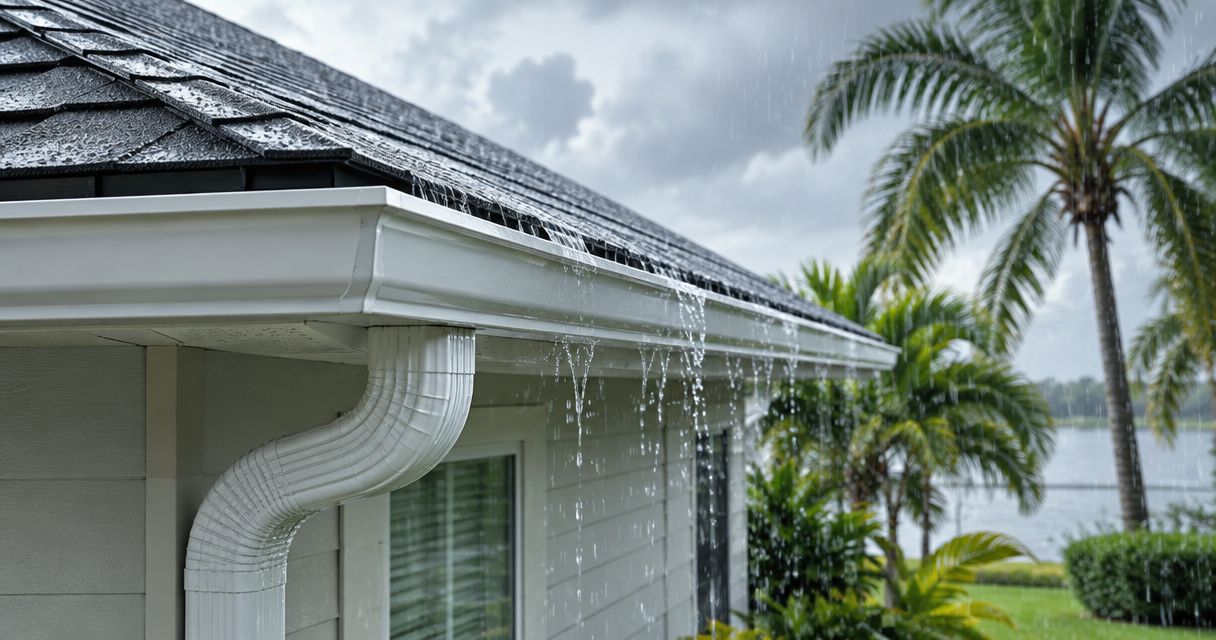
Southwest Florida's wet season runs roughly June through September, and hurricane season stretches June 1 through November 30 every year, including 2026. Clogged gutters during that stretch don't just overflow — they back water up under fascia boards and drip edges, which is where roof rot actually starts.
Roof Smart of SW Florida sees this pattern on service calls across Cape Coral, Fort Myers, and Naples: a gutter guard that looked fine on the shelf lets sand and pine debris pack into the mesh, and the homeowner doesn't notice until a storm pushes water over the fascia. Getting the guard type right the first time matters more here than in drier climates, because the install window between storms is shorter every year.
If your gutters were installed more than a decade ago, pair any gutter guard upgrade with a look at the seamless gutter installation guide — guards only perform as well as the gutter system underneath them.
Who this is for
This guide is for Cape Coral homeowners with mature oak, pine, or palm canopy near the roofline, anyone who's cleaned gutters twice in one rainy season already, and owners preparing a home for hurricane season who want one less thing to check before a storm. It's less useful if your lot has minimal tree cover and you already clean gutters once a year without issue — in that case, a basic screen guard is probably enough and you don't need the premium tier.
What to look for in gutter guards for Cape Coral homes
Mesh size and material
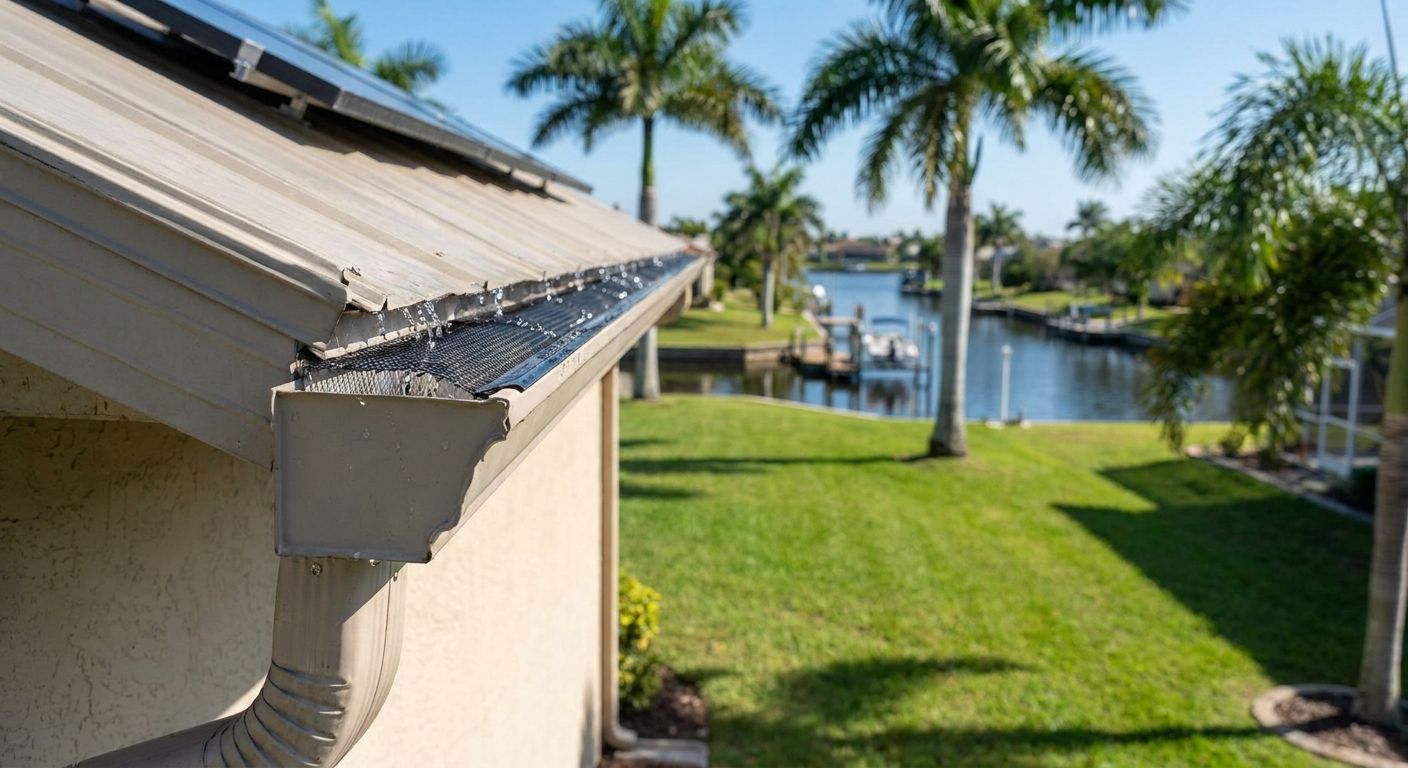
Stainless steel micro-mesh blocks fine debris like pine needles and roof grit, while standard aluminum screen lets smaller particles through. In a coastal, sandy environment, mesh that corrodes or clogs within a couple of seasons costs you more in cleanings than the cheaper guard saved you upfront.
Compatibility with your roof edge and gutter profile
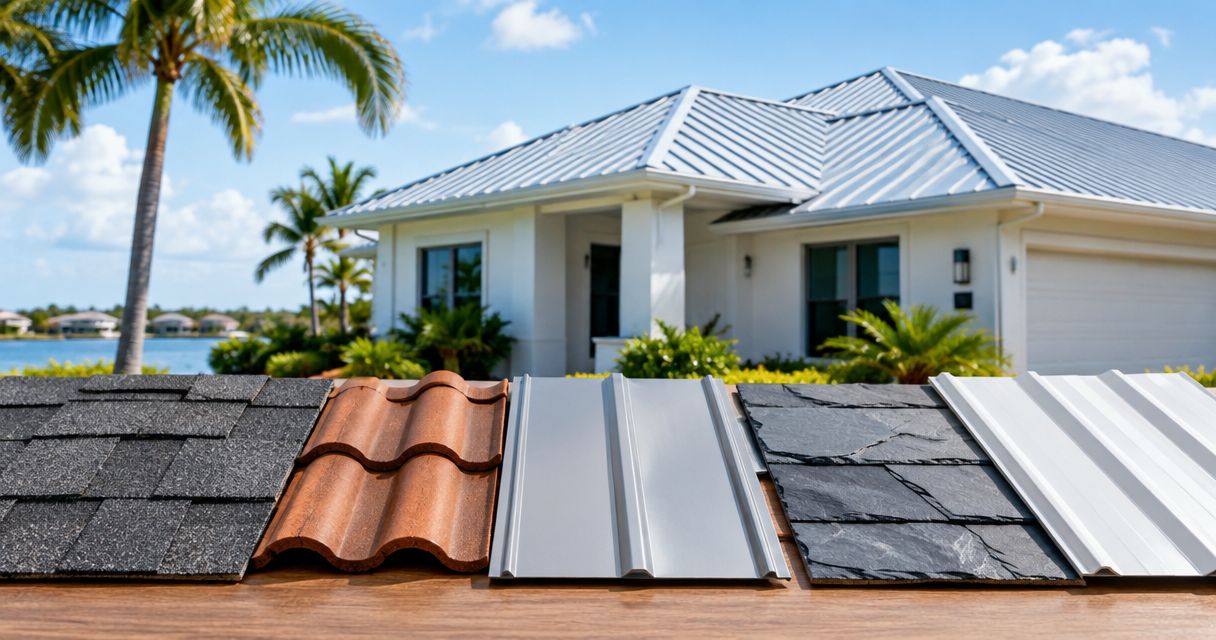
Tile roofs, metal roofs, and asphalt shingle roofs all shed water differently at the drip edge, and a guard designed for one profile can create a gap on another. If you're re-roofing or already have metal roofing in Cape Coral, confirm the guard's mounting style matches the panel edge before you buy — a mismatched fit is the most common reason guards fail in their first year.
Wind and storm rating
Florida Building Code sets wind-load requirements for roof-attached components in Lee County, and a gutter guard that lifts or rattles loose in sustained wind isn't just annoying — it's debris in the next storm. Ask any installer whether the guard is rated to stay fastened in local wind conditions, not just whether it's marketed as hurricane-ready.
Maintenance access
Some guards snap off for cleaning in seconds; others require removing screws or prying up a sealed edge. If your home has two-story sections or a steep tile pitch, maintenance access affects whether you're paying a crew to clean the guard itself every year.
Local install and warranty support
A guard installed by a crew that also handles your gutters and roofline catches fit issues before they become leaks. Guards installed separately from the gutter system, without coordination on fascia condition or roof edge, are more likely to need adjustment within the first year.
Top picks by guard type
Micro-mesh stainless steel — the safe pick. Stainless steel micro-mesh guards typically hold up 15 to 20 years before material fatigue sets in, longer than most aluminum or vinyl alternatives sold locally. The fine weave keeps out pine needles and sand grit, which is the debris that clogs Cape Coral gutters fastest. Verdict: Buy for homes with heavy tree canopy or sandy roof runoff.
Reverse-curve (surface tension) guards — the low-maintenance pick. These guards use the curve of the hood to let water follow the surface into the gutter while debris slides off the front edge, so there's no mesh to clog at all. They cost more upfront and can struggle in very low-slope or low-flow gutter runs. Verdict: Consider for oak- and pine-heavy lots where mesh guards clog within a season.
Screen/perforated aluminum — the middle ground. Perforated aluminum screens block larger leaves and debris but let finer sand and needle litter through over time, meaning a Cape Coral roof under heavy pine cover will still need occasional clearing. They're a reasonable step up from bare gutters without the cost of micro-mesh or reverse-curve systems. Verdict: Consider for lighter tree cover or as a budget-conscious upgrade.
Foam insert guards — the wildcard, and it doesn't land well here. Foam inserts sit inside the gutter channel and are the cheapest option at the hardware store, but Southwest Florida's summer heat and UV exposure cause foam to degrade and compress faster than mesh or metal alternatives, and compressed foam holds water instead of shedding it. Verdict: Skip for anything but a short-term rental fix.
Bottle-brush guards — the DIY trap. These sit loosely in the gutter channel and are marketed as a no-tools install, but they trap organic debris inside the bristles instead of shedding it, which means the debris rots in place during the wet season. Verdict: Skip for Cape Coral's climate; they're built for drier, lower-debris regions.
Get a gutter guard fit assessment
A free, no-pressure evaluation of your gutters and roofline before storm season.
What to avoid
- Guards fastened with screws through shingle tabs. This is common with cheap snap-on plastic guards and can void a shingle roof's manufacturer warranty — the fastener penetration is the problem, not the guard itself.
- Foam inserts sold as a permanent fix. They're a temporary patch at best in Florida heat, not a multi-year solution, no matter how the packaging frames it.
- Any guard installed without checking the fascia first. If the fascia board underneath is already soft or water-stained, a new guard just hides the problem until the next roof inspection finds it.
Verdict comparison
| Guard type | Material | Best for | Maintenance | Verdict |
|---|---|---|---|---|
| Micro-mesh stainless | Stainless steel | Heavy tree canopy, sandy runoff | Rinse annually | Buy |
| Reverse-curve | Aluminum/steel hood | Oak/pine-heavy lots | Minimal | Consider |
| Perforated screen | Aluminum | Light-to-moderate debris | Clear 1-2x/year | Consider |
| Foam insert | Foam | Short-term rentals only | Replace often | Skip |
| Bottle-brush | Plastic bristle | Low-debris, drier climates | Frequent | Skip |
If you're also weighing whether your roof needs work versus your gutters, the breakdown on roof repair vs. roof replacement in Florida covers how to tell which one is the actual priority before you spend on either.
FAQ
What's the best gutter guard for Cape Coral homes in 2026?
Stainless steel micro-mesh guards are the best fit for most Cape Coral homes in 2026 because they block fine sand and pine debris that clog standard screens. Homes with heavy oak or pine canopy see the biggest benefit.
Do gutter guards work during Florida's rainy season?
Yes, but only if the mesh size and gutter slope are matched correctly. A guard with the wrong pitch or mesh density can overflow during heavy summer downpours even though it blocks debris fine the rest of the year.
How much do gutter guards cost installed in Cape Coral?
Installed cost varies by material, roof edge profile, and linear footage of gutter. Get a local estimate that accounts for your specific roofline rather than relying on national averages.
Can gutter guards handle hurricane-level rain?
Quality guards rated for local wind conditions stay fastened and functional in heavy storms, but no guard replaces regular gutter and downspout maintenance before hurricane season. Check fasteners and clear downspouts every year before June.
Are foam gutter guards good for Florida homes?
No, foam insert guards degrade faster in Florida's heat and UV exposure than mesh or metal alternatives. They're a short-term fix at best, not a long-term solution for Cape Coral's climate.
Do gutter guards need maintenance in Southwest Florida?
Yes, even the best guards need occasional rinsing or clearing, especially under heavy tree canopy. Micro-mesh and reverse-curve systems need the least frequent attention of the common guard types.
Should gutter guards be installed with a full gutter replacement?
It's the most efficient time to do it, since the installer can match the guard to the new gutter profile and roof edge in one visit. Retrofitting guards onto old, sagging gutters often means the guard doesn't fit properly.
Is mesh or reverse-curve better for homes with oak or pine trees?
Reverse-curve guards shed needles and leaves without any mesh to clog, which makes them a strong fit for heavy pine or oak canopy. Micro-mesh is a close second and costs less upfront.
One last thing
The guard material matters less than most homeowners think — the roof edge fit is what actually determines whether water goes into the gutter or behind it. A premium guard mounted with the wrong pitch will overflow in the same storm that a properly fitted mid-range screen handles fine. Get the fit checked before you get sold on the material.