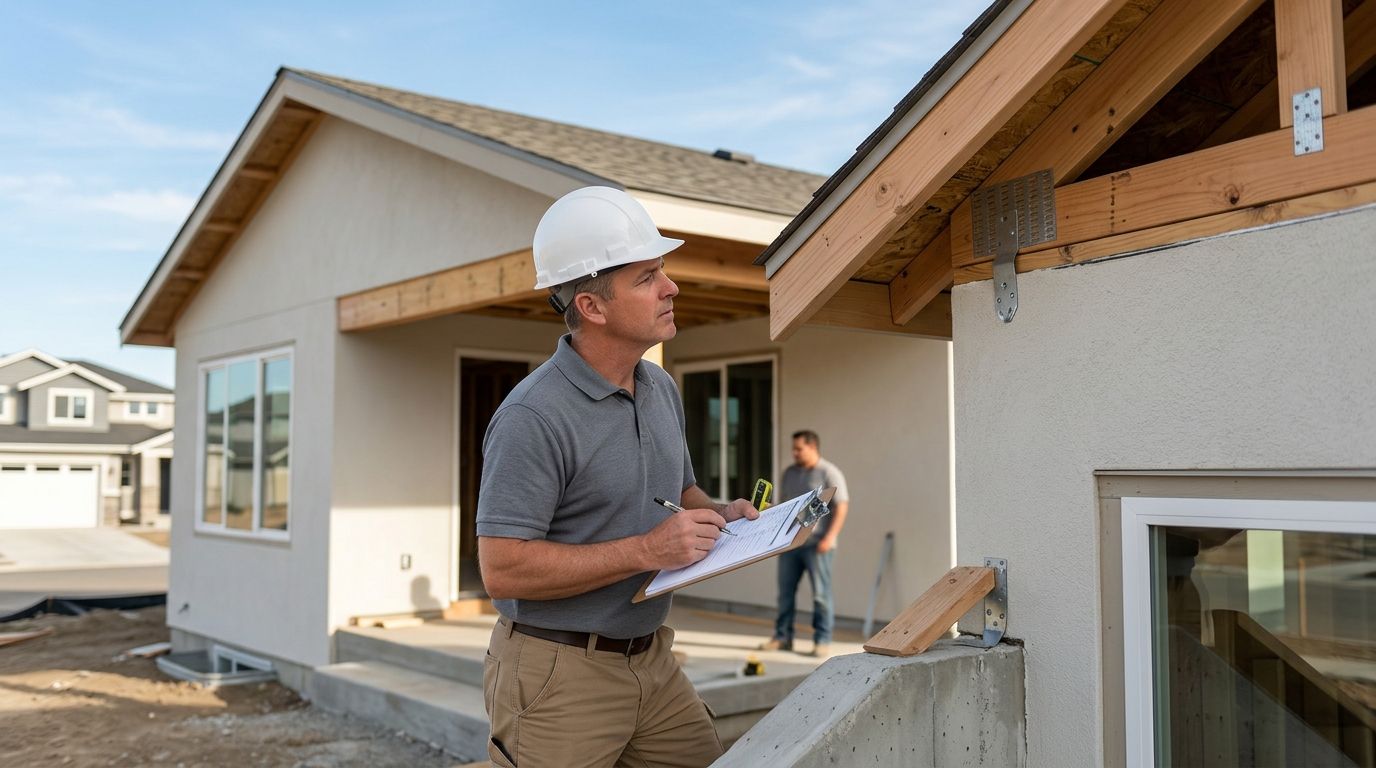
Wind mitigation inspection for new construction homes documents the hurricane-resistant features already built into the house so the buyer can claim every insurance discount Florida's building code entitles them to. A newly built home in Cape Coral, Fort Myers, or Naples usually already meets stricter wind-resistance standards than a 20-year-old house on the same street — the inspection just proves it on paper, and paper is what your insurance carrier actually reads.
- New construction homes often qualify for full wind mitigation credits automatically, but the discount only applies once a signed OIR-B1-802 form reaches your insurer.
- Builders rarely file the wind mitigation inspection for you — request it before your first policy renewal, not after.
- Roof-to-wall connections, opening protection, and roof deck attachment are the three line items that swing the credit the most.
- A wind mitigation inspection for new construction typically takes under an hour on a 2026 build with clear attic access.
Why this matters
Homeowners assume a brand-new roof automatically means a lower premium. It doesn't — the insurer needs a completed, signed inspection form, and that form is a separate document from your certificate of occupancy or your builder's warranty paperwork.
Southwest Florida carriers price wind risk line by line: roof covering, roof deck attachment, roof-to-wall connection, opening protection, and secondary water barrier each get scored separately. A 2026-built home under the current Florida Building Code often checks every box for maximum credit, but if nobody submits the wind mitigation inspection to the carrier, the homeowner pays full premium for protection they already own.
This is a different problem than the one facing owners of older homes. Someone buying a 1998 Cape Coral house needs to physically verify whether retrofits exist. Someone closing on new construction in 2026 usually just needs the paperwork trail confirmed and filed — the build itself is rarely the issue.
Why wind mitigation matters specifically for new construction homes
New construction buyers are the group most likely to leave money on the table, because everything about the house feels finished. Closing day hands you a binder, the roof is under warranty, and the last thing on your mind is ordering another inspection.
Meanwhile the insurance quote you accepted at closing was almost certainly priced without mitigation credits applied. Carriers default to the conservative assumption when a line item is blank. Blank does not mean "new" — it means "unverified," and unverified gets priced like an unprotected 1980s roof.
The second issue is timing. Florida insurance credits generally apply from the date the form is submitted, not from the date the house was built. Every month the form sits unfiled is a month of premium you don't get back.
How to handle a wind mitigation inspection on a new build
Confirm your certificate of occupancy date and code cycle
The inspection form asks which Florida Building Code edition governed construction. Get this right before anything else — it determines which credit boxes even apply to your house.
- Pull the certificate of occupancy date from your closing packet
- Match that date to the Florida Building Code edition in effect at permit issuance
- Confirm the permit record with the county building department if the closing date is unclear
- Keep a copy of the approved plans — inspectors reference them for roof deck nailing patterns
Order the form before you shop insurance quotes
Don't wait for your insurance agent to ask. Order the inspection the moment you have keys, before comparing carriers, because the quote you get without it is not the real quote.
- Ask specifically for the OIR-B1-802 Uniform Mitigation Verification Inspection form
- Confirm the inspector will physically verify the attic and roof-to-wall connections, not just review builder paperwork
- Get the signed form as a PDF immediately after the visit
- Send it to your insurance agent the same week — don't let it sit in a drawer
- A roofing contractor that performs these inspections can pair it with the roof documentation, which is the faster path when you also want the deck and underlayment specs confirmed
Verify the roof-to-wall connection type
This is the single line item that moves the needle most on new construction. Homes built with clips score differently than double wraps, and the inspector has to confirm what your builder actually installed, not what the plans specified.
- Check whether the report lists toe nails, clips, single wraps, or double wraps
- Compare the report against the structural plans in your closing file
- Ask the inspector to photograph the connection from inside the attic
- Flag any mismatch between plans and field verification before submitting to insurance
- Keep the photos with your policy documents in case of a future claim dispute
Confirm opening protection is documented correctly
Impact windows and doors carry real weight in the credit calculation, but only if the glazing markings and door hardware match what the inspector records.
- Verify the impact-rating labels on windows and sliding doors are still visible and legible
- Confirm the garage door carries a wind-load rating label, not just "hurricane-rated" in the sales listing
- Check that shutters, if installed, are listed by type: accordion, panel, or roll-down
- Make sure the form distinguishes all openings protected from some openings protected — that changes the discount tier
- Photograph every label before landscaping or touch-up paint covers it
Check roof deck attachment and secondary water barrier
These two are often already at maximum credit on a 2026-built home because current code requires enhanced nailing and a sealed deck by default. Confirm the report reflects that instead of defaulting to a lower generic entry.
- Ask whether the deck attachment was verified as 8d nails at 6 inches on center or better
- Confirm the secondary water barrier line is checked, not left blank
- Request the roofing contractor's material invoice as backup documentation
- Cross-reference the underlayment against the roofing for new construction and spec homes specs on file
- Save the invoice in your permanent home file, not just the closing folder
Submit the form and confirm it was applied
Never assume the builder or the title company forwarded anything. Submitting is not the same as the credit appearing on your declarations page.
- Email the signed OIR-B1-802 to your agent and ask for written confirmation
- Request an updated declarations page showing the revised premium
- Set a calendar reminder to check the credit on your next renewal notice
- Review how to qualify for a wind mitigation insurance discount if the carrier disputes a line item
Comparing your inspection options in 2026
| Option | Best for | Key limitation |
|---|---|---|
| Independent licensed wind mitigation inspector | Owners who want a standalone, insurer-accepted form fast | Won't cross-reference roofing materials against your build invoices |
| Roofing contractor that also performs wind mitigation inspections | Owners who want roof documentation and inspection tied together | Scheduling depends on the contractor's roofing workload in storm season |
| Builder-arranged inspection at closing | Buyers who want one less task during move-in | Not always included, and the report may sit unfiled with the title company |
| Reviewing the county permit file yourself | Confirming the code cycle before ordering a real inspection | Not accepted by carriers as a substitute for the signed form |
Roof Smart of SW Florida is best for new construction owners who want the wind mitigation inspection handled by a roofing company that can also confirm deck attachment and underlayment specs firsthand. The honest limitation: during active storm season in Southwest Florida, repair and emergency work competes for the same calendar, so book the inspection early rather than the week your policy renews.
Get your wind mitigation inspection scheduled
Roof documentation and inspection handled together for new construction homes.
Common mistakes new construction owners make
- Assuming the builder already filed the form. Most builders hand over warranty paperwork at closing and the wind mitigation form is not part of it.
- Filing without checking opening protection labels. A missing or painted-over impact sticker drops the credit tier even when the windows are genuinely rated.
- Waiting for the first renewal notice. By then you've paid months of 2026 premium at the undiscounted rate.
- Confusing code compliance with automatic credit. Building to current Florida code does not put the discount on your policy — someone still has to submit the form.
- Losing the report in the closing pile. Carriers request it again at renewal; keep a digital copy, not just the printed one from closing day.
FAQ
Does a new construction home automatically get the wind mitigation discount?
No. Building to current Florida Building Code makes a new home eligible for maximum credits, but the discount only applies once a signed OIR-B1-802 form is submitted to the insurance carrier.
Who pays for a wind mitigation inspection on a new build?
The homeowner typically orders and pays for it after closing. Builders in Southwest Florida rarely include the inspection in the closing package.
How long does a wind mitigation inspection take on a new construction home?
Usually under an hour. The roof, attic, and openings are new and easy to access, unlike older homes with retrofits and attic clutter.
What is the difference between a 4-point inspection and a wind mitigation inspection?
A 4-point inspection reviews the age and condition of roof, electrical, plumbing, and HVAC. A wind mitigation inspection scores hurricane-resistant construction features for insurance credits. New construction homes rarely need a 4-point inspection because the systems are new.
Can I use my builder's construction documents instead of a formal inspection?
No. Carriers require the signed OIR-B1-802 form completed by a qualified inspector, not permit records or plans, even on a brand-new house.
Does a wind mitigation inspection expire?
Carriers commonly treat the report as valid for a set period and may request an updated one at renewal or after roof work. Confirm the current requirement with your agent whenever your policy changes.
Which features give the biggest insurance credit on a new Florida home?
Roof-to-wall connection type, opening protection on all windows and doors, and roof deck attachment method drive the largest credits on a 2026-built Southwest Florida home.
Can I get a wind mitigation inspection before closing?
Yes, if the builder allows access and the roof and openings are complete. Many owners schedule it right after the certificate of occupancy is issued so the form is ready when the first policy binds.
One last thing
The credit most often lost on new construction isn't the roof — it's opening protection, because the impact-rating label on a garage door or slider gets painted over or peeled off during final finishing and staging before the owner ever calls an inspector. Photograph every rating label the week you get keys in 2026, before move-in traffic covers them up.