Wind mitigation inspection in Cape Coral gets one thing decided fast: whether your homeowners insurance premium drops by hundreds of dollars a year or stays flat. Here's who needs one, what a qualified inspector actually checks, and which features are worth chasing before you schedule.
- A wind mitigation inspection cape coral homeowners request typically pays for itself through the insurance discount within one policy cycle.
- Roof-to-wall connections and deck attachment type matter more to insurers than a brand-new roof.
- The OIR-B1-1802 form is valid for 5 years once signed by a qualified inspector.
- Hip roofs and impact-rated openings carry real discount weight in Southwest Florida markets.
- Skipping attic access to save time is the fastest way to lose your best discount category.
Why this matters
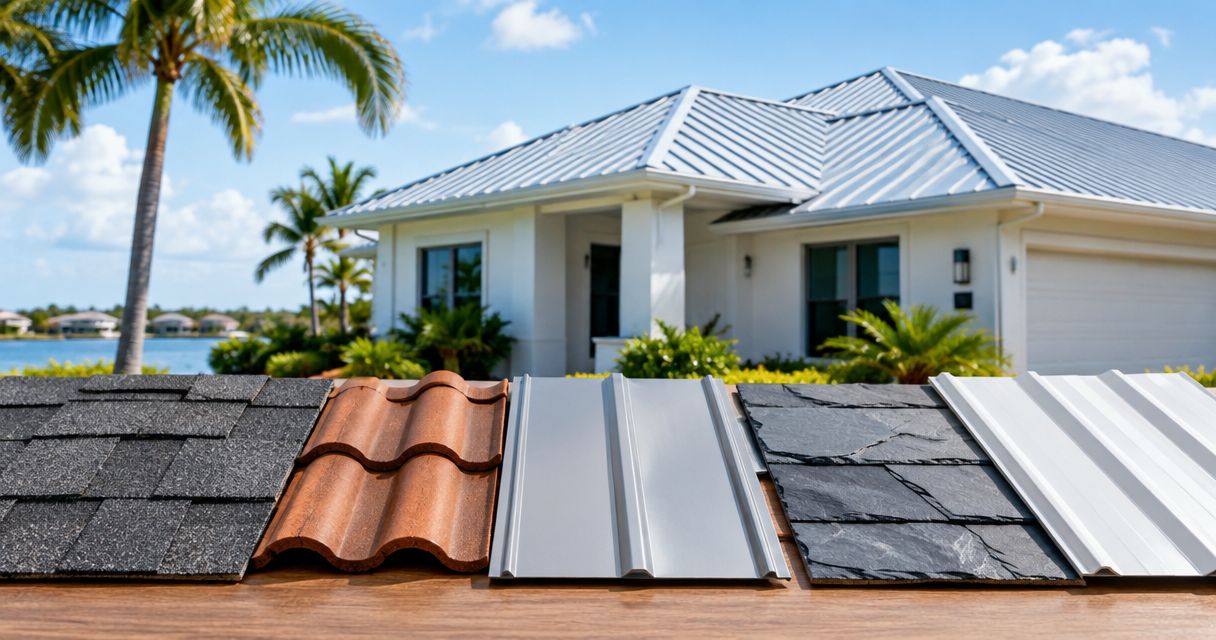
Cape Coral sits in one of the highest wind-exposure zones in Lee County, and insurers price that risk into every policy. A wind mitigation inspection documents the features on your roof that actually resist hurricane-force wind — and without that documentation, you pay the full uncredited premium even if your roof already qualifies. If your roof is nearing the point where roof repair versus roof replacement is on the table, the inspection also tells you which upgrades double as insurance savings.
Most Florida carriers, including Citizens Property Insurance Corporation, require the state-standard OIR-B1-1802 form before applying any wind mitigation credit. That form stays valid for 5 years from the inspection date, so this isn't an annual expense — it's a five-year investment that either pays off immediately or doesn't get filed at all.
Who this is for
This guide is for Cape Coral homeowners with a policy renewal coming up, anyone who just replaced a roof and hasn't filed the paperwork, and buyers closing on a home built before the 2002 Florida Building Code update. If your last wind mitigation report is more than 5 years old, you're likely paying for protections your roof already has without getting credit for them.
What to look for in a wind mitigation inspection for Cape Coral homes
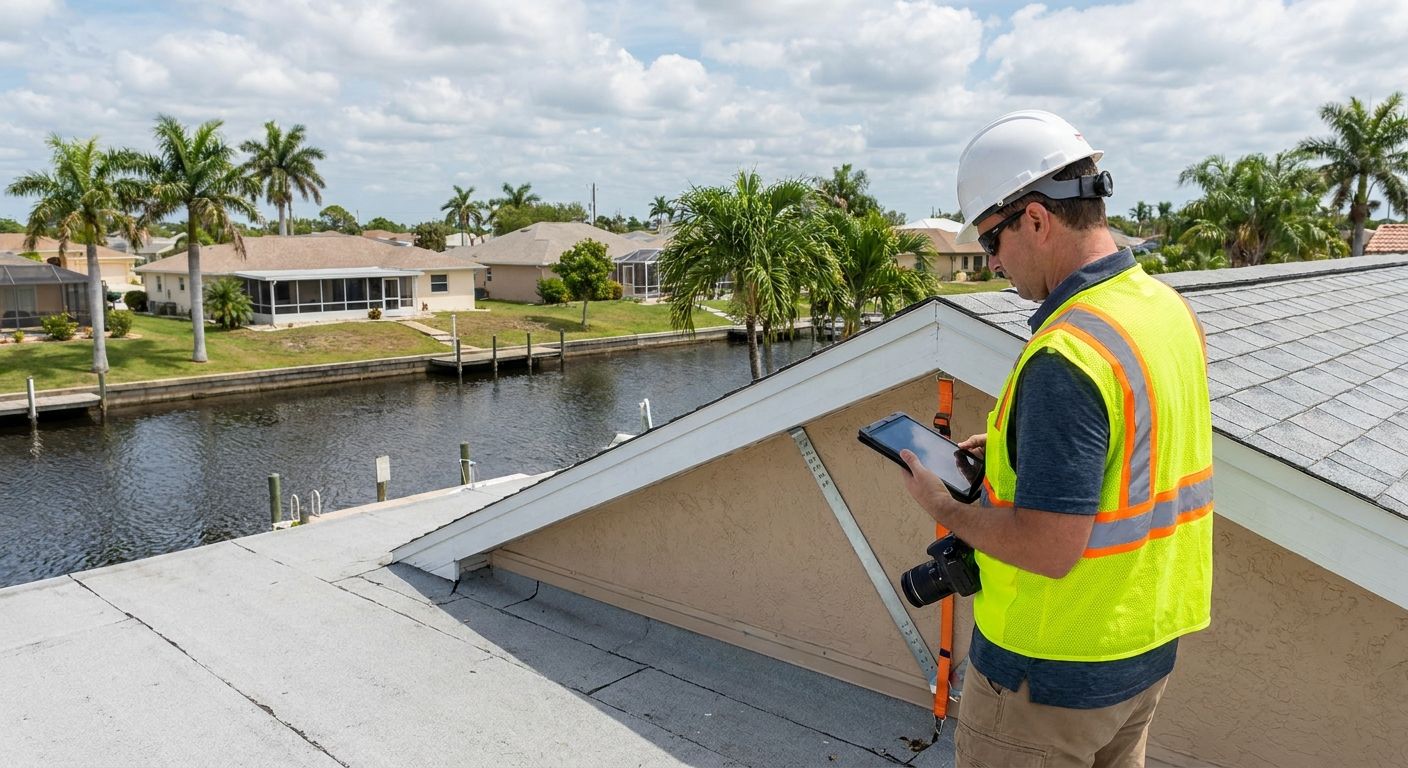
A state-qualified inspector, not a handyman with a checklist
Florida statute limits who can legally sign an OIR-B1-1802 form — licensed contractors, professional engineers, licensed home inspectors, and a handful of other certified categories. An inspection signed by someone outside those categories gets rejected by the carrier, and you find out after you've already paid for it.
Roof permit history that matches the roof on the house
Inspectors pull permit records to confirm the roof's actual install date, not just what the seller or homeowner remembers. A mismatch between the permit date and the roof's apparent age is one of the fastest ways an inspection gets flagged for a second look.
Attic access for the roof deck attachment check
The deck attachment category — how the plywood is nailed to the trusses — carries some of the heaviest discount weight on the whole form, and it can only be verified from inside the attic. An inspector who skips attic access can't legally mark this category as anything but the lowest tier, which costs you money regardless of what's actually up there.
Roof-to-wall connection type
This is the single most valuable line item on the form for most Cape Coral homes. Clips and wraps score higher than toe-nails alone, and the difference between categories on this line often outweighs every other credit combined.
Opening protection documentation
Impact-rated windows, doors, and garage doors — or code-compliant shutters — need product approval numbers or permit records, not just a visual glance. Inspectors who don't ask for this paperwork tend to under-report what the home actually qualifies for.
A report you can hand directly to your insurance agent
The finished form should be ready to submit as-is, with the inspector's license number, signature, and date clearly visible. A report missing any of those three gets bounced back by underwriting.
What the inspection actually checks — feature by feature
Roof shape (hip vs. gable). Hip roofs shed wind more evenly across all four slopes and score higher on the form than gable roofs, which take a direct hit on the gable end. If your Cape Coral home has a hip roof, this line alone is often worth verifying first. Verdict: confirm it.
Roof deck attachment. The form distinguishes between staples, 6d nails, and 8d ring-shank nails spaced at 6 inches on center — the tighter nail spacing and larger nail size score the highest tier. Homes built or re-roofed after the mid-2000s often already qualify without any additional work. Verdict: verify before assuming.
Roof-to-wall connections. Clips scored higher than single wraps, which score higher than toe-nails alone. This is the category most homeowners assume is fine and most often costs them the biggest discount when it isn't documented. Verdict: prioritize this check.
Secondary water barrier. A self-adhering membrane under the shingles or a sealed roof deck adds a modest credit and is common on roofs installed under the 2020 Florida Building Code. Retrofitting one on an existing roof usually isn't worth doing solely for the insurance credit. Verdict: nice to have, not worth chasing alone.
Opening protection. Impact-rated windows and doors, or rated shutters covering every opening, unlock one of the larger credit categories on the form — but partial protection (some openings covered, others not) often scores no better than no protection at all. Verdict: go all-in or skip it.
Schedule your wind mitigation inspection
Get a straight answer on what your Cape Coral roof qualifies for.
What to avoid
- A discount quote based on roof age alone. A 3-year-old roof with toe-nail wall connections can score worse than a 12-year-old roof with clips — age tells you nothing about the categories that actually move the discount.
- Skipping the attic because access is tight. Inspectors who quote a lower price for a quick inspection are usually planning to skip the deck attachment check entirely, which defaults you to the lowest credit tier.
- Partial opening protection. Covering three of four openings with shutters and leaving one exposed frequently scores the same as having none, because the form grades the weakest point, not the average.
Verdict comparison table
| Feature checked | What insurers weigh it against | Typical impact | Verdict |
|---|---|---|---|
| Roof shape | Hip vs. gable vs. flat | High | Confirm on file |
| Roof deck attachment | Nail type and spacing | High | Verify in attic |
| Roof-to-wall connections | Clips vs. straps vs. toe-nails | Highest | Prioritize |
| Secondary water barrier | Presence of sealed underlayment | Moderate | Nice to have |
| Opening protection | Full vs. partial coverage | High if complete | All-in or skip |
| Inspector credentials | State-qualified license type | Pass/fail | Non-negotiable |
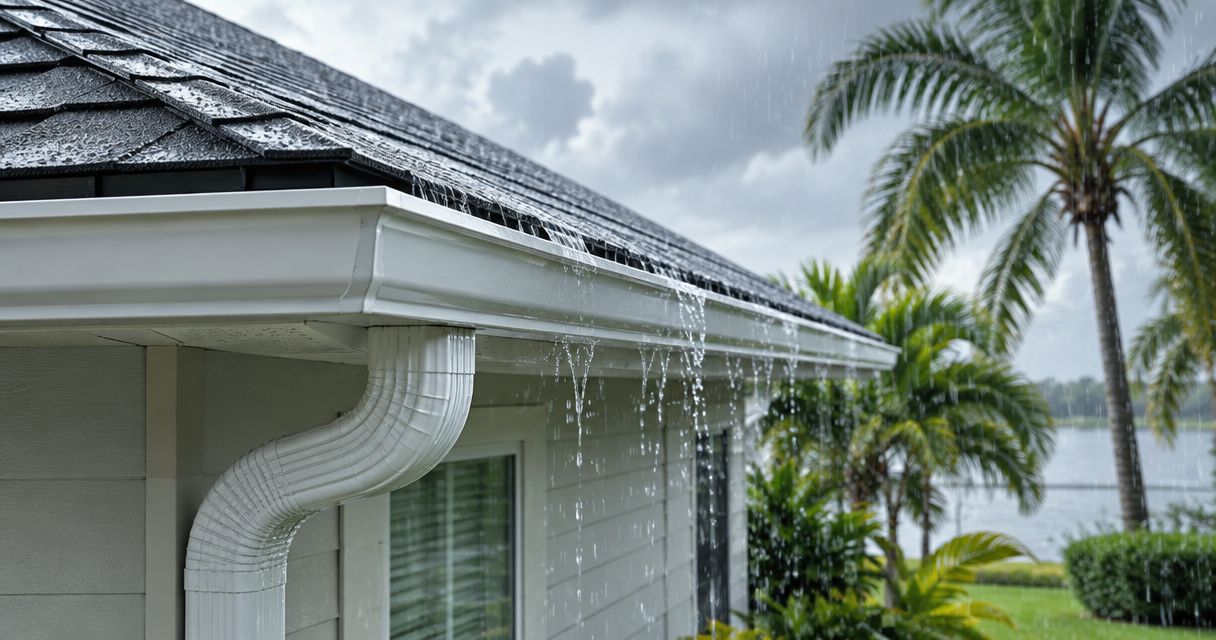
If your roof is closer to end-of-life than mid-life, run the deck attachment and roof-to-wall numbers before you spend money on new shutters — that repair versus replacement decision changes every category on this table at once. And if wind-driven rain during the last named storm season pointed to drainage as much as wind resistance, pairing the inspection with a look at seamless gutter installation for Florida homes closes a gap the mitigation form doesn't cover at all.
FAQ
What is a wind mitigation inspection in Cape Coral?
A wind mitigation inspection cape coral homeowners request documents the wind-resistant features on a roof — shape, deck attachment, wall connections, and opening protection — on the state-standard OIR-B1-1802 form. Insurers use that form to apply premium discounts, and it stays valid for 5 years.
How much does a wind mitigation inspection cost?
Pricing varies by inspector and property, so check current rates directly with a licensed provider before booking. The inspection commonly pays for itself through the first year of insurance savings on Cape Coral policies.
How long is a wind mitigation report valid?
The OIR-B1-1802 form is valid for 5 years from the inspection date under Florida regulation. After that, a new inspection is required to keep the discount active on your policy.
Do I need a wind mitigation inspection every year?
No — the form is valid for 5 years unless the roof is replaced or significantly altered sooner. Replacing the roof before the 5-year mark requires a new inspection to reflect the updated features.
Does a new roof automatically qualify for the maximum discount?
Not automatically — roof age alone doesn't determine the score. Deck attachment type and roof-to-wall connection type carry more weight than how recently the roof was installed.
Who is qualified to perform a wind mitigation inspection in Florida?
Licensed contractors, professional engineers, licensed home inspectors, and other categories defined by Florida statute can legally sign the OIR-B1-1802 form. An inspection from anyone outside those categories will typically be rejected by the insurance carrier.
Is a hip roof better than a gable roof for wind mitigation?
Yes — hip roofs generally score higher on the wind mitigation form because all four slopes distribute wind load, while gable roofs take a direct hit on the flat end wall. This is one of the higher-weighted lines on the form.
What happens if the inspector can't access the attic?
Without attic access, the roof deck attachment category defaults to the lowest scoring tier regardless of what's actually installed. That single limitation can eliminate one of the largest available discounts on the form.
One last thing
The roof-to-wall connection line is the one homeowners skip verifying most often — and it's frequently worth more than every other category on the form combined. Before you schedule anything for 2026, ask directly whether the inspector will access the attic to check it; if the answer is no, the inspection isn't worth the paper it's printed on.