Roofing for new construction homes in Florida means selecting a wind-rated system, an underlayment spec, and an inspection sequence during the build itself, not retrofitting them after a buyer moves in. For builders and spec developers in Cape Coral, Fort Myers, and Naples, the roof decision has to satisfy three audiences at once: the Florida Building Code inspector, the HOA architectural committee, and the first buyer's insurance underwriter.
That's what separates this segment from a homeowner replacing a worn roof. A spec builder is choosing a roofing system for someone who hasn't signed a contract yet, on a timeline set by the framing crew, with a wind mitigation form that determines the buyer's first insurance quote before the sale even closes. Roof Smart of SW Florida works directly with builders on this sequence across Southwest Florida.
- Tile and standing seam metal dominate new spec builds in Southwest Florida through 2026 for wind rating and resale appeal.
- Order the wind mitigation inspection during the build, not after closing, to lock in insurance credit for the first buyer.
- Asphalt shingle still works for entry-price spec homes, but it must carry a Florida Building Code or Miami-Dade product approval.
- Truss engineering has to match the roof material's weight before framing, not after tile delivery shows up on the lot.
Why roofing for new construction homes matters in Florida
A spec home's roof shows up on the buyer's insurance quote before it shows up on the listing photos. Wind mitigation credits tied to roof shape, deck attachment, and roof-to-wall connections can swing the first-year premium meaningfully, and a buyer's lender or insurer will ask for that form at closing in 2026 the same way they did in prior years.
HOA and community architectural standards also constrain material choice in a lot of Southwest Florida developments, especially Mediterranean-style and gated communities where tile is the expected look. Getting that wrong after the roof is dried-in means a change order the builder eats, not the buyer.
A new construction roof in Southwest Florida has to pass code, pass HOA review, and pass a wind mitigation inspection — in that order, before the buyer ever sees a quote.
Confirm the wind zone and code requirements for the lot
Every Southwest Florida county enforces the Florida Building Code's wind design provisions differently depending on distance from the coast. Confirm the required wind speed rating and fastening schedule before the truss package ships.
- Pull the wind speed design requirement from the county permit office for the specific lot, not a county-wide average.
- Check whether the parcel sits in a wind-borne debris region, which changes underlayment and fastening rules.
- Verify the roof deck attachment schedule the permit requires, including nail type and spacing.
- Confirm secondary water barrier requirements before the dry-in date.
- Cross-check the truss engineering package against the roof material's dead load before ordering.
Choose a roofing material that matches the spec home's price point
The roof material decision on a spec build is a margin decision as much as a design one. Match the system to where the home sits on the community's price ladder.
- Review the best roofing materials for Florida hurricanes against the target sale price before locking the spec sheet.
- Price out asphalt shingle only if it carries a current Florida Building Code or Miami-Dade product approval number.
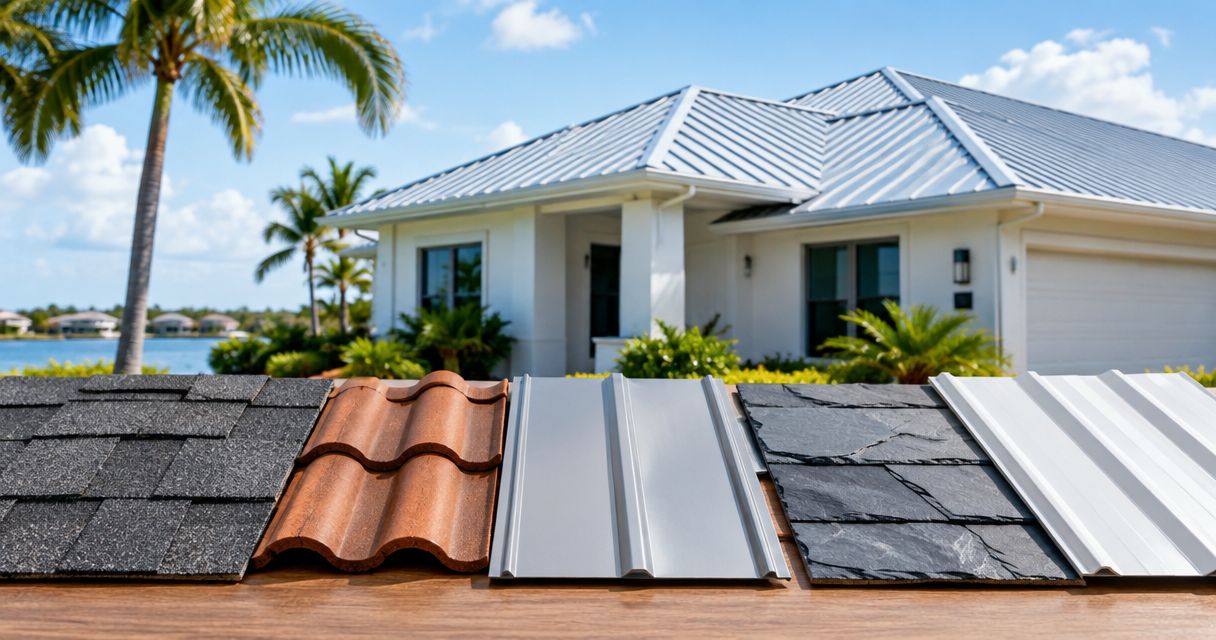
- Consider tile roofing options for Southwest Florida homes when design guidelines call for a Mediterranean look.
- Check whether the HOA architectural review board keeps an approved materials list before ordering.
- Roof Smart of SW Florida quotes shingle, tile, metal, and flat systems side by side against the same truss package, which is the faster way to compare margin impact once code and HOA constraints are set.
Coordinate the roof install with the wind mitigation inspection
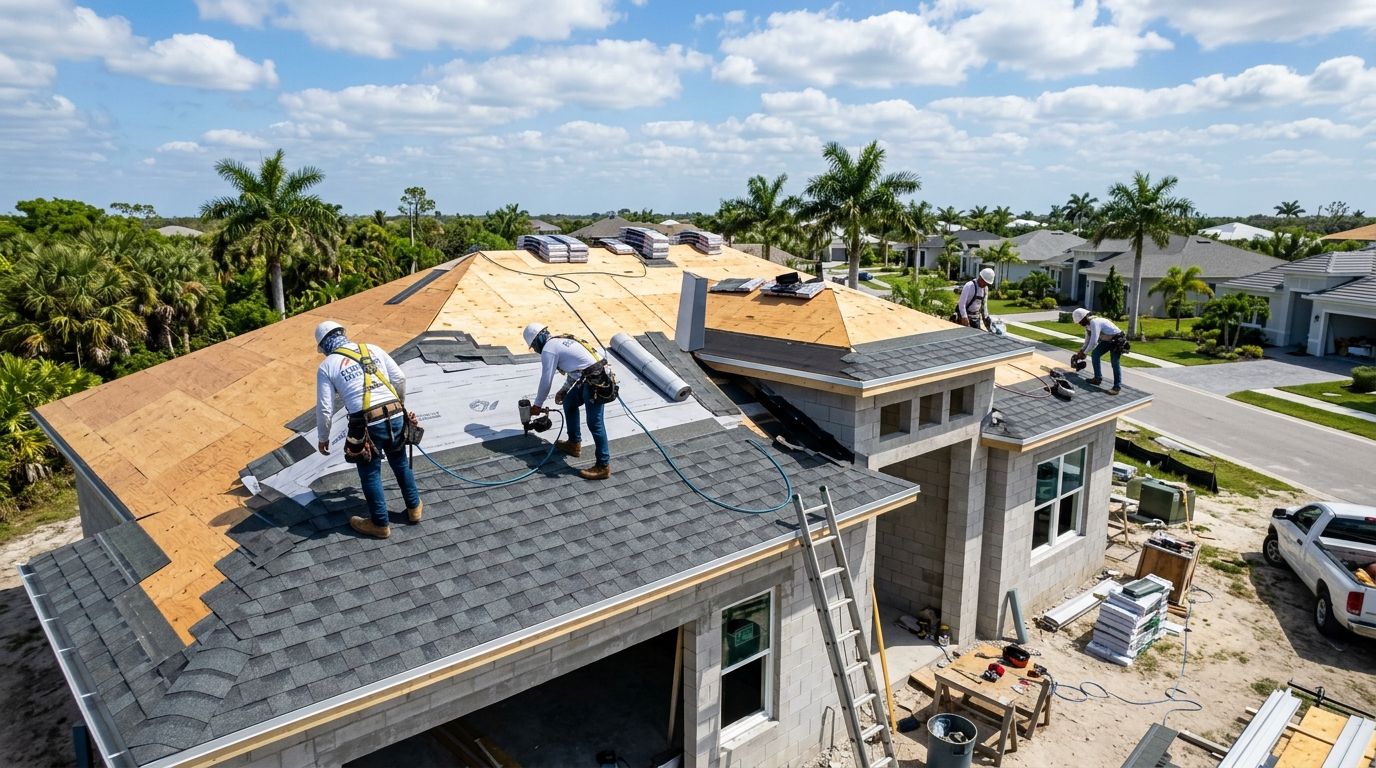
A wind mitigation inspection documents roof shape, deck attachment, roof-to-wall connections, and secondary water barrier — all items that are easiest to verify while the roof is still exposed.
- Schedule the inspection after roof-to-wall connections are installed but before soffit and fascia close them off.
- Photograph deck attachment and secondary water barrier installation as a fallback if the inspector can't access every connection later.
- Confirm the roof shape qualifies for hip-roof credit if that's what the design calls for.
- Get a wind mitigation inspection scheduled before drywall, not after the buyer's insurance agent asks for one.
“If the roof can't pass a wind mitigation inspection before the buyer's insurance quote, the spec home loses its price advantage.”
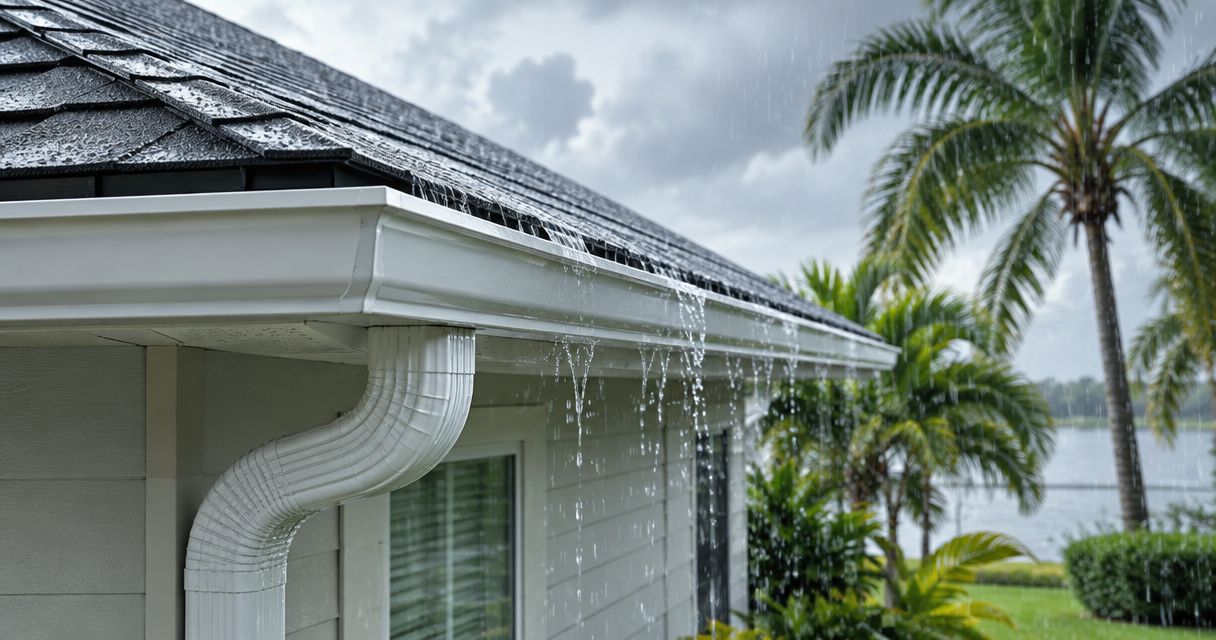
Build in gutter and drainage systems before drywall
Gutters and drainage get treated as a punch-list afterthought on a lot of spec builds, and that's exactly why they end up as a rework item at final walkthrough.
- Sequence gutter and downspout installation with fascia work, not after landscaping.
- Size downspout capacity for Southwest Florida rainy-season rainfall, not a generic national spec.
- Route downspouts away from the foundation and any lanai or pool cage tie-in points.
- Specify seamless aluminum gutters over sectional if the community's finish standard expects it.
- Add gutter guards on lots with heavy tree canopy to cut down on buyer maintenance calls in year one.
Match roof color and material to community or HOA standards
Roof color affects more than curb appeal on a Florida spec home. It affects attic temperature and, in some cases, energy code compliance calculations.
- Check the best roof color for energy efficiency in Florida homes against the approved palette before finalizing the spec sheet.
- Confirm the HOA's approved color and material list in writing, not verbally from the sales office.
- Factor reflectivity into the energy code compliance path the home is using.
- Order sample boards for the model home before committing the whole phase to one color run.
Schedule inspections around Florida's rainy season
Southwest Florida's rainy season runs roughly June through September, and a roof left open during a sudden afternoon storm turns into a warranty claim before the home ever sells.
- Stage material delivery to match the dry-in schedule, not a fixed calendar date.
- Keep tarping materials on site for any phase where the roof will be open overnight during summer months.
- Build a buffer into the schedule for inspections that require dry conditions to access the roof safely.
- Track county inspector availability during peak building season, since inspection backlogs stretch timelines in 2026 the same way they have in past years.
Document everything for the buyer's 4-point and wind mitigation forms
The paperwork from the build becomes the first buyer's insurance documentation. Missing photos or unsigned forms at this stage become a closing-week fire drill.
- Keep a dated photo log of deck attachment, underlayment, and roof-to-wall connections for every unit in the phase.
- File the wind mitigation form with the roofing contractor's license number and inspection date.
- Hand the buyer's closing package a copy of the roof warranty documentation at handoff, not on request.
- Confirm the contractor's license is active and matches the name on the permit — verify a roofing contractor's license in Florida before the phase closes.
Roofing options compared for spec builds
| Roofing System | Best For | Key Limitation |
|---|---|---|
| Asphalt shingle (code-approved) | Entry-price spec homes competing on closing cost | Shorter service life under direct Gulf sun than tile or metal |
| Concrete or clay tile | Mediterranean-style spec homes and HOA communities with a tile standard | Heavier deck load requires engineered truss specs from the start |
| Standing seam metal | Spec homes marketed on hurricane resistance or a solar-ready roof | Higher install labor affects per-unit builder margin |
| Flat or low-slope | Contemporary spec designs with lanai or pool cage tie-ins | Needs a shorter recoating cycle than pitched roof systems |
Standing seam metal wins on wind performance and buyer marketing; concrete tile wins on HOA compliance in Mediterranean-style communities. Pick based on the community's design standard first, price point second.
Get a roof quote for your next phase
Compare shingle, tile, and metal against your truss package before you order materials.
Common mistakes builders make on spec home roofing
- Locking the material on the spec sheet before HOA architectural review — a rejected material choice after truss delivery is an expensive redesign.
- Skipping the wind mitigation inspection until after closing — the first buyer inherits a higher premium quote that could have been avoided.
- Ordering underlayment rated for a different climate zone — this shows up as a failed 4-point inspection at the home's first resale, years after the builder is gone.
- Assuming any truss can carry tile or metal roof weight — shingle-spec trusses under tile roofing is a structural liability, not a punch-list item.
- Sequencing gutters after landscaping instead of with fascia work — this forces a rework line item into the final walkthrough on nearly every phase.
FAQ
What roofing is best for new construction homes in Florida?
Concrete tile and standing seam metal are the most common choices for new construction homes in Southwest Florida in 2026 because both carry strong wind ratings and support wind mitigation insurance credits. Asphalt shingle still works for entry-price spec homes if it carries a current Florida Building Code or Miami-Dade product approval.
Do spec homes need wind mitigation inspections before selling?
A wind mitigation inspection is not required to close a sale, but skipping it leaves the first buyer without the insurance credits tied to roof shape and deck attachment. Scheduling the inspection during the build, while roof-to-wall connections are still exposed, is faster than doing it after the home is finished.
Is tile or metal roofing better for a new build in Southwest Florida?
Tile fits Mediterranean-style spec homes and HOA communities with a tile design standard, while standing seam metal fits builds marketed on hurricane resistance or a solar-ready roof. The right choice depends on the community's architectural guidelines more than personal preference.
How much wind load does a new roof need to meet in Cape Coral or Fort Myers?
Wind speed design requirements are set at the county permit level and vary by distance from the coast, so the required rating has to be pulled for the specific lot rather than assumed. Confirm the number with the county permit office before ordering the truss package.
Can a builder use shingle roofing and still get a wind mitigation discount?
Yes, shingle roofing can qualify for wind mitigation credits when roof shape, deck attachment, and secondary water barrier meet the inspection criteria. The covering material matters less to the credit than the roof-to-wall connections and deck attachment method.
When should gutters go on during new home construction?
Gutters should be sequenced with fascia and soffit work, before the phase moves to landscaping. Installing gutters after landscaping is a common cause of rework items at final walkthrough.
Does roof color affect energy efficiency on a new Florida home?
Roof color affects attic temperature and can factor into the energy code compliance calculation on a new Florida home. Lighter, more reflective colors generally reduce cooling load, but the community's approved color palette has to be checked first.
What happens if a new construction roof fails a 4-point inspection?
A failed 4-point inspection at resale usually traces back to underlayment, flashing, or documentation issues from the original build, and it can delay a sale until repairs are made. Dated photo records of the original installation make resolving these issues faster for whoever owns the home later.
One last thing
The wind mitigation form gets filed once, during the build, and then it follows the house through every sale after that. A spec builder who documents deck attachment and roof shape correctly in 2026 hands every future owner an insurance credit that a retrofit inspection years later often cannot fully recover.