Roof replacement for seasonal residents means scheduling a full roof tear-off and installation around a homeowner's absence from Southwest Florida, not around the contractor's calendar. Part-time residents face a different set of constraints than full-timers: permit timing, HOA approval windows, hurricane season exposure, and insurance renewal dates all have to line up with a trip you booked eight months ago. Roof Smart of SW Florida handles roof replacement for seasonal residents by building the whole timeline around when you're actually here — best for snowbirds, second-home owners, and part-time Southwest Florida residents who can't babysit a job site.
If you split your year between Cape Coral, Fort Myers, or Naples and somewhere up north, the roof over your vacation rental or seasonal property still ages every month you're gone. A roof that needs replacing doesn't wait for your return flight.
- Roof replacement for seasonal residents in 2026 needs to be scheduled 60-90 days before departure to allow for permitting and inspection delays.
- A 4-point inspection is typically required by insurers on homes 25-30 years or older before renewal — schedule it before you leave, not after.
- Contractor-managed replacement while you're away works only with a documented power of attorney or signed contract authorizing decisions without your physical presence.
- Roof Smart of SW Florida coordinates roof replacement timing with Southwest Florida hurricane season (June 1 through November 30) for part-time residents.
Why roof replacement matters for seasonal residents
A property that sits empty for four to eight months a year has nobody watching for a slow leak, lifted tile, or a wind mitigation certificate that quietly expired. Insurance carriers in Florida have gotten stricter about roof age and condition since 2023, and that trend hasn't reversed in 2026 — a roof past 20-25 years on an asphalt shingle system is a common trigger for non-renewal or a mandatory inspection.
Seasonal residents also carry a scheduling problem full-timers don't: if a contractor finds storm damage or code issues mid-project and you're back in Michigan or Ontario, decisions stall. That stall costs weeks, and weeks matter when hurricane season runs June 1 through November 30 every year.
Time the replacement around your travel calendar
The biggest mistake in roof replacement for seasonal residents is treating the contractor's schedule as fixed and your travel dates as flexible. Reverse that.
- Book the inspection and estimate 60-90 days before your scheduled departure
- Ask for a written project timeline that includes permit turnaround, not just install days
- Build in a 2-3 week buffer for weather delays common in Southwest Florida spring storms
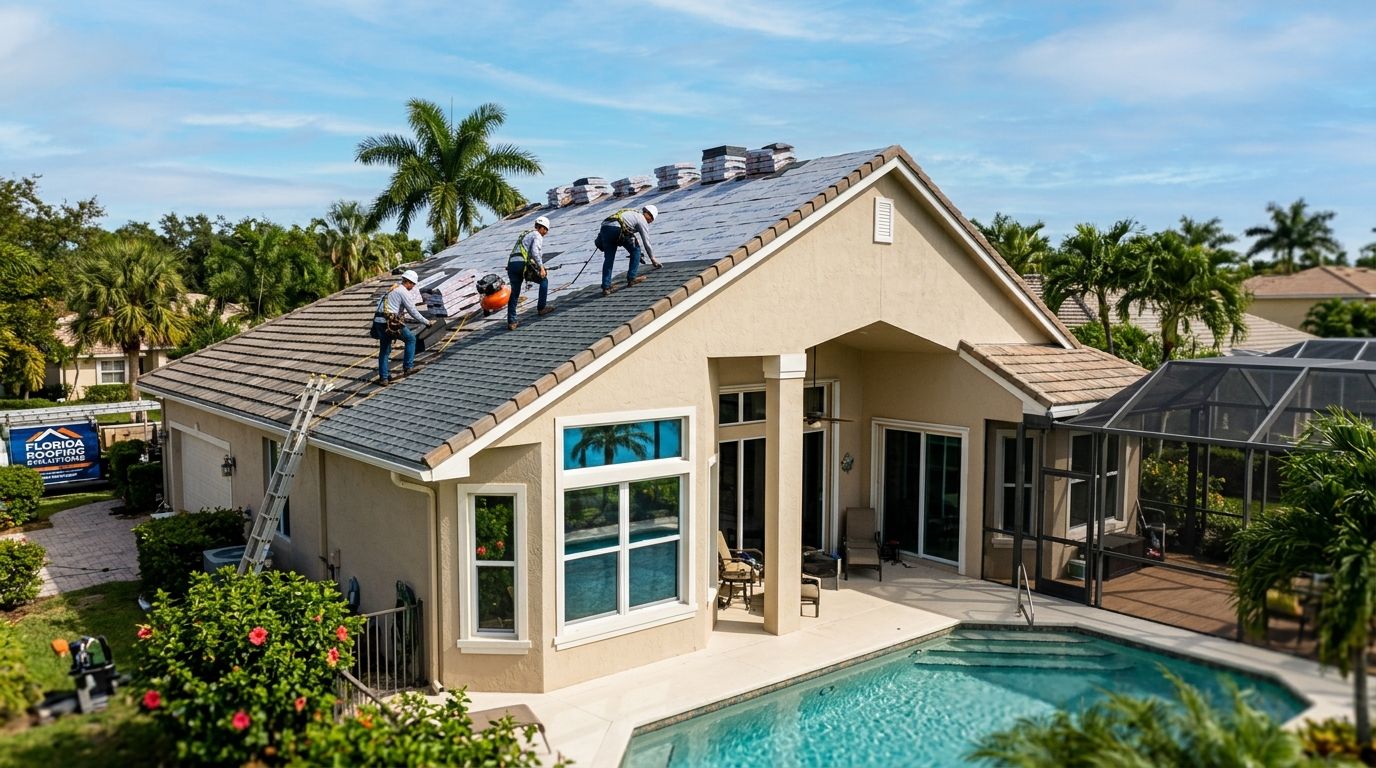
- Confirm the tear-off and dry-in phase (the vulnerable window) doesn't overlap your last week in town
- Avoid scheduling a full replacement during peak hurricane months if you won't be present
Schedule the inspection before you leave for the season
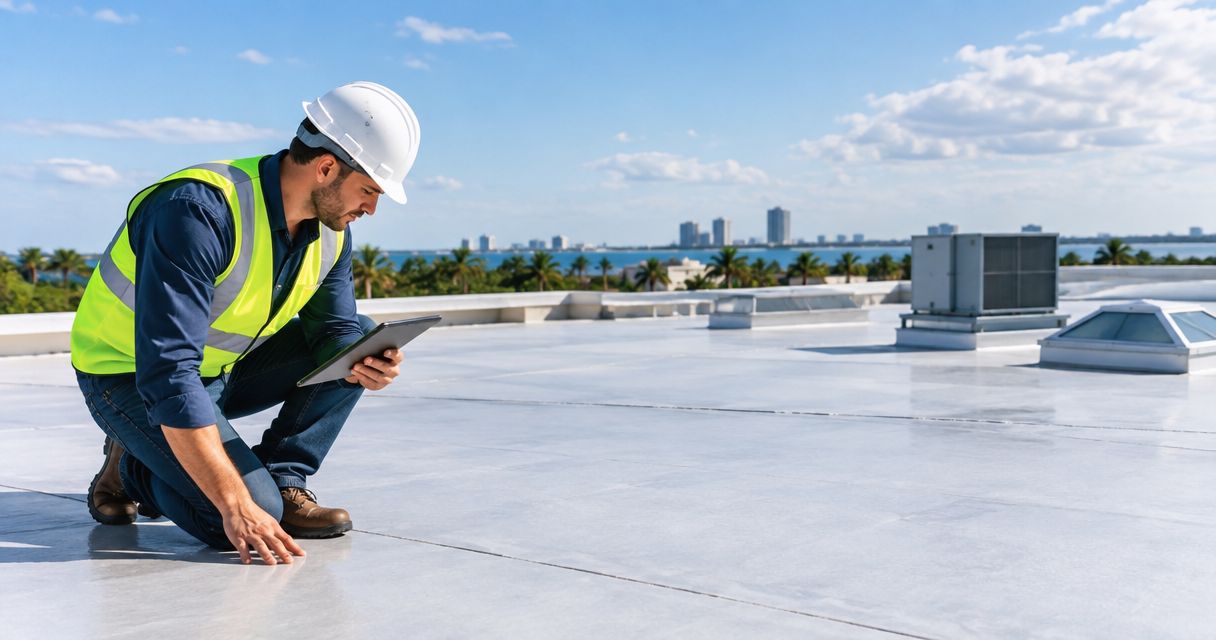
Don't wait for a leak to force the issue. A pre-departure inspection catches problems while you're still local enough to make decisions in person.
- Request a full roof inspection, not just a visual drive-by
- Ask specifically about flashing, valleys, and any prior repair patches
- Get the wind mitigation inspection updated if it's more than a few years old
- Confirm whether your roof age triggers a 4-point inspection requirement at renewal
- Photograph the roof from ground level and drone if available, dated and saved
Line up a local contact who can act on your behalf
Someone needs authority to approve change orders, let inspectors in, and sign off on completion while you're 1,200 miles away.
- Name a local property manager, neighbor, or family member as your point of contact
- Put decision-making authority in writing with your contractor, including a dollar threshold for changes they can approve without calling you
- Share contractor contact info with whoever is checking on the property
- Set expectations for photo updates at each project milestone
- Confirm who receives and signs final inspection paperwork
Choose materials that need less maintenance while you're away
Material choice changes how much attention a roof needs during the months nobody's home.
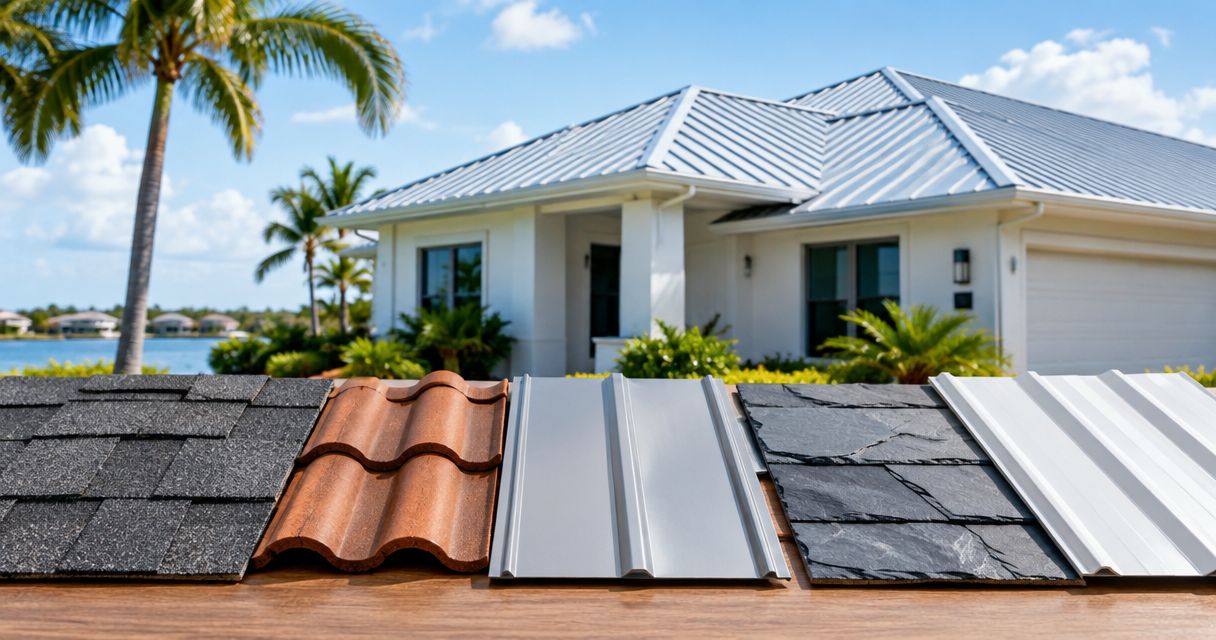
- Metal roofing holds up well against wind and needs minimal upkeep between visits — reasonable for owners gone 6+ months a year
- Tile roofing lasts decades but individual tiles can crack from debris impact and go unnoticed until your return
- Asphalt shingle is the most common and budget-predictable option, though it has the shortest lifespan of the three
- Ask about underlayment quality — a stronger underlayment matters more when nobody's checking for early leak signs
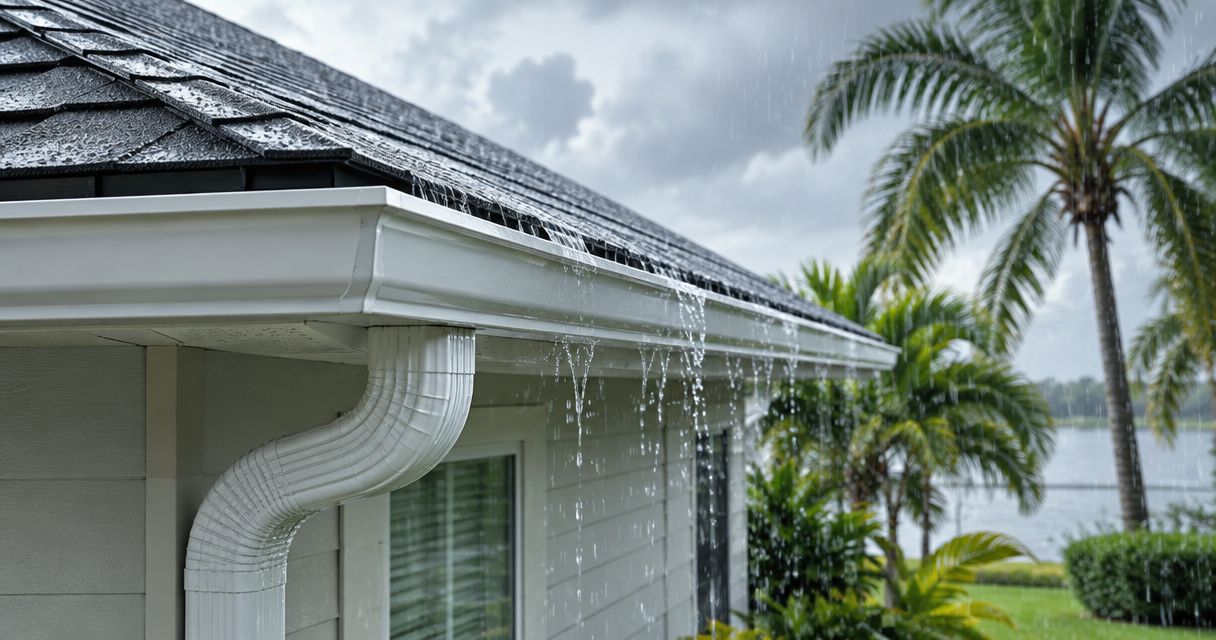
- Confirm gutter and drainage condition alongside the roof; a clogged gutter during an absent summer causes fascia damage fast
Confirm your wind mitigation and insurance paperwork before you go
An expired wind mitigation certificate or a lapsed inspection can mean a surprise premium increase you don't discover until you're back.
- Verify your wind mitigation inspection is current and on file with your insurer
- Ask your contractor for updated documentation immediately after replacement, not "whenever it's convenient"
- Confirm the roof replacement itself doesn't trigger a policy review while you're away
- Keep digital copies of all inspection and completion paperwork accessible from anywhere
- Ask specifically whether your new roof qualifies for a wind mitigation discount
Plan your roof replacement before you leave
Get a no-pressure estimate that works around your travel dates.
Set up remote monitoring and communication with your contractor
A seasonal resident's biggest risk isn't the roof failing — it's not knowing it happened until the damage has spread.
- Ask for photo or video updates at tear-off, dry-in, and final inspection stages
- Request a single point of contact at the roofing company, not a rotating crew lead
- Confirm how change orders or unexpected findings (rotted decking, for example) get communicated and approved
- Set a response-time expectation for questions while the project is underway
- Ask whether the crew will secure the property (locks, materials, debris) at the end of each work day
Plan for permit and HOA timelines that outlast your visit
Cape Coral, Fort Myers, and Naples permitting offices don't move on your schedule, and neither does an HOA board that meets monthly.
- Submit HOA architectural review requests as early as possible — some boards only meet once a month
- Confirm permit turnaround times with the local building department before locking in your install date
- Ask your contractor to handle permit filing and HOA documentation directly rather than routing it through you
- Keep a copy of approved plans and permits in case questions come up after you've left
- Build permit delay risk into your written timeline, not as an afterthought
Get everything documented for the next hurricane season
Once the new roof is in, the paperwork matters as much as the shingles.
- Get manufacturer warranty documentation in writing, not a verbal promise
- File the final wind mitigation inspection with your insurer before the policy renews
- Save before-and-after photos in case of a future storm claim
- Confirm gutter and drainage work was included or still needs separate scheduling
- Set a calendar reminder to have the roof checked again before your next departure
Options compared for seasonal residents
| Approach | Best for | Key limitation |
|---|---|---|
| Complete replacement before departure | Owners who want to inspect final work in person | Requires committing to a tighter pre-departure timeline |
| Contractor-managed replacement while away | Owners with a trusted local contact and written authority | Decisions on change orders take longer without you on site |
| Wait until next visit | Owners with a roof showing only minor, non-urgent wear | Risks a leak or storm event going unaddressed for months |
| Emergency tarp-and-repair, replace later | Owners who discover damage remotely mid-season | Delays a permanent fix and can complicate an insurance claim |
Common mistakes seasonal residents make
- Scheduling replacement for the week you leave, with no buffer. Weather delays or a failed inspection push the project into your absence with no plan for it.
- Skipping the wind mitigation update after replacement. A new roof doesn't automatically update your insurance file — someone has to submit it.
- Giving nobody local decision-making authority. Contractors stall on change orders when they can't reach the homeowner and nobody else can approve.
- Assuming an HOA will approve materials quickly. Some boards meet monthly; missing that meeting can push your project back 30 days.
- Choosing the lowest bid without checking local licensing. Verify a contractor's license before signing anything, especially if you won't be present for the work.
FAQ
When should seasonal Florida residents schedule roof replacement?
Schedule 60-90 days before you leave for the season, so permitting, inspection, and any weather delays don't push the project into your absence. Booking earlier also gives you time to catch issues in person before you go.
Can a roof be replaced while I'm out of state?
Yes, with a local contact who has documented authority to approve decisions and a contractor who provides regular photo updates. Roof Smart of SW Florida coordinates this directly with part-time homeowners across Cape Coral, Fort Myers, and Naples.
Does roof age affect my Florida insurance renewal?
Roofs 25-30 years or older commonly trigger a required 4-point inspection at renewal, and some carriers won't renew without one. Get the inspection done before your policy renewal date, not after a notice arrives.
Is metal roofing better for a part-time Florida home?
Metal roofing needs less maintenance between visits and holds up well against wind, making it a reasonable choice for owners gone 6 months or more a year. Tile and asphalt shingle remain valid options depending on style and budget.
How do I get a wind mitigation discount as a seasonal resident?
Schedule the wind mitigation inspection before you leave and confirm it's filed with your insurer before your next renewal. A new roof replacement is a good time to update this paperwork since features often change.
What happens if my roof gets storm damage while I'm away?
A local contact should notify your contractor immediately for emergency tarping, then coordinate permanent repair or replacement once you're reachable. Document the damage with dated photos for the insurance claim before repairs begin.
Should I replace my roof before or after hurricane season?
Before, if possible — hurricane season runs June 1 through November 30, and a roof mid-replacement during a storm is far more vulnerable than a finished one. Plan replacement in the spring shoulder months when you can.
Do HOA communities have different rules for roof replacement timing?
Yes, many HOA and condo boards require architectural review approval before work starts, and some boards only meet monthly. Submit your request as early as possible to avoid delays that outlast your visit.
One last thing
The detail most seasonal residents miss isn't the roofing material or the contractor — it's the insurance paperwork trail. A completed roof replacement that never gets filed with your insurer as an updated wind mitigation inspection is a missed discount sitting on the table every renewal until someone catches it.