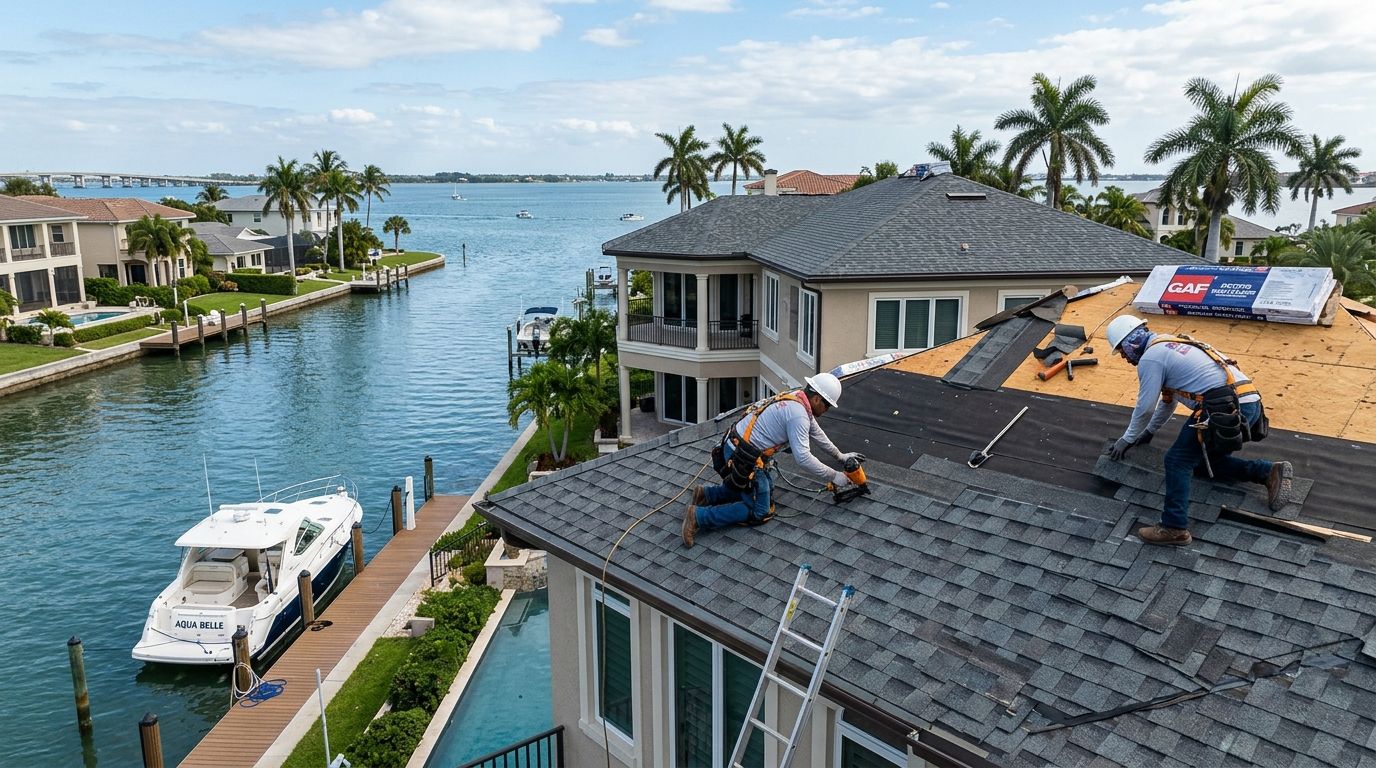
Roof replacement for waterfront homes in Southwest Florida means matching the roofing material, fasteners, and flashing to salt spray, wind-driven rain, and storm exposure that inland homes never see. Canal-front and Gulf-facing properties in Cape Coral, Fort Myers, and Naples corrode faster and lose shingle tabs sooner than a house three miles inland with the identical roof age.
The first move on any waterfront reroof is picking a system rated for both wind uplift and salt corrosion, not wind alone. Roof Smart of SW Florida works on canal-front and Gulf-access homes across Lee and Collier counties, and the material call changes the moment a property sits within sight of open water.
- Standing seam metal and concrete tile outlast architectural shingles on canal-front homes exposed to salt spray.
- Roof replacement for waterfront homes requires stainless or hot-dip galvanized fasteners, not standard electro-galvanized ones.
- A wind mitigation inspection after replacement documents credits insurers use to price windstorm coverage in 2026.
- Schedule tear-off outside the June through November hurricane season whenever the timeline allows.
- Roof Smart of SW Florida quotes waterfront roof replacement with salt exposure built into the estimate.
Why roof replacement matters for waterfront and canal-front homes
Salt-laden air attacks fasteners, flashing, and metal edge trim years faster than the same parts fail inland. A shingle roof that runs its full rated life a few miles from the coast can show granule loss and nail-head rust well before that on a direct canal lot.
Florida insurers weigh wind mitigation features heavily, and a canal-front home with an undocumented roof deck attachment or no secondary water barrier pays more for windstorm coverage. Replacement is the one moment you can fix both problems together: upgrade the material and document the mitigation features on the same job.
Verdict: for canal-front and Gulf-access homes in Southwest Florida, standing seam metal or concrete tile paired with stainless steel fasteners is the safer 2026 roof replacement choice over standard architectural shingles.
Assess your salt and wind exposure before choosing a material
Not every waterfront lot has the same exposure. A home on a narrow interior canal behind other houses sees less direct salt spray than a Gulf-front property, and that difference should drive the material decision as much as budget does.
- Measure distance to open water or a wide canal mouth versus a narrow interior canal
- Check for direct line-of-sight wind exposure with no windbreak from trees or neighboring structures
- Look at how nearby roofs of similar age have aged: rust streaks, curling tabs, chalking paint
- Note the home's flood zone and elevation, which often track with wind exposure
- Photograph existing corrosion on gutters, downspouts, and metal fascia as a baseline
Choose a wind-rated, corrosion-resistant roofing system
A high wind rating does not protect against salt corrosion, and corrosion resistance does not stop uplift. Waterfront homes need both boxes checked on the product data sheet before the contract is signed.
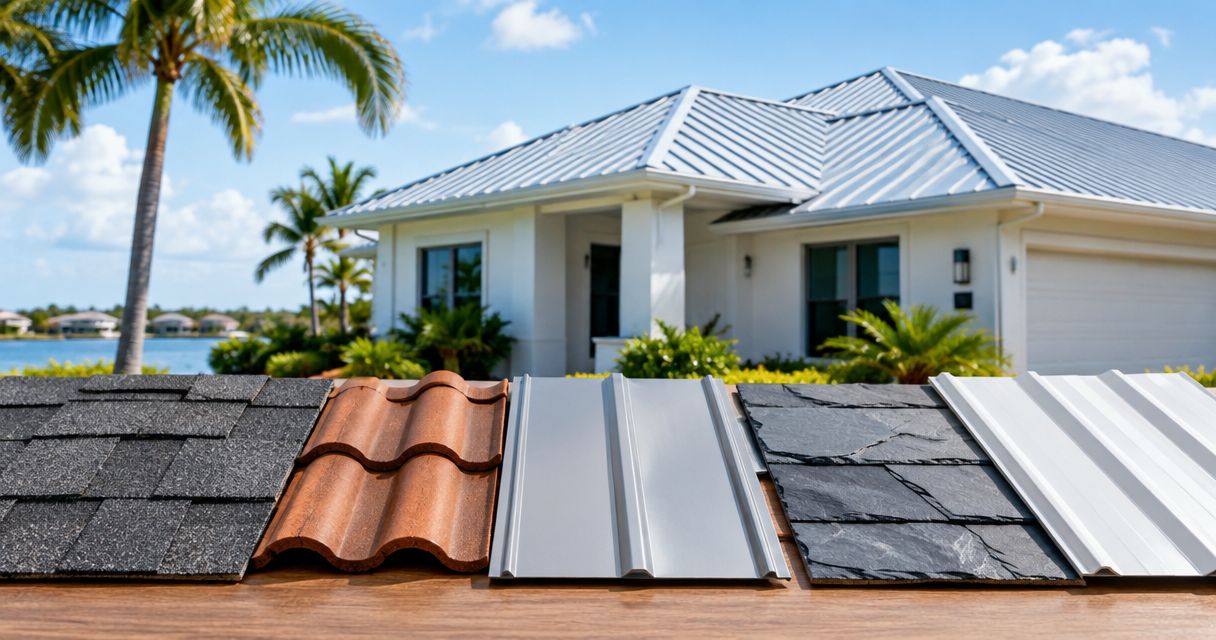
- Standing seam metal with aluminum or coated steel panels resists corrosion better than exposed-fastener panels
- Concrete or clay tile rated for high wind uplift performs well on canal-front homes with a correct attachment system
- Architectural shingles rated 130 mph or higher work on interior canals with moderate exposure, with a shorter life near open water
- Skip mill-finish or unpainted steel panels within roughly a mile of saltwater
- Match the best roof underlayment for Florida humidity and heat, not just the top layer
Specify corrosion-resistant fasteners and flashing
The failure point on most waterfront roofs isn't the field material, it's the fasteners and flashing. Standard electro-galvanized screws and nails rust on a canal lot and stain the roof surface long before the shingles or panels wear out.
- Request stainless steel or hot-dip galvanized fasteners for anything within about a mile of saltwater
- Specify aluminum or stainless flashing at valleys, chimneys, and wall transitions
- Ask for corrosion-resistant drip edge and gutter hangers instead of standard steel
- Confirm sealants and washers are rated for UV and salt exposure, not generic caulk
- Check that vent boots and pipe collars use UV- and salt-stable rubber or silicone
Schedule a wind mitigation inspection after the new roof is on
A wind mitigation inspection records roof-to-wall connections, roof deck attachment, and secondary water barrier: the features carriers use to calculate windstorm credits. Do it right after replacement so the upgrade sits on record for the 2026 policy year.
- Book the inspection once the deck and covering are fully installed
- Confirm the inspector documents the secondary water barrier, whether sealed deck or self-adhering underlayment
- Verify the roof-to-wall connection type is recorded correctly
- Get a copy of the completed inspection form for your carrier
- Re-inspect after any major roof repair so the recorded features still match the roof
Time the tear-off around hurricane season
Tear-off exposes the deck, and an exposed deck on a waterfront lot during a named storm is a real risk. Working outside the June through November window removes most of that exposure.
- Target late winter or spring for a full tear-off and replacement when scheduling allows
- Build in same-day dry-in so the deck is never left open overnight during rainy season
- Ask about the crew's tarping and emergency response plan if a storm forms mid-project
- Confirm material lead times early, since metal panel and tile orders can run weeks
- Do not start a large job with a storm already in the regional forecast
Verify licensing, insurance, and itemized specs before signing
Waterfront jobs attract out-of-town crews chasing storm work, and license or insurance gaps surface fast once a claim gets filed. Verifying credentials protects you more than any warranty language.
- Confirm an active Florida roofing license, not just a general contractor license
- Ask for current liability and workers' comp certificates with valid dates
- Require itemized estimates naming fastener type, underlayment, and flashing material
- Ask for references on canal-front or Gulf-access properties specifically
- Compare labor warranty terms separately from the manufacturer material warranty
Bring in a crew that reroofs waterfront homes regularly
A crew working interior lots all week may not default to corrosion-resistant fastener and flashing specs unless asked directly. Roof Smart of SW Florida quotes waterfront roof replacement and roof replacement for older Florida homes with the salt exposure question handled in the estimate rather than as an afterthought.
Roofing options for waterfront and canal-front homes
| Option | Best for | Key limitation |
|---|---|---|
| Standing seam metal, coated steel or aluminum | Direct canal or Gulf-front homes with heavy salt exposure | Higher material cost than shingles |
| Concrete or clay tile | Homes wanting the longest service life, where structure supports the weight | Weight requires a structural check on older homes |
| Architectural shingles, 130 mph+ rating | Interior canal lots with moderate exposure | Shorter service life near open water than metal or tile |
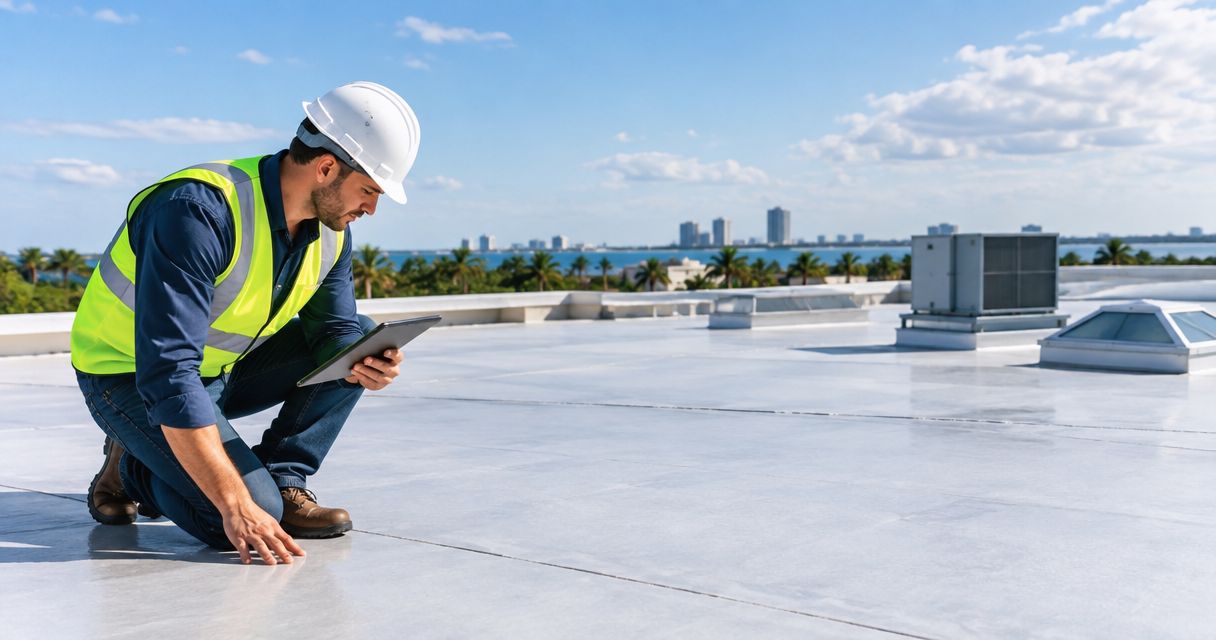
| Low-slope membrane on lanai and flat tie-ins | Waterfront homes with attached flat sections | Needs periodic recoating against UV and standing water |
For Gulf-facing properties, metal roofing for coastal Southwest Florida homes is the default recommendation in 2026 because the panel coating and fastener spec can both be controlled.
Get a free roof evaluation
No-pressure estimate for canal-front and Gulf-access homes in SW Florida.
Common mistakes waterfront homeowners make
- Reusing standard fasteners to save money. Electro-galvanized screws rust on a canal lot and streak the roof surface, then loosen at the worst time.
- Skipping the wind mitigation inspection after replacement. Undocumented roof-to-wall connections and deck attachment mean the insurance credit never gets applied.
- Choosing mill-finish or unpainted metal panels. Within a mile of saltwater these corrode well ahead of their rated lifespan.
- Scheduling tear-off mid-hurricane season with no tarping plan. An open deck on a Gulf-facing or canal lot during a storm is preventable.
- Focusing only on the field roofing. Standard steel flashing and gutter hangers corrode faster than the panels around them and drag the whole system down.
FAQ
What is the best roof replacement for waterfront homes in Florida?
Standing seam metal with coated steel or aluminum panels and stainless steel fasteners holds up best on canal-front and Gulf-access homes in 2026. Concrete tile is a strong second choice where the roof structure supports the added weight.
Is metal roofing better than shingles for canal-front homes?
Metal roofing generally outlasts architectural shingles on canal-front homes because it resists salt corrosion and carries higher wind ratings. Shingles rated 130 mph or higher still work on interior canals with lower direct exposure.
How much does roof replacement cost for a waterfront home?
Cost depends on material, roof size, and the corrosion-resistant fastener and flashing specs the exposure requires. Get an itemized estimate from a licensed local roofer rather than relying on a general per-square figure.
Does a wind mitigation inspection lower insurance costs after a roof replacement?
A wind mitigation inspection documents roof-to-wall connections, deck attachment, and secondary water barrier that carriers use to calculate windstorm credits. Scheduling it right after replacement puts the upgraded specs on record.
What fasteners should be used on a canal-front roof?
Stainless steel or hot-dip galvanized fasteners resist salt corrosion far better than standard electro-galvanized screws and nails. Standard fasteners on a canal-front roof commonly show rust staining within a few storm seasons.
Should I replace my roof before or after hurricane season?
Replacing outside the June through November hurricane season reduces the risk of an exposed deck during a storm. When timing does not allow it, confirm the contractor has a tarping and emergency response plan in writing.
Can a flat section on a waterfront home be repaired instead of replaced?
Flat sections tied to a lanai or pool cage can often be recoated if the membrane is still structurally sound. A roof inspection determines whether recoating or full replacement is the right call.
How do I check that a roofing contractor is licensed in Florida?
Confirm the contractor holds an active Florida roofing license, not only a general contractor license, and ask for current liability and workers' comp certificates. Verify the license number against the state record before signing anything.
One last thing
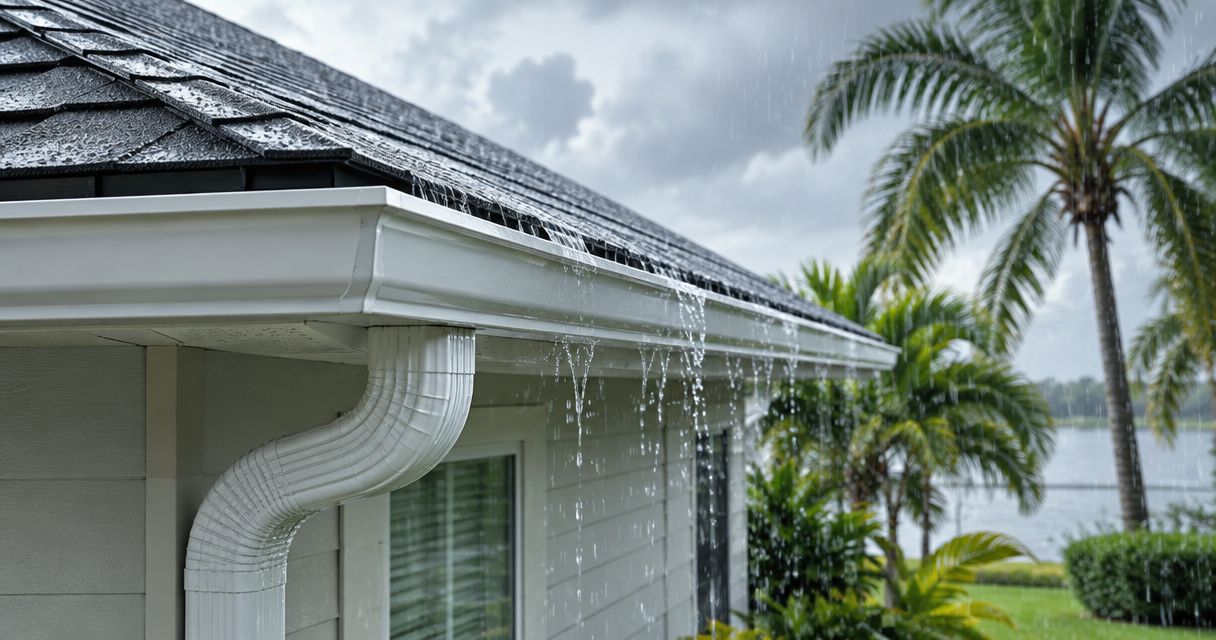
The detail most waterfront homeowners skip is not the roofing material, it is the gutter and flashing hardware. A canal-front home can get a premium standing seam roof in 2026 and still show rust streaks down the fascia within a couple of years, because standard steel gutter hangers set the corrosion pace for the entire system.