Florida homeowners hear "lifetime warranty" in a sales pitch and assume every roof problem is covered — it isn't, and knowing the difference before you sign a contract in 2026 is what protects your investment.
- The best roof warranty florida homeowners can get combines a manufacturer material warranty with a written contractor workmanship warranty.
- Manufacturer warranties cover material defects only; they do not cover labor to remove and replace a failed roof.
- Wind-rated system warranties matter most in Southwest Florida's hurricane corridor and often connect to wind mitigation insurance discounts.
- Transferable warranties add resale value but must be registered correctly at installation, not after the fact.
- Tile and metal roofs carry longer manufacturer terms than shingles but usually cost more to register and maintain.
Why this matters
A roof warranty only pays out when the failure matches what the warranty actually covers, and most homeowners in Cape Coral, Fort Myers, and Naples find that out during a claim, not before one. Southwest Florida roofs take more abuse than roofs almost anywhere else in the country — UV load, humidity, and named storms every hurricane season — so the gap between a paper warranty and a real one shows up fast.
Roof Smart of SW Florida walks homeowners through warranty terms during every free estimate, because the fine print matters more than the sales sheet. This guide ranks the roof warranty types that actually matter in Florida in 2026, what each one covers, and who should skip which one.
What makes the best roof warranty in Florida
- Coverage scope — materials only, materials plus labor, or a full system warranty covering both
- Term length — flat multi-year coverage versus prorated coverage that declines over decades
- Wind and storm rating — whether the warranty holds up under Florida's wind uplift and hurricane exposure requirements
- Transferability — whether a new homeowner inherits the same protection at resale
- Who backs it — the manufacturer, the installing contractor, or both jointly
- Claim process — how a claim gets filed and what specific actions void it
At a glance: roof warranty types ranked
| Warranty Type | Best For | Standout Feature | Key Limitation |
|---|---|---|---|
| Manufacturer material warranty | Baseline defect protection | Broad, no-cost registration on new installs | Covers materials only, not labor |
| Contractor workmanship warranty | Installation-error protection | Backed by the crew that actually installed the roof | Terms vary widely by contractor |
| Enhanced system warranty | Full labor-plus-material coverage | Requires a certified installer program | Fewer contractors qualify to offer it |
| Transferable warranty | Resale value | Passes protection to the next owner | Must be registered correctly at install, not later |
| Wind-rated system warranty | Hurricane-prone counties | Ties to wind mitigation inspection results | Only as strong as the mitigation documentation behind it |
| Tile and metal manufacturer warranty | Long-life roof systems | Decades-long prorated terms | Higher registration and maintenance requirements |
1. Manufacturer material warranty: best roof warranty florida for defect protection
Every asphalt shingle, tile, or metal panel sold by a major manufacturer comes with a material warranty covering defects in the product itself — cracking, granule loss, or premature failure that isn't tied to installation or storm damage. It's registered at the time of install and it's the floor every Florida roof should have, not the ceiling.
Manufacturer material warranty pros:
- No added cost on most new roof installations
- Backed by a national manufacturer, not a single local business
- Terms often run 25 to 50 years, sometimes labeled "lifetime" on architectural shingles
Manufacturer material warranty cons:
- Covers materials only — labor to tear off and reinstall isn't included
- Wind and storm damage is typically an insurance claim, not a warranty claim
- Proration usually kicks in after the first several years, reducing payout over time
Best for: any new roof installation, as a baseline, not a substitute for other coverage. Verdict: Buy.
2. Contractor workmanship warranty: best for installation-error protection
A workmanship warranty is separate from the manufacturer's paper — it's the installing contractor standing behind their own labor. If flashing is installed wrong, nails miss the deck, or ventilation is undersized, this is the warranty that covers the fix, not the manufacturer's.
During a roof replacement in Cape Coral or anywhere else in Southwest Florida, ask the contractor to put the workmanship term in writing before signing — verbal promises don't survive a change in ownership or a bad review.
Contractor workmanship warranty pros:
- Covers installation errors that manufacturer warranties exclude
- Local accountability — the crew that installed it is the crew that fixes it
- Often the fastest claim to resolve since no manufacturer approval is required
Contractor workmanship warranty cons:
- Terms and length vary contractor to contractor — there's no industry standard
- Only as good as the contractor's longevity in business
- Rarely covers material defects, only installation mistakes
Best for: homeowners who want protection against installer error specifically. Verdict: Buy.
Get your warranty terms in writing
Free, no-pressure roof estimate for Southwest Florida homeowners.
3. Enhanced system warranty: best for full labor-plus-material coverage
Manufacturers like GAF and Owens Corning offer enhanced or "golden" tier system warranties, but only through contractors certified in their installer program. These combine material and labor coverage under one document, which closes the gap between items 1 and 2 above.
Enhanced system warranty pros:
- Single warranty covers both materials and labor in one claim process
- Often extends the manufacturer's standard term significantly
- Reduces disputes over whether a failure is a materials issue or an install issue
Enhanced system warranty cons:
- Not every contractor is certified to offer it — ask before assuming it's available
- Requires strict adherence to manufacturer specifications during install
- Registration deadlines are tighter than standard material warranties
Best for: homeowners doing a full reroof who want one warranty instead of two. Verdict: Hold — confirm your contractor's certification status before counting on it.
4. Transferable warranty: best for resale value
A transferable warranty passes the remaining coverage to a new owner when a home sells, which matters in Southwest Florida's active resale market across Cape Coral, Fort Myers, and Naples. It has to be registered as transferable at installation — retroactive registration usually isn't an option.
Transferable warranty pros:
- Adds a documented selling point at resale
- Gives the next owner continued protection without paying to re-register
- Signals the roof was installed and registered properly the first time
Transferable warranty cons:
- Some manufacturers reduce the remaining term upon transfer
- Missed registration windows can void transferability entirely
- Not every roofing product line offers this option
Best for: homeowners planning to sell within the warranty period. Verdict: Hold — confirm transfer terms in writing, don't assume they're automatic.
5. Wind-rated system warranty: best for hurricane-prone counties
This is the warranty tier that matters most for anyone in Naples, Port Charlott,e or coastal Lee County. Wind-rated system warranties specify a wind speed threshold the installed roof must meet, and that documentation often overlaps with what insurers require for a wind mitigation insurance discount.
Wind-rated system warranty pros:
- Directly tied to the storm exposure Southwest Florida actually faces
- Documentation can support insurance premium reductions
- Forces installation to meet a specific, verifiable wind uplift standard
Wind-rated system warranty cons:
- Only as strong as the underlying wind mitigation inspection paperwork
- Higher wind ratings can mean fewer material and color options
- Doesn't cover storm damage itself — that's still an insurance matter
Best for: any Southwest Florida home in a wind-exposed or coastal zone. Verdict: Buy.
6. Tile and metal manufacturer warranty: best for long-life roof systems
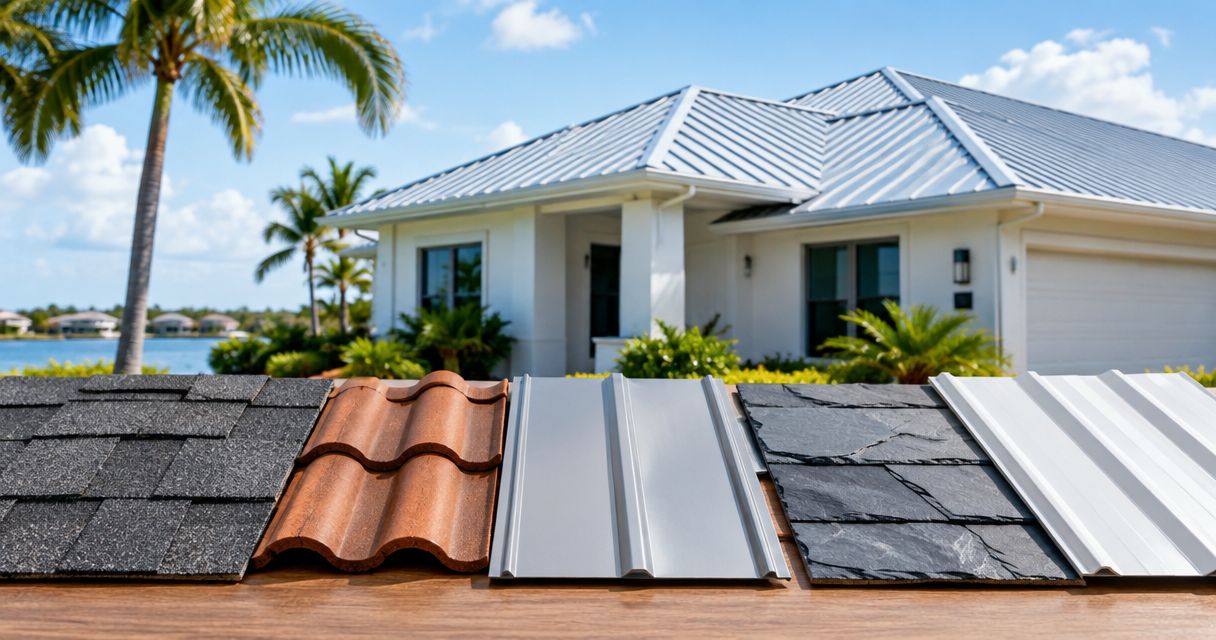
Clay tile and standing-seam metal roofs carry the longest manufacturer terms in the roofing category, often decades beyond standard asphalt shingle terms. Homeowners considering tile roofing options for Southwest Florida homes should weigh the longer warranty against the higher registration requirements that come with it.
Tile and metal manufacturer warranty pros:
- Longest terms available in residential roofing
- Materials naturally resist the granule loss and UV degradation asphalt shingles face
- Prorated coverage still holds meaningful value decades in
Tile and metal manufacturer warranty cons:
- Requires precise installation specifications to keep the warranty valid
- Registration and inspection requirements are stricter than shingle warranties
- Higher upfront commitment if the roof isn't already tile or metal
Best for: homeowners already choosing tile or metal for a reroof. Verdict: Wait — it's a strong warranty, but not a reason to switch roof materials on its own.
How this ranking works
Each warranty type above is scored against the same six criteria: coverage scope, term length, wind rating, transferability, who backs it, and how a claim actually gets filed. No single warranty wins on all six — that's why the ranking pairs a material warranty with a workmanship warranty as the baseline, then layers in enhanced, transfer, wind, or material-specific coverage based on the home.
Which roof warranty should you choose?
For most Southwest Florida homeowners in 2026, the right answer is a manufacturer material warranty paired with a written contractor workmanship warranty — that combination closes the biggest coverage gap without requiring a specialty roof system. Add the wind-rated tier if the home sits in a coastal or high-exposure zone, and check transferability if a sale is on the horizon within the next several years.
FAQ
What's the best roof warranty in Florida?
A manufacturer material warranty combined with a written contractor workmanship warranty is the strongest baseline for Florida homes in 2026. Homes in wind-exposed counties should add a wind-rated system warranty on top of that pairing.
Is a manufacturer warranty better than a contractor warranty?
Neither replaces the other — a manufacturer warranty covers material defects while a contractor workmanship warranty covers installation errors. Florida homeowners need both to close the full coverage gap.
Does a roof warranty cover hurricane damage?
Standard manufacturer and workmanship warranties generally do not cover storm or wind damage — that's an insurance claim, not a warranty claim. A wind-rated system warranty documents that the roof met a specific wind uplift standard at install, which can support an insurance claim but doesn't replace one.
Can I transfer a roof warranty when I sell my house?
Only if the warranty was registered as transferable at the time of installation. Some manufacturers reduce the remaining term upon transfer, so confirm the exact terms in writing before listing the home.
How long does a roof warranty last in Florida?
Manufacturer material warranties commonly run 25 to 50 years on asphalt shingle systems, with tile and metal systems often running longer. Contractor workmanship warranties typically run 2 to 10 years and vary by installer.
Does a wind mitigation inspection affect my roof warranty?
A wind mitigation inspection doesn't change the warranty itself, but its documentation often supports both a wind-rated warranty claim and an insurance premium discount. Keep the inspection report with the warranty paperwork.
What voids a roof warranty in Florida?
Unapproved repairs, improper installation, and missed registration deadlines are the most common reasons a warranty gets denied. Using a manufacturer-certified installer and registering the warranty immediately after install avoids most of these issues.
How much does a roof warranty cost?
Manufacturer material warranties are typically included in the cost of the roofing materials with no separate registration fee. Enhanced system warranties and extended workmanship terms vary by contractor, so ask for exact terms during a free estimate.
One last thing
The warranty most homeowners forget to ask about is the one tied to their own contractor's business longevity — a 10-year workmanship warranty is only as good as whether that roofing company is still answering the phone in year eight. Ask how long the installer has operated in Southwest Florida before signing anything, not just what the warranty document says.