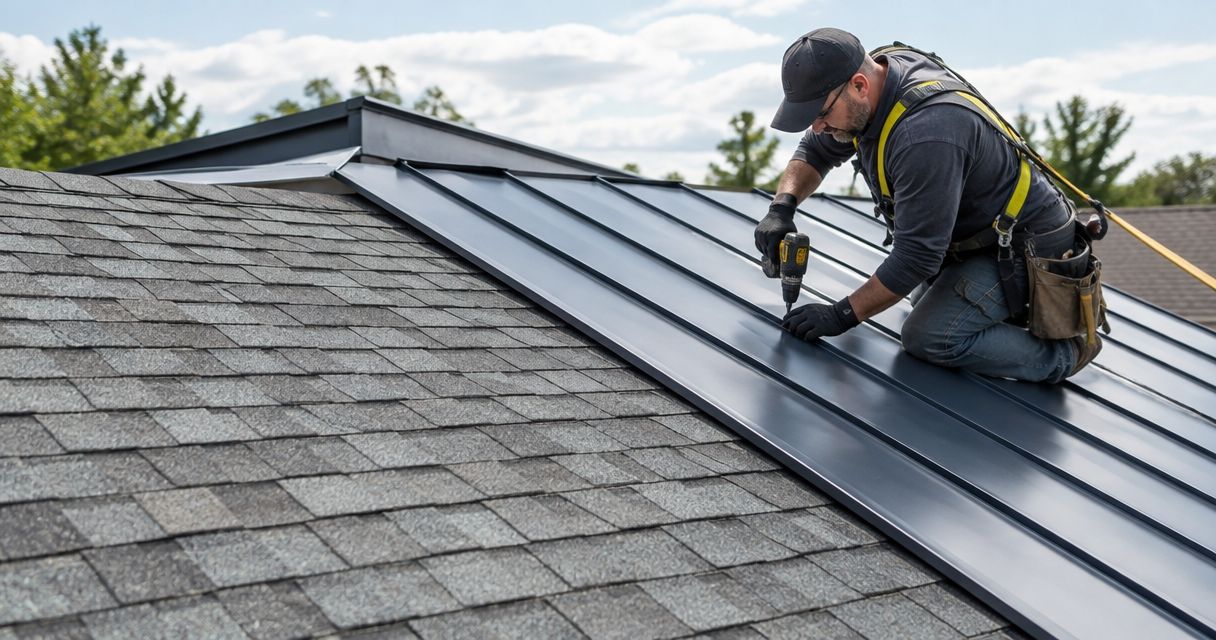
A wind mitigation inspection has no guaranteed savings amount: your reduction depends on the wind-resistant features documented, the credits already applied, and your insurer’s rating rules. For your 2026 policy, ask for a written comparison with and without any newly accepted credits; inspection fees and improvement costs are separate from the premium reduction.
- How much can a wind mitigation inspection save on my insurance premium? Your insurer must calculate newly accepted credits.
- Existing wind mitigation credits can leave no additional savings, even when your home has qualifying features.
- Compare identical coverage and deductibles before treating a lower homeowners insurance quote as mitigation savings.
- Roofsmartflorida provides roofing and wind mitigation services for Southwest Florida homeowners who need a roof evaluation.
How much can a wind mitigation inspection save on my insurance premium?
Your savings equal the premium reduction attributable to newly accepted mitigation credits—not the discount advertised for another home. An inspection documents construction features; the insurer decides how those findings affect your policy.
Start with the distinction between qualifying for a credit and adding a credit you do not already receive. The guide to wind mitigation inspections for homeowners insurance discounts explains the inspection’s role in that process.
| Your situation | What the inspection establishes | Savings implication | Best next step |
|---|---|---|---|
| Qualifying features are not credited | Evidence of features the insurer has not recognized | Additional credits depend on acceptance and rating rules | Submit the report for a policy review |
| Qualifying features are already credited | Confirmation of the existing construction | The same findings do not create a second credit | Check whether anything has changed |
| Features cannot be verified | A documentation or access gap | Unverified features do not establish eligibility | Ask what evidence the inspector needs |
| Improvements are planned | The current condition before work | Future savings depend on completed, documented work | Request an insurer estimate before authorizing upgrades |
A report showing strong construction is useful evidence, but it is not a promise of a lower bill. Ask your agent to identify which findings would change your current rating.
Why this matters
Wind mitigation credits concern resistance to wind damage. They do not make every part of a homeowners policy cheaper, and they do not prevent other premium changes.
Florida’s Office of Insurance Regulation provides the Uniform Mitigation Verification Inspection Form to document relevant construction features. For a 2026 review, have your insurer confirm the accepted form and supporting documentation before booking an inspection.
Your total premium can rise at renewal even while mitigation credits reduce the wind-related charge. Separate those effects: a renewal increase does not, by itself, prove that the insurer ignored your report.
Measure the credit against the same policy terms, not simply against last year’s bill. Otherwise, changes in coverage, deductibles, or rates obscure the inspection’s effect.
How do I find my actual savings before making a decision?
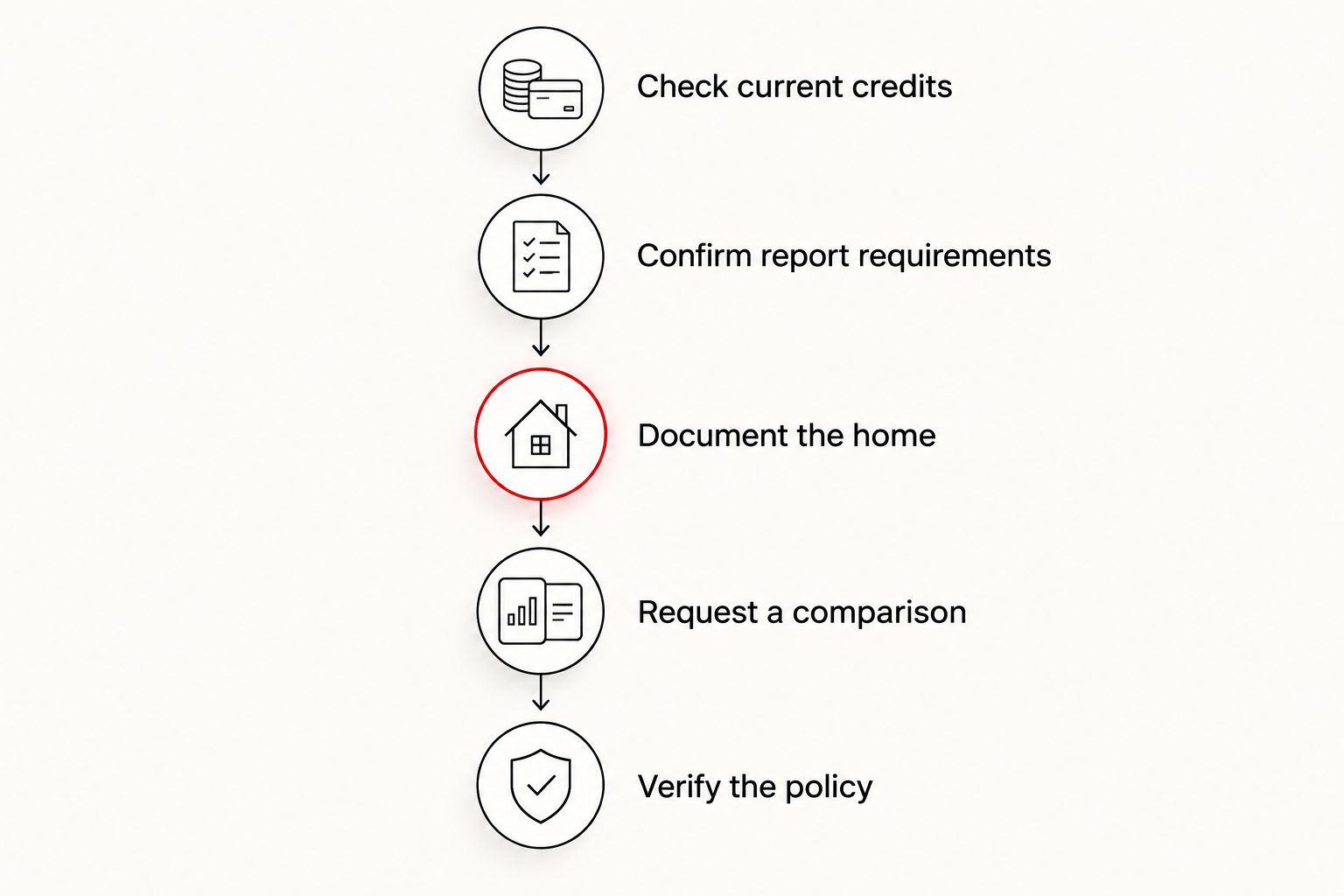
Use this sequence to replace a general savings claim with a policy-specific answer. Keep the agent’s response with your inspection records so you can check the final policy documents.
- Check current credits. Ask your agent for the wind mitigation features currently recorded on your policy. Request more than confirmation that a discount exists; ask which inspection findings support it.
- Confirm report requirements. Ask which form, inspector qualifications, photographs, and supporting records the insurer accepts. Confirm whether your existing report remains acceptable before ordering another.
- Document the home. Give the inspector available roof permits, installation records, product approvals, and prior reports. Records support the inspection but do not replace required verification.
- Request a comparison. Have your agent calculate the effect of accepted findings while holding coverage, deductibles, and other discounts constant. Ask which findings changed the premium.
- Verify the policy. Review the issued documents for the applied credits and their effective date. Submission alone is not confirmation that the insurer has accepted and applied them.
For an annual comparison, use the same 12-month policy term on both sides. Comparing an annual figure with an installment payment does not show your annual savings.
Your written request can be simple: ask the agent to show the premium difference attributable only to the newly accepted mitigation findings. Also ask whether the change applies during the current term or at renewal, rather than assuming an effective date.
Which roof features affect wind mitigation credits?
The Florida mitigation form examines specific construction details, not whether the roof looks new from the driveway. Roof covering, deck attachment, roof-to-wall connections, roof geometry, secondary water resistance, and opening protection are relevant categories.
Roof covering and deck attachment
Roof covering documentation helps establish the installed system and its applicable approvals. Deck attachment concerns how the roof sheathing is fastened to the supporting structure; shingle, tile, or metal appearance alone does not establish that connection.
Ask the inspector what can be verified safely and what records would resolve uncertainty. Do not assume a recent roof replacement automatically proves every credit-related detail.
Roof-to-wall connections and roof shape
Roof-to-wall connections help hold the roof structure to the walls. The inspector records the connection type using the applicable form criteria, rather than accepting a general description that the roof has straps.
Roof geometry is a separate feature. A qualifying roof shape does not establish the quality of the connections, and stronger connections do not change the shape classification.
Secondary water resistance and opening protection
Secondary water resistance addresses protection against water intrusion beneath the roof covering. Not every underlayment installation meets the applicable classification, so keep installation documentation rather than relying on a product description alone.
Opening protection concerns more than the roof. Windows, doors, skylights, and garage doors must be evaluated under the form’s criteria; protected windows alone do not establish whole-home opening protection.
Why wind mitigation savings vary
The same inspection result does not produce the same reduction on every policy. These factors explain why a neighbor’s experience is not a reliable forecast for your home:
- Existing credits. Features already included in your rating do not generate another credit merely because a new report confirms them.
- Verified construction. The inspector must document the actual features. An assumption about what is hidden behind finishes is not equivalent to verified evidence.
- Combination of features. Roof attachments, geometry, water resistance, and opening protection represent different parts of the home’s wind resistance. Do not add separate advertised percentages together.
- Insurer rating rules. The insurer applies accepted findings through its rating plan. A contractor’s assessment does not establish the insurer’s final calculation.
- Policy structure. The wind-related portion of the premium and the coverage you carry affect how a credit translates into the total bill.
- Comparison timing. A renewal quote can include other changes. For your 2026 review, isolate the mitigation effect from changes in rates, insured value, and deductibles.
Ask for an explanation of any finding that receives no additional credit. The answer should distinguish an existing credit, an eligibility issue, and missing documentation rather than treating them as the same problem.
Is an inspection worth getting if I already have credits?
An existing credit makes checking your records the first move, not automatically ordering another inspection. A new report is most useful when construction has changed, documentation is incomplete, or the insurer requires updated evidence.
If your roof has been replaced since the last report, compare the old findings with the completed work. Ask whether the installation changed any feature the insurer uses for rating, and gather the records needed to verify it.
If nothing has changed, ask whether the insurer already has an acceptable report. Repeating the same findings does not create a new source of savings, although an insurer’s documentation requirements still matter.
An inspection also does not strengthen the house by itself. It records existing conditions; repairs and improvements are separate decisions with their own scope and expense.
Should I upgrade my roof just to reduce insurance premiums?
Do not authorize roof work solely on an unverified insurance savings claim. First establish what needs repair, what mitigation improvement is proposed, and how your insurer would treat the completed work.
For a 2026 project, keep the roofing proposal and insurance estimate separate. A sound proposal explains the physical work; a useful insurance response explains the potential rating change and the documentation needed afterward.
| Option | Best for | Main benefit | Main limitation |
|---|---|---|---|
| Review existing records | Homeowners unsure which credits already apply | Identifies documentation gaps before ordering work | Cannot verify undocumented physical conditions |
| Obtain an updated inspection | Homeowners with changed or incompletely documented features | Creates a current record for insurer review | Does not guarantee additional credits |
| Complete targeted improvements | Homeowners with a verified weakness and defined work scope | Changes the construction rather than just the paperwork | Requires separate spending and post-work verification |
Roofsmartflorida is a fit for Southwest Florida homeowners who need roofing and wind mitigation services. The company serves Cape Coral, Fort Myers, Naples, and surrounding Southwest Florida counties; its roofing assessment and your insurer’s premium calculation serve different purposes.
Use Roofsmartflorida’s roofing and wind mitigation services to discuss the roof’s condition and proposed work. Keep the insurance decision with your agent or insurer: a roofing recommendation is not confirmation of a premium reduction.
Discuss your roof’s condition
Request a roofing evaluation before deciding whether repairs or replacement belong in your mitigation plan.
Can I save without replacing my roof?
You do not need a roof replacement merely to document qualifying features that already exist. If those features are missing from the insurer’s records, an accepted report is the route to having them reviewed.
Start with evidence, not construction. Ask whether the issue is an uncredited feature, an unverified feature, or an actual construction weakness; each requires a different response.
Will my total premium fall after the inspection?
A newly accepted mitigation credit does not guarantee a lower total renewal premium. Other rating or coverage changes can exceed the reduction attributable to the credit.
For 2026, request a comparison using the same coverage and deductible. Then check both the credit and the final amount due instead of judging the result from the renewal total alone.
Is a wind mitigation inspection the same as a roof inspection?
A wind mitigation inspection documents specified wind-resistant construction features for insurance review. A roof condition inspection examines the roof’s condition, while a four-point inspection addresses roofing, electrical, plumbing, and heating and cooling systems.
These reports answer different questions. Confirm which report your insurer needs before assuming that a general roof inspection satisfies a mitigation documentation request.
FAQ
How much can a wind mitigation inspection save on my insurance premium?
There is no guaranteed savings amount; your insurer calculates the effect of newly accepted mitigation credits. Ask for a comparison with the same coverage, deductibles, and policy term.
Can a wind mitigation inspection produce no additional savings?
Yes, an inspection can produce no additional savings when qualifying features are already credited or no new qualifying features are verified. Check your current credits before booking.
Does a new roof automatically lower my homeowners insurance?
A new roof does not automatically establish additional wind mitigation savings. The insurer must accept documentation of relevant features and apply its rating rules.
Do wind mitigation credits reduce my entire insurance bill?
Wind mitigation credits apply through the insurer’s wind-related rating calculation, not as a blanket reduction to every charge. Ask your agent to explain the effect on your total premium.
Should I get a wind mitigation inspection before my 2026 renewal?
Ask your insurer before your 2026 renewal whether an updated report is needed and when it must be submitted. Confirm the effective date of any accepted credit.
Can my roofing contractor guarantee insurance savings?
A roofing contractor cannot establish your insurer’s final premium calculation. Roofsmartflorida provides roofing and wind mitigation services; your insurer confirms accepted credits and their premium effect.
What should I do if my insurer does not apply a credit?
Ask for the reason in writing and identify whether the issue is eligibility, existing credits, or missing documentation. Resolve that specific issue rather than ordering work without an explanation.
One last thing
A rising renewal premium and a valid mitigation credit can exist at the same time. The useful question is whether the accepted features reduced the premium compared with the same policy without those credits—not whether the bill fell overall.
Before spending on improvements, get the physical findings and the insurer’s explanation in writing. That separates work your home needs from savings your policy will actually recognize.