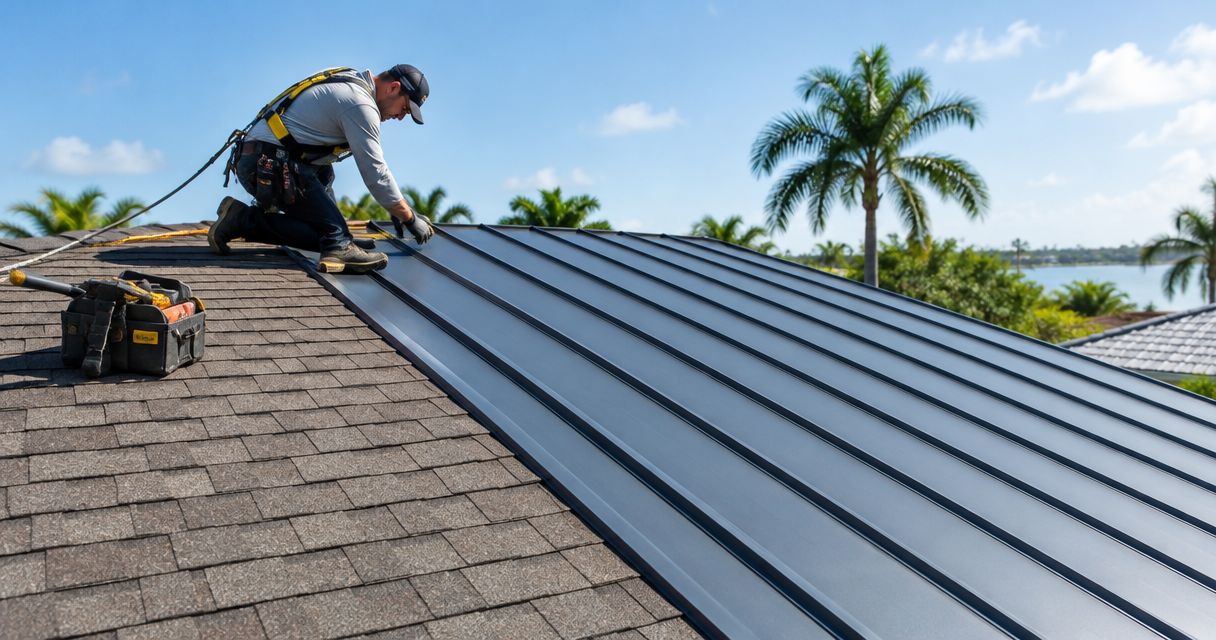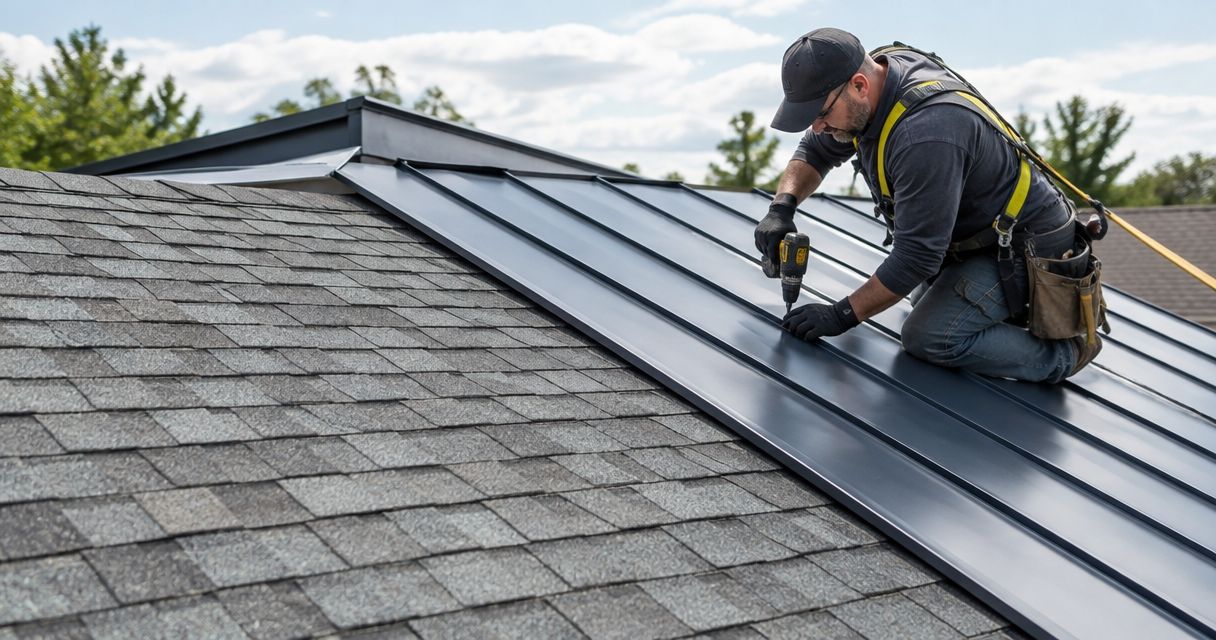
Yes, you can install a metal roof over an existing shingle roof when the existing roof is suitable, the metal roofing system permits that installation, and local building requirements allow it. Covering shingles does not fix wet insulation, damaged decking, or an unresolved leak. For a Southwest Florida project in 2026, confirm those conditions before agreeing to leave the shingles in place.
- Can you install a metal roof over an existing shingle roof? Yes, when roof condition, installation requirements, and local rules allow.
- Metal roof installation over shingles does not repair hidden damage or eliminate the need for proper flashing.
- Roofsmartflorida provides metal roofing services for Southwest Florida homeowners considering roof replacement.
- Choose tear-off when damage needs exposure and repair; consider an overlay only after confirming eligibility.
Can you install a metal roof over an existing shingle roof?
Yes, but an overlay is a conditional installation method—not permission to cover any old roof. Your contractor must establish that the existing roof can remain and that the proposed metal assembly meets the requirements for your property.
Start by asking for an evaluation of the shingles, decking, attic conditions, and leak history. Roofsmartflorida offers residential and commercial roofing services, including metal roofing installation, repair, and replacement across Southwest Florida.
The practical choice is between leaving the shingles beneath the metal and removing them before installation. Neither approach excuses missing repairs or incorrect attachment.
| Approach | Best for | Main advantage | Main limitation |
|---|---|---|---|
| Metal over shingles | Roofs verified as suitable for an approved recover assembly | Avoids removing the existing shingles | Limits direct access to inspect and repair the covered decking |
| Tear-off before metal | Roofs with damage, unsuitable existing layers, or conditions requiring deck access | Exposes the deck for inspection and repairs | Adds removal work and exposes the roof during construction |
A roof that looks acceptable from the driveway has not passed this evaluation. The decision depends on what supports the new panels, how water drains, and how the complete assembly attaches to the building.
Why this matters
Your new roof depends on the structure beneath it. Metal panels cannot strengthen rotten decking or make a poorly detailed roof penetration watertight simply by covering it.
For a 2026 Southwest Florida replacement, ask how the proposed assembly addresses wind resistance, water entry, and existing damage. A panel's appearance tells you little about those details. Approve the installation method only after the contractor explains the roof assembly—not just the metal finish.
When installing metal over shingles makes sense
An overlay deserves consideration when the existing shingles provide a suitable surface, the underlying roof is sound, and the proposed system specifically allows the installation. The contractor also needs to confirm that the existing layers and building conditions satisfy applicable reroofing requirements.
The existing roof is sound
Look for an explanation of how the contractor assessed the roof deck, not just a statement that the shingles look fine. Attic observations, accessible decking, leak history, and targeted investigation can help identify concerns. Hidden areas still require judgment and, where necessary, opening the roof.
A dry ceiling is not proof that every part of the deck is sound. Tell the contractor about previous leaks, even if you have already repaired the interior stain.
The proposed assembly allows reroofing
The metal system's installation instructions and applicable product approval must support the proposed construction. Ask whether those documents cover installation over existing shingles and what they require beneath the panels.
Do not accept a generic explanation that all metal roofs install the same way. Attachment, support, separation materials, and roof slope must match the selected assembly.
Roof details can be rebuilt correctly
Edges, valleys, vents, walls, and other roof transitions need a workable water-management detail. Leaving shingles in place must not become an excuse to cover questionable flashing or ignore a recurring leak.
An acceptable overlay plan explains which existing components stay, which components are replaced, and how the new roofing connects at each transition. Those details belong in the written scope.
When removing the shingles is the better choice
Choose tear-off when the existing roof needs repairs that cannot be properly completed through an overlay. Removal gives the contractor direct access to the decking and a clearer starting point for the new assembly.
Warning signs include sagging areas, soft decking, persistent leaks, trapped moisture, and shingles that cannot provide a suitable base. Unsuitable existing layers or an installation method that does not permit reroofing also rule out simply covering the shingles.
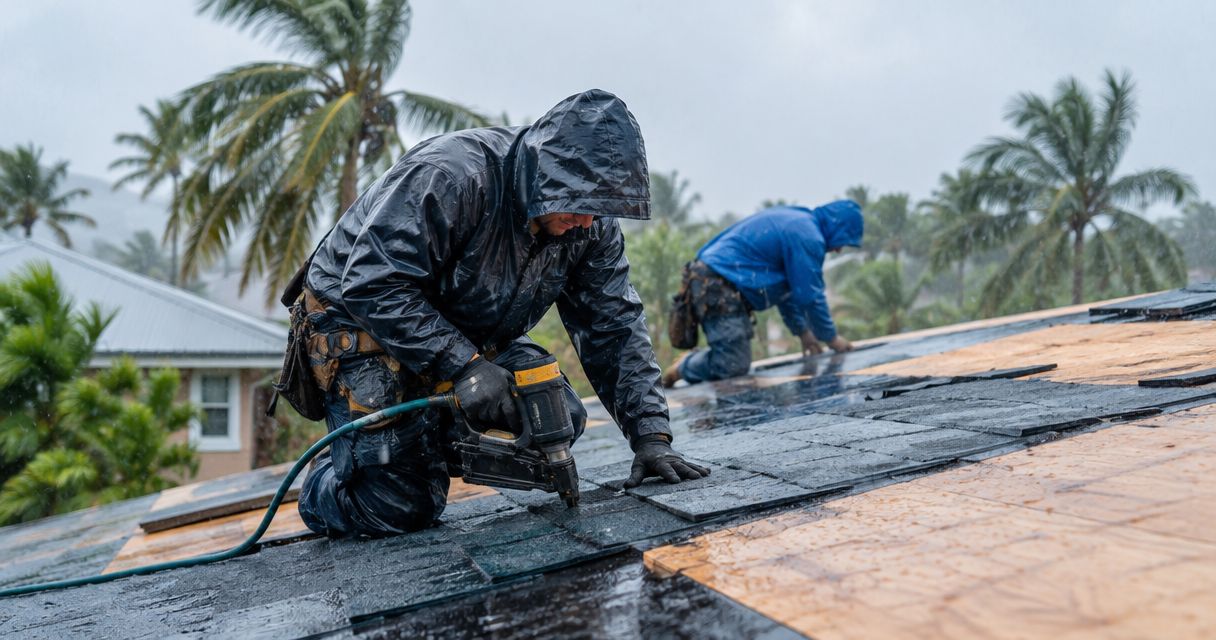
Tear-off has a trade-off: removing roofing creates debris and temporarily exposes the deck. Ask how the contractor will protect the building during the work and handle weather interruptions. Do not trade necessary deck repairs for less disruption.
For older properties, the guide to roof replacement for older Florida homes provides related planning context. A home's age alone does not determine whether an overlay is acceptable; the actual roof conditions do.
Why the answer varies from roof to roof
These conditions determine whether installing metal over shingles is appropriate:
- Deck condition: The material supporting the roof must be sound enough for the proposed attachment. Covering deterioration leaves the underlying problem in place.
- Existing roof layers: Identify what is already installed and confirm whether the proposed recover meets applicable requirements. Do not assume visible shingles are the only layer.
- Leaks and moisture: Determine the source of water entry and address wet or damaged materials before covering them.
- Approved installation method: The proposed support, attachment, and separation details must match the selected metal assembly.
- Roof geometry: Slope, valleys, wall intersections, and penetrations affect whether the system can drain and be detailed correctly.
- Local requirements: Confirm permit requirements, applicable code provisions, and any property-specific restrictions before work begins.
No single favorable condition cancels out the others. A sound deck does not make an unsuitable installation method acceptable, and an approved panel does not make damaged decking usable.
What should happen before you approve an overlay?
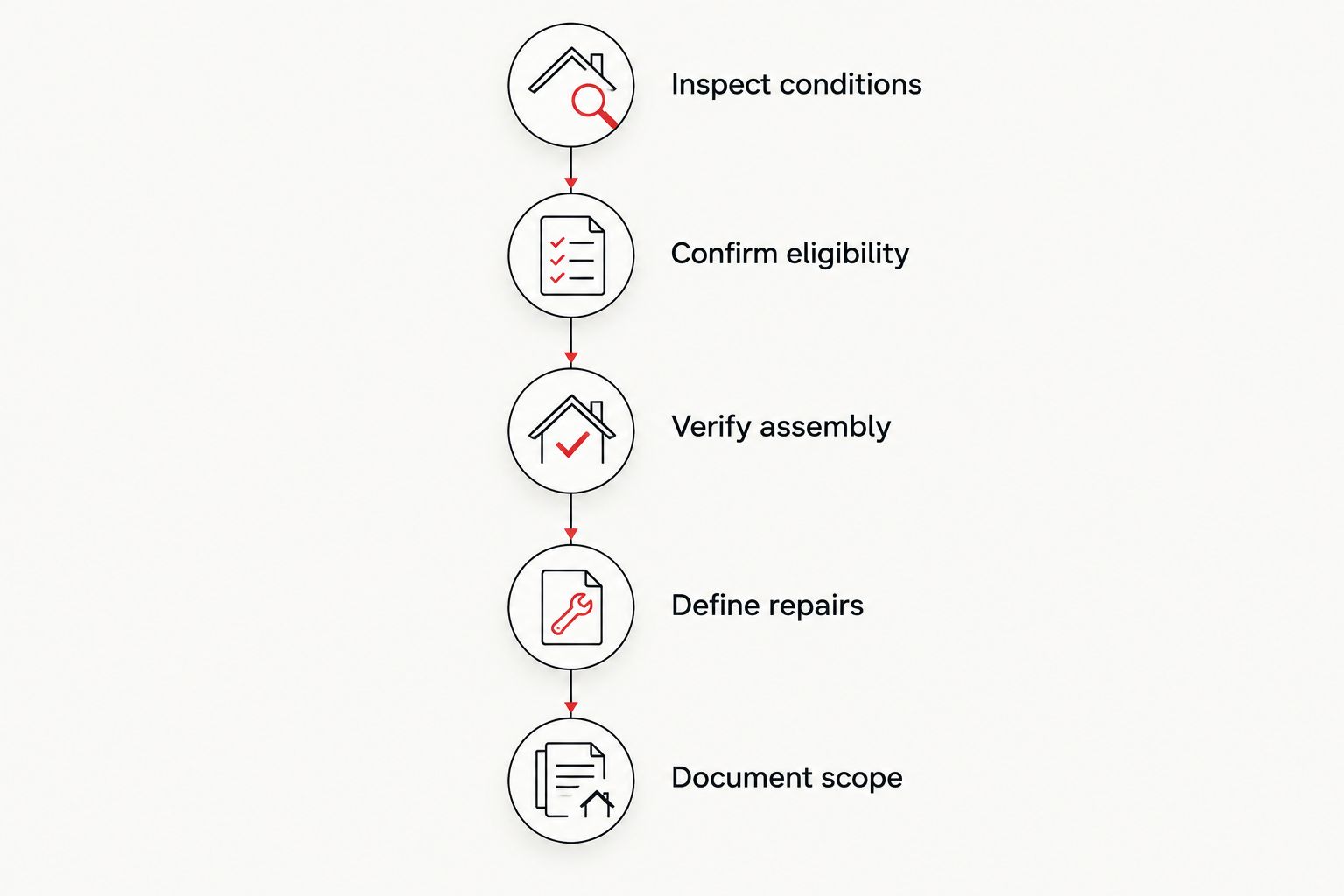
Use this sequence when reviewing a 2026 proposal. It separates the roof's condition from the question of whether the selected metal system can be installed over it.
- Inspect conditions. Review the roof surface, accessible attic areas, known leaks, and signs of deterioration. Identify areas that need further investigation.
- Confirm eligibility. Establish the existing roof layers and check applicable local reroofing requirements. Ask who handles the permit process.
- Verify assembly. Identify the metal system and obtain the installation requirements supporting the proposed overlay.
- Define repairs. Put necessary decking work, flashing replacement, and moisture corrections in writing. Explain how hidden damage will be handled.
- Document scope. Record what stays, what is removed, and how the contractor will complete and document the work.
The sequence matters because selecting a panel does not establish that your existing roof is a suitable base. Resolve eligibility before treating an overlay as the agreed construction method.
What goes between the shingles and the metal?
There is no universal layer arrangement for every metal roof recover. The correct materials and supports come from the approved assembly and the manufacturer's installation instructions.
Some systems use a separation layer; others use a specified support arrangement. Neither approach is a substitute for repairing the existing roof. Ask the contractor to describe the proposed build-up from the decking to the finished metal surface.
Separation materials
A specified separation material keeps the roofing components arranged as the system requires. Do not assume the old shingles replace every underlayment or separation requirement simply because they remain beneath the metal.
Ask what material is proposed, where it will be installed, and which installation document requires it. An unexplained reference to a protective layer is not a complete scope.
Supports and attachment
Where the assembly uses battens, purlins, clips, or other supports, those components need the specified attachment. Shingles are a roof covering, not a structural fastening base.
Avoid choosing screw lengths or attachment spacing yourself. Those details depend on the assembly and supporting construction; a generic measurement copied from another roof is not a project design.
Flashing and transitions
Ask how the contractor will handle roof edges, valleys, plumbing vents, and intersections with walls. New panels must connect to these details without leaving a path for water beneath the roof.
Existing flashing should not remain solely because removing it requires extra work. Its suitability must be part of the installation decision.
Does metal over shingles cause condensation?
Metal over shingles does not automatically create condensation, but an overlay does not eliminate condensation risk either. Condensation forms when moisture in the air reaches a surface cold enough for that moisture to collect.
Your contractor should distinguish a roof leak from moisture coming from inside the building. The correction depends on the source. Covering shingles will not fix an exhaust duct that releases humid air into an attic or an unresolved ventilation problem.
For your 2026 project, ask how the proposed roof assembly handles moisture and whether existing attic conditions need correction. Do not accept an air gap as a complete explanation without the installation detail behind it.
Will a metal overlay meet Florida wind requirements?
A metal overlay meets applicable wind requirements only when the complete assembly and installation satisfy the requirements for that property. The metal panel alone does not establish compliance.
Ask the contractor to identify the applicable approval documents, attachment requirements, and permit scope. The connection through the roofing assembly to its supporting structure matters, as do edge and transition details.
Do not accept a hurricane-proof promise. Request documentation showing how the proposed installation addresses the applicable requirements instead of relying on a broad claim about metal roofing.
What should your written roofing proposal include?
Your 2026 proposal should make the installation method clear enough that you can distinguish an overlay from a full tear-off. If the scope leaves that choice uncertain, resolve it before signing.
Ask for these details in plain language:
- Whether the existing shingles remain or are removed.
- How the existing roof and decking will be assessed.
- The proposed metal system and installation method.
- Required repairs and the procedure for addressing concealed damage.
- Work at valleys, edges, penetrations, and wall connections.
- Permit responsibilities and completion documentation.
- The actual warranty documents and any installation conditions they impose.
Roofsmartflorida serves Southwest Florida homeowners who need metal roofing installation, repair, or replacement. Ask for an honest evaluation of whether keeping the shingles is appropriate for your roof, rather than starting with a commitment to an overlay.
Request a roof evaluation
Discuss whether your existing shingles can remain beneath a new metal roofing system.
FAQ
Can you install a metal roof over an existing shingle roof in Florida?
Yes, when the existing roof is suitable and the proposed installation meets applicable local requirements and the metal system's installation requirements. Confirm the roof's condition, existing layers, and approved assembly before proceeding.
Do I have to remove old shingles before installing metal roofing?
Not always, but removal is necessary when the existing roof is unsuitable for the proposed recover assembly or needs repairs requiring access. A contractor must establish eligibility rather than assume the shingles can stay.
Can metal roofing go over shingles that already leak?
An unresolved leak must be investigated and corrected before it is covered. The evaluation should identify the water source and any damaged decking or wet materials.
Can you screw metal roofing directly into shingles?
Shingles are not a structural fastening base. Metal roofing must attach to suitable supporting construction according to the selected assembly's requirements.
Do you need underlayment when installing metal over shingles?
Follow the selected metal system's requirements for underlayment, separation materials, and supports. Existing shingles do not automatically replace those specified components.
Will installing metal over shingles affect my roof warranty?
Warranty eligibility depends on the actual warranty terms and installation requirements. Ask for the documents covering the proposed overlay rather than assuming all installation methods receive the same coverage.
Will my insurer accept a metal roof installed over shingles?
Confirm acceptance with your insurer before authorizing the work. Building approval and insurance underwriting are separate decisions, so obtain the documentation your insurer requires.
One last thing
Ask what evidence would make the contractor reject an overlay. A useful answer identifies conditions such as damaged decking, unresolved moisture, unsuitable existing layers, or installation restrictions—not just a preference for a particular roofing material.
For a 2026 replacement, that question helps you judge whether the recommendation follows the roof's condition. Keeping shingles is an installation choice, not the goal; a sound, correctly installed roof is the goal.