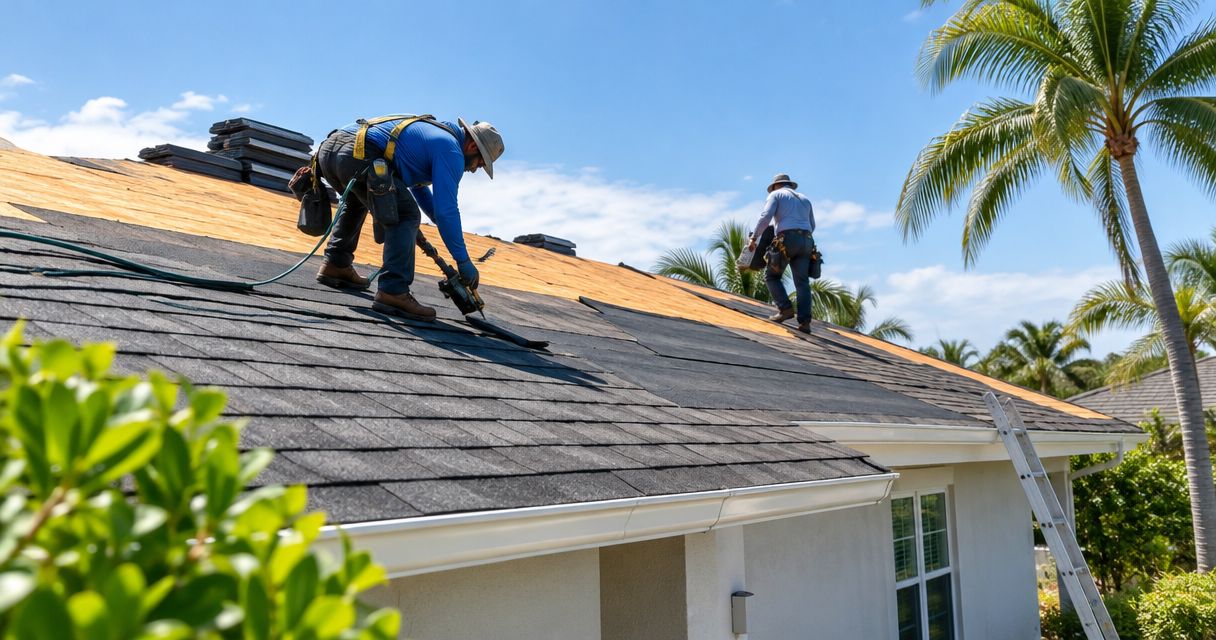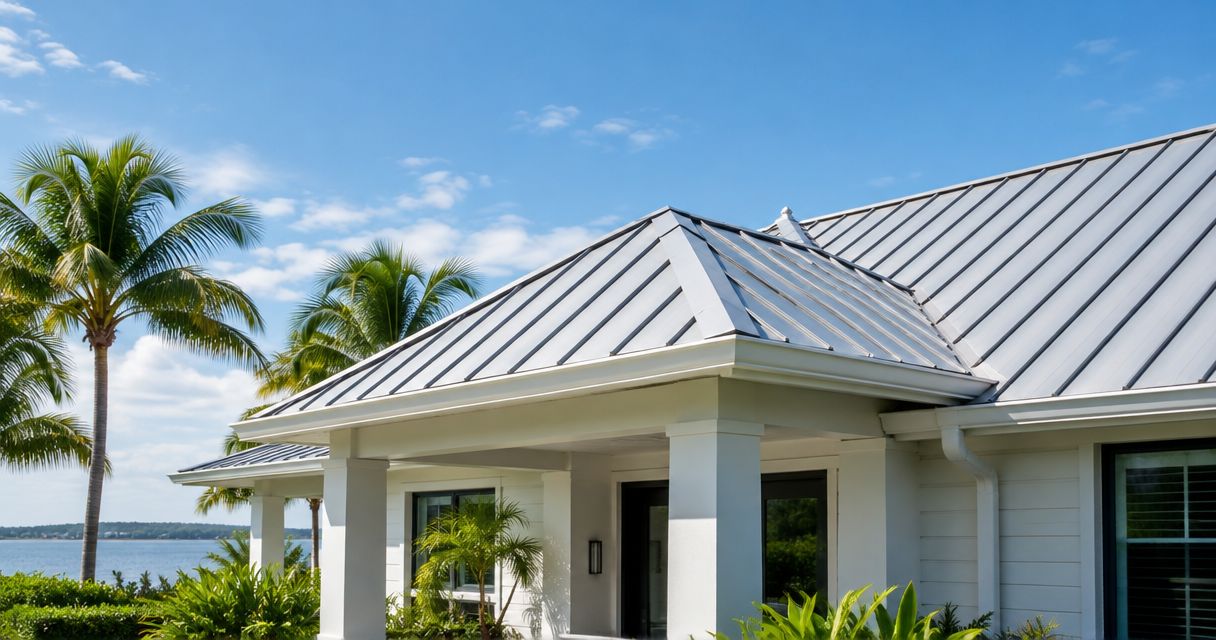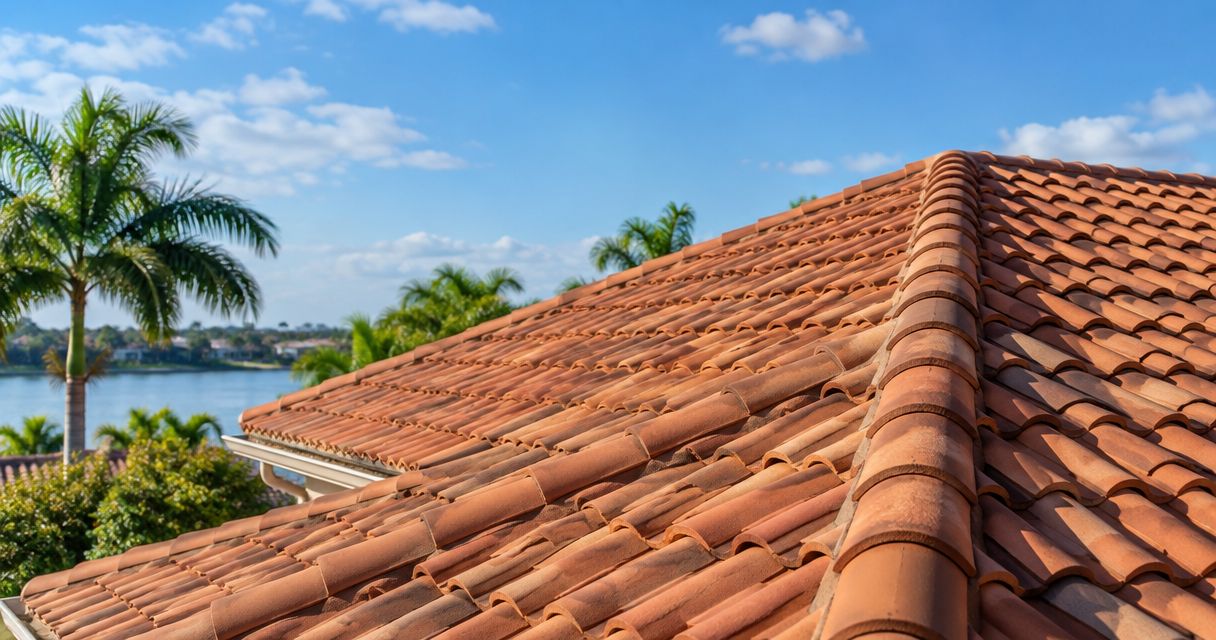
A tile roof in Florida can last for decades, but the tiles alone do not determine when the roof needs replacement. Underlayment, flashing, tile attachment, and storm damage can require major work while the visible tiles still look sound. In 2026, judge your roof by its documented condition, not a promised expiration date.
- How long does a tile roof last in Florida? Decades, but tile condition alone cannot establish remaining roof life.
- Underlayment and flashing need attention even when concrete or clay tiles look intact.
- Choose localized repair only when the surrounding roofing system remains serviceable.
- Roofsmartflorida provides tile roofing repair and replacement for Southwest Florida homeowners and businesses.
How long does a tile roof last in Florida?
A Florida tile roof lasts as long as its connected parts continue to shed water, resist displacement, and protect the structure below. Long-lasting tiles do not make the materials underneath permanent. That distinction matters when you compare an older roof that looks attractive with one that has documented maintenance and sound waterproofing.
For practical maintenance steps, see how to extend the life of a tile roof in SW Florida. Start with the condition of the complete assembly rather than the appearance of the tile surface.
| Roof component | What it does | What shortens usable roof life |
|---|---|---|
| Tiles | Shed rain and protect underlying materials | Cracks, displacement, impact damage, and broken pieces |
| Underlayment | Provides a water-resistant layer beneath the tiles | Deterioration, tears, damaged laps, and failed connections |
| Flashing | Directs water away from joints and penetrations | Corrosion, separation, poor detailing, and damaged seals |
| Tile attachment | Holds tiles in their intended positions | Loose or damaged attachment and wind-related movement |
| Roof deck | Supports the roofing assembly | Moisture damage, deterioration, and structural problems |
A tile lifespan is not a whole-roof lifespan. Ask which component has failed before accepting either a small repair or a full replacement recommendation.
Why this matters
Replacing sound roofing prematurely wastes money. Waiting because the tiles still look good can leave hidden water-entry problems unresolved. Your decision needs evidence from the roof, not an age rule applied to every Florida house.
For a 2026 purchase, sale, or maintenance decision, separate physical condition from paperwork requirements. An insurer's request, a buyer's inspection, and a contractor's repair assessment address different questions. Get each requirement in writing instead of assuming one report answers all of them.
Concrete tile roofs: check beneath the surface
Concrete tile is a durable roof covering, but visible strength does not establish the condition of the underlying waterproofing. A roof can retain its overall appearance while developing problems at valleys, wall connections, or penetrations.
Look for displaced pieces, broken corners, and evidence of previous patching from a safe location. Then ask the roofer whether the damage is isolated or repeated across the roof. A scattered pattern of problems deserves a different assessment from a single impact-damaged area.
The advantage of a tile covering is that individual damaged pieces can sometimes be replaced. The limitation is access: reaching a concealed defect requires disturbing the covering, and replacement tiles must fit the existing system. A surface repair is not enough when the water-entry problem lies below it.
Clay tile roofs: lasting tiles still need sound connections
Clay tile can remain serviceable for a long time, but durability does not make it immune to cracking or displacement. Age alone also does not establish whether an individual tile needs replacement.
Evaluate clay tile as part of the same connected assembly: covering, attachment, underlayment, flashing, and deck. Attractive tiles offer no protection against a failed detail around a roof penetration. Likewise, an isolated broken tile does not automatically mean the entire roof has reached the end of its life.
If preserving existing clay tile matters to you, ask how the contractor will assess reuse, matching, and breakage during access. Those questions belong in the scope before work begins. Do not assume every tile can be retained simply because it looks intact from the ground.
Why tile roof lifespan varies in Florida
The same roof age can represent very different conditions. These factors explain why a visual age estimate cannot substitute for an inspection:
- Storm exposure: Wind and airborne debris can break or displace tiles and damage roof details. A recent event matters even when the roof previously performed well.
- Underlayment condition: The concealed water-resistant layer must remain serviceable. Intact tiles do not prove that this layer is sound.
- Installation details: Valleys, wall connections, penetrations, and attachment details affect how the assembly handles water and wind.
- Drainage: Debris and obstructed water paths can keep water where it does not belong. Valleys and roof transitions deserve particular attention.
- Maintenance history: Documented repairs help establish what changed, where problems developed, and whether the same issue has returned.
- Foot traffic: Walking and work on a tile roof can cause damage. Keep unnecessary access off the roof and have qualified professionals handle inspection and repairs.
Florida weather is not a reason to assume every tile roof fails on the same schedule. It is a reason to examine exposure, workmanship, and maintenance together.
How to assess your roof's remaining life
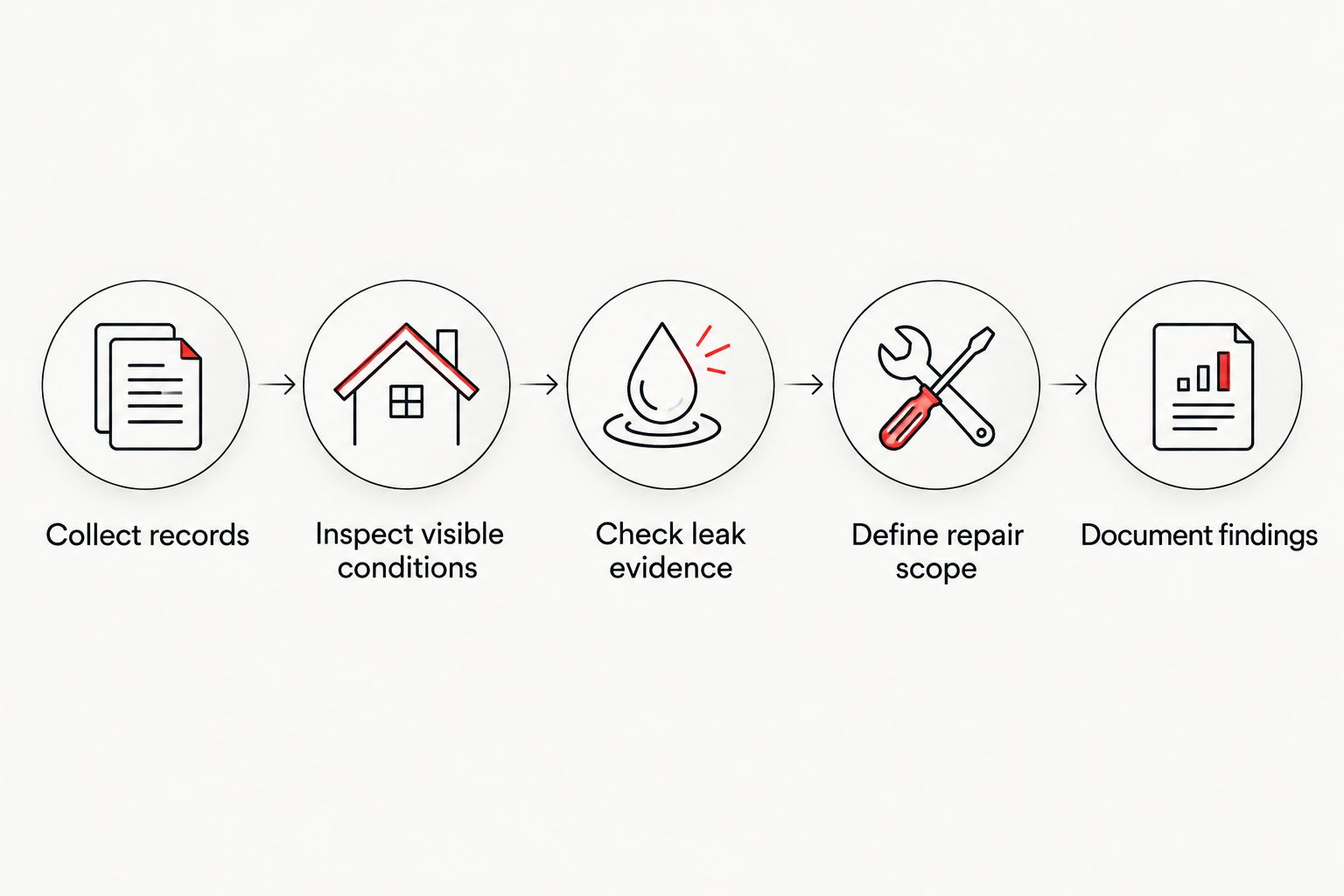
A useful 2026 roof assessment should connect observations to a decision. Ask for photographs, the location of defects, and a clear explanation of which findings are visible and which require further investigation.
- Collect records. Gather installation documents, permits, warranties, repair invoices, and previous inspection photographs. Separate original installation from later repair work.
- Inspect visible conditions. Have the roofer document broken or displaced tiles, flashing problems, drainage obstructions, and roof transitions. Stay off the roof yourself.
- Check leak evidence. Share the location and timing of ceiling stains, attic moisture, or recurring leaks. Water can travel before becoming visible indoors.
- Define repair scope. Ask whether the proposed work addresses an isolated defect or a broader failure. Establish what must be opened to confirm concealed conditions.
- Document findings. Request a written explanation of the recommendation, its limitations, and the next maintenance action. Keep the report with your property records.
The inspection should distinguish a confirmed defect from an assumption. If the underlayment is concealed and has not been examined, a clean-looking roof surface does not establish its remaining service life.
Should you repair or replace an aging tile roof?
Choose the scope that fixes the cause, not just the visible symptom. Repair makes sense when the defect is localized and the surrounding assembly remains serviceable. Replacement deserves consideration when deterioration is widespread or repeated repairs cannot address the underlying condition.
| Option | Best for | Main advantage | Main limitation |
|---|---|---|---|
| Localized repair | An isolated defect with sound surrounding materials | Limits disturbance to the affected area | Does not renew aging materials elsewhere |
| Underlayment work with tile reuse | A failed concealed layer where suitable tiles can be retained | Addresses waterproofing while preserving usable covering | Requires lifting tiles; reuse depends on condition and fit |
| Full roof replacement | Widespread deterioration or an assembly that cannot be reliably repaired | Allows the connected roofing components to be addressed together | Creates a larger project with more disruption |
Tile reuse is a project-specific decision, not a guaranteed middle option. The contractor must evaluate tile condition, attachment, handling, and applicable requirements before promising that approach.
Ask every proposal to identify what stays, what comes off, and what happens if concealed damage is found. Comparing those scopes is more useful than comparing a repair label with a replacement label.
Roofsmartflorida is a local tile roofing option for Southwest Florida homeowners who need repair or replacement. Its stated service area includes Cape Coral, Fort Myers, Naples, and surrounding Southwest Florida counties; the appropriate scope still depends on your roof's condition.
Get an honest roof evaluation
Request a no-pressure free estimate for your Southwest Florida roof repair or replacement.
Can a tile roof leak even when the tiles look good?
Yes, intact-looking tiles can sit above damaged underlayment or defective flashing. The visible covering is only part of the roof's water-management system, so a surface inspection cannot rule out concealed problems.
A ceiling stain also does not identify the exact entry point. Give the roofer photographs and describe whether the problem appears during particular rain conditions or has returned after a repair.
Does replacing broken tiles reset the roof's age?
No, replacing broken tiles repairs those pieces; it does not renew the rest of the roofing assembly. Keep the repair date separate from the original installation date so future inspections do not confuse maintenance with full replacement.
The same distinction applies to resealing a penetration. A successful localized repair resolves a specific problem, not every age-related concern across the roof.
Should you replace a tile roof just because it is old?
No, age alone does not establish that a tile roof needs replacement. Use age to prompt closer evaluation, then base the recommendation on documented condition, repairability, and any written transaction or insurance requirements.
For your 2026 planning, ask what evidence would change the recommendation. A clear answer should identify a condition, such as widespread concealed deterioration, rather than repeat that the roof is simply old.
Questions to ask before approving work
A useful proposal should let you understand both the immediate repair and its limits. Ask these questions before authorizing access or removal:
- Which component is causing the problem, and what evidence supports that diagnosis?
- Is the damage localized, or does the same condition appear elsewhere?
- Which concealed areas need investigation before the scope is final?
- How will the crew protect surrounding tiles during access?
- What findings would require a change in the agreed work?
- What records and photographs will you receive when the work is complete?
Keep material warranties separate from the assessment of remaining life. Warranty terms describe coverage and conditions; they do not establish that every component on your roof will remain serviceable for the same period.
FAQ
How long does a tile roof last in Florida?
A tile roof in Florida can last for decades, but its remaining life depends on the complete roofing assembly. Underlayment, flashing, attachment, storm damage, and maintenance matter alongside tile condition.
Can my tile roof need replacement even if the tiles look good?
Yes, a tile roof can need major work while the visible tiles remain sound. Concealed waterproofing or flashing problems require assessment beyond the appearance of the covering.
Is concrete or clay tile better for a Florida roof?
Neither concrete nor clay tile is automatically better for every Florida roof. Compare the complete assembly, structural suitability, installation requirements, and maintenance needs rather than choosing on lifespan claims alone.
Can a roofer replace underlayment and reuse my tiles?
Tile reuse is possible only when the existing tiles and project conditions support it. Ask the contractor to explain removal, breakage, matching, attachment, and applicable requirements before accepting that scope.
Does a roof leak mean I need a whole new tile roof?
A leak does not automatically require full tile roof replacement. A localized defect can support repair, while widespread deterioration requires a broader assessment.
Should I walk on my tile roof to check for damage?
Do not walk on your tile roof to inspect it yourself. Falls and broken tiles are avoidable risks; document visible concerns from a safe location and arrange professional access.
What should I keep from a tile roof inspection in 2026?
Keep the written findings, photographs, recommended scope, and any stated inspection limitations. Store them with installation and repair records so later assessments can distinguish new damage from earlier conditions.
Does Roofsmartflorida provide tile roof repair and replacement?
Roofsmartflorida provides tile roofing repair and replacement for homeowners and businesses in Southwest Florida. Its stated service area includes Cape Coral, Fort Myers, Naples, and surrounding counties.
One last thing
Before you approve work in 2026, ask the contractor to finish this sentence: The tiles are in this condition, and the waterproofing underneath is in this condition. If the second answer requires investigation, make that investigation part of the plan. A roof's appearance and its ability to keep water out are not the same finding.