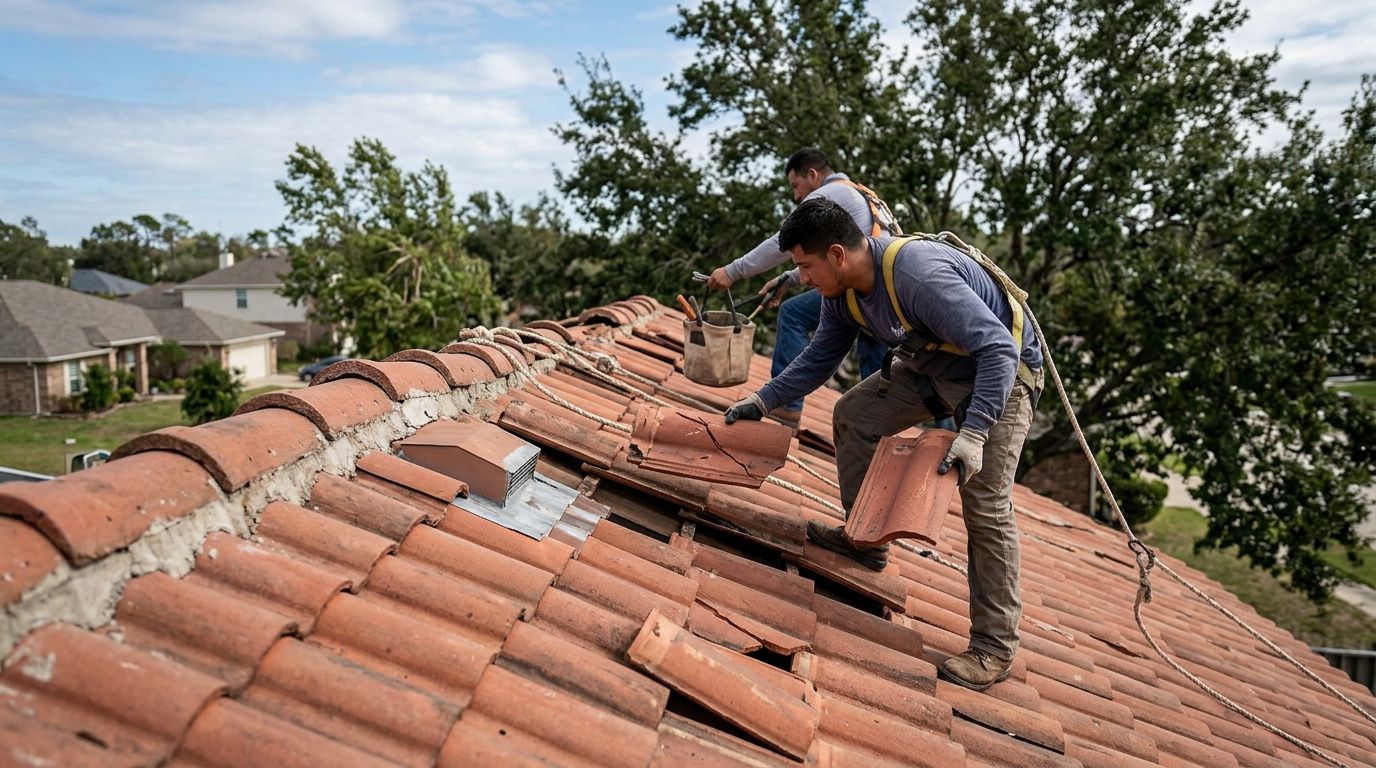
Tile roof repair for wind-damaged tiles after hurricanes means replacing cracked, slipped, or missing tiles and repairing the underlayment beneath them so the roof deck stays sealed until the next storm season. Southwest Florida homeowners face a different repair math than homeowners inland: wind-driven rain gets under lifted tiles fast, and insurers in 2026 scrutinize storm-damage claims harder than they did five years ago.
- Tile roof repair for wind damaged tiles starts with a ground-level photo inspection, not a walk on the roof.
- Roof Smart of SW Florida handles spot tile replacement and underlayment repair in Cape Coral, Fort Myers, and Naples.
- Cracked tiles left unrepaired through one more hurricane season usually become interior water damage claims.
- Insurance approval in 2026 depends on dated photos and a licensed contractor's written scope, not a verbal estimate.
- Full re-roofing only makes sense when slippage is widespread or the underlayment is past its service life.
Why tile roof repair matters for wind-damaged Southwest Florida homes
A tile roof works as a system: tiles, underlayment, and fasteners share the job of shedding water. Wind from a hurricane does not need to destroy the tile field to cause a leak. It only needs to crack a handful of tiles or peel back an underlayment seam beneath them.
The pattern repeats every season across Lee, Collier, and Charlotte counties. A few visibly broken tiles get noticed the morning after the storm. The slipped tiles and hairline cracks that cause the expensive damage get missed until the next heavy rain, sometimes months later. If you are not sure what you are looking at, how to spot roof storm damage after a hurricane covers the visual signs before you call anyone.
Waiting costs more with tile than with shingle. A slipped concrete or clay tile does not fail the roof today. It fails it the next time wind pushes rain sideways under the gap it left behind.
Tile also hides its damage better than any other roofing material used in Florida. A shingle roof shows missing shingles from the street. A tile roof can look intact from the driveway while the felt under three rows of tile has been torn since the last named storm.
The repair sequence, step by step
Seven steps, in this order. Skipping the documentation steps is the single most common reason Southwest Florida claims get denied in 2026.
Inspect within 48 hours of the storm
Do this before debris cleanup hides the evidence and before your memory of the roofline fades.
- Walk the perimeter of the house and photograph the roofline from all four sides
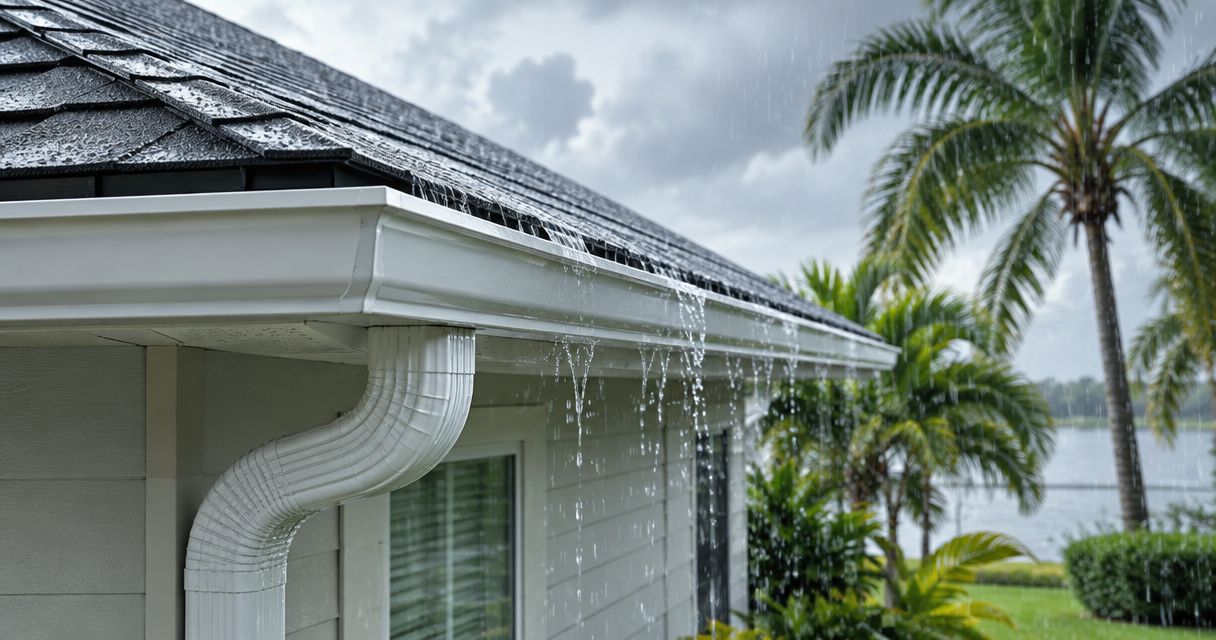
- Check gutters and the ground for broken tile fragments, which mean tiles slipped or shattered
- Look inside the attic for daylight, water stains, or a damp smell
- Note tiles that sit shifted or misaligned against the row around them
- Check ridge caps and hip lines first, because these fail before field tiles do
- Stay off the tile field; foot traffic cracks tiles that survived the wind
Document everything before anyone touches the roof
Carriers in 2026 want a timestamped record, not a description of what the roof used to look like.
- Photograph each damaged area with one wide shot and one close-up
- Save pre-storm photos or real estate listing photos showing the roof's prior condition
- Write the storm name and date alongside your photo set
- Keep a copy of any wind mitigation inspection report already on file
- Sign nothing from a door-knocking contractor until your own documentation is complete
Get a licensed inspection, not a storm-chaser estimate
After every major hurricane, out-of-state crews arrive offering same-week repairs. Florida law requires a state license for roofing work, and an unlicensed repair can void your claim outright.
- Ask for the Florida roofing license number and verify it with the state yourself
- Request a written scope of repair, not a verbal number in the driveway
- Confirm the company carries workers' compensation and liability coverage
- Ask whether the crew matches tile profile and color, not just generic replacement stock
- Get the inspection findings in writing before tarping or repair begins
The state lookup steps are laid out in how to verify a roofing contractor's license in Florida.
Tarp exposed sections immediately
A missing tile section left open through one rain event turns a small repair into an interior drywall, insulation, and flooring job.
- Cover any area with missing or heavily cracked tiles using a rated tarp secured under battens or sandbags
- Never staple or nail directly through tile, which cracks the surrounding field
- Photograph the tarp placement for your insurance file
- Call for professional emergency roof tarping after storm damage when the opening is larger than a few tiles or sits near a valley
- Treat the tarp as a two-to-four-week measure, not a season-long solution
File the claim before you approve permanent work
Most Florida carriers require the claim filed and an adjuster scheduled before permanent repair starts, or they dispute the scope afterward.
- Call the carrier's storm claim line and get a claim number the same day you find damage
- Submit your photo documentation with the claim rather than after it
- Have your contractor provide a written estimate the adjuster can review line by line
- Keep receipts for temporary tarping, because most policies reimburse mitigation costs
If the claim process itself is unfamiliar, how to file a roof insurance claim after storm damage breaks down what the adjuster looks for.
Match tile profile and color during the repair
A repair that ignores tile matching passes inspection and still looks patched from the street for years.
- Confirm the replacement tile matches the existing profile: flat, S-tile, or barrel
- Ask whether the color is a factory match or a close approximation
- For older roofs, ask whether discontinued tiles can be sourced or a blended repair is the realistic option
- Require the underlayment be inspected and replaced under every removed tile, not just the tile swapped out
Schedule wind mitigation after repairs close out
A repaired roof with updated fastening and sealed underlayment can qualify for insurance credits your current policy does not reflect.
- Book the inspection once the repair is signed off, not while work is open
- Bring the report to your carrier at renewal rather than mid-policy
- Ask whether new fasteners and a sealed ridge change your credit tier
Repair options compared for wind-damaged tile roofs
| Option | Best for | Key limitation |
|---|---|---|
| Spot tile replacement | A handful of cracked or missing tiles isolated to one section | Misses underlayment damage hidden beneath tiles that look fine |
| Full tile removal and underlayment replacement | Roofs past 15 to 20 years with widespread slippage or repeat storm hits | More labor, permitting, and downtime than a spot repair |
| Temporary tarp only | Immediate protection right after the storm, before a crew can schedule | Not a fix; must be followed by real repair within weeks |
| DIY tile reset | Cosmetic shifts on a low-slope section a homeowner can reach safely | Voids most manufacturer and workmanship warranties, risks new cracks |
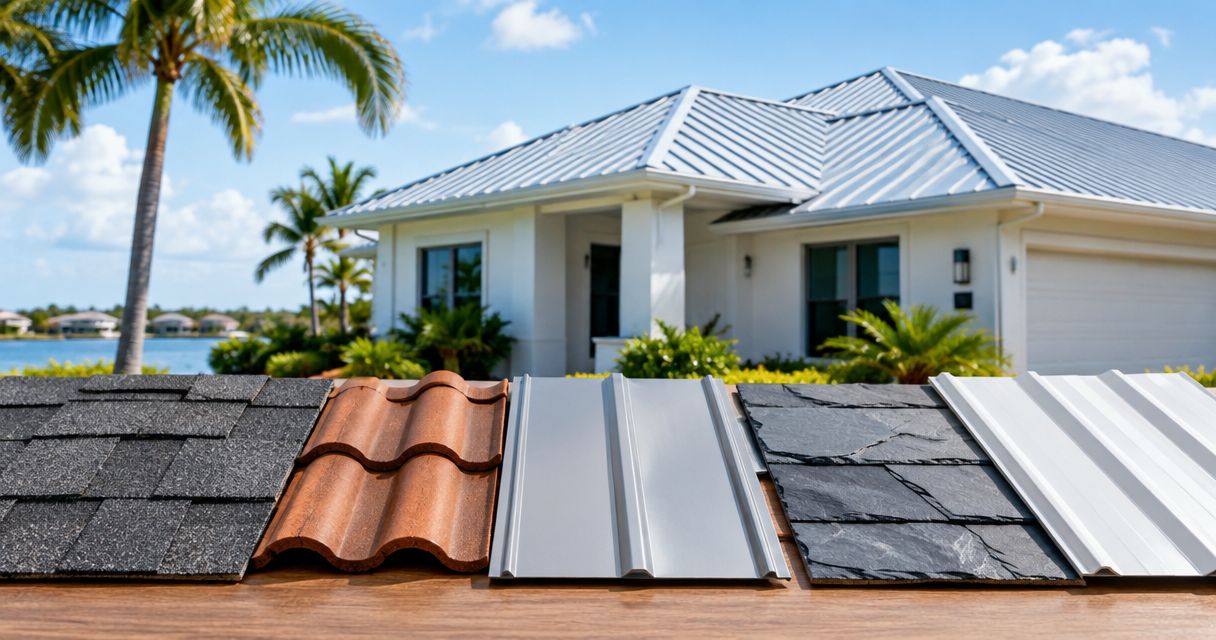
Homeowners deciding between a patch and a system upgrade should compare tile roofing options for Southwest Florida homes before locking into a repair-only path.
Verdict: for isolated wind damage on a tile roof under 15 years old, spot repair plus a full underlayment inspection is the right call in 2026. Full replacement earns its cost only when the tile field shows widespread slippage or the underlayment is already past its expected life.
“A tile can survive 130 mph wind and still sit over torn felt that has been leaking since the last named storm.”
Get your tile roof inspected after storm damage
An honest evaluation before you file a claim or approve repair work.
Common mistakes Southwest Florida homeowners make
- Walking the tile field to inspect it themselves. Foot traffic on concrete or clay cracks tiles the wind never touched, creating damage during the inspection itself.
- Approving repair work before the adjuster sees the roof. Carriers routinely deny or reduce claims when permanent repairs happen ahead of documentation.
- Accepting mismatched replacement tile. A patch in the wrong profile or color shows up in every drone photo an appraiser or future buyer takes.
- Ignoring hairline cracks because the tile still looks whole. A cracked tile that has not slipped yet still lets water track under the surface in the next storm.
- Hiring the first contractor who knocks post-storm. Out-of-state crews rarely hold Florida licensing and are gone before warranty work comes due.
FAQ
How much does tile roof repair for wind damage cost in 2026?
Cost depends on how many tiles are damaged and whether the underlayment beneath them also needs replacement. A licensed inspection produces a written scope before work starts, which is what most Florida insurers require for claim approval.
Can I replace a few cracked tiles myself after a hurricane?
You can, but walking the tile field usually cracks additional tiles that survived the storm. A DIY reset also typically voids manufacturer and workmanship warranties on the rest of the roof.
Does homeowners insurance cover wind-damaged tile roofs in Florida?
Most Florida policies cover wind damage from a named storm, but the claim must be filed and documented before permanent repairs begin. Photos taken within 48 hours of the storm are the strongest evidence for approval.
How do I know if my tile roof has wind damage after a hurricane?
Look for slipped, cracked, or missing tiles, broken tile fragments in gutters or on the ground, and daylight or water stains in the attic. Ridge caps and hip lines usually show damage before the flat tile field does.
Is a full tile roof replacement ever needed after storm damage?
Full replacement makes sense when slippage spans multiple sections or the underlayment is past its service life. Isolated cracked tiles on a roof under 15 to 20 years old are normally a spot repair.
How long can I leave a tarp on a wind-damaged tile roof?
Treat a tarp as a two-to-four-week measure, not a season-long fix. Leaving it through another rain event risks the exact leak the tarp was meant to prevent.
Will repairing wind damage affect my wind mitigation insurance discount?
A repair that updates fastening and seals the underlayment properly can improve your wind mitigation credit tier at the next renewal. Schedule the inspection after repairs are signed off, not before.
What is the difference between spot tile repair and full re-roofing?
Spot repair replaces individual damaged tiles and the underlayment directly beneath them. Full re-roofing removes the entire tile field to replace underlayment system-wide, which older roofs and multi-section damage require.
One last thing
The underlayment beneath your tile field, not the tile itself, is what usually fails first in a Florida hurricane. That is why a roof can pass a driveway glance and still be actively wetting the deck. If your tile roof is past 15 years old and has not had an underlayment check since the last major hurricane, ask for that specifically in 2026 rather than a tile count. Roof Smart of SW Florida looks under removed tile as part of a tile roof repair rather than reseating what is already there.