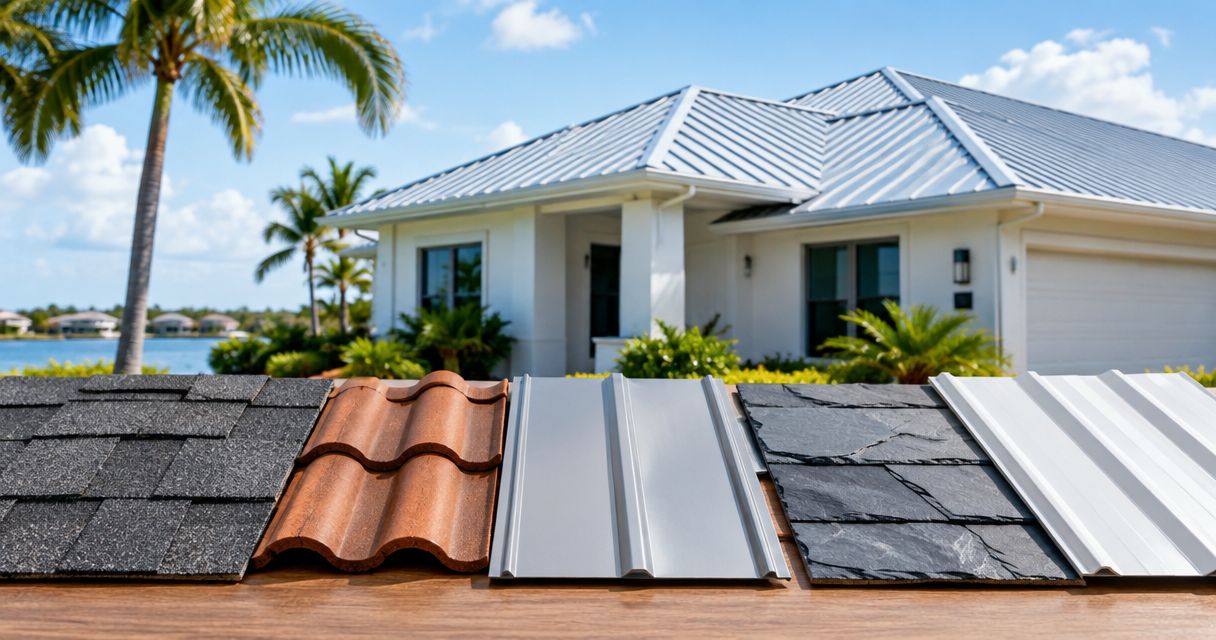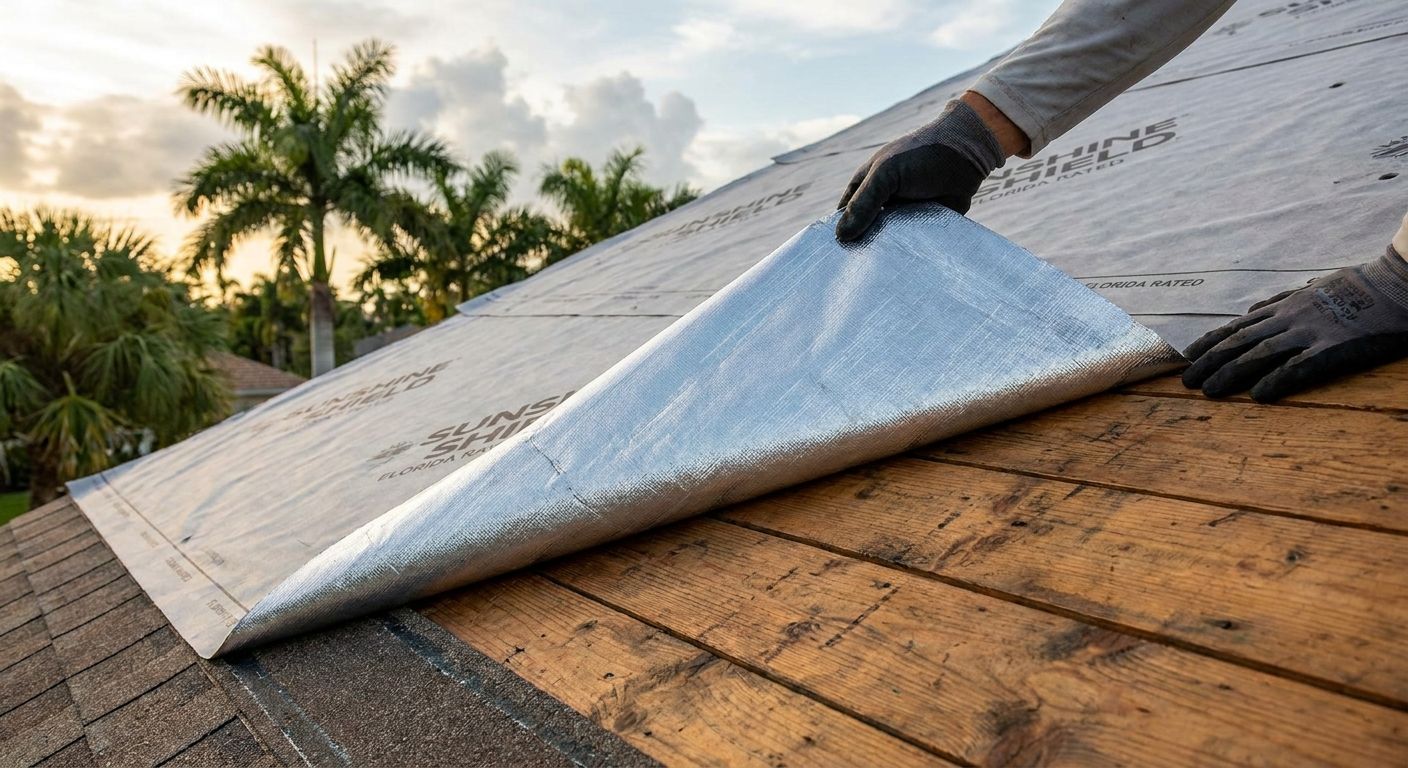
Underlayment is the layer between your roof deck and the shingles, tile, or metal panels on top — and it's the layer that actually keeps water out once Southwest Florida's heat and humidity start working on your roof. Pick the wrong one in 2026 and you get a leak years before the visible roofing material ever wears out.
- The best roof underlayment for Florida humidity and heat in 2026 is a high-temp self-adhered SBS membrane under tile — buy it.
- Synthetic polymer underlayment beats felt under asphalt shingles in Fort Myers and Cape Coral humidity — buy it.
- Standard 15lb organic felt absorbs moisture and blisters under Southwest Florida sun — skip it on any 2026 install.
- Non-high-temp peel-and-stick under tile has a documented failure history in Florida heat — confirm the grade before signing a contract.
Why this matters
Roof deck surfaces in Cape Coral, Fort Myers, and Naples routinely climb past 150°F in July and August, and tile and metal roofs push that number even higher because the material sits directly on the deck and radiates heat downward all afternoon. Pair that with relative humidity that sits in the 70-90% range most of the year and you get an underlayment environment that most products sold nationally were never designed for.
The roofing material on top — shingle, tile, metal — gets the attention. The underlayment underneath is what determines whether a punctured tile or a lifted shingle turns into a $200 repair or a $9,000 sheathing replacement. Roof Smart of SW Florida sees underlayment failure on tear-offs long before the visible surface material is due for replacement, and it's almost always the same three culprits: organic felt, non-high-temp peel-and-stick under tile, and underlayment installed without regard for how the roof deck ventilates.
How this list is ranked
Each underlayment type below is ranked on four criteria that matter specifically in a Southwest Florida climate: documented high-temperature performance (does the manufacturer publish a high-temp/HT rating or ASTM D1970 compliance), moisture resistance under sustained humidity rather than occasional rain, compatibility with the roofing material it sits under (tile traps heat differently than metal, which traps heat differently than shingle), and real-world failure history on roofs across Cape Coral, Fort Myers, and Naples. Standard-grade products that work fine in drier, cooler climates get ranked down here even when they're still sold locally in 2026, because the failure mode in Florida is different from the failure mode they were designed against.
The ranked list
1. High-temp self-adhered SBS modified bitumen — the tile roof non-negotiable
Built to ASTM D1970 and rated to resist softening above roughly 240°F, high-temp (HT) self-adhered membrane is the underlayment tile roofs in this climate actually need. Standard clay and concrete tile roofs trap heat against the deck all afternoon, and non-HT self-adhered products have a documented history of softening and sliding under that heat across Florida since the 2000s. This is the underlayment Roof Smart of SW Florida specs on tile roofing for Mediterranean-style Florida homes precisely because the failure mode with the standard-grade version shows up years before the tile itself needs attention. Verdict: Buy.
2. Synthetic polymer underlayment — the shingle roof workhorse
Synthetic underlayment is a woven or non-woven polymer sheet built to outperform felt on moisture absorption, and it's the standard choice under asphalt shingles in Southwest Florida in 2026. It doesn't wick humidity the way organic felt does, it stays flat instead of wrinkling in 80-90% relative humidity, and it holds up to foot traffic during a multi-day install better than felt does after a single afternoon rain shower. It's the product behind most shingle roof installation in Fort Myers jobs quoted today. Verdict: Buy.
3. High-temp self-adhered membrane under metal panels — the metal roof insurance policy
Metal roofing reflects a lot of solar heat, but the panel itself still runs hot, and metal expands and contracts more than shingle or tile with every heat cycle. A high-temp self-adhered underlayment under metal handles that thermal movement without the seams opening up, and it doubles as a secondary water barrier if a panel seam ever works loose in a storm. This is standard on metal roofing in Naples installs where wind exposure and heat cycling both run high. Verdict: Buy.
4. 30lb fiberglass-reinforced felt — the budget compromise
Thirty-pound felt built to ASTM D226 Type II holds up better than 15lb organic felt, and it's still specified on some lower-slope sections or secondary roof planes where budget is the deciding factor. It absorbs less moisture than 15lb felt but still more than synthetic, and its service life in sustained Southwest Florida humidity runs shorter than either synthetic or self-adhered options. Fine as a secondary material on a mixed job, not something to accept as the primary underlayment on a full 2026 replacement. Verdict: Hold.
5. 15lb organic felt — the one still showing up on some quotes
Organic felt was designed decades ago for climates far drier than Cape Coral or Naples, and it shows. It absorbs ambient moisture, wrinkles and blisters under repeated humidity cycling, and loses much of its water resistance well before a typical roof's surface material is due for replacement. If a contractor quotes 15lb felt as the primary underlayment on a Southwest Florida roof in 2026, that's a red flag on the whole bid, not just the material choice. Verdict: Skip.
6. Standard-grade (non-HT) self-adhered underlayment under tile — the one that already failed once
This is the same self-adhered membrane category as pick #1, minus the high-temperature rating, and it's the material behind a well-documented wave of premature underlayment failures under Florida tile roofs. It softens under sustained deck heat and can slide or delaminate years before the tile itself needs attention, sometimes triggering a full retile just to replace the underlayment. It's still a reasonable choice in lower-heat applications like shingle valleys or dormers, just not under tile. Verdict: Skip for tile, Consider for shingle valleys only.
Comparison table
| Underlayment type | Best for | Heat resistance | 2026 verdict |
|---|---|---|---|
| High-temp self-adhered SBS (ASTM D1970) | Tile roofs | High (240°F+ rated) | Buy |
| Synthetic polymer | Shingle roofs | Moderate-high | Buy |
| High-temp self-adhered under metal | Metal roofs | High | Buy |
| 30lb fiberglass felt | Secondary/low-slope areas | Moderate | Hold |
| 15lb organic felt | Nothing in this climate | Low | Skip |
| Standard (non-HT) self-adhered | Shingle valleys only | Low under tile | Skip for tile |
How to make sure you actually get it
- Ask for the manufacturer spec sheet by product name, not just "peel and stick." HT and non-HT versions of the same product line look identical on a proposal line item.
- Get the ASTM D1970 high-temp rating in writing for any tile or metal job — a verbal assurance doesn't help if the underlayment fails in year six.
- Don't accept a felt-only quote for a full roof replacement in 2026. If felt is the base bid, ask what a synthetic or self-adhered upgrade costs before you sign.
Get a free roof evaluation
Find out which underlayment your roof actually needs, no pressure.
FAQ
What is the best roof underlayment for Florida humidity and heat in 2026?
A high-temp self-adhered SBS modified bitumen membrane rated to ASTM D1970 is the best roof underlayment for Florida humidity and heat in 2026, especially under tile and metal roofing where deck temperatures run highest.
Is synthetic underlayment better than felt in Florida?
Yes. Synthetic polymer underlayment resists moisture absorption far better than organic felt, which blisters and wrinkles under Southwest Florida's 70-90% average relative humidity.
Does peel-and-stick underlayment fail under tile roofs in Florida?
Non-high-temp peel-and-stick underlayment has a documented history of softening and sliding under Florida tile roofs because deck temperatures under tile can exceed 150-180°F in summer. High-temp (HT) grade products are built to resist that softening.
How much humidity can roof underlayment handle before it fails?
Synthetic and self-adhered underlayments handle sustained 70-90% relative humidity without significant degradation, while organic felt starts absorbing moisture and losing water resistance well before a roof's surface material needs replacement.
What underlayment do metal roofs need in Southwest Florida?
Metal roofs need a high-temp self-adhered underlayment because metal panels run hot and expand and contract more than shingle or tile with each heat cycle, which can open standard underlayment seams over time.
Does underlayment affect a wind mitigation inspection?
Yes, in part. Florida wind mitigation inspections assess secondary water resistance, and a properly sealed underlayment installation can factor into that rating, which affects homeowners insurance premiums.
How long does roof underlayment last in Florida heat?
High-temp self-adhered and synthetic underlayments are built to last the life of the roofing material above them, while 15lb organic felt commonly degrades well before that point under sustained Florida heat and humidity.
Can I mix underlayment types on one roof?
Yes, and it's common practice — a roof might use high-temp self-adhered membrane under tile sections and synthetic underlayment under a shingled secondary structure, as long as each section gets the grade suited to its material.
One last thing
The underlayment decision often gets bundled into the wind mitigation conversation, and it shouldn't be an afterthought — a properly sealed, high-temp-rated underlayment installation can count toward secondary water resistance credit on a Florida wind mitigation form, which factors directly into your homeowners insurance premium. That's a detail most quotes skip entirely in 2026, and it's worth asking about before any contract gets signed.