A metal roof in Florida can last for several decades, but its remaining life depends on the metal, installation, coastal exposure, and maintenance—not age alone. Panels can outlast the fasteners, flashing, sealants, and waterproofing beneath them, so a long-lasting metal surface does not mean a maintenance-free roof. For a 2026 repair or replacement decision, judge the complete roof system rather than a lifespan promise.
- How long does a metal roof last in Florida? Decades are possible; condition determines remaining service life.
- Salt exposure, drainage, installation, and maintenance affect metal roofing lifespan.
- A panel warranty is not a promise that every roof component lasts equally long.
- Roofsmartflorida provides metal roofing services for Southwest Florida homeowners and businesses seeking installation, repair, or replacement.
How long does a metal roof last in Florida?
A metal roof can provide decades of service in Florida, but there is no single expiration age for every roof. An inland roof with sound installation faces different conditions from a waterfront roof exposed to salt spray. Storm damage can also interrupt an otherwise serviceable roof's life.
Roofsmartflorida is a roofing service option for homeowners and businesses in Cape Coral, Fort Myers, Naples, and surrounding Southwest Florida counties. You can discuss installation, repair, or replacement with Roofsmartflorida; the useful starting point is an evaluation of the existing roof, not an automatic replacement recommendation.
Separate these measures before judging a lifespan claim:
| Measure | What it tells you | What it does not establish |
|---|---|---|
| Panel condition | Whether the metal has corrosion, holes, deformation, or damaged seams | Whether concealed waterproofing and decking remain sound |
| Roof-system condition | How panels, attachments, flashing, and drainage work together | A guaranteed failure date |
| Warranty term | How long specified coverage applies under written conditions | The actual service life of every component |
| Remaining useful life | An assessment of the roof's current condition and expected continued service | A promise against future storms or neglected maintenance |
A roof's installation date is useful evidence. It is not a diagnosis.
Why this matters
Replacing a sound roof solely because of its age risks discarding useful service life. Keeping a deteriorated roof solely because metal is long-lasting risks leaks and concealed damage. The right decision follows documented condition.
For a home purchase, insurance renewal, or replacement discussion in 2026, collect the permit record, installation documents, repair history, and warranty paperwork. Ask the roofer to distinguish observed damage from assumptions about age.
A useful evaluation identifies the defect, explains its consequence, and shows whether a localized repair addresses it. A statement that the roof is simply old does not answer those questions.
Standing-seam metal roofs: focus on seams and concealed attachments
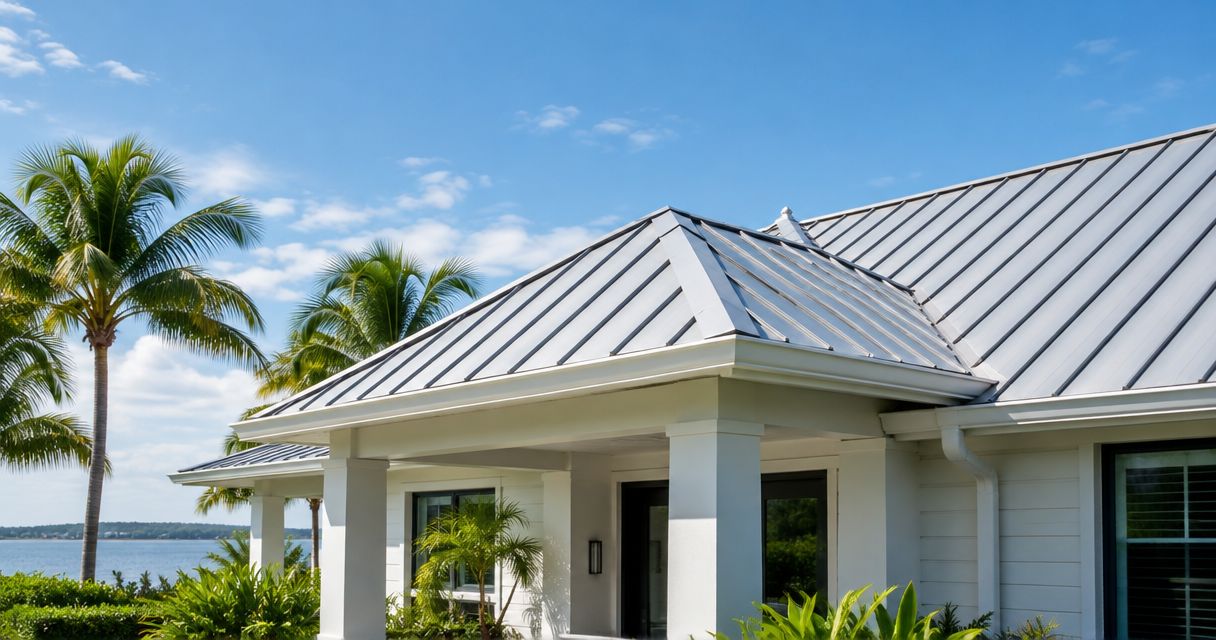
Standing-seam roofing joins panels along raised seams, with attachment details that vary by system. Concealed-fastener designs keep the primary attachment points beneath the panel assembly rather than exposed across the roof surface.
Best for: homeowners considering a concealed-fastener roof system and prepared to maintain its flashing and other details. The benefit is reduced direct weather exposure at primary attachment points; the limitation is that seams, penetrations, perimeter details, and installation quality still require attention.
A standing-seam roof is not maintenance-free. Ask the inspector to check seam condition, edge attachment, transitions, and flashing around roof penetrations. Where an attachment is concealed, a clean-looking surface alone cannot establish its condition.
Do not assume that every standing-seam system performs identically. The panel design and installation instructions matter more than the category name.
Exposed-fastener metal roofs: focus on screws and washers
Exposed-fastener roofing uses visible fasteners through the panels. Those attachment points form part of the roof's weather protection, making their condition a direct maintenance concern.
Best for: owners whose building and roof design suit an exposed-fastener system and who accept ongoing attention to its attachments. Visible fasteners are accessible for inspection, but deteriorated washers, loose screws, and damaged holes can create leak paths.
A screw replacement is not automatically a complete repair. The roofer must also determine whether the attachment still holds properly and whether the surrounding metal remains sound.
Avoid treating a blanket application of sealant as proof that the roof has gained a new service life. A repair should address the source of water entry and follow the applicable system requirements.
Why metal roof lifespan varies in Florida
Florida's weather does not affect every roof equally. These factors explain why two roofs installed at the same time can need different work:
- Salt exposure: salt-containing moisture promotes corrosion of susceptible metals. Coastal specifications must account for the actual exposure and the manufacturer's restrictions.
- Material compatibility: panels, fasteners, flashing, and accessories need compatible materials. Certain combinations of dissimilar metals in wet conditions promote galvanic corrosion.
- Installation details: attachment, seams, flashing, and edge details determine how the assembly resists water entry and wind forces.
- Moisture and drainage: trapped debris and drainage problems keep vulnerable areas wet. Persistent moisture also makes concealed damage harder to dismiss.
- Storm damage: lifted edges, displaced flashing, impact damage, and opened seams need assessment even when the roof is relatively young.
- Maintenance history: unresolved leaks and unsuitable repairs leave defects in place. Documented inspection and appropriate repairs provide a clearer picture of condition.
For waterfront properties, the guide to metal roofing for coastal Southwest Florida homes addresses the exposure question more directly than a statewide lifespan figure.
Aluminum versus coated steel: compare exposure, not slogans
Aluminum and coated steel are different material choices, not interchangeable lifespan guarantees. The specific product, finish, accessories, and installation requirements determine whether either belongs on your property.
| Material | Best for | Useful characteristic | Limitation to check |
|---|---|---|---|
| Aluminum | Projects where coastal corrosion resistance is a central specification issue | Aluminum does not develop iron rust | Compatibility, attachment, finish, and physical damage still matter |
| Coated steel | Projects where the specified protective system suits the exposure | Protective coatings separate steel from the environment | Damaged protection can expose steel to corrosion |
Choose the material as part of a complete roof specification. A familiar metal name does not confirm that the fasteners, flashing, or finish suit a salt-exposed location.
How do you determine a metal roof's remaining life?
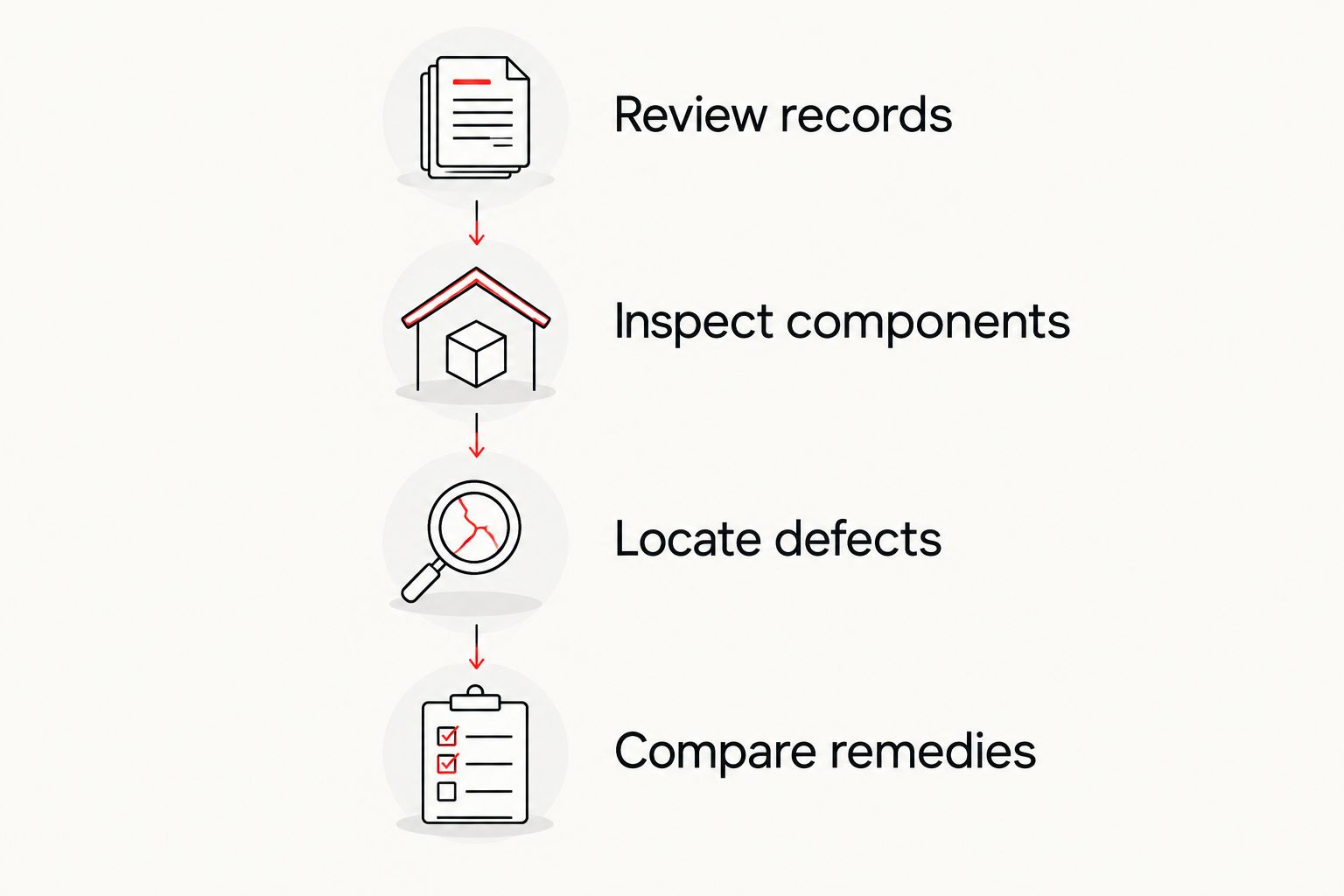
For a 2026 assessment, use a sequence that connects records, visible condition, and repairability. Do not climb onto the roof to perform these checks yourself; arrange professional access and inspection.
- Review records. Establish the installation date, panel system, previous repairs, and available warranty terms. Identify additions or later work around penetrations.
- Inspect components. Examine panels, seams, fasteners, flashing, edges, and drainage. Check accessible interior areas for evidence of water entry.
- Locate defects. Separate isolated problems from deterioration affecting multiple areas. Record photographs and locations rather than relying on a general condition label.
- Compare remedies. Ask whether repair restores a sound assembly or leaves deteriorated components in service. Obtain a written explanation for the recommendation.
The inspection should connect each proposed repair to an observed problem. That connection helps you distinguish necessary work from a recommendation based only on roof age.
Ask what the inspection could not establish without opening the assembly. Concealed underlayment, decking, and attachments are not fully assessed simply by viewing the panels from outside.
That limitation should shape the recommendation. It should not disappear behind a confident remaining-life estimate.
Should you repair or replace an aging metal roof?
Repair makes sense when a defined defect can be corrected while the surrounding roof remains serviceable. Replacement deserves consideration when deterioration is widespread or a repair would leave significant problems unresolved.
| Approach | Best for | Advantage | Limitation |
|---|---|---|---|
| Localized repair | An identifiable defect within an otherwise serviceable assembly | Addresses the problem without removing the entire roof | Does not correct unrelated deterioration elsewhere |
| Roof replacement | Widespread deterioration or an assembly that cannot be reliably repaired | Allows the roof system to be rebuilt as a coordinated assembly | Removes existing materials and requires a larger construction project |
A leak around a penetration does not, by itself, prove that every panel needs replacement. Conversely, repeated repairs do not prove that a roof remains a sensible candidate for more patching.
For a replacement recommendation in 2026, request photographs of the conditions that make repair unsuitable. Ask which components will be removed, what concealed conditions require attention, and how the new assembly will suit the building.
Roofsmartflorida provides metal roofing installation, repair, and replacement across its stated Southwest Florida service area. The benefit is access to those service options; the limit is that no service description establishes what your particular roof needs before evaluation.
Request an honest roof evaluation
Discuss metal roof repair or replacement with a no-pressure free estimate.
Does a metal roof warranty tell you how long it lasts?
A warranty describes coverage, not an expiration date for the roof. Read the actual documents to determine whether coverage concerns the finish, material defects, installation, or another defined issue.
For a roof installed in 2026, keep the material and workmanship documents together. Check exclusions, maintenance obligations, transfer provisions, and any coastal restrictions before treating coverage as part of the purchase decision.
Also distinguish appearance from performance. A finish concern and an active leak require different evaluations, even when both involve the same panel.
Does living near the coast shorten a metal roof's life?
Coastal salt exposure increases corrosion risk for susceptible roof components. The effect depends on the materials, protective finish, details, and actual exposure rather than a universal deduction from the roof's lifespan.
Ask the roofer to verify that the proposed panels and accessories meet the manufacturer's requirements for the property. Do not accept a general statement that all metal roofing is suitable for waterfront use.
Can maintenance keep a metal roof working longer?
Maintenance addresses defects before they remain active sources of deterioration. It does not reverse widespread corrosion or make storm-damaged attachments sound without appropriate repairs.
Follow the roof manufacturer's care instructions, keep drainage paths clear, and arrange evaluation after suspected damage. Avoid abrasive cleaning, incompatible repair materials, or roof-mounted additions that disregard the roof system's requirements.
FAQ
How long does a metal roof last in Florida?
A metal roof in Florida can last for several decades when the materials suit the exposure and the system remains sound. Its actual remaining life depends on installation, corrosion, storm damage, and maintenance—not age alone.
Does a metal roof need maintenance in Florida?
Yes, a metal roof needs maintenance appropriate to its system and exposure. Seams, fasteners, flashing, penetrations, and drainage need attention even when the panels look sound.
Is standing seam better than exposed-fastener roofing?
Standing seam keeps primary fasteners concealed in concealed-fastener designs, but that does not make every standing-seam roof better for every building. Compare the specific systems, attachment requirements, exposure, and maintenance responsibilities.
Does salt air damage metal roofing?
Salt-containing moisture promotes corrosion of susceptible metals. Select panels, fasteners, flashing, and finishes that suit the location and comply with the manufacturer's exposure requirements.
Does one leak mean my metal roof needs replacement?
One leak does not establish that the entire metal roof needs replacement. An inspection should identify the source and determine whether the surrounding assembly remains serviceable.
Will my metal roof last as long as its warranty?
A warranty term does not guarantee the service life of the entire roof. Coverage applies to specified issues under written conditions and exclusions.
Can I judge metal roof condition from the ground?
A ground-level view cannot establish the condition of the complete roof assembly. Concealed components, attachment problems, and some flashing defects require closer professional evaluation.
One last thing
Ask the roofer to name the component limiting your roof's remaining life. The answer should identify something specific: damaged panels, corroded attachments, failed flashing, concealed moisture damage, or another documented defect.
If the explanation stops at the roof's age, ask for the condition evidence. Metal roofing longevity belongs to the whole assembly—not just the metal you can see.