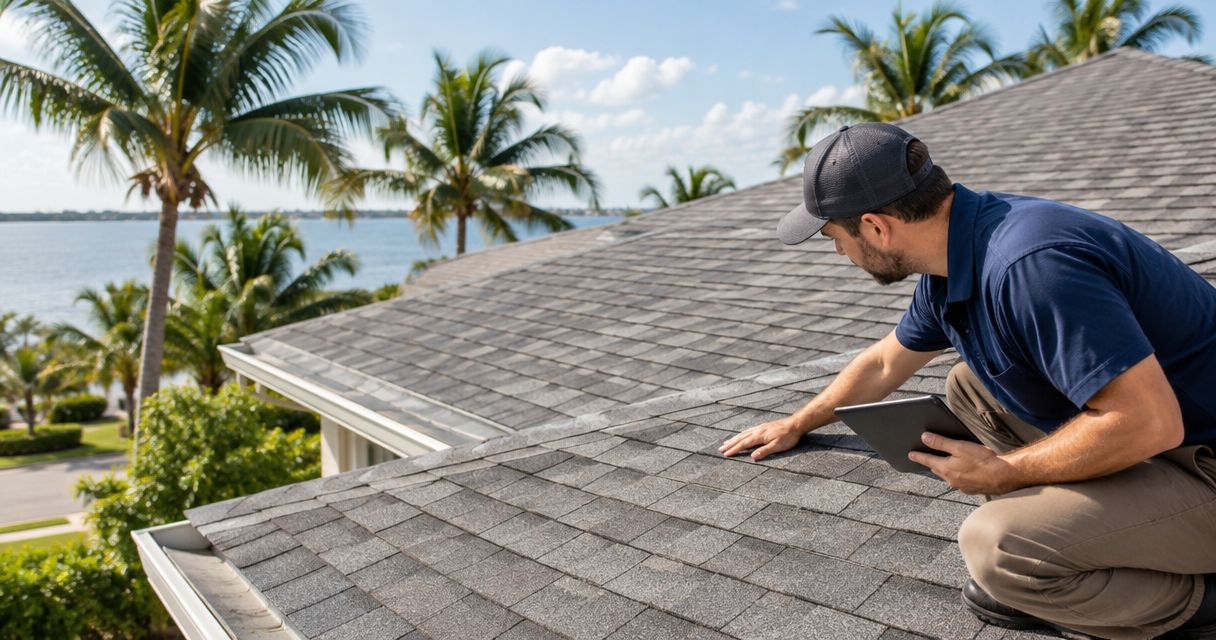
Yes—Florida homeowners insurance can cover roof replacement when a covered event damages the roof and replacement is justified under your policy; age, wear, or a renewal notice alone does not establish coverage. Your deductible, exclusions, and roof settlement terms determine what you must pay yourself. In 2026, the right starting point is the cause of damage and the policy in force when it happened—not whether a contractor recommends a new roof.
- Does homeowners insurance cover roof replacement in Florida? Yes, for covered damage—not ordinary aging or maintenance.
- Replacement cost and actual cash value produce different claim payments; check your roof endorsements.
- An insurer's replacement requirement at renewal is not approval of a roof insurance claim.
- Roofsmartflorida provides Southwest Florida roofing services; your insurer determines coverage under your policy.
Does homeowners insurance cover roof replacement in Florida?
Coverage depends on what damaged the roof, not simply on whether the roof needs replacing. A covered wind event and a worn-out roof can both leave you needing work, but they present different insurance questions.
Use this comparison before assuming that a roofing estimate equals an insurance obligation. If you have fresh storm damage, the guide to filing a roof insurance claim after storm damage explains the next steps.
| Roof situation | Coverage position | Evidence to gather |
|---|---|---|
| Wind or a fallen tree damages the roof | Potentially covered, subject to policy terms and exclusions | Event date, photographs, inspection findings |
| Roof deteriorates through ordinary aging | Generally excluded as wear and tear | Maintenance history and roof condition report |
| Roof leaks after a storm | Cause must be established; timing alone does not prove coverage | Entry point, damaged components, prior condition |
| Insurer requires replacement for renewal | An underwriting requirement, not automatic claim coverage | Renewal notice and any inspection requirements |
| Floodwater damages the property | Standard homeowners insurance generally excludes flood | Flood policy, water source, damage documentation |
A covered repair does not automatically justify replacing the entire roof. Ask the insurer to explain the approved scope and the policy provisions behind that decision.
Why this matters
You face two separate decisions: what work your home needs and what your insurance contract covers. A roof can need replacement even when no insured event caused the problem.
Keep those decisions separate in 2026. Get a written roofing assessment for the physical condition, then obtain a written coverage explanation from the insurer; neither document replaces the other.
Do not sign a replacement contract on the assumption that insurance will reimburse the full amount. Confirm your payment obligations before authorizing permanent work, while still taking reasonable steps to prevent further damage.
Replacement cost coverage: check the payment conditions
Replacement cost coverage generally values covered damage without subtracting depreciation from the final covered replacement amount. That does not mean the insurer pays every proposed expense or releases the full amount immediately.
Depending on the policy and applicable law, an initial payment can reflect depreciation, with additional payment tied to completed repairs and supporting documents. Check the roof endorsement, not just the general description of dwelling coverage.
- Best for: Homeowners seeking protection against depreciation on covered roof damage.
- Advantage: Recoverable depreciation can increase the eventual payment when policy conditions are met.
- Limitation: Deductibles, exclusions, limits, and documentation requirements still apply.
Ask the insurer which depreciation is recoverable and what documents release it. Keep invoices, completion records, and proof of payment together so you can answer that question with evidence rather than assumptions.
Actual cash value coverage: depreciation affects payment
Actual cash value coverage generally subtracts depreciation for age and condition from the value of covered damage. A roof replacement recommendation does not remove that deduction.
This distinction matters when your roof is older but the damage itself is covered. You can have an accepted claim and still carry a substantial share of the replacement expense.
| Settlement approach | What it does | Best for | Main limitation |
|---|---|---|---|
| Replacement cost | Generally allows covered replacement value without a final depreciation deduction when conditions are met | Homeowners prioritizing protection against depreciation | Payment conditions and exclusions remain |
| Actual cash value | Generally deducts depreciation from the covered loss | Homeowners reviewing an existing policy's payment limits | Depreciation generally remains your responsibility |
| Roof payment schedule | Applies the roof-specific settlement formula written into an endorsement | Homeowners checking exactly how their policy values roof damage | The schedule can limit recovery despite broader dwelling coverage |
Read the roof-specific terms before relying on the words replacement cost. A declarations page alone does not explain every endorsement or exclusion affecting your roof.
Why roof replacement coverage varies
For a 2026 roof claim, these policy and damage details determine the coverage analysis:
- Cause of loss: Wind damage, deterioration, faulty work, and flood are different causes with different coverage treatment.
- Policy exclusions: Read exclusions and endorsements together; an exception or limitation can change the result.
- Settlement terms: Replacement cost, actual cash value, and roof payment schedules value covered damage differently.
- Deductible: Check whether an ordinary, hurricane, or other applicable deductible governs the loss.
- Damage extent: The evidence must explain why repair or replacement is necessary, including relevant building requirements.
- Reporting and documentation: Notice timing, photographs, maintenance records, and inspection findings affect the claim record.
A storm date is useful evidence, but it does not establish that every roof defect came from that storm. Ask the inspection report to distinguish fresh damage from pre-existing deterioration.
What should you do before authorizing roof replacement?
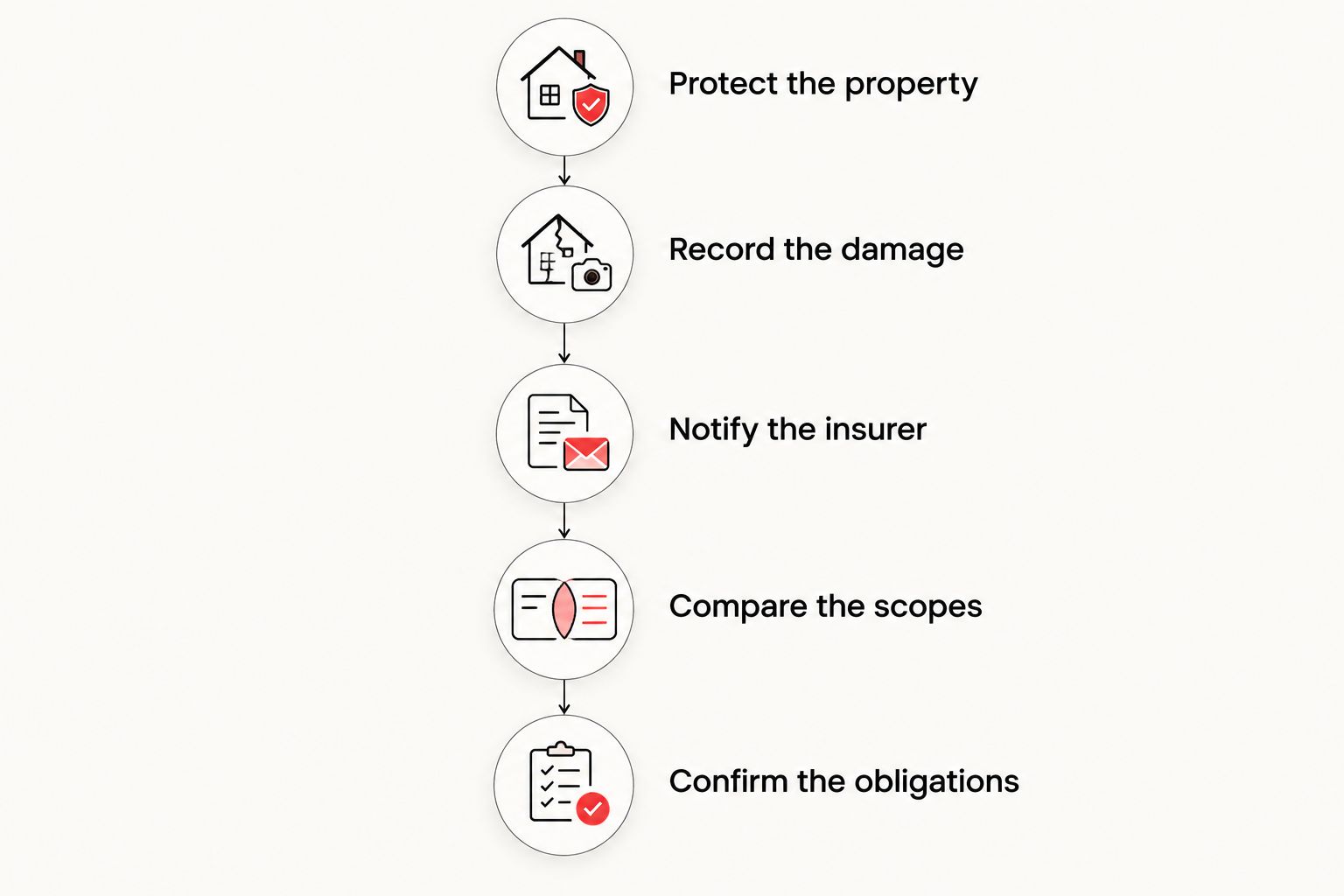
Document first, prevent further damage, and keep permanent replacement separate from emergency protection. Never climb onto a damaged roof to collect photographs; ground-level images and a professional inspection are safer ways to build the record.
- Protect the property. Arrange reasonable temporary protection when needed and safe. Photograph conditions before work when possible, and keep receipts.
- Record the damage. Save dated photographs, interior leak locations, inspection findings, and records showing the roof's previous condition.
- Notify the insurer. Report the loss promptly, request a claim number, and ask which documents the insurer needs.
- Compare the scopes. Read the insurer's estimate alongside the contractor's assessment, identifying specific differences rather than comparing totals alone.
- Confirm the obligations. Before permanent work, understand the contract, deductible, payment terms, permits, and any unresolved coverage questions.
An emergency repair receipt is evidence of work performed, not a promise of reimbursement. Ask the insurer how it handles reasonable protective expenses under your policy.
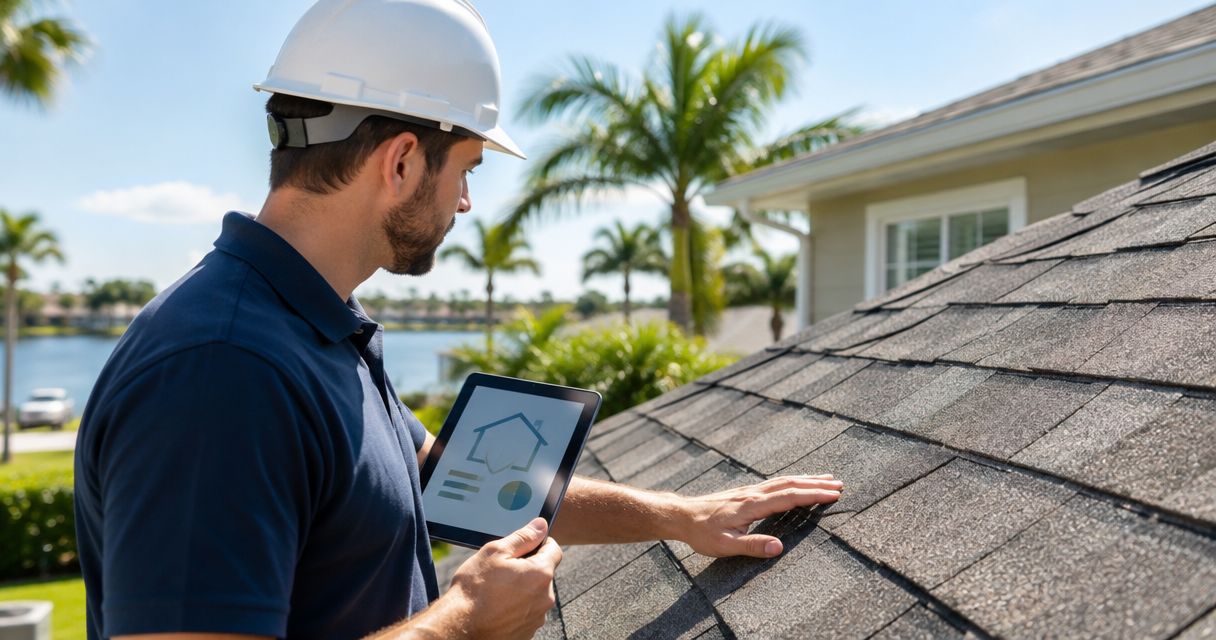
Check the contractor's assessment for damaged components, photographs, proposed work, and any explanation for replacing rather than repairing. A report that only says the roof is old does not establish storm damage.
Roofsmartflorida provides residential roofing repair and replacement across Cape Coral, Fort Myers, Naples, and surrounding Southwest Florida communities. Roofsmartflorida is best suited to Southwest Florida homeowners seeking roofing services—not a substitute for an insurer's coverage decision.
The benefit is help assessing and completing roofing work; the limitation is that a contractor cannot promise your policy will cover it. You can request a roofing evaluation through Roofsmartflorida while directing coverage questions to your insurer or a qualified insurance professional.
Can an insurer require replacement without covering it?
Yes. An insurer's underwriting decision about keeping a property insured is separate from a claim decision about damage that already occurred.
Florida Statutes section 627.7011 addresses roof-age restrictions for homeowners policies. The statute prohibits refusing to issue or renew a policy solely because a roof is less than 15 years old; for a roof at least 15 years old, it provides an inspection opportunity before replacement is required solely because of age.
When that inspection shows at least 5 years of useful life remaining, the statute restricts refusal based solely on roof age. These protections do not establish coverage for deterioration or eliminate other underwriting issues.
For a 2026 renewal, ask the insurer to identify the exact reason for its requirement and the inspection evidence it will accept. Distinguish an age-only objection from documented damage, condition concerns, or another stated underwriting reason.
How long do you have to report roof damage in Florida?
Florida Statutes section 627.70132 generally sets 1 year after the date of loss for notice of an initial or reopened property insurance claim and 2 years after the date of loss for a supplemental claim. The statute distinguishes those claim types; they are not interchangeable labels.
Report damage promptly rather than treating the statutory deadline as a waiting period. Your policy also contains notice and cooperation duties, and the law applicable to a particular loss can depend on its date and circumstances.
For a 2026 loss, confirm the applicable requirements with the insurer or a Florida insurance attorney. Save the acknowledgment of your notice, and do not assume a contractor's visit counts as reporting the loss to the insurance company.
What if insurance approves repair instead of replacement?
Ask for the written scope, inspection findings, and the policy explanation supporting repair. Then have the roofing assessment identify the specific reasons that scope does or does not address the documented damage.
Relevant questions include whether the proposed repair is physically workable, which components are damaged, and which applicable code requirements affect the work. A preference for a newer roof is not the same as evidence that replacement is required.
Submit differences in writing with supporting photographs and an itemized explanation. If the disagreement remains, review the policy's dispute procedures and seek advice from a properly licensed professional; a roofing contractor's estimate is not legal advice.
FAQ
Does homeowners insurance cover roof replacement in Florida after a hurricane?
Florida homeowners insurance can cover hurricane-related roof replacement when the damage falls within the policy and replacement is justified. Hurricane deductibles, wind exclusions, roof endorsements, and the documented cause of damage affect the outcome.
Will insurance replace my roof just because it is old?
Insurance generally does not cover roof replacement caused solely by age or ordinary wear and tear. An older roof can still sustain covered damage, but the insurer evaluates the cause and applicable policy terms.
Does a roof leak mean my whole roof is covered?
A roof leak does not automatically establish coverage for whole-roof replacement. The source of the leak, damaged components, exclusions, and necessary repair scope determine the coverage analysis.
Can my insurer refuse renewal because my roof is old?
Florida law restricts age-only refusals: section 627.7011 addresses roofs less than 15 years old and an inspection process for older roofs. An inspection showing at least 5 years of useful life remaining provides additional age-related protection, but condition issues remain separate.
Will replacement cost coverage pay everything for my new roof?
Replacement cost coverage does not guarantee payment of every roof replacement expense. Your deductible, limits, exclusions, endorsements, and conditions for recovering depreciation still apply.
How long do I have to report roof damage in Florida?
Florida Statutes section 627.70132 generally allows 1 year for initial or reopened claim notice and 2 years for supplemental claim notice, measured from the loss date. Report promptly and confirm the requirements applicable to your loss.
Can a roofer guarantee that my insurance claim will be approved?
A roofer cannot guarantee insurance claim approval. A contractor documents roof condition and proposed work; the insurer determines coverage under the policy, subject to available dispute procedures.
One last thing
A replacement requirement and a covered replacement are different things. Before you authorize work, write down which problem you are solving: active damage, an insurance renewal condition, or a roof reaching the end of its service life.
That distinction keeps your 2026 decision grounded in the right evidence. Your roofing assessment should explain the work; your insurer's written response should explain coverage and payment conditions.