Best overall for tile-required communities: concrete tile. Best for an HOA-approved lightweight roof: standing-seam metal. Best for traditional barrel-tile appearance: clay tile. Best for shingle-approved homes: architectural asphalt shingles. The best roofing materials for golf course community homes in Florida depend on your association’s rules, your roof structure, and the approved installation—not the material name alone.
- Concrete tile leads for golf course homes where HOA rules require a tile roof.
- Standing-seam metal is the lightweight alternative when the HOA approves the profile and finish.
- Clay tile suits traditional barrel-tile architecture, but structure and impact damage need attention.
- Architectural asphalt shingles fit shingle-approved communities; verify the complete wind-rated installation.
- Roofsmartflorida provides roofing services for Southwest Florida homeowners comparing these materials.
Why this matters
A golf course address does not create a special roofing standard. Your actual exposure, roof geometry, structural capacity, and community restrictions determine which roofing system belongs on your home. A fairway-facing roof also deserves a discussion about golf-ball impacts, not just hurricane wind.
For a 2026 replacement, get written architectural approval before ordering materials. A permitted roof and an HOA-approved roof are separate requirements; satisfying one does not automatically satisfy the other.
Roofsmartflorida provides residential roof installation, repair, and replacement across Cape Coral, Fort Myers, Naples, and surrounding Southwest Florida counties. Roofsmartflorida is a roofing service option for Southwest Florida homeowners who need an evaluation before choosing a material.
What makes the best roofing material for a golf course home?
Use these six criteria before comparing colors or profiles:
- HOA approval: Confirm the permitted material, profile, color, and review process in writing. Do not assume a tile-look metal panel satisfies a tile requirement.
- Structural fit: Check whether the existing roof structure supports the proposed covering. A change from shingles to tile needs particular attention to weight.
- Wind resistance: Review the specific roofing assembly, attachment method, and requirements for your address. A generic hurricane-resistant label is not enough.
- Water protection: Evaluate underlayment, flashing, valleys, and penetrations. The visible covering is only part of the system that keeps rain out.
- Impact exposure: Discuss golf balls, branches, and other debris. Cracking and denting are different failure modes, and neither material is impact-proof.
- Repair access: Ask how damaged sections are replaced and how maintenance workers reach roof equipment without damaging the covering.
Keep your 2026 material decision separate from your color decision. First establish which systems qualify; then choose a finish within the HOA’s approved palette. That order prevents an attractive sample from becoming an unusable choice.
Roofing materials at a glance
| Material | Best for | Standout feature | Key limitation |
|---|---|---|---|
| Concrete tile | Communities requiring a tile roof | Molded profiles for tile-based architecture | Weight and brittle impact damage |
| Standing-seam metal | Approved lightweight replacements | Concealed fastening in standing-seam assemblies | HOA acceptance and visible denting |
| Clay tile | Traditional barrel-tile architecture | Fired-clay appearance | Structural requirements and breakage |
| Architectural asphalt shingles | Communities that permit shingles | Layered appearance without a tile-weight covering | Wind performance depends on the specified installation |
The table ranks materials by their fit for a particular homeowner—not by an unsupported lifespan promise. No covering makes a roof hurricane-proof, and a material’s appearance does not establish its wind performance.
1. Concrete tile: best roofing material for tile-required HOAs
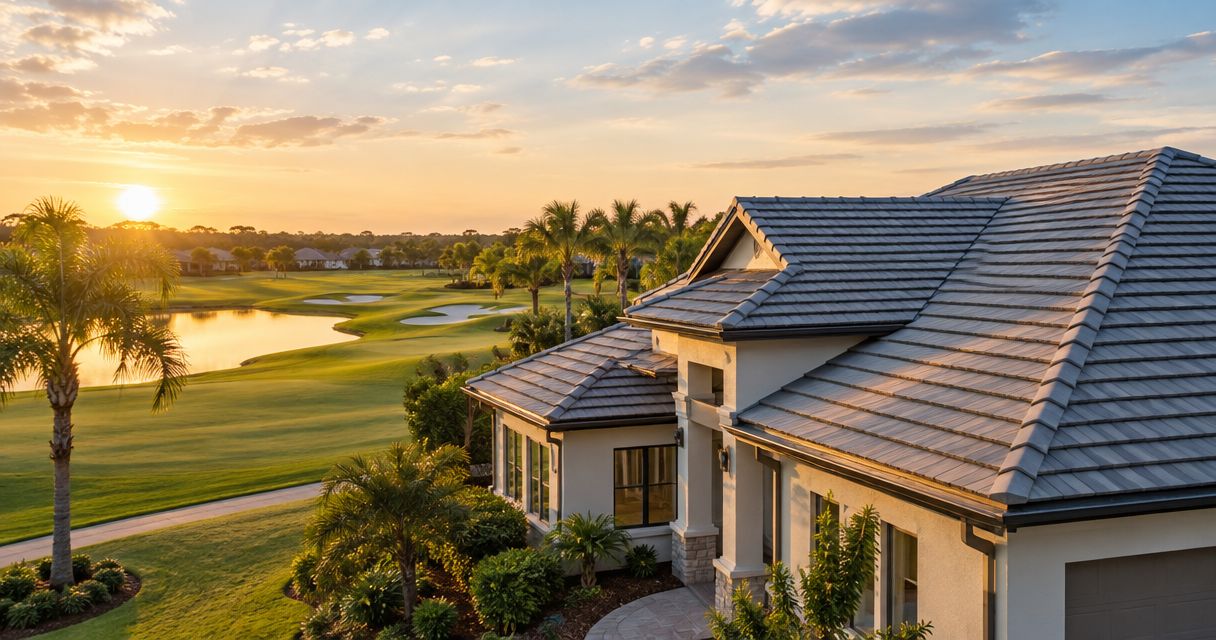
Concrete roof tiles are molded units installed over an underlayment system. They come in different profiles, including shapes that suit tile-based Florida architecture. Concrete tile is the default shortlist choice when your HOA requires tile and your structure supports the specified system.
The decision is about more than replacing a broken surface. During replacement, the contractor needs to evaluate the deck, underlayment, flashing, and attachment details beneath the tiles. Reusing the same material does not remove that responsibility.
Review the best tile roofing options for Southwest Florida homes before selecting a profile. Bring your community’s written requirements to the conversation so the proposed tile matches the rules, not merely neighboring roofs.
Concrete tile pros:
- Offers profiles suited to tile-based architectural requirements.
- Allows replacement of individual damaged tiles when compatible units are obtainable.
- Provides a noncombustible roof covering.
Concrete tile cons:
- Requires a structure capable of carrying the specified load.
- Can crack under concentrated impacts or careless foot traffic.
- Does not eliminate maintenance of underlayment and flashing.
Best for: Homeowners replacing a tile roof in a community with a written tile requirement.
For a fairway-facing home, ask how the proposed system handles inspection and localized damage. An intact-looking field of tiles does not establish the condition of the layers below it. Arrange roof access through a qualified contractor rather than walking the tiles yourself.
Verdict: Buy concrete tile when the HOA requires tile and the structural evaluation supports it.
2. Standing-seam metal: best for an approved lightweight replacement
Standing-seam metal uses panels with raised seams and concealed attachment details. It is lighter than concrete or clay tile, making it a useful alternative when you want to avoid a heavy covering. The exact panel assembly still needs to meet your roof’s slope and wind requirements.
Standing-seam metal belongs on your shortlist only after the HOA approves its appearance. A metal roof that performs well but violates the community’s architectural rules is not a workable recommendation.
The guide to metal roofing for coastal Southwest Florida homes covers a related selection issue: exposure near salt water. Golf course frontage alone does not establish coastal exposure; discuss your property’s actual location when choosing the metal, finish, and compatible fasteners.
Standing-seam metal pros:
- Places less covering weight on the structure than concrete or clay tile.
- Uses concealed fastening in the specified standing-seam assembly.
- Offers a continuous-panel appearance for communities that accept it.
Standing-seam metal cons:
- Requires explicit approval where community rules restrict roof profiles.
- Can show dents from golf balls or other concentrated impacts.
- Demands careful detailing for panel movement, penetrations, and material compatibility.
Best for: Homeowners seeking a lightweight replacement in a community that permits standing-seam metal.
For your 2026 comparison, identify the actual panel system rather than accepting a proposal that says only metal roof. Ask for its approval documentation, attachment details, and repair method. A dented panel and a leaking panel are not automatically the same problem, but both deserve assessment.
Verdict: Buy standing-seam metal when the HOA approves it and the specified assembly fits your exposure.
3. Clay tile: best for traditional barrel-tile architecture
Clay roof tiles are fired-clay units installed over a supporting roof and underlayment system. Barrel-style profiles suit homes where the original design calls for that appearance. Choose clay for a defined architectural requirement, not for an assumed immunity to storms.
Clay tile is the architectural pick when traditional barrel-tile appearance is the priority. Check the exact profile against the HOA requirements; the word tile does not make every shape or finish interchangeable.
Clay tile pros:
- Provides the fired-clay appearance associated with traditional tile architecture.
- Offers curved profiles for homes designed around barrel-style roofing.
- Provides a noncombustible roof covering.
Clay tile cons:
- Requires confirmation that the structure supports the specified load.
- Can break under golf-ball impacts, falling objects, or improper walking.
- Needs compatible replacement tiles and careful repair access.
Best for: Homeowners preserving a traditional clay-tile architectural style approved by their community.
Do not convert a lighter roof to clay solely because a neighboring house has it. Similar-looking homes do not prove identical structural capacity. Have the contractor establish the roof’s suitability and identify any required structural review before you commit.
Also distinguish appearance from watertightness. Cracked tiles need attention, but recurring leaks require inspection of the water-protection system beneath and around the covering. Replacing visible tiles alone is not a complete diagnosis.
Verdict: Buy clay tile for an approved architectural match; hold the decision until structural suitability is confirmed.
4. Architectural asphalt shingles: best for shingle-approved homes
Architectural asphalt shingles use a layered design to create a thicker-looking profile than basic flat shingles. They suit pitched roofs in communities that permit asphalt coverings. Their performance depends on the selected product, roof slope, fastening, and installation conditions.
Architectural shingles are the straightforward choice for a shingle-approved home—not a substitute for a tile requirement. Obtain approval for the exact style and color before assuming an existing shingle roof establishes permission for every replacement.
Architectural asphalt shingle pros:
- Provide a layered appearance for communities that accept shingles.
- Avoid the covering weight of concrete or clay tile.
- Allow localized replacement of damaged shingles where the surrounding roof remains serviceable.
Architectural asphalt shingle cons:
- Do not satisfy an HOA requirement for actual tile.
- Depend on correct fastening and sealing for wind performance.
- Require attention to lifted edges, damaged tabs, and flashing after storms.
Best for: Homeowners replacing an existing shingle roof where community rules permit architectural shingles.
Slope is a real boundary, not a styling preference. Standard code provisions restrict asphalt shingles to slopes of at least 2 inches of rise per 12 inches of horizontal run. Between that minimum and 4 inches of rise per 12 inches of run, additional underlayment provisions apply; your contractor must follow the applicable code and manufacturer’s instructions.
For a 2026 project, require the proposal to identify the shingle and installation requirements. Do not transfer a wind-rating claim from one product or fastening pattern to another.
Verdict: Buy architectural shingles for an approved pitched-roof application; skip them where tile is mandatory.
Check the roof before choosing the covering
The best material shortlist becomes useful only when you connect it to your actual home. Roofsmartflorida offers shingle, metal, and tile roofing services, plus roof repair and replacement. Use the evaluation to establish what the roof needs before narrowing the material.
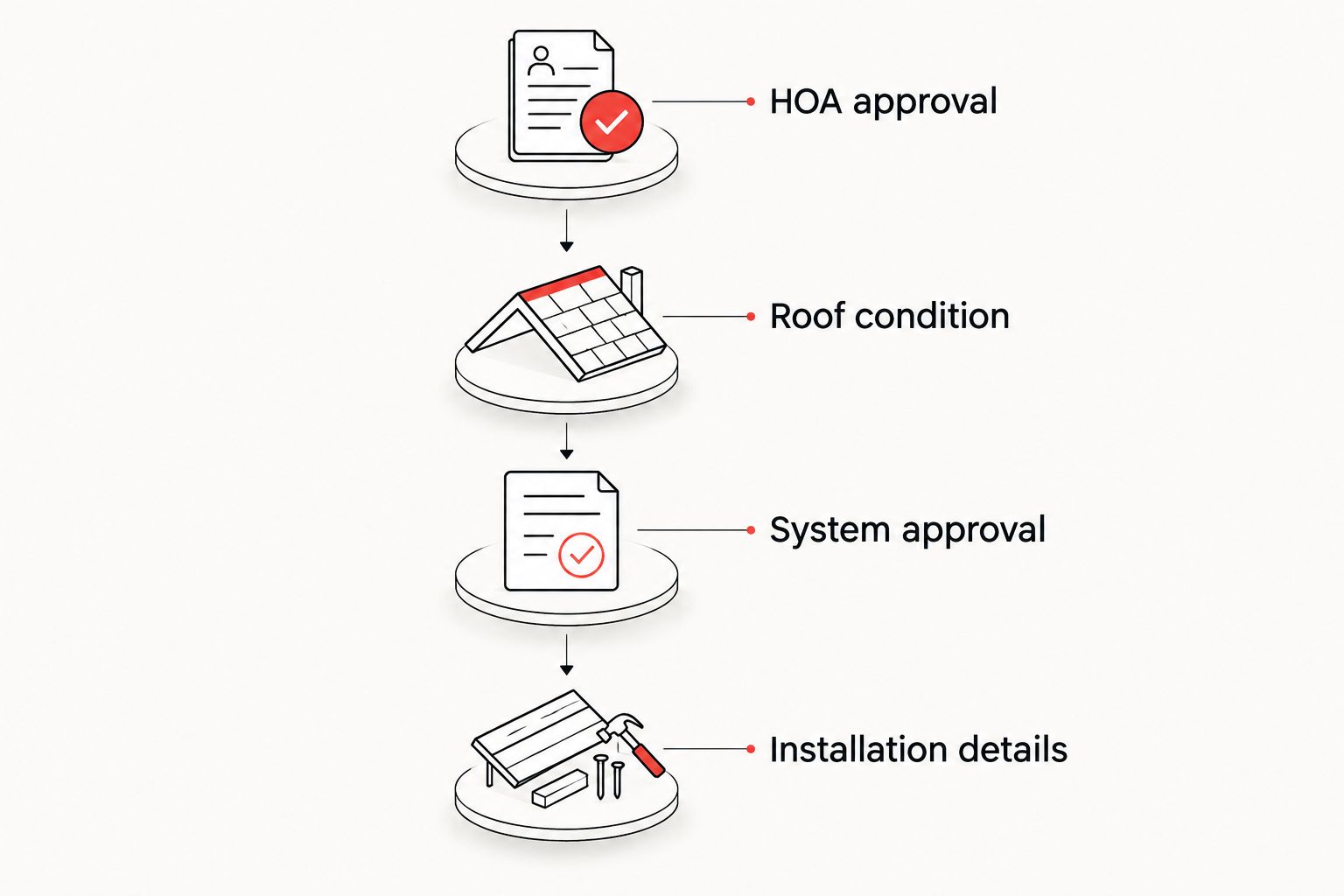
Follow this sequence:
- HOA approval: Obtain the current written rules and submit the proposed material, profile, and color through the required process.
- Roof condition: Assess the deck, existing leaks, structural suitability, and any sections with different slopes.
- System approval: Identify the roofing assembly and confirm its permitted use for the property and installation conditions.
- Installation details: Put underlayment, flashing, attachment, penetrations, and drainage work into the written scope.
Do not use a reroofing proposal for the main pitched roof as permission to apply the same covering to a low-slope lanai. Different roof sections can require different systems. The connection between those sections needs its own waterproofing detail.
Ask for a clear explanation of what remains uncertain after the inspection. Hidden deck damage, for example, needs a written procedure for documenting and approving additional work. An honest scope separates known work from conditions discovered during removal.
Request an honest roof evaluation
Discuss your HOA requirements, roof condition, and replacement options for your Southwest Florida home.
How these materials are ranked
This ranking prioritizes HOA compliance, structural fit, wind-resistant installation, water protection, impact exposure, and repair access. It does not assign unsupported lifespan figures or promise insurance savings. Concrete tile leads for tile-required communities; standing-seam metal leads for an approved lightweight change.
Clay tile earns its place for architectural fidelity, while architectural shingles serve communities that accept shingle roofs. These are distinct use cases. The right ranking for your house starts by removing every material that fails a mandatory requirement.
Which roofing material should you choose?
If your golf course community requires tile, start with concrete tile and compare clay only when its appearance serves a specific architectural goal. If the HOA permits metal and reducing covering weight matters, evaluate standing-seam metal. Keep architectural shingles on the shortlist for shingle-approved homes.
For an undecided homeowner in 2026, the next move is simple: obtain the HOA rules and schedule a roof evaluation. Roofsmartflorida provides roofing services for Southwest Florida homeowners making that decision. Ask for a recommendation tied to your structure and exposure—not a blanket claim that one material wins everywhere.
FAQ
What are the best roofing materials for golf course community homes in Florida?
Concrete tile is the default shortlist choice where an HOA requires tile; standing-seam metal is an alternative where lightweight metal roofing is approved. Clay tile serves traditional barrel-tile architecture, and architectural shingles fit shingle-approved communities.
Is metal roofing better than tile for a golf course home?
Standing-seam metal is lighter than concrete or clay tile, but it is not automatically the better choice. HOA rules, structural suitability, exposure, and the approved installation determine which system fits your home.
Can my HOA reject a metal roof in Florida?
Check your governing documents and applicable law before assuming a metal roof is permitted. Obtain written architectural approval for the specific profile and finish before ordering materials.
Will golf balls damage a tile or metal roof?
Golf-ball impacts can crack roof tiles or dent metal panels. Have a qualified contractor assess the damage rather than treating every visible mark as either harmless or a leak.
Can I replace a shingle roof with concrete tile?
A change from shingles to concrete tile requires confirmation of structural suitability and community approval. Do not assume the existing structure supports the proposed tile load.
Does a new roof automatically qualify for insurance discounts?
A new roof does not establish an automatic insurance discount. Ask your insurer which documented roof features and inspections affect eligibility under your policy.
Are light-colored roofs always better for Florida homes?
Color alone does not establish roof energy performance. Compare documented solar reflectance and thermal emittance, then check whether the finish is permitted by your HOA.
What should a roofing proposal include in 2026?
A roofing proposal should identify the covering, underlayment, attachment, flashing, penetrations, and drainage work. It should also explain how hidden damage and any additional work will be documented and authorized.
One last thing
A roof covering can look intact while the underlayment or flashing needs repair. The reverse also matters: a visible dent does not, by itself, prove water is entering the house. Ask the contractor to separate appearance damage from water-entry risk.
For a fairway-facing home, keep photographs of the roof’s condition after installation and arrange safe inspections when impacts or storms raise concerns. Documentation gives you a clearer basis for repair decisions than judging the entire roof from a single mark.