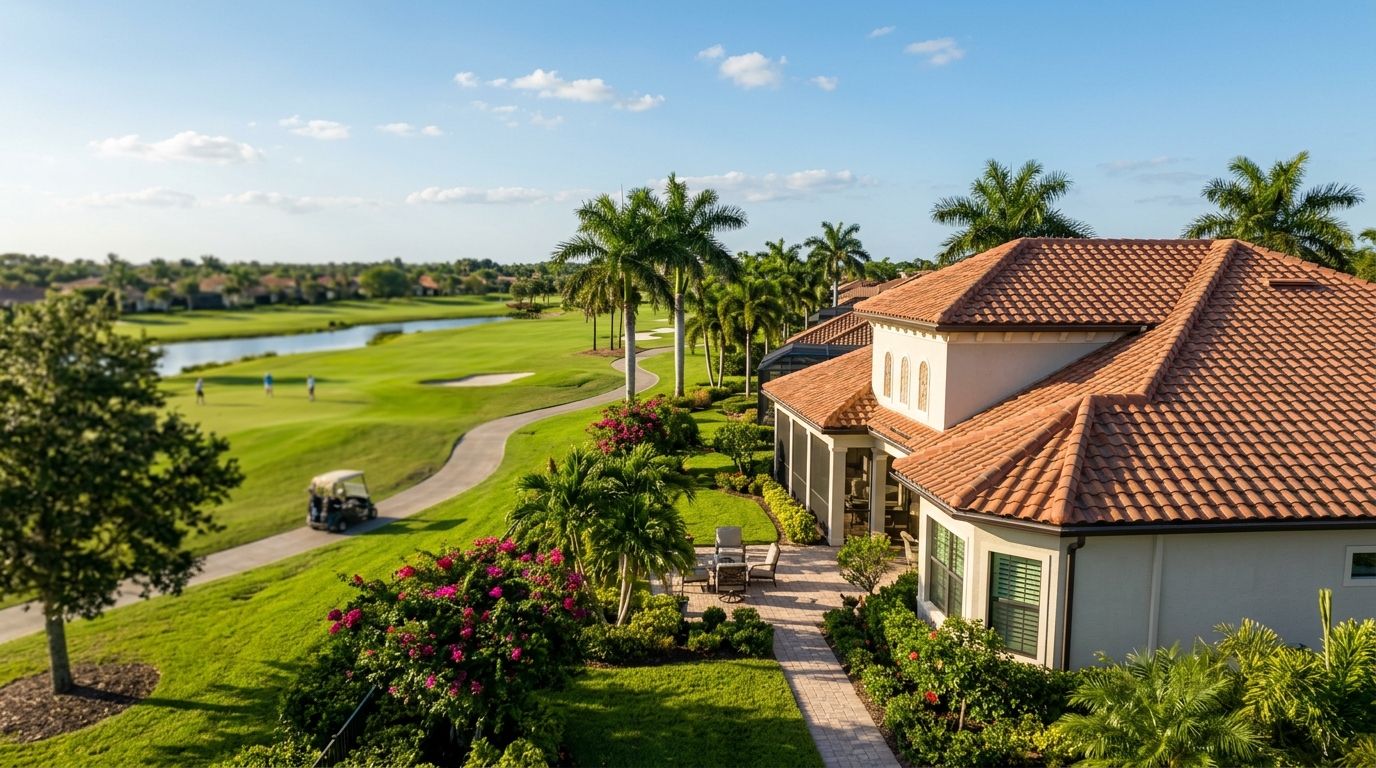
Roofing for golf course community homes in Southwest Florida means matching HOA-approved materials, colors, and wind ratings to a covenant-controlled neighborhood, with the goal of passing architectural review and protecting the resale value that comes with a fairway lot. These homes face tighter aesthetic rules than a standalone property, plus more open wind exposure where fairways and lakes remove the tree buffer other subdivisions rely on.
- Tile is the default material in most golf course communities from Naples to Fort Myers, though metal is gaining approval in newer HOAs.
- Roofing for golf course communities almost always requires HOA sign-off on color and profile before a permit gets pulled.
- Wind mitigation inspections matter more on fairway lots because open exposure increases wind load versus tree-shielded interior streets.
- Roof Smart of SW Florida handles tile, metal, and shingle work across Cape Coral, Fort Myers, and Naples covenant communities.
Why roofing matters for golf course communities
A golf course lot sells at a premium, and the roof is the single largest visible surface tied to that value. HOA boards in these communities enforce architectural standards specifically because a mismatched roof on a fairway-facing home drags down the whole street's appearance and, by extension, comparable sale prices. Most HOA and condo community roofing projects in Southwest Florida start with a covenant review, not a material choice.
Open fairways also change the wind math. A home with a clear sightline down 400+ yards of open turf catches gusts that a tree-lined interior lot never sees. That is one reason wind mitigation documentation carries more weight for these addresses in 2026 than for a typical subdivision home built the same year.
The verdict up front: on a fairway lot in Southwest Florida, get the HOA's approved material and color list in hand before you call a single roofer. Everything downstream — quote, permit, timeline — depends on it.
How to handle a roof project in a golf course community
Pull your HOA's architectural standards first
Most golf course communities in Naples, Fort Myers, and Cape Coral maintain an architectural guideline document that predates any individual homeowner's roof decision.
- Request the current standards packet from the HOA management company before getting quotes
- Confirm whether tile, metal, or shingle is permitted on your specific street or phase
- Check if the board requires approval before you sign a contract, not just before installation
- Ask for the review meeting schedule, since many boards only meet monthly
- Save the approval letter — insurers and future buyers both ask for it
Match your material to the community's design language
Mediterranean and Spanish-influenced architecture dominates golf course developments built through the 1990s and 2000s, and tile is usually the only material the covenant allows on front-facing slopes.
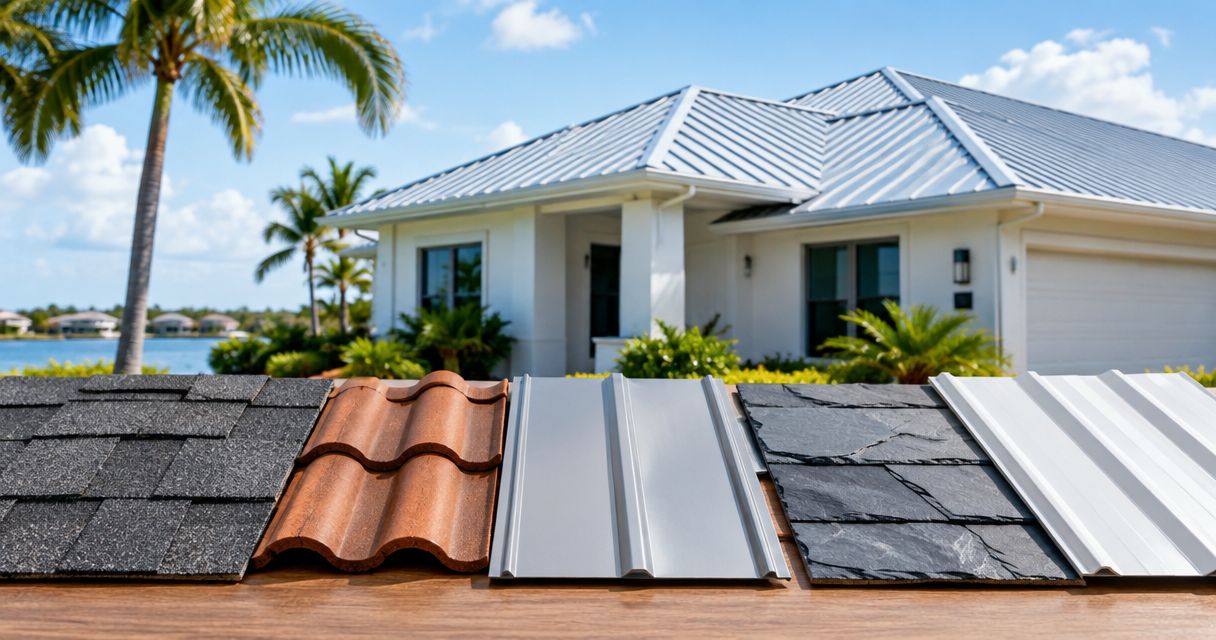
- Barrel and flat concrete tile match the stucco-and-arch look most 1990s and 2000s golf course homes were built with
- Metal standing seam is increasingly approved in newer phases whose covenants were updated in the last decade
- Architectural shingle is common on interior, non-golf-facing streets within the same community
- Concrete tile commonly runs 40-50 years of service life against 20-25 years for asphalt shingle — weigh that against a covenant that locks you into one material
- Tile roofing for Mediterranean-style homes covers the profiles review boards recognize on sight
Choose a color from the approved palette before ordering
Color is the leading reason architectural submittals get bounced back in golf course HOAs, and it is entirely avoidable with one phone call before material goes on order.
- Pull the approved color chart from the HOA before selecting a shingle or tile shade
- Ask whether the palette differs between golf-facing and street-facing elevations
- Confirm whether lighter colors are required or restricted in your phase
- Get the color approval in writing, not a verbal nod from one board member
- Best roof color for energy efficiency explains how shade affects attic temperature in Southwest Florida heat
Book a wind mitigation inspection before your renewal date
Wind exposure on a fairway lot is a real underwriting factor, and the inspection is a one-time step most homeowners skip until a renewal notice forces it.
- Schedule the inspection at least 60 days ahead of your policy renewal so the report reaches the carrier in time
- Have permit records ready if the roof was replaced after the original build date
- Add a four-point inspection if the home predates 2002, when Florida's current statewide code took effect
- Keep a copy in your HOA file, since some boards ask for it at resale transfer
- Roof Smart of SW Florida handles this alongside roofing work, which is faster than coordinating two separate vendors
Time the replacement around the board's review calendar
Boards that meet monthly create a real scheduling risk when a roof fails mid-summer and the homeowner assumes approval is instant.
- Submit at least one full review cycle ahead of hurricane season, which runs June 1 through November 30
- Ask the property manager for the submittal deadline, often two weeks before the meeting itself
- Build a 30-45 day buffer between approval and your target completion date
- Flag active leaks or storm damage separately — most boards have an expedited path for those
Verify the contractor has worked inside covenant communities
A roofer who has never dealt with an architectural review board will submit the wrong packet or the wrong spec, costing you a full resubmittal cycle.
- Ask for references from your community or a comparable one nearby
- Confirm the contractor prepares the HOA submittal, not just the county permit
- Check Florida licensure directly with the state rather than trusting a business card
- Ask how many covenant-community roofs the crew completed in the past two years
Plan for golf ball impact on fairway-facing slopes
Homes bordering active holes take occasional ball strikes on tile and shingle alike, and that belongs in the material decision rather than in a surprise claim later.
- Ask which tile profiles resist point impacts versus hairline cracking
- Photograph existing impact damage before the new roof goes on, for insurance clarity
- Consider impact-rated shingle on fairway-facing slopes if your covenant allows shingle
- Keep spare matching tile on hand, since discontinued colors become a headache years later
Get a free roof evaluation
Honest, no-pressure estimates for golf course community homes across SW Florida.
Comparison: roofing options for golf course community homes
| Option | Best for | Key limitation |
|---|---|---|
| Concrete tile | Mediterranean-style covenants and fairway-lot resale value | Heaviest option; older homes need structural verification |
| Metal standing seam | Newer phases with updated covenants and long-term wind performance | Still disallowed in many older golf course HOAs |
| Architectural shingle | Interior, non-golf-facing streets with looser standards | 20-25 year lifespan; often restricted on golf-facing elevations |
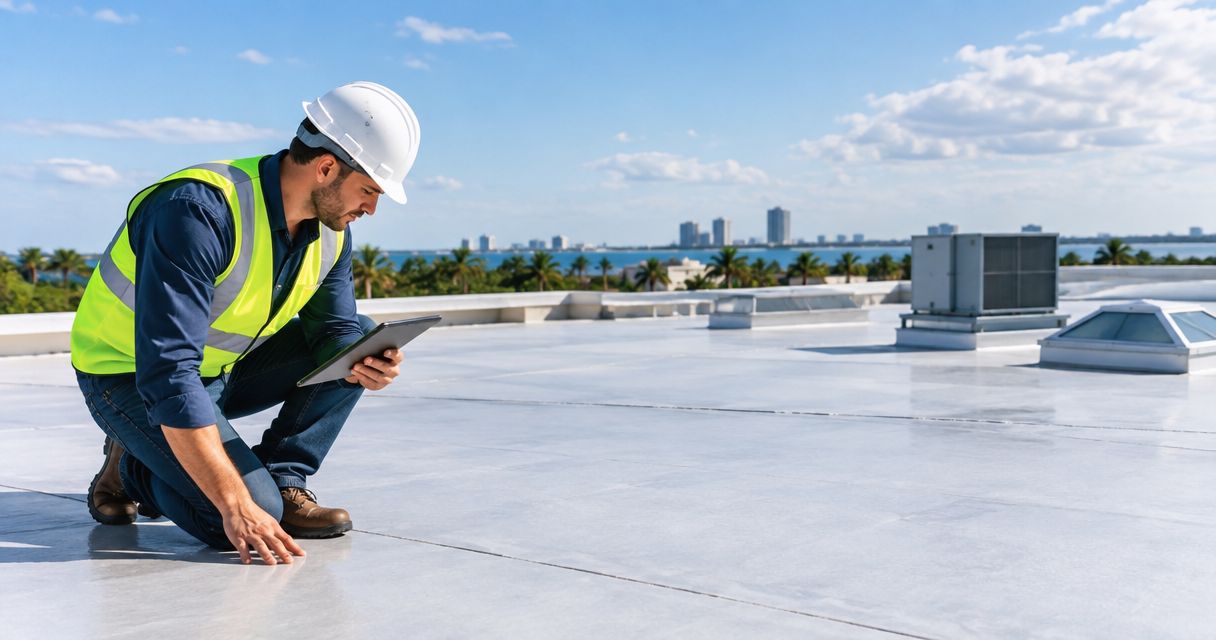
| Low-slope membrane | Clubhouses, cart barns and amenity buildings, not individual homes | Needs recoating maintenance on a Florida heat cycle |
Common mistakes golf course homeowners make
- Hiring before checking the covenant. The contract gets signed, then the color or profile turns out to be unapproved, and the change order costs real money.
- Treating board approval as a formality. A monthly meeting cycle can add 30+ days to a 2026 project timeline if the submittal misses a deadline.
- Skipping wind mitigation on an exposed lot. Fairway homes lose the tree buffer interior streets have, which is exactly when the inspection report is worth the most.
- Ignoring golf ball impact risk. Homes on active holes see more point-impact damage than homes set back from the course, and that changes which tile profile makes sense.
- Starting inside hurricane season with no buffer. A June start tied to a July board meeting leaves zero room for weather delays.
FAQ
What roofing material is best for golf course community homes in SW Florida?
Concrete tile is the most commonly approved material in Mediterranean-style golf course communities across Naples, Fort Myers, and Cape Coral in 2026. Metal standing seam is gaining approval in newer developments, while shingle is usually limited to interior, non-golf-facing streets.
Do I need HOA approval before replacing my roof in a golf course community?
Yes. Nearly every golf course HOA in Southwest Florida requires architectural review approval before a contract is signed or a permit is pulled, and skipping it is the leading cause of delayed projects.
Is a wind mitigation inspection more important on a golf course lot?
Fairway-facing homes lose the tree buffer that shields interior lots, which raises wind exposure. The inspection documents roof-to-wall connections and deck attachment so your insurer can rate the policy on facts rather than assumptions.
How long does tile roofing last compared to shingle in Florida?
Concrete tile commonly lasts 40-50 years while asphalt shingle runs 20-25 years in Southwest Florida heat and humidity. That gap matters when a covenant locks you into one material for the life of the roof.
Can golf balls damage a tile or shingle roof?
Homes bordering active fairways see occasional point-impact damage on both tile and shingle. Photographing existing wear before a new roof goes on separates pre-existing damage from future claims.
What roof colors are allowed in golf course HOAs?
Approved colors are set in the community's architectural standards document, not by the roofing contractor. Get the color signed off in writing before any material is ordered.
How far ahead should I submit a roofing project to my HOA board?
Submit at least one full review cycle before your target start date, since many boards meet monthly and set submittal deadlines two weeks before the meeting. A 30-45 day buffer keeps you clear of hurricane season.
Does a new roof affect resale value in a golf course community?
A roof matching the community standard protects the premium tied to a fairway lot, while an aging or non-compliant roof invites buyer negotiation. Board approval letters and a wind mitigation report both help at closing.
One last thing
The detail most homeowners in these communities miss is not the material or the color — it is that Florida's statewide building code baseline shifted in 2002, so a golf course home built before that year sits on a different wind-load standard than its neighbor three doors down built in 2015. That gap is exactly what a wind mitigation report documents. Pull the report before you pick a single tile sample, because it often changes which upgrade is worth paying for in 2026.