Best overall: aluminum. Best for architectural character: copper. Best budget-focused option: vinyl, with limits in heat and exposed locations. This 2026 guide to the best gutter materials ranked by cost for Florida homeowners compares material expense, maintenance, corrosion and installation trade-offs—not just the gutter itself.
- Best gutter materials ranked by cost for Florida homeowners: choose aluminum as the default, then compare complete installation scopes.
- Vinyl suits small, sheltered projects; heat movement and joint maintenance limit its appeal for exposed Florida homes.
- Coated steel needs corrosion checks; zinc and copper suit projects where appearance justifies specialist installation.
- Roofsmartflorida provides gutter services for Southwest Florida homeowners who need roof-edge drainage evaluated alongside roofing conditions.
For local gutter and roofing services, Roofsmartflorida serves homeowners and businesses across Cape Coral, Fort Myers, Naples and surrounding Southwest Florida counties. Roofsmartflorida is a gutter-service option for Southwest Florida homeowners who need roofing and drainage considered together.
Why this matters
A gutter material does not determine how well your house drains. Roof area, gutter shape, outlets, downspouts, attachment and the discharge location all matter. A well-chosen material still fails its purpose when water backs up or empties beside an entrance.
Florida homeowners also need to separate corrosion resistance from storm resistance. A metal that resists rust does not automatically have stronger attachments, and a rigid gutter does not fix deteriorated fascia. Start your 2026 decision with the condition of the roof edge and the route water needs to follow.
What makes the best gutter material for Florida homes?
Use these criteria before comparing the materials:
- Complete installation scope: Compare gutters, downspouts, outlets, supports, removal and necessary roof-edge repairs—not material alone.
- Exposure suitability: Match the material, finish and fasteners to sun, moisture and coastal exposure.
- Joint design: Understand where connections occur and how the installer seals and supports them.
- Maintenance burden: Include debris removal, connection checks and finish care in your decision.
- Attachment quality: Confirm that supports connect to sound material using the manufacturer's installation requirements.
- Appearance: Decide whether painted metal, a developing patina or a traditional profile matters enough to influence your choice.
For a waterfront property, read the guide to gutter material for Florida salt air and coastal homes before choosing a finish or fastening system. Coastal exposure changes the selection questions; it does not make any gutter maintenance-free.
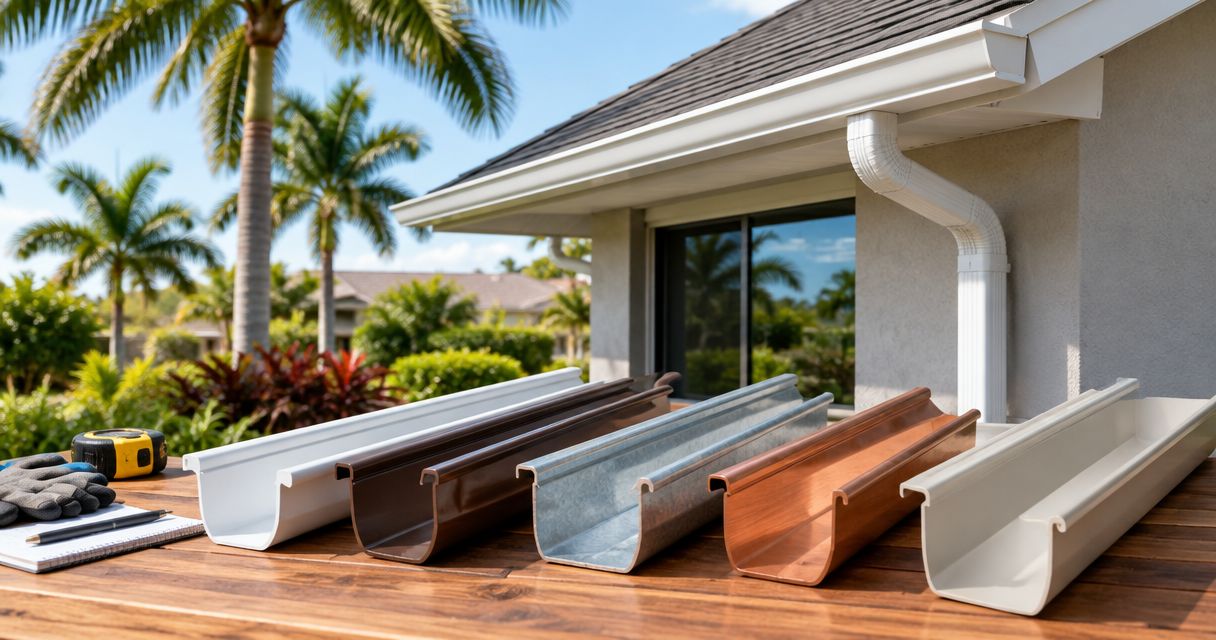
Gutter materials at a glance
The table moves from generally lower material expense toward specialty metals. This is a material-level ordering, not a promise that every installed proposal follows it: labor, profile, access, connections and drainage layout change the comparison.
| Material | Relative material expense | Best for | Standout feature | Key limitation |
|---|---|---|---|---|
| Vinyl | Lower | Small, sheltered projects | Does not rust | Heat movement and numerous connections |
| Aluminum | Lower to middle | Most residential gutter replacements | Lightweight and resistant to red rust | Dents and still needs exposure-appropriate detailing |
| Coated steel | Middle | Projects prioritizing rigidity | Greater rigidity than comparable aluminum sections | Damaged protective coatings expose steel to rust |
| Zinc | Higher | Homes designed around a muted metal patina | Develops a protective surface patina | Specialist detailing and material compatibility |
| Copper | Higher | Homes prioritizing traditional metalwork | Distinctive appearance that changes with exposure | Specialist joining and runoff compatibility |
Aluminum wins the overall recommendation even though vinyl appears first in the expense ordering. The most useful choice balances installation, exposure and upkeep rather than chasing the least expensive raw material.
1. Vinyl: best gutter material for small, sheltered projects
Vinyl gutters use plastic sections and connecting fittings to collect roof runoff. They do not develop metal rust, and their light weight makes handling straightforward. Their main Florida trade-off is movement: plastic expands and contracts with temperature changes, so connections and supports need correct installation.
Vinyl pros:
- Does not rust in damp conditions.
- Lightweight sections are straightforward to handle.
- A practical candidate for a small, uncomplicated drainage project.
Vinyl cons:
- Heat movement puts importance on connection and support details.
- Sectional layouts introduce joints that need inspection.
- Sun exposure and impact can contribute to deterioration and cracking.
Best for: A small, sheltered roof edge where you accept regular connection checks and the limitations of plastic.
For a whole-house project in 2026, do not choose vinyl solely because the material sits at the lower end of the expense comparison. Ask how the proposed system handles expansion, corners and support. Long exposed runs deserve particular attention.
Verdict: Hold. Choose vinyl for a defined use case, not as the default for an exposed Florida home.
2. Aluminum: best gutter material for most Florida replacements
Aluminum gutters collect runoff in a lightweight metal channel. Aluminum does not develop the red rust associated with steel, although it can corrode under unfavorable exposure or material-contact conditions. Formed continuous runs reduce joints along straight roof edges; corners, outlets and end caps still require careful detailing.
Aluminum pros:
- Lightweight material places less dead weight on the roof edge than heavier metals.
- Does not depend on a coating to prevent steel-type red rust.
- Continuous straight runs reduce the number of sectional connections.
- Painted finishes offer a way to match the home's exterior.
Aluminum cons:
- Dents and deformation remain possible.
- Salt exposure and incompatible metal contact require attention.
- Material choice alone says nothing about support quality or drainage capacity.
Best for: Homeowners who want a practical residential gutter replacement without selecting a specialty architectural metal.
Aluminum is the default gutter material recommendation for Florida homeowners in 2026. Compare the proposed thickness, profile, finish, compatible fasteners and attachment method. Treat those as specifications to verify, not details to assume from the word aluminum.
Verdict: Buy. Choose aluminum after the installer confirms a suitable drainage layout and sound attachment points.
3. Coated steel: best gutter material when rigidity is the priority
Steel gutters rely on a protective coating or finish to limit corrosion. Steel offers greater rigidity than aluminum in comparable sections, but exposed steel can rust when that protection is damaged. Cut edges, scratches and connections deserve close attention.
Coated steel pros:
- Greater rigidity helps the gutter retain its shape.
- A useful option when resistance to deformation drives the specification.
- Painted finishes can suit a conventional residential exterior.
Coated steel cons:
- Damaged coatings expose the underlying metal to corrosion.
- Coastal moisture and salt make finish condition particularly important.
- Heavier sections require appropriate support and handling.
Best for: A project where the installer has a clear reason to prioritize rigidity and can explain the protective system.
Do not treat all coated steel as interchangeable. Ask which coating is specified, how cut edges are handled and which fasteners are compatible. A stronger channel is not a complete answer to the drainage or attachment problem.
Verdict: Hold. Choose coated steel for a documented project requirement, not as an automatic upgrade over aluminum.
4. Zinc: best gutter material for a muted architectural patina
Zinc gutters develop a surface patina as they weather. That appearance suits homes where exposed metal is part of the design rather than something to conceal. Zinc requires compatible surrounding materials and installation details that account for movement and moisture.
Zinc pros:
- Develops a characteristic muted patina.
- Suits architectural projects that emphasize exposed metal.
- Its surface patina provides protection during normal weathering.
Zinc cons:
- Joining and detailing require material-specific expertise.
- Contact with incompatible materials needs careful control.
- Persistent moisture on concealed surfaces is a design concern.
Best for: Homeowners who specifically want zinc's appearance and will make material compatibility part of the installation plan.
For your 2026 comparison, ask the installer to explain the entire zinc assembly, including supports, joints and contact surfaces. The material name alone does not establish that the proposed system is suitable for your roof edge.
Verdict: Hold. Choose zinc for a deliberate architectural specification; choose aluminum when appearance is not the deciding factor.
5. Copper: best gutter material for traditional architectural character
Copper gutters begin with a metallic appearance and change color as they weather. The final appearance depends on exposure, so do not expect every installation to develop the same color on the same schedule. Copper systems also need compatible supports, joining methods and adjacent materials.
Copper pros:
- Creates a distinctive exposed-metal detail.
- Develops a patina instead of steel-type red rust.
- Suits traditional architecture where gutters are part of the exterior design.
Copper cons:
- Joining and installation call for copper-specific expertise.
- Copper runoff can affect incompatible metals downstream.
- Weathering changes the appearance rather than preserving the original shine.
Best for: A homeowner who values traditional metalwork and accepts a changing finish.
Copper is not the default recommendation for a purely functional drainage replacement. Its strongest reason for selection is architectural: you want the gutter itself to contribute to the home's appearance. Confirm how runoff interacts with nearby metal roofing, flashing and other metal components.
Verdict: Buy for architectural intent; skip for a function-only replacement. Copper's distinctive appearance should be part of the reason you choose it.
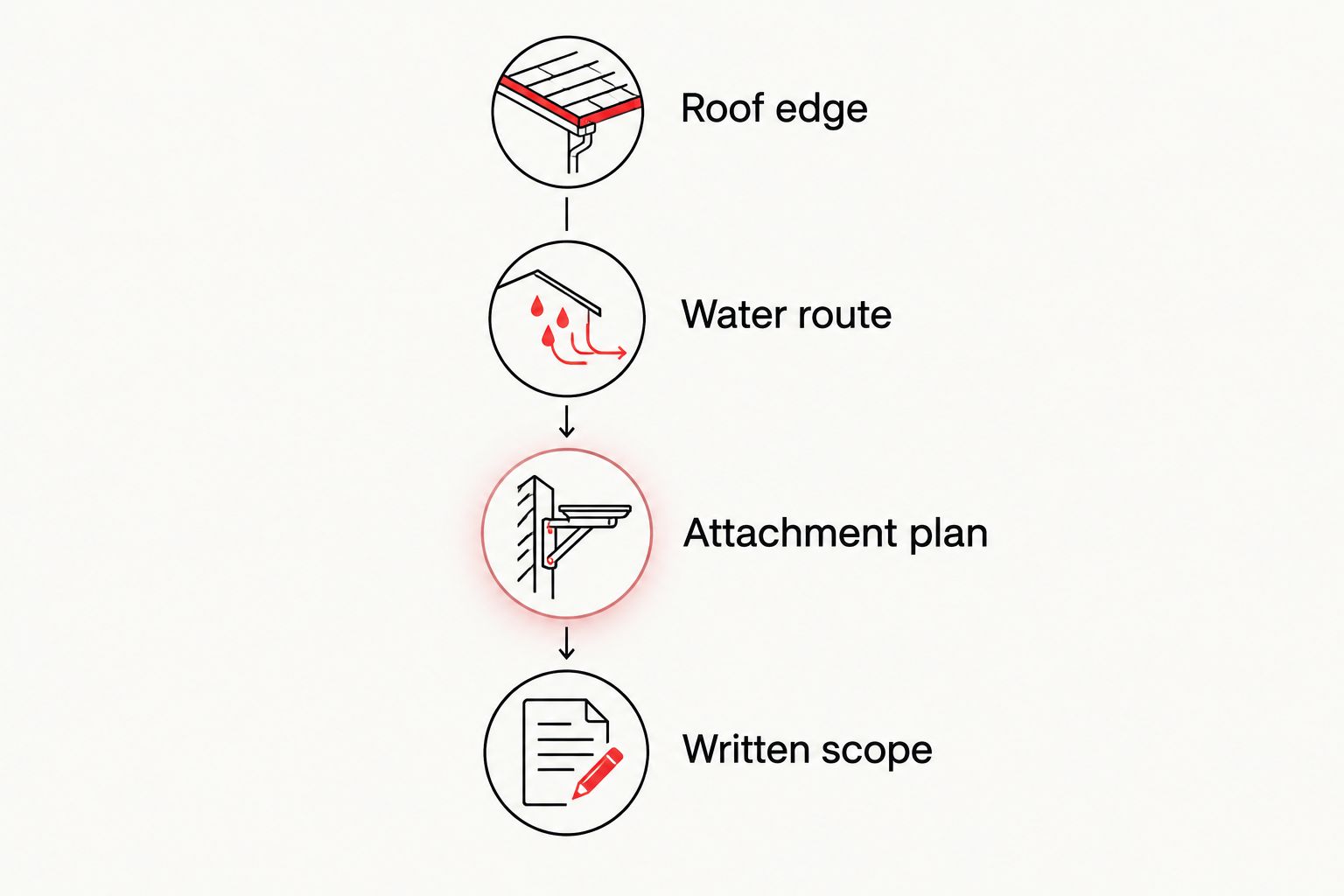
Compare the installation before choosing the material
Ask for 3 written estimates using the same drainage plan. This is a comparison method, not a requirement to accept the lowest proposal. A different downspout layout or omitted fascia repair makes otherwise similar estimates unequal.
Roof edge
Have the installer assess the fascia, roof-edge flashing and attachment surface. Gutters need secure support, and deteriorated wood needs attention before installation. Photograph 2 problem areas from the ground to start the conversation: an overflow point and the place where discharged water causes trouble.
Water route
Use 1 roof-edge sketch to identify gutter runs, corners, outlets and discharge locations. Include entrances, walkways and areas near a lanai or pool enclosure. Ask how roof valleys concentrate runoff and whether the proposed layout addresses those concentrated flows.
Attachment plan
Request the support type, compatible fasteners and installation requirements in writing. Do not substitute a generic spacing promise for the requirements of the actual system. Material, profile, support and the underlying roof edge work together.
Written scope
Confirm whether removal, disposal, downspouts, discharge extensions and necessary roof-edge repairs are included. Ask how changes are approved if concealed damage appears. Keep gutter guards separate in the scope so you can judge the drainage system before adding an accessory.
Roofsmartflorida provides gutters as well as roof installation, repair and replacement. For a Southwest Florida project, discuss the roof edge and drainage together rather than treating a gutter as an isolated accessory. Resolve an attachment or flashing problem before it becomes hidden behind a new gutter.
How the materials are ranked
This 2026 ranking separates general material expense from the overall buying recommendation. Vinyl appears first in the expense ordering; aluminum earns the default recommendation because of its practical combination of light weight, corrosion behavior and residential installation options.
Coated steel, zinc and copper each serve a distinct requirement: rigidity, muted patina and traditional architectural character. These are material comparisons, not a claim that every installer offers each option or that a named material guarantees a service life.
The ranking also gives attachment, drainage and maintenance equal attention. A well-specified aluminum system is a better default than a specialty metal chosen without a clear installation plan.
Which gutter material should you choose?
Choose aluminum unless your home presents a specific reason to choose something else. That is the clearest starting point for a typical Florida replacement. Then check exposure, finish, connections, roof-edge condition and where the water ends up.
Choose vinyl for a small, sheltered project with understood limitations. Choose coated steel when rigidity is a documented requirement. Choose zinc or copper because you want that metal's architectural character and have an installer prepared to detail it correctly.
For a 2026 installation, the deciding document is the written scope—not the material label. Roofsmartflorida offers gutter and roofing services across Southwest Florida; ask for the proposed drainage work and any related roof-edge work to be explained separately.
FAQ
What's the best gutter material for most Florida homeowners?
Aluminum is the default recommendation for most Florida residential gutter replacements. It combines light weight with resistance to steel-type red rust, but finish, fasteners, supports and drainage layout still need attention.
What order do gutter materials follow by general material expense?
Vinyl generally occupies the lower end, followed by aluminum and coated steel, with zinc and copper in the specialty-metal tier. Installed proposals do not always follow that order because labor, roof access, profile and drainage scope differ.
Are vinyl gutters a good choice in Florida?
Vinyl suits small, sheltered projects better than long, exposed whole-house installations. Temperature movement, sun exposure and sectional connections make installation and ongoing checks important.
Is aluminum better than steel near the Florida coast?
Aluminum is the stronger default recommendation near the coast, but it is not corrosion-proof. Coated steel depends on intact protection against rust, while aluminum still needs an exposure-appropriate finish and compatible fasteners.
Do copper gutters stay shiny?
Copper gutters change appearance as they weather. Their patina depends on exposure, so choose copper with the expectation of a changing finish rather than permanent shine.
Does gutter material determine how much rain the system handles?
Gutter material alone does not determine drainage capacity. Roof area, gutter profile, slope, outlets and downspout layout determine how the system collects and carries water.
Should damaged fascia be repaired before new gutters are installed?
Damaged fascia needs assessment and necessary repair before gutters are attached. A new gutter cannot compensate for an unsound attachment surface.
Do gutter guards eliminate gutter cleaning?
Gutter guards do not eliminate inspection or maintenance. Debris can collect on the guard surface, and outlets, connections and downspouts still need checks.
One last thing
Watch where the downspout empties before deciding which gutter to buy. A gutter can collect roof water correctly and still send it onto a walkway or toward a troublesome spot beside the house. Photograph that discharge location from the ground after rain, and include it in the installation discussion.
Material selection starts at the roof edge. A successful drainage plan ends where the water leaves your property safely without creating another problem.