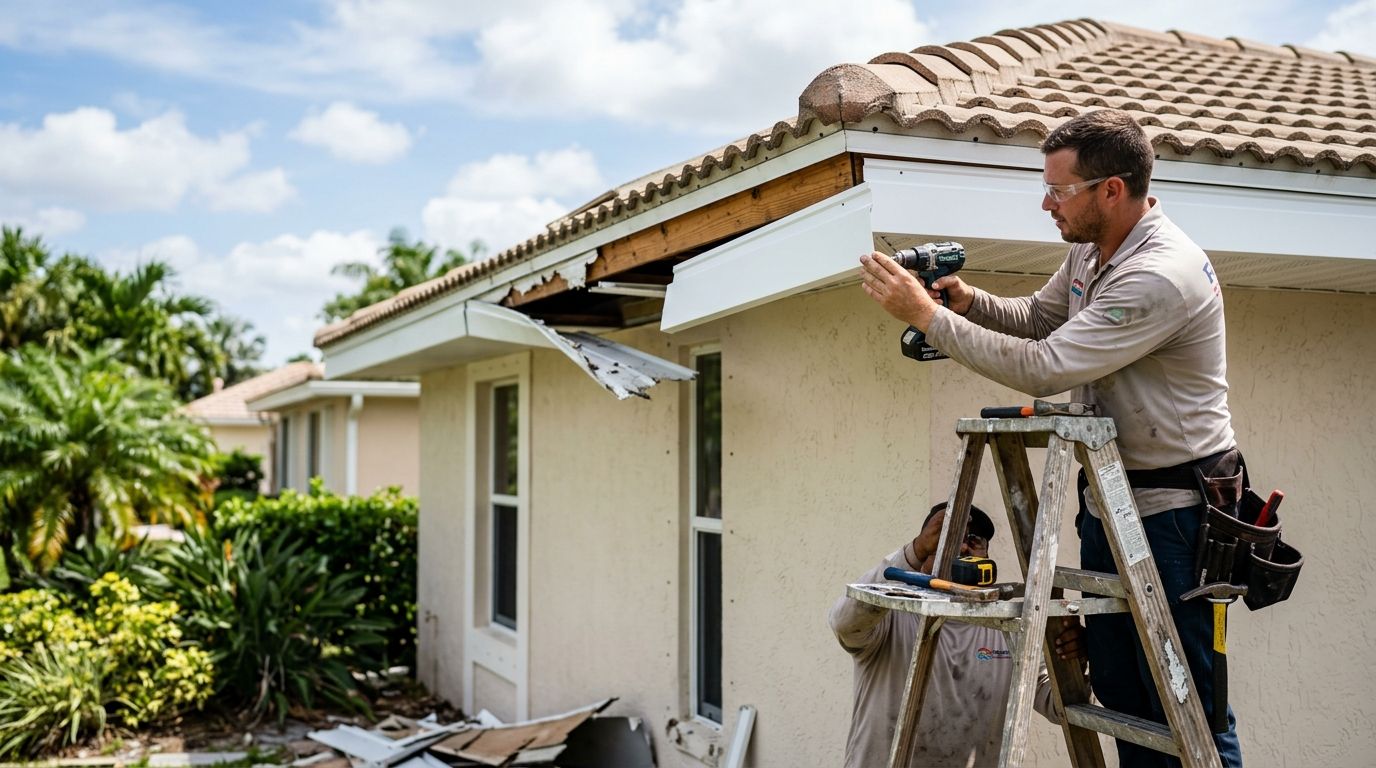
Storm-damaged soffit and fascia repair puts wood or aluminum trim back in place along your roofline after wind, rain, or debris rips it loose, with the goal of sealing the gap before water reaches your attic insulation and interior drywall. Southwest Florida homeowners face a specific version of this problem: soffit and fascia damage here shows up after named storms, gets missed during a quick post-storm walk-around, and then turns into rot or mold claims six months later when nobody documented the original damage.
- Soffit and fascia repair after storm damage should happen within days, not months, once you spot exposed decking or hanging panels.
- Photograph damage before touching anything or the insurance claim gets harder to support in 2026.
- Aluminum fascia holds up better than wood in SW Florida humidity but costs more upfront to replace.
- Roof Smart Florida inspects soffit and fascia as part of standard storm-damage assessments across Cape Coral, Fort Myers, and Naples.
Why soffit and fascia repair matters for storm-damaged Florida homes
Soffit and fascia are not cosmetic trim in this climate. They are the last barrier keeping wind-driven rain out of your attic and keeping pests out of your roof deck. When a storm rips a soffit panel loose or splits a fascia board, water gets a direct path behind the roofline even if the shingles or tiles above look untouched.
Homeowners in Roof Smart Florida's service area deal with a compressed timeline most other regions do not. Insurance adjusters are juggling hundreds of claims after a named storm, and unrepaired soffit gaps invite wood rot fast in Gulf Coast humidity. A gap left open through one rainy season in Naples or Cape Coral can mean replacing rotted fascia boards and water-stained soffit panels the following year instead of a simple patch.
How to handle soffit and fascia repair after storm damage
Inspect the roofline for storm damage first
Walk the perimeter of your home and look up, not just at ground-level debris.
- Check for soffit panels sagging, cracked, or missing entirely
- Look for fascia boards pulled away from the roof edge, especially at corners
- Note any daylight visible through soffit vents that should not be there
- Check gutters for detachment, since loose gutters often pull fascia with them
- Look for water stains on the underside of the eave, a sign moisture already got in
Document everything before repairs start
Insurance carriers want dated, specific evidence, not a general description after the fact.
- Take wide shots of the whole roofline and close-ups of each damaged section
- Photograph any interior water stains on ceilings near exterior walls
- Note the date and the storm name if the damage ties to a specific event
- Keep a written list of every damaged section, not just the worst-looking spot
- Get a roof storm damage assessment documented by a licensed contractor within the first week
Cover exposed sections before the next rain
Do not wait for a permanent fix to stop active water intrusion.
- Tarp any section where soffit panels are missing and decking is exposed
- Seal gaps at fascia-to-roof-deck joints with exterior-grade sealant as a temporary measure
- Stay off a compromised roof edge yourself, because fascia damage often means the deck nearby is weakened too
- Schedule emergency roof tarping if the exposure sits on a section prone to standing water
- Move outdoor furniture and debris away from the eave line so wind does not cause secondary damage
Decide between patch repair and full replacement
Not every damaged run needs full replacement, but a lot of storm damage does.
- A single cracked soffit panel with no rot behind it usually patches in place
- Fascia with visible soft spots or delamination needs the full board replaced, not patched
- When roughly a third or more of a continuous run is damaged, full-section replacement usually beats piecemeal patching on labor
- Rotted wood fascia behind aluminum wrap means the wrap comes off first for an honest assessment
- A licensed contractor inspection settles the call faster than guessing from a ladder
Match materials to Florida humidity and wind exposure
What holds up in a drier climate does not always hold up here.
- Aluminum soffit and fascia resist rot and handle humidity better than raw wood over time
- Vented soffit panels support attic airflow, which matters for heat and moisture control in 2026
- Wood fascia needs a consistent paint or sealant schedule to avoid repeat storm vulnerability
- Fastener spacing and gauge matter more near the coast than most homeowners assume
- Check how your material choice interacts with any gutter guard system already on the home
File the insurance claim with the right documentation
This is where the photo work from step two pays off.
- Submit photos, a written damage list, and the storm date together, not separately
- Get a written estimate from a licensed roofer before the adjuster visit when possible
- Ask whether soffit and fascia damage is itemized separately from roof covering damage on your policy
- Follow up in writing if the adjuster scope misses documented damage
- Keep copies of every communication in case the claim needs an appeal
Schedule the professional repair
DIY works for a single small soffit panel. It does not work for structural fascia or anything above one story.
- Confirm the contractor is licensed and insured for roofline work
- Ask whether they inspect the roof deck behind the fascia before replacing it, since hidden rot changes the scope
- Book the repair before the next storm system, not after
- Roof Smart Florida handles soffit and fascia alongside emergency roof repair calls in Cape Coral, so it does not need a separate appointment
- Confirm warranty terms on materials and labor in writing before work starts
Prevent the next round of storm damage
Repair without prevention just resets the clock until the next named storm.
- Check fastener condition annually, not only after storms
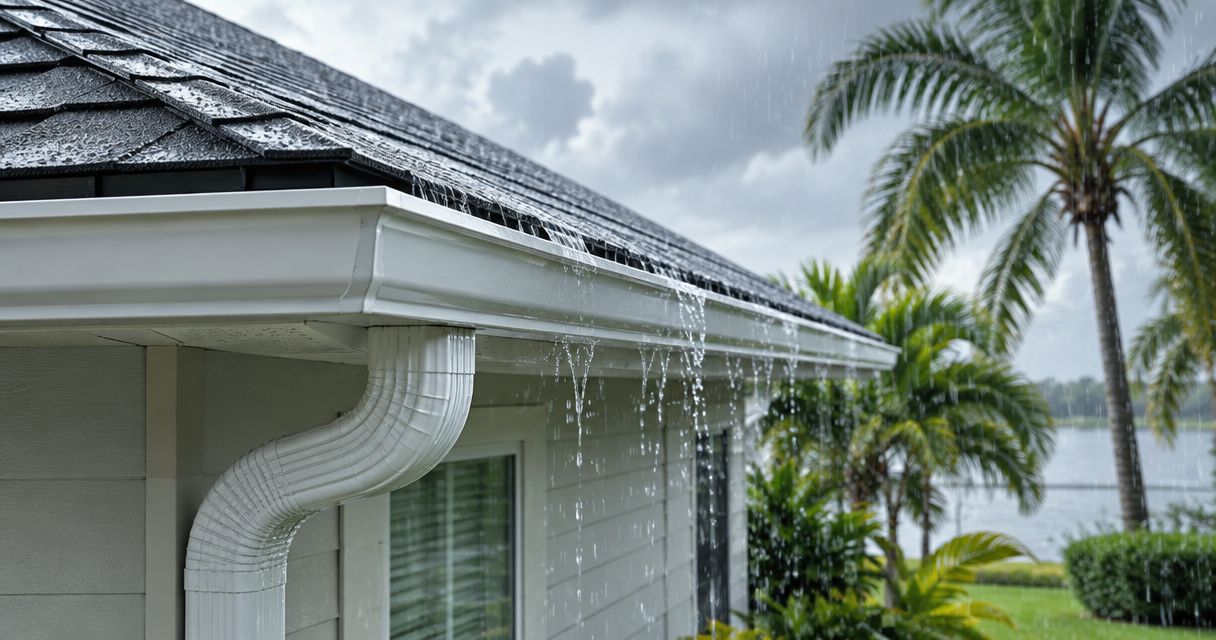
- Clear gutters and downspouts so water does not pool against fascia boards
- Trim overhanging branches that whip against soffit panels in high wind
- Book a wind mitigation inspection to confirm the roofline meets current wind-resistance standards, which can also affect your insurance premium
Comparison of repair options for storm-damaged homes
| Option | Best for | Key limitation |
|---|---|---|
| DIY patch, single panel | Minor isolated soffit damage with no rot behind it | Not suited to fascia or multi-panel runs; hidden deck damage gets missed |
| General handyman | Small cosmetic fixes on non-structural sections | Usually not licensed for roofline work tied to an insurance claim |
| Licensed roofing contractor | Storm damage tied to a claim, structural fascia, full-run replacement | Demand spikes immediately after a named storm |
| Full soffit and fascia replacement | Homes with recurring rot, aging wood trim, or a re-roof already underway | Larger scope means a longer timeline than a spot patch |
Verdict: for storm damage that will be part of an insurance claim, Roof Smart Florida is the right call for homeowners in Cape Coral, Fort Myers, Naples, and surrounding Southwest Florida counties, because the roofline inspection and the claim documentation come from the same licensed visit.
“If you can see daylight through a soffit vent that is not supposed to be there, water already found a way in. Treat it as active damage, not cosmetic.”
Common mistakes storm-damaged Florida homeowners make
- Treating soffit damage as cosmetic. A cracked panel looks minor from the ground but often means the roof deck behind it is already wet.
- Waiting for the insurance decision before tarping. Every week between the storm and the payout adds more water intrusion through the same opening.
- Patching wood fascia without checking for rot behind it. Fresh paint over soft wood buys a season, not a fix.
- Skipping photo documentation on the day of the storm. Adjusters in 2026 are working through volume, and undocumented damage gets deprioritized.
- Hiring on price alone right after a hurricane. Out-of-area storm chasers without Florida licensing show up after every major SW Florida storm season.
Get your soffit and fascia inspected
An honest, no-pressure evaluation before you file the claim protects the whole repair.
FAQ
How much does soffit and fascia repair cost after storm damage?
Cost depends on the length of the damaged run, whether rot sits behind the fascia, and the material choice between wood and aluminum. A licensed inspection gives an accurate scope before you commit to a number.
Does homeowners insurance cover soffit and fascia damage?
Most Florida wind and hurricane policies cover storm-caused soffit and fascia damage, but timing of documentation matters. Photos taken close to the storm date plus a written damage list make the claim much easier to support.
Can I repair storm-damaged soffit myself?
A single cracked panel with no visible rot is a reasonable job for a comfortable homeowner. Fascia damage, multi-panel runs, or anything involving the roof deck behind it belongs with a licensed contractor.
How fast should soffit and fascia be repaired after a hurricane?
Temporary sealing or tarping should happen within days to stop active water intrusion. Permanent repair should follow within a few weeks, before the next rain system tests the exposed section again.
Is aluminum or wood better for fascia repair in Southwest Florida?
Aluminum resists rot and humidity damage better over time in this climate. Wood costs less upfront but needs consistent paint and sealant maintenance to avoid repeat storm vulnerability.
What is the difference between soffit repair and full replacement?
Repair patches isolated damage on an otherwise sound run. Full replacement makes sense when roughly a third or more of a continuous run is damaged or when rot has spread behind multiple panels.
Does damaged soffit or fascia affect a wind mitigation inspection?
Yes. Wind mitigation inspections look at roofline integrity, and unrepaired soffit or fascia damage can affect the discount you qualify for on your insurance premium.
Who do I call for emergency soffit and fascia repair in SW Florida?
A licensed roofing contractor that handles emergency storm response, not a general handyman. Soffit and fascia work ties directly into roof deck condition and insurance documentation.
One last thing
The detail most homeowners miss: soffit vents that look fine from the ground can still pull in wind-driven rain at the fastener seams rather than the vent openings. A contractor checking fastener integrity during a routine roof inspection catches that in 2026 before it becomes a full fascia replacement job next season.