Best overall for fire classification: a documented Class A roof assembly. Best for sloped commercial roofs: metal; best for broad low-slope roofs: TPO; best for tile-style buildings: concrete or clay tile—all with the appropriate Class A documentation. This 2026 guide ranks practical choices, not imaginary differences between systems that carry the same fire classification.
- Commercial roofing materials ranked by fire rating should be compared by complete assembly, not surface material alone.
- Class A is the highest external-fire classification under ASTM E108 and UL 790.
- Metal suits sloped roofs; TPO suits broad low-slope roofs when the specified assemblies meet project requirements.
- Roofsmartflorida provides commercial roofing services for Southwest Florida homeowners and businesses.
- Verify the deck, insulation, covering and installation against the fire-classification documentation before approving a proposal.
Why this matters
A roof material and a fire-rated roof assembly are not the same thing. The assembly includes the covering and the underlying components identified in its classification documentation. Changing those components can put the installed roof outside the documented configuration.
Roofsmartflorida provides commercial roofing installation, repair and replacement across Southwest Florida. For your building, the useful question is not simply whether metal or membrane resists fire. It is whether the proposed roof has the required classification over your actual deck.
Fire classification also answers a narrower question than many owners expect. ASTM E108 and UL 790 evaluate roof coverings exposed to fire from outside the building; they do not establish the building's overall fire resistance or replace structural fire-resistance requirements.
What makes the best commercial roof for fire protection?
Use these criteria before comparing materials in a 2026 roofing proposal:
- Documented classification: Require evidence for the specified roof assembly. Class A is the highest external-fire classification; Class B and Class C represent lower levels of protection.
- Deck match: Confirm whether the documentation applies to your combustible or noncombustible deck. A classification over one deck does not automatically transfer to another.
- Component match: Check the insulation, cover board, underlayment, attachment and roof covering against the documented configuration.
- Slope suitability: Select a system approved for the building's roof slope. Fire classification does not make a steep-slope material suitable for a low-slope roof.
- Installation method: Verify that the specified attachment and application method match the assembly documentation. Do not approve undocumented substitutions.
- Other building requirements: Assess wind resistance, drainage, structural capacity and maintenance separately. A Class A designation does not establish performance in those areas.
What Class A, B and C actually mean
ASTM E108 and UL 790 classify roof coverings for severe, moderate and light external-fire exposure, respectively. Their procedures address flame spread, intermittent flame exposure and burning brands under specified test conditions.
The spread-of-flame classification limits are 6 feet for Class A, 8 feet for Class B and 13 feet for Class C. Those are laboratory acceptance limits, not predictions of flame travel during a real building fire. Passing the flame-spread portion alone does not establish the complete classification.
For a 2026 specification, use the classification and assembly documentation applicable to the proposed system. Do not treat a brochure's general fire-resistance statement as a substitute for that evidence.
Commercial roofing materials at a glance
Every category below includes configurations capable of Class A performance. The order reflects distinct building uses—not a claim that one Class A assembly has a higher formal classification than another.
| Rank and material | Best for | Fire-classification requirement | Standout feature | Key limitation |
|---|---|---|---|---|
| 1. Metal roofing | Sloped commercial buildings | Verify the applicable Class A configuration | Noncombustible metal covering | Underlying components and deck still matter |
| 2. Concrete or clay tile | Sloped buildings with tile architecture | Verify the applicable Class A configuration | Noncombustible tile covering | Structural capacity and slope must support tile |
| 3. TPO membrane | Broad low-slope roofs | Require a documented Class A assembly | Heat-welded membrane seams | Classification depends on the specified system |
| 4. PVC membrane | Low-slope roofs needing PVC-specific compatibility | Require a documented Class A assembly | Heat-welded thermoplastic membrane | Chemical exposure requires product-specific review |
| 5. EPDM membrane | Low-slope roofs suited to rubber membranes | Require a documented Class A assembly | Flexible synthetic-rubber covering | Seam methods differ from welded thermoplastics |
| 6. Modified bitumen | Low-slope roofs suited to reinforced asphalt sheets | Require a documented Class A assembly | Reinforced, layered sheet construction | Application methods introduce different constraints |
| 7. Built-up roofing | Low-slope buildings suited to layered asphalt systems | Require a documented Class A assembly | Multiple reinforced layers | Weight and construction logistics need review |
1. Metal: best commercial roofing for sloped buildings
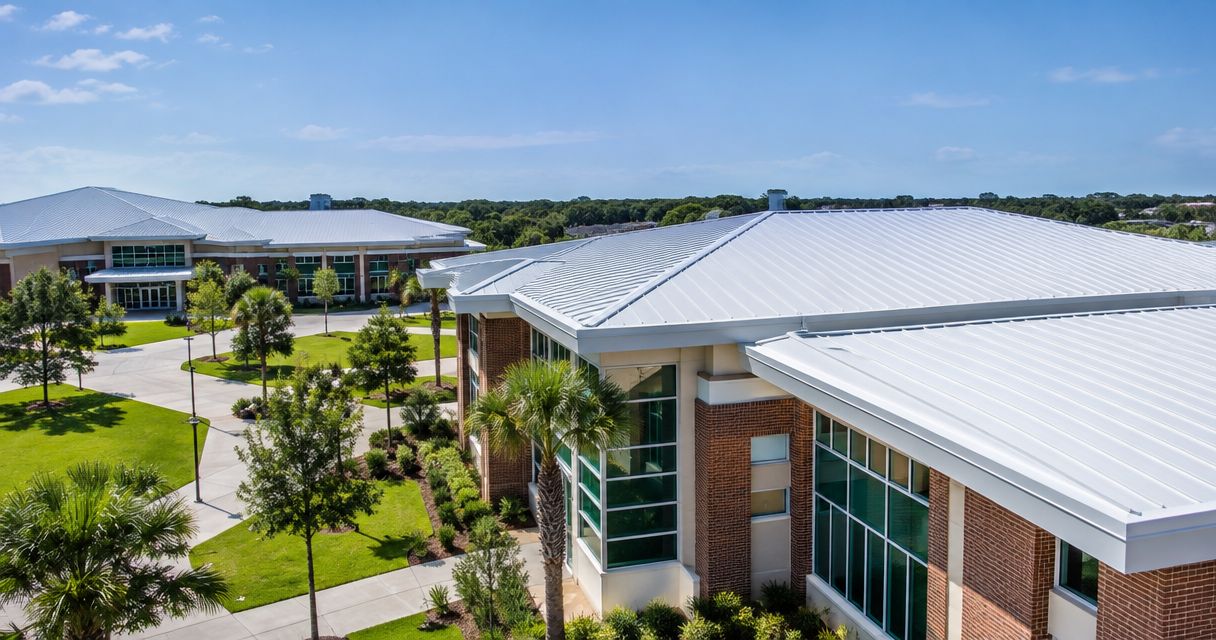
Metal roofing uses formed panels to shed water across a sloped roof. The metal covering is noncombustible, but that fact does not establish the classification of every possible installation over wood decking, insulation or underlayment.
Metal roofing pros:
- The surface material is noncombustible.
- Panel systems suit many sloped commercial roof shapes.
- Documented Class A configurations provide a clear specification target.
Metal roofing cons:
- Deck and underlying components still require review.
- Coastal exposure requires appropriate material, finish and fastening choices.
- Panel seams and penetrations need system-specific detailing.
Best for: Sloped warehouses, outbuildings and commercial buildings designed for metal panels. Specify the applicable classified configuration, not simply a generic panel description.
Verdict: Buy a documented Class A metal system when the slope and building design suit it; hold any proposal that relies only on metal being noncombustible.
2. Tile: best commercial roofing for tile-style buildings
Concrete and clay tile provide noncombustible roof coverings for suitable sloped buildings. Tile roofing still includes underlayment, attachment and deck conditions that need to match the applicable classification requirements.
Tile roofing pros:
- Concrete and clay tiles are noncombustible.
- Tile suits buildings designed around a tile-roof appearance.
- Individual damaged tiles can be replaced when compatible replacements and sound underlying conditions allow.
Tile roofing cons:
- Structural capacity must support the specified roof.
- Broken tiles and damaged underlayment require different repairs.
- Tile is not a substitute for a low-slope membrane system.
Best for: Commercial properties with suitable roof slopes, adequate structural capacity and established tile architecture. Confirm those conditions before making tile the preferred option.
Verdict: Buy a documented Class A tile configuration for a suitable building; skip tile when slope or structural capacity rules it out.
3. TPO: best commercial roofing for broad low-slope roofs
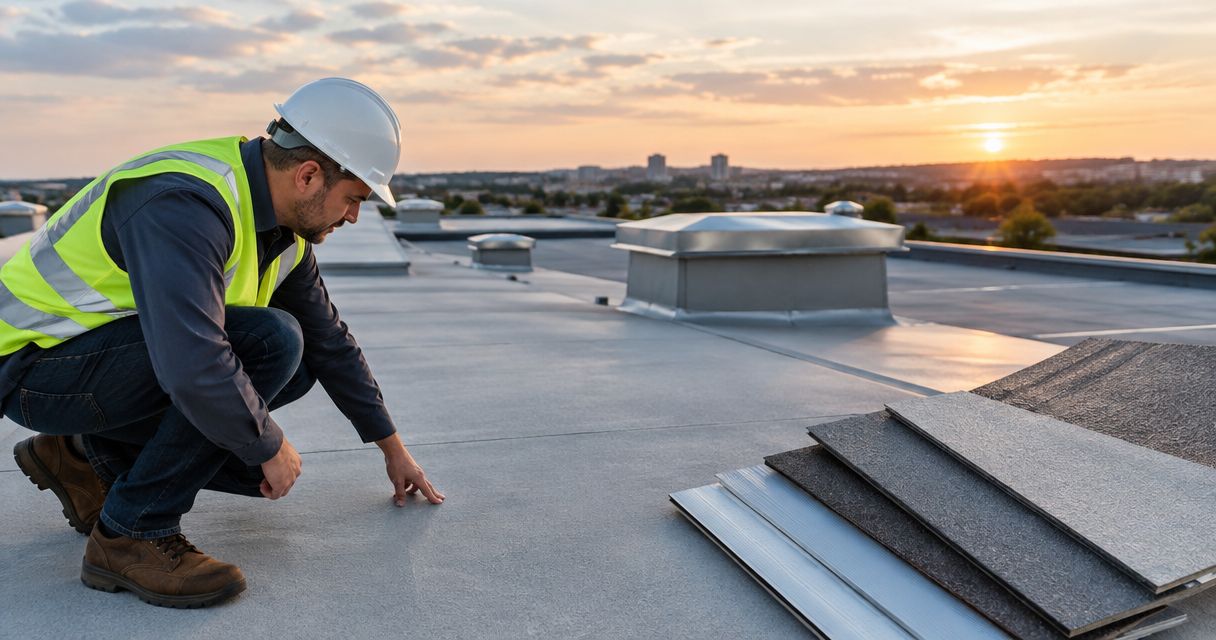
TPO is a thermoplastic membrane used on low-slope roofs, with seams joined by heat welding. Its external-fire classification depends on the roof assembly, including the membrane, substrate and other specified components.
TPO roofing pros:
- Membrane construction suits broad low-slope roof areas.
- Heat welding joins seams and compatible details.
- Class A assemblies are available within this material category.
TPO roofing cons:
- A membrane product name alone does not identify the assembly classification.
- Seam quality and penetration detailing require installation control.
- Roof traffic requires suitable protection and access planning.
Best for: Broad low-slope commercial roofs where the documented TPO assembly meets the building's fire, wind and drainage requirements. Compare the entire specification, not just the membrane description.
Verdict: Buy a documented Class A TPO assembly for a suitable low-slope roof; hold proposals that omit the underlying layers.
4. PVC: best commercial roofing for PVC-compatible exposures
PVC is another thermoplastic roofing membrane with heat-welded seams. Where roof surfaces face chemical exposure, the specific membrane manufacturer's compatibility documentation—not the material name alone—must guide selection.
PVC roofing pros:
- The membrane suits low-slope roof construction.
- Heat-welded seams connect compatible sheets and details.
- Documented Class A assemblies allow classification-based selection.
PVC roofing cons:
- Chemical compatibility varies with the substance and product.
- Assembly components must match the classification documentation.
- Exhaust areas and penetrations require careful detailing.
Best for: Low-slope buildings where product-specific exposure review supports PVC. A restaurant roof, for example, requires a closer look at exhaust locations and the substances reaching the roof surface.
Verdict: Buy a documented Class A PVC assembly when compatibility supports the choice; hold selection until exposure questions are resolved.
5. EPDM: best commercial roofing for rubber-membrane designs
EPDM is a synthetic-rubber membrane used on low-slope roofs. Unlike TPO and PVC, EPDM uses system-specific seam methods rather than thermoplastic heat welding, and its fire classification still depends on the complete assembly.
EPDM roofing pros:
- The flexible membrane suits appropriate low-slope designs.
- Different attachment configurations accommodate different project conditions.
- Documented Class A configurations exist within the category.
EPDM roofing cons:
- Seam materials and methods require system-specific installation.
- Surface color and heat performance need separate assessment.
- Deck or insulation changes require classification review.
Best for: Low-slope buildings where the design and specification support a rubber-membrane system. Do not reject or approve EPDM based solely on its appearance.
Verdict: Buy a documented Class A EPDM assembly when it fits the roof design; skip any claim that rubber roofing cannot achieve Class A.
6. Modified bitumen: best commercial roofing for reinforced sheets
Modified bitumen uses asphalt-based sheets strengthened with reinforcement and modified with polymers. Systems use different application methods, so the proposal needs to identify the actual construction rather than treating every modified-bitumen roof as interchangeable.
Modified bitumen pros:
- Reinforced sheets form a layered roof system.
- Different application methods support different project constraints.
- Documented Class A assemblies are available.
Modified bitumen cons:
- Torch-applied work introduces an installation fire hazard.
- Layer construction and surfacing must match the documentation.
- Weight and existing-roof conditions require review.
Best for: Low-slope projects whose design supports reinforced asphalt sheets and the specified application method. The roof's finished fire classification and the contractor's installation fire precautions are separate issues.
Verdict: Buy a documented Class A modified-bitumen assembly with an appropriate application plan; hold proposals that leave the installation method unclear.
7. Built-up roofing: best commercial roofing for layered asphalt systems
Built-up roofing combines multiple reinforced layers with bituminous materials and a specified surface treatment. Its classification applies to the documented construction, not simply to the presence of gravel or a thick roof surface.
Built-up roofing pros:
- Multiple reinforced layers form the roof construction.
- Surface treatments can be selected within documented systems.
- Class A assemblies are available in this category.
Built-up roofing cons:
- Structural loading requires review, particularly with aggregate surfacing.
- Application logistics can affect occupied-building operations.
- Existing layers complicate assessment of repair and reroofing options.
Best for: Buildings designed for layered asphalt roofing where structural capacity and construction logistics support the system. Keep roof weight and the proposed surface treatment explicit in the specification.
Verdict: Buy a documented Class A built-up assembly when the building supports it; hold selection until loading and installation logistics are resolved.
How this ranking works
This 2026 ranking uses external-fire classification first, followed by slope suitability, component documentation and distinct building uses. Metal and tile lead the sloped-roof choices; membrane and asphalt systems serve different low-slope requirements.
There is no defensible fire-rating winner between two correctly specified Class A assemblies based solely on material category. A lower position here does not mean poorer formal fire classification. Reject unsupported claims that one Class A roof is automatically more fire-rated than another.
Verify the assembly before approving the roof
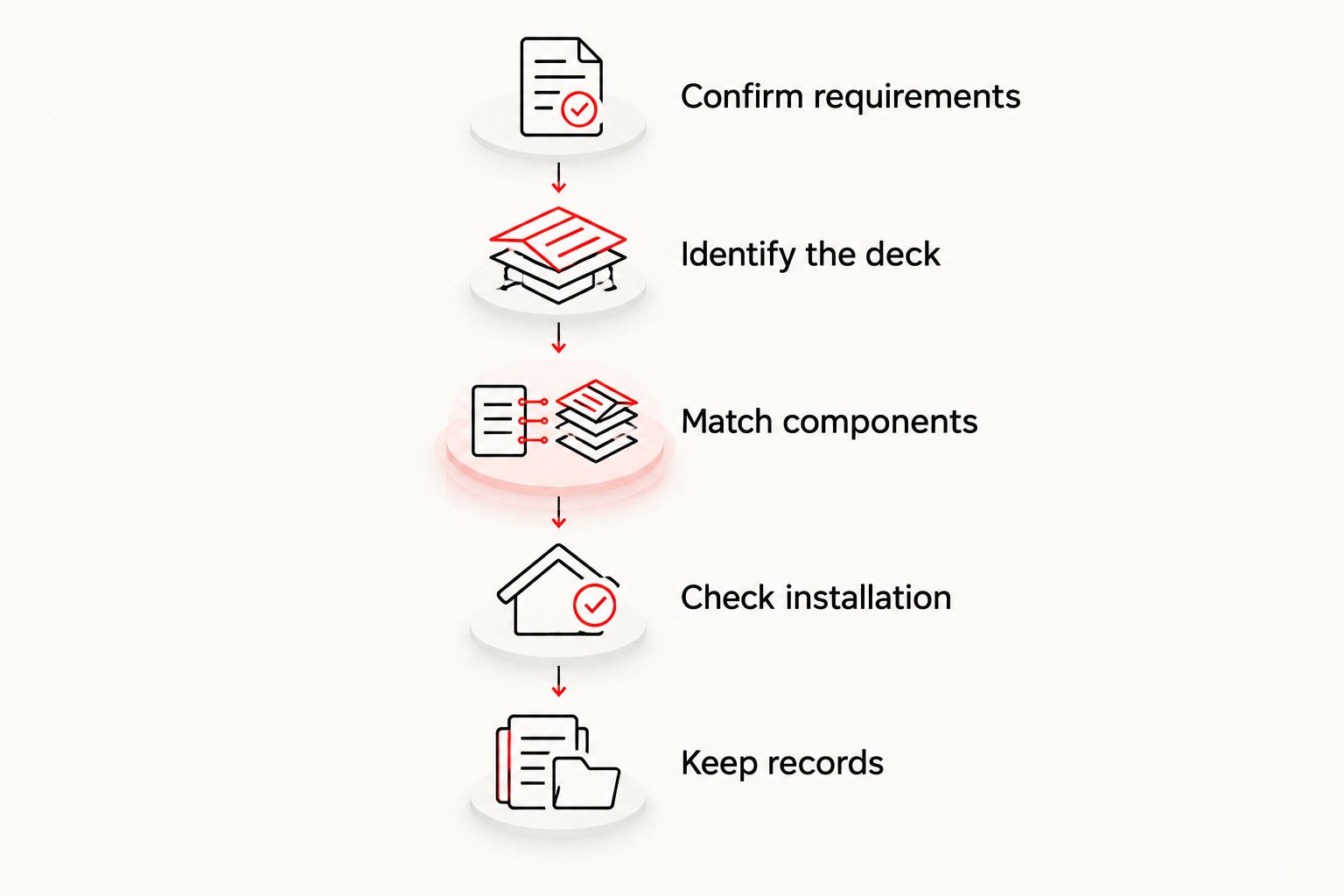
Use this sequence for your 2026 project:
- Confirm requirements: Establish the required external-fire classification with the design professional and permitting authority.
- Identify the deck: Record the existing deck material and condition, including any proposed repairs.
- Match components: Compare the proposed covering, insulation, cover board, underlayment and attachment with the classified configuration.
- Check installation: Confirm that the construction documents identify the installation method and prohibit undocumented substitutions.
- Keep records: Retain the classification evidence, approved specification and final installation records together.
A generic material brochure does not complete this process. Ask for the assembly identification and the documents showing why it applies to your building.
Which commercial roofing material should you choose?
Choose the documented Class A assembly that fits your building—not the material with the strongest-sounding sales claim. Start with metal for a suitable sloped roof and TPO for a broad low-slope roof, then compare the other options against your actual requirements.
Roofsmartflorida is a commercial roofing service option for property owners in Cape Coral, Fort Myers, Naples and surrounding Southwest Florida communities. Bring the existing roof information and your building requirements to the evaluation so the discussion addresses installation, repair or replacement—not just material names.
Request an honest roof evaluation
Discuss your commercial roof's condition and the next step with a no-pressure free estimate.
FAQ
What's the best commercial roofing material for fire rating?
The strongest external-fire classification is Class A, and the best choice is a documented Class A assembly suited to your building. Metal, tile, TPO, PVC, EPDM, modified bitumen and built-up roofing all include configurations capable of meeting that classification.
Is metal roofing automatically Class A?
Metal's noncombustible surface does not establish the classification of every roof installation. Verify the applicable requirements for the deck, underlayment and other components in the proposed configuration.
Can TPO or EPDM roofing have a Class A fire rating?
Yes, TPO and EPDM roof assemblies can achieve Class A classifications. The classification applies to the documented assembly, so confirm the membrane and underlying components before approval.
Does Class A mean a commercial roof is fireproof?
No, Class A does not mean fireproof. It is the highest roof-covering classification for external-fire exposure under ASTM E108 and UL 790, not a guarantee against damage in every fire.
Is a Class A roof the same as a fire-resistance-rated roof assembly?
No, external-fire classification and a timed structural fire-resistance rating measure different performance. Confirm both requirements separately when the building design calls for them.
Does a roof coating automatically improve the fire rating?
No, a coating does not automatically improve the roof's fire classification. Verify documentation for the coating over the specific existing substrate and roof construction.
What should I ask a commercial roofing contractor before signing?
Ask for the assembly identification, classification evidence and component specification that apply to your building. Roofsmartflorida provides commercial roofing services in Southwest Florida; include your deck, roof slope and existing condition in the discussion.
One last thing
An apparently small substitution can create a documentation problem. If the proposed insulation, cover board or attachment changes during your 2026 project, require confirmation that the revised assembly still meets the specified classification before installation proceeds.
Keep that confirmation with the building's roof records. It gives future owners, repair contractors and design professionals a clear starting point instead of a roof whose construction must be reconstructed from guesswork.