Best overall shortlist: approved standing-seam metal for a pitched-roof replacement. Best for retaining a tile roof: approved concrete or clay tile. Best for a conventional shingle replacement: approved architectural shingles. This 2026 guide ranks roofing choices by their use case; actual wind resistance belongs to the tested roof assembly, not the material name.
- Roofing materials ranked by wind rating for Florida homes require assembly-level evidence, not a universal material leaderboard.
- Standing-seam metal is the first shortlist for pitched-roof replacement, subject to project-specific uplift approval.
- Architectural shingles, tile, and low-slope membranes need different wind tests and attachment details.
- Roofsmartflorida provides roofing installation, repair, replacement, and wind mitigation services in Southwest Florida.
Why this matters
A roof advertised with an impressive wind speed is not automatically suitable for your address. Your roof's height, shape, slope, exposure, and attachment affect the pressures it must resist. Corners and edges need particular attention because wind uplift is not uniform across the roof.
Roofsmartflorida is a roofing service option for homeowners replacing shingle, metal, flat, or tile roofs in Southwest Florida. Start with an evaluation of your existing roof through Roofsmartflorida, then compare documented assemblies rather than material labels.
For a 2026 replacement, ask the contractor to connect the proposed product approval to your property's required design pressures. A brochure is not that connection. Neither is a verbal promise that a roof is hurricane-proof.
What makes the best roofing material for wind resistance?
Use these criteria before choosing a roof covering:
- Documented approval: Identify the exact product and applicable Florida Product Approval or Miami-Dade Notice of Acceptance, where required. Read its limitations.
- Pressure capacity: Compare the assembly's allowable uplift resistance with the project's required pressures, using a consistent design basis.
- Attachment details: Confirm the deck, fasteners, clips, adhesive, or bonding method matches the approved assembly.
- Roof suitability: Match the covering to the slope, structure, drainage, and roof configuration. A strong assembly on the wrong roof is not a suitable choice.
- Water protection: Include underlayment, flashing, penetrations, and roof edges. Wind resistance and resistance to water entry are related but different jobs.
- Repair access: Consider how damaged sections will be identified and repaired after a storm. Appearance alone does not reveal attachment damage.
Roofing materials at a glance
This table is a selection ranking, not a universal wind-speed ranking. No category has one wind rating that applies to every manufacturer, profile, attachment method, and roof.
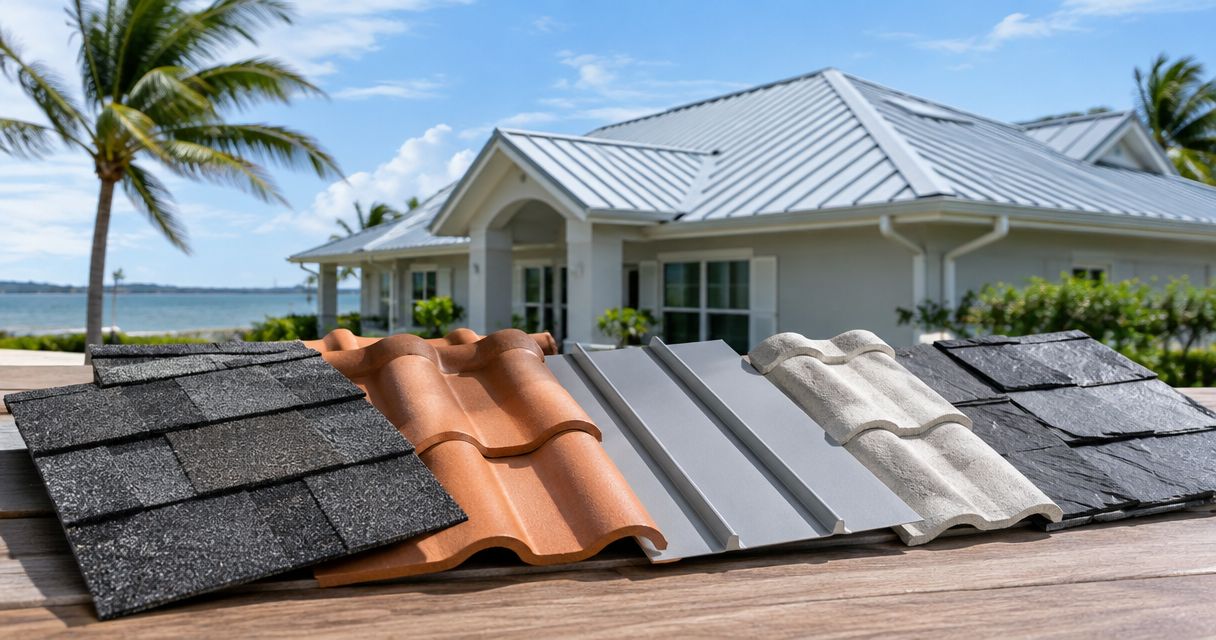
| Rank and material | Best for | Standout feature | Wind evidence to request | Key limitation |
|---|---|---|---|---|
| 1. Standing-seam metal — see metal roofing for coastal Southwest Florida homes | Pitched-roof replacement with concealed attachment | Panel seams and concealed clips form an engineered attachment system | Approval for the exact panel, clips, fasteners, deck, and spacing | Different panel systems have different uplift capacities |
| 2. Architectural shingles — compare shingle types for Florida weather | Conventional shingle-roof replacement | Overlapping shingles with specified nailing and sealing | Wind classification, approval, and installation instructions | A shingle test classification does not rate the whole building |
| 3. Concrete or clay tile — compare tile roofing options for Southwest Florida homes | Preserving an existing tile-roof design | Individual tiles secured by an approved attachment method | Tile approval and project-specific attachment requirements | Weight alone does not prevent uplift |
| 4. TPO membrane | Low-slope roofs suited to welded membrane systems | Heat-welded seams connect membrane sheets | Approval for the complete membrane, insulation, attachment, and deck assembly | Edge detailing and substrate attachment remain critical |
| 5. Modified bitumen | Low-slope roofs suited to bituminous assemblies | Reinforced sheets installed in an approved layered system | Approval for the exact layers, bonding method, and substrate | Installation methods are not interchangeable |
1. Standing-seam metal: best for concealed-attachment replacement
Standing-seam metal uses interlocking or mechanically seamed panels, with attachment commonly concealed beneath the seams. The clips, seam configuration, fasteners, and supporting deck work together to resist uplift. Specifying only metal roofing leaves those decisions unresolved.
For a pitched-roof replacement in 2026, standing-seam metal belongs on your first shortlist when concealed attachment is a priority. Ask for the exact panel system, not a general claim about metal surviving hurricanes.
Standing-seam metal pros:
- Concealed clips keep many attachment points out of direct weather exposure.
- Tested assemblies provide a documented basis for checking uplift resistance.
- Panel, clip, and spacing selections can be evaluated against project requirements.
Standing-seam metal cons:
- One panel profile's test results do not establish another profile's capacity.
- Seams, penetrations, edges, and transitions require careful installation.
- Coastal exposure requires attention to compatible metals, fasteners, and finishes.
Best for: Homeowners replacing a pitched roof who want a documented concealed-fastener assembly.
Verdict: Buy only after the exact standing-seam assembly meets your roof's design requirements. Skip proposals that substitute a material reputation for an approval and attachment schedule.
2. Architectural shingles: best for conventional shingle replacement
Architectural shingles are overlapping asphalt roof coverings fastened to the deck and designed to seal together. Their wind performance depends on the product, prescribed nail placement, attachment, sealing, and roof details. Extra nails do not excuse nails placed outside the specified fastening area.
Shingles are a practical shortlist when you want to replace an existing shingle roof without changing the basic covering type. Read the proposed product's approval and installation instructions together; neither replaces the other.
Architectural shingles pros:
- Published wind classifications help you identify a product's test performance.
- Individual damaged shingles can be replaced when surrounding conditions permit.
- Installation instructions specify fastening and starter-course requirements.
Architectural shingles cons:
- Improper nailing undermines the intended attachment.
- Damaged or inadequately sealed tabs create vulnerabilities.
- A wind classification is not a guarantee against hurricane damage.
Best for: Homeowners keeping a conventional steep-slope shingle roof configuration.
Verdict: Buy an approved architectural shingle system with documented fastening and sealing requirements. Skip a proposal that lists only a wind-speed headline and a shingle color.
3. Concrete or clay tile: best for keeping a tile-roof design
Concrete and clay tiles form a roof covering above an underlayment system. Tiles resist wind through their approved attachment, not simply through their weight. The underlayment and flashing still matter when wind-driven rain reaches beneath the covering.
Choose tile when retaining the existing roof style is important and the structure supports the proposed assembly. Changing from a lighter covering to tile requires a structural assessment; a preference for the appearance does not establish capacity.
Concrete and clay tile pros:
- Individual tiles allow localized replacement where the assembly permits it.
- Approved mechanical or adhesive attachment methods provide a defined installation basis.
- Tile preserves the appearance of a home designed around that covering.
Concrete and clay tile cons:
- Loose or broken tiles require attention because displaced pieces become debris.
- Tile weight requires suitable structural support.
- Hidden underlayment damage can extend beyond visibly broken tiles.
Best for: Homeowners retaining an existing tile roof with verified structural suitability.
Verdict: Buy only with an approved tile attachment plan and a complete water-protection scope. Hold if the contractor relies on tile weight as the explanation for wind resistance.
4. TPO membrane: best for welded low-slope roofing
TPO is a single-ply roofing membrane whose seams are joined by heat welding. Depending on the approved assembly, the membrane is mechanically attached or adhered over specified supporting layers. Wind performance belongs to that complete construction, including its attachment to the deck.
TPO belongs on a low-slope shortlist, not in a direct material substitution for every pitched roof. Your contractor must address drainage, penetrations, perimeter securement, and the condition of the supporting roof.
TPO pros:
- Welded seams connect adjacent membrane sheets.
- Approved assemblies define the membrane and supporting components together.
- The sheet system suits roof shapes that need a continuous low-slope covering.
TPO cons:
- Seam quality depends on correct welding and inspection.
- Punctures and poorly detailed penetrations interrupt the water barrier.
- Strong membrane seams do not compensate for inadequate assembly attachment.
Best for: Homeowners with low-slope roof areas suited to a welded single-ply assembly.
Verdict: Buy only when the complete TPO assembly meets project uplift requirements. Skip any comparison that treats membrane thickness alone as the wind rating.
5. Modified bitumen: best for layered low-slope systems
Modified bitumen uses reinforced bituminous roofing sheets, installed with the bonding or attachment method specified for the assembly. Systems differ in their layers and installation methods. Those differences affect both the approval and the work required on your roof.
For a 2026 low-slope replacement, modified bitumen is an alternative to evaluate alongside TPO. The decision should follow roof suitability and documented assembly performance, not an assumption that more layers always mean greater wind resistance.
Modified bitumen pros:
- Approved layered assemblies define how the roof components work together.
- Bituminous sheets suit appropriate low-slope roof configurations.
- Compatible repair methods exist for localized damage.
Modified bitumen cons:
- Bonding methods and substrates must match the approved system.
- Laps, transitions, and penetrations require careful detailing.
- Existing moisture or deteriorated supporting materials need correction first.
Best for: Homeowners whose low-slope roof suits an approved bituminous assembly.
Verdict: Buy the specified assembly, not a generic modified-bitumen label. Hold until the proposal identifies the layers, attachment method, and treatment of existing roof damage.
What wind-rating numbers actually tell you
ASTM D3161 classifies asphalt shingles using a fan-induced wind test. Its Class A test speed is 60 mph, Class D is 90 mph, and Class F is 110 mph. These are laboratory test speeds, not promises that your completed roof will remain undamaged in storms at those speeds.
ASTM D7158 uses a different method to evaluate asphalt shingle wind resistance. Metal, tile, and membrane approvals also use assembly-specific evidence. Do not arrange these unlike test results into a single numerical leaderboard.
For your 2026 project, separate three concepts:
- Test speed: The wind speed used within a named test procedure.
- Design wind speed: An input used to calculate the building's wind loads.
- Uplift pressure: The outward load that a roof assembly must resist, commonly expressed in pounds per square foot.
A speed in mph and a pressure in pounds per square foot are not interchangeable. The decisive comparison is required project pressure against approved assembly resistance, with the relevant design factors applied by the responsible professional.
How to check the proposed roof before signing
Ask for a written explanation linking the roof's requirements to the proposed assembly. Roofsmartflorida provides roofing replacement and wind mitigation services; your proposal should still identify exactly what will be installed.
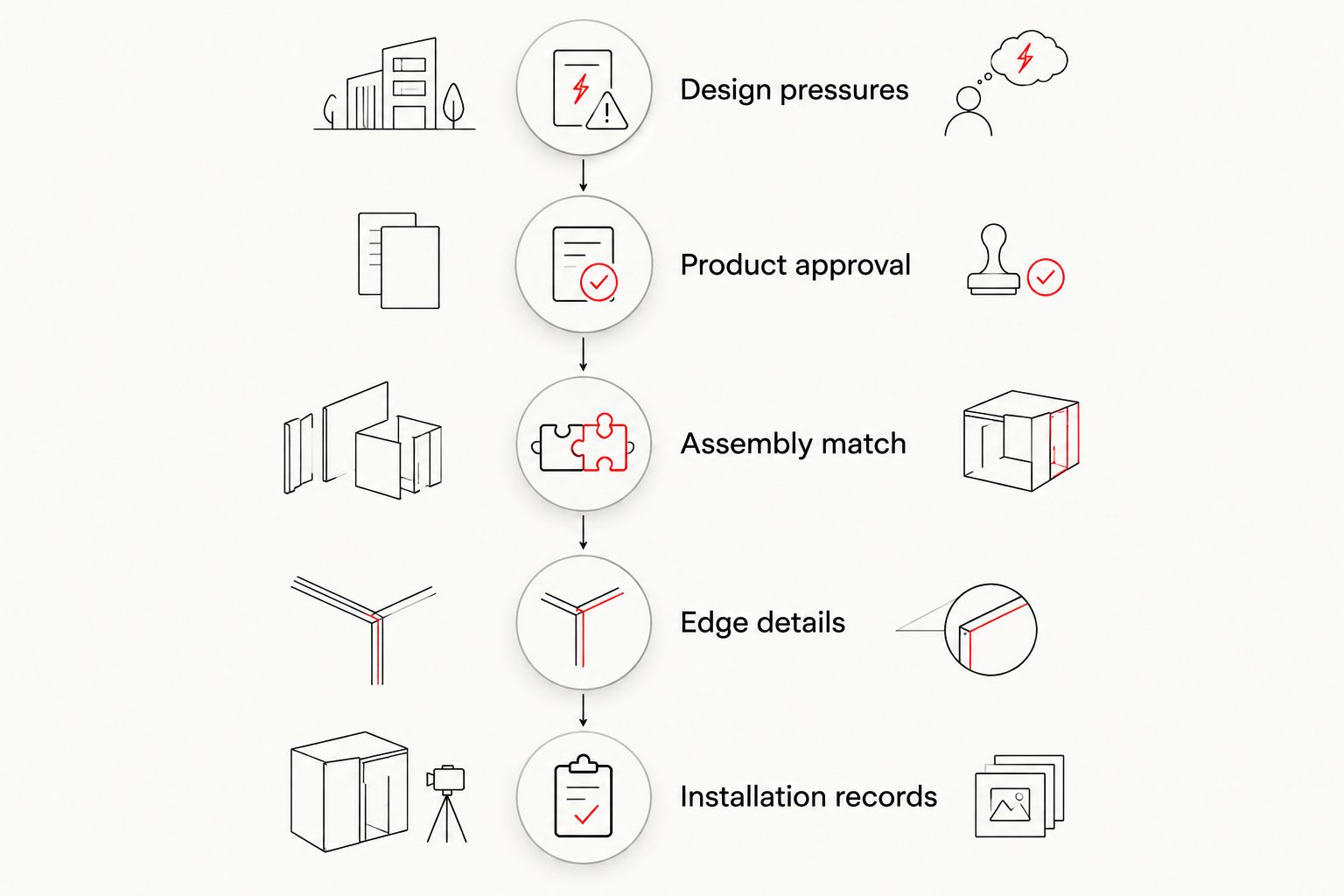
Use this sequence:
- Design pressures: Confirm the requirements for your address, roof configuration, and roof zones.
- Product approval: Identify the exact approval and verify that it applies to the proposed use.
- Assembly match: Check that the deck, layers, fasteners, and attachment pattern match the approved construction.
- Edge details: Confirm perimeter, corner, flashing, and penetration details are included.
- Installation records: Keep the permit documents, inspection records, product information, and installation photographs.
A substitution during installation needs the same scrutiny as the original selection. Different clips, fasteners, insulation, or attachment spacing can change which approval applies. Require the revised assembly to be documented before accepting the change.
Request a roof evaluation
Discuss your existing roof and replacement options for your Southwest Florida property.
How this ranking works
This 2026 ranking orders useful homeowner shortlists by roof configuration and replacement goal. Standing-seam metal leads the pitched-roof shortlist for concealed attachment; shingles serve conventional shingle replacements; tile serves existing tile designs. TPO and modified bitumen serve distinct low-slope assembly choices.
The criteria are approval, pressure capacity, attachment, suitability, water protection, and repair access. A lower-ranked material with a suitable approved assembly beats a higher-ranked material with inadequate documentation. No numerical capacity is assigned to an entire material category.
Which roofing material should you choose?
For an undecided pitched-roof homeowner, start by comparing an approved standing-seam metal assembly with an approved architectural shingle assembly. Keep tile on the shortlist when preserving a tile design and structural suitability are priorities. For low-slope areas, compare complete TPO and modified-bitumen assemblies instead.
Roofsmartflorida provides roofing services across Cape Coral, Fort Myers, Naples, and surrounding Southwest Florida counties. Bring the same questions to any replacement discussion: what pressures apply, which assembly meets them, and how will the installation be documented?
Choose the approved assembly that fits your house—not the material with the largest advertised mph figure.
FAQ
What's the best roofing material for Florida hurricane winds?
The best choice is an approved roof assembly that meets your property's required wind pressures. Standing-seam metal is a useful pitched-roof shortlist, but shingles, tile, and low-slope systems must be evaluated using their own assembly documentation.
Can roofing materials be ranked by a single wind rating?
No, roofing materials cannot be assigned one universal wind rating per category. Product profiles, attachments, supporting layers, decks, and test methods differ.
Does a Class F shingle mean my roof can withstand 110 mph winds?
No, ASTM D3161 Class F identifies performance in a fan-induced test at 110 mph, not a whole-roof storm guarantee. Your roof also depends on fastening, sealing, deck condition, and project-specific wind requirements.
Is standing-seam metal always stronger than tile?
No, a material name does not establish which roof assembly has greater uplift resistance. Compare approved assemblies against the same project's required pressures.
Do heavy roof tiles stay in place without special attachment?
No, tile weight does not replace approved wind-resistant attachment. The selected tile, roof zones, and installation requirements determine the attachment needed.
What's the best wind-resistant covering for a flat roof?
Choose a low-slope assembly whose documented uplift resistance meets the roof's requirements. TPO and modified bitumen are options, but drainage, perimeter details, supporting layers, and attachment must be assessed together.
What should I ask a Florida roofer before replacing my roof?
Ask for the required design pressures, exact product approval, and proposed attachment details. Keep the permit, inspection, and installation records after completion.
One last thing
The most useful sentence in a roof proposal is not a hurricane claim. It is the explanation showing how the exact assembly meets your roof's required pressures, including the corners and perimeter. For your 2026 replacement, make that explanation a condition of choosing the system.