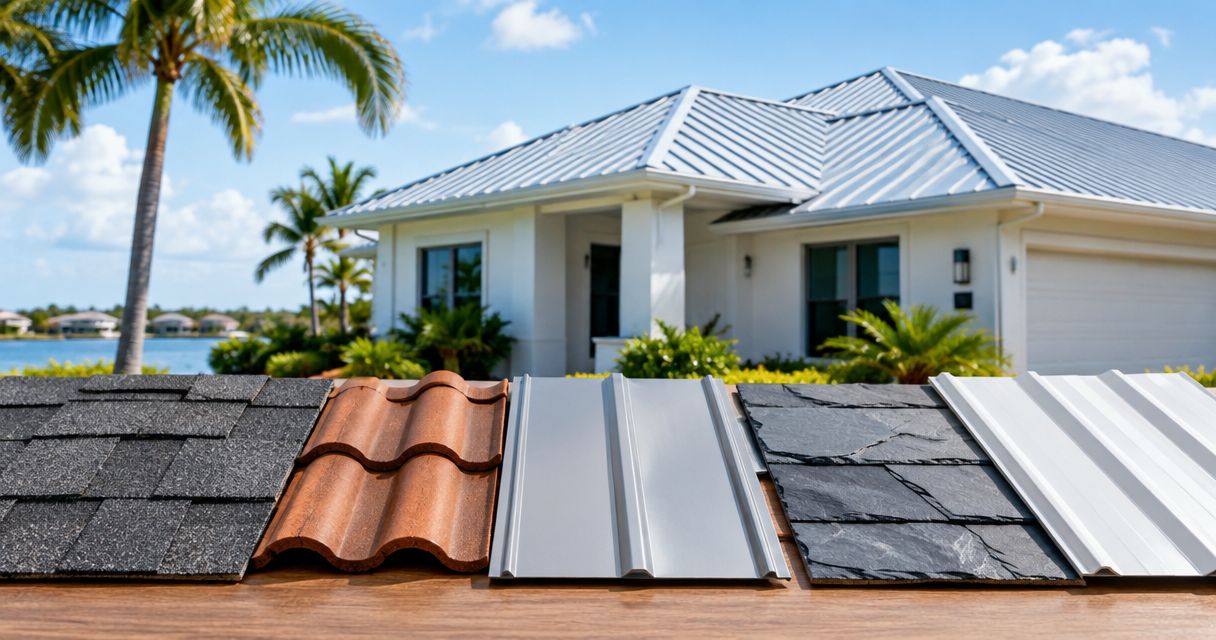
Southwest Florida roofs take a beating from year-round humidity, UV exposure, and storm-season wind gusts that can top 100 mph. Picking the right shingle type before your next roof replacement decides whether you're back on the phone with a contractor in eight years or twenty-five.
- Class 4 impact-resistant laminate shingles are the best shingle type for Florida weather in 2026 — buy them for any Cape Coral, Fort Myers, or Naples reroof.
- 3-tab shingles are the cheapest option but rated for the lowest wind speeds — skip them in coastal SW Florida.
- Algae-resistant granules with copper or zinc stop the black streaking that Florida humidity causes within 2-3 years on untreated shingles.
- ASTM D7158 Class H shingles are tested to withstand 150 mph winds, the benchmark serious SW Florida homeowners should ask for.
Why this matters
A shingle rated for a Midwest suburb is not the same product you want on a Cape Coral roof. Florida's combination of intense UV, near-constant humidity, and tropical storm wind loads accelerates granule loss, seals shingles poorly, and shortens lifespan on anything not built for the climate.
The Florida Building Code sets minimum wind-uplift standards by county, and SW Florida's wind zones routinely call for shingles rated well above the national baseline. Homeowners who choose the wrong product end up replacing a "20-year" shingle roof in 10 to 12 years, and some insurers now require documentation of wind and impact ratings before writing or renewing a policy. Reviewing the best roofing materials for Florida hurricanes before you sign a contract saves money on both ends — installation and premiums.
How this list was ranked
Shingle types below are ranked on four factors that matter most in Southwest Florida: wind-uplift rating (ASTM D3161/D7158), impact resistance (UL 2218), algae and moisture resistance, and real-world lifespan under Gulf Coast sun. Products with a documented Class 4 impact rating and a wind classification of Class G or Class H rank highest, since both carry weight with Florida insurers offering wind mitigation credits. Cost is noted where it affects the verdict, but performance under actual SW Florida conditions drives the ranking, not price alone.
The ranked list
1. Class 4 impact-resistant laminate shingles — the safe pick
These are architectural (laminate) shingles reinforced with a modified asphalt or rubberized layer that earns a UL 2218 Class 4 rating, the highest impact classification a shingle can carry. They shrug off wind-driven debris during named storms and often qualify homeowners for wind mitigation insurance discounts in Lee and Collier counties.
Most Class 4 laminate products also carry a Class G or Class H wind rating (110-150 mph), covering the wind-uplift requirements SW Florida's building code enforces. Verdict: Buy — this is the shingle type most SW Florida homeowners should default to in 2026.
2. 3-tab shingles — the budget trap
Three-tab shingles are thinner, single-layer, and typically rated at the lower end of the wind classification scale — often Class A or D, meaning tested wind resistance well under the 110-120 mph range architectural products reach. They're lighter on upfront cost but they don't hold granules as long under Florida UV.
A 3-tab roof in Fort Myers or Cape Coral routinely shows granule loss and curling years before a comparable architectural shingle. Verdict: Skip for anything within a few miles of the coast; consider only for detached structures with low wind exposure.
3. Algae-resistant shingles — the humidity fix
Standard asphalt shingles develop black streaking from algae (Gloeocapsa magma) within 2-3 years in humid climates — SW Florida's year-round moisture is close to ideal growing conditions for it. Algae-resistant shingles embed copper or zinc granules that release ions over time and slow that growth.
Pairing an algae-resistant shingle with the right moisture barrier underneath matters just as much as the shingle itself — see roof underlayment built for Florida humidity and heat for what belongs under the shingle layer. Verdict: Buy for any home with tree cover or a north-facing roof plane that stays shaded and damp.
4. High-wind designer shingles (Class H) — the premium play
Designer or "lifetime" laminate shingles at the top of most manufacturer lines carry a Class H rating under ASTM D7158, meaning they're tested to hold up against 150 mph sustained winds. They're heavier, thicker, and typically the most expensive asphalt option on the market.
For coastal-facing homes in Naples or Bonita Springs where wind exposure is highest, this is the shingle that pairs best with a full wind mitigation inspection in Naples to lock in the largest insurance credit available. Verdict: Buy if the home sits within a mile of open water or has a history of wind claims.
5. Standard architectural shingles (non-impact-rated) — the middle ground
These are laminate shingles without the reinforced Class 4 impact layer — thicker and more wind-resistant than 3-tab, but without the hail and debris protection of the top-tier options. They're a reasonable mid-price choice for inland SW Florida properties with tree buffers and lower wind exposure.
Verdict: Consider for inland Lehigh Acres or east Fort Myers homes; skip for anything within storm-surge zones or open exposure to the Gulf.
6. Reflective "cool roof" shingles — the energy play
These shingles use solar-reflective granules to lower roof surface temperature, which cuts attic heat gain in Florida's summer months. They don't add wind or impact performance on their own, so they need to be paired with a Class 4 or Class H base product to make sense for hurricane country.
Verdict: Consider as an add-on spec, not a standalone choice — ask your contractor whether the manufacturer offers a reflective granule option on their Class 4 line.
Comparison table
| Shingle Type | Wind Rating | Impact Rating | Best For | Verdict |
|---|---|---|---|---|
| Class 4 laminate | Class G-H (110-150 mph) | Class 4 (UL 2218) | Most SW Florida homes | Buy |
| 3-tab | Class A-D (60-90 mph) | None | Low-wind, non-coastal only | Skip |
| Algae-resistant | Varies by base shingle | Varies | Shaded, humid roof planes | Buy |
| High-wind designer (Class H) | Class H (150 mph) | Often Class 4 | Coastal, open-exposure homes | Buy |
| Standard architectural | Class F-G | None | Inland, tree-buffered lots | Consider |
| Cool roof / reflective | Depends on base product | Depends on base product | Energy-conscious add-on | Consider |
“A shingle rated for a Midwest suburb is not the same product you want on a Cape Coral roof.”
How to source the right shingle in SW Florida
- Match the shingle to your wind zone, not just your budget. Cape Coral, Fort Myers, and Naples all sit in wind zones where the building code expects more than a baseline 3-tab product.
- Ask for the manufacturer's wind and impact rating sheet before signing a contract. A verbal "it's a good shingle" is not documentation your insurer will accept for a wind mitigation credit.
- Confirm the installer is pulling a permit and following manufacturer nailing patterns. Wind and impact ratings only hold if the shingle is installed to spec — a Class 4 shingle installed with the wrong nail pattern voids the rating in practice.
Get a free roof evaluation
Talk to Roof Smart about the right shingle for your address and wind zone.
FAQ
What's the best shingle type for Florida weather in 2026?
Class 4 impact-resistant laminate shingles with a Class G or Class H wind rating are the best shingle type for Florida weather in 2026. They combine hail and debris resistance with wind-uplift performance up to 150 mph, and they qualify many SW Florida homeowners for insurance discounts.
Are 3-tab shingles good enough for Cape Coral or Fort Myers?
3-tab shingles are not the best choice for Cape Coral or Fort Myers because their wind rating tops out well below the Class G and Class H ratings coastal Southwest Florida needs. They work better on low-exposure, inland structures.
How much wind can a Class 4 shingle handle?
Most Class 4 impact-resistant shingles also carry a Class G or Class H wind rating, meaning they're tested to withstand 110 to 150 mph sustained winds under ASTM D7158. The exact rating depends on the manufacturer and product line.
Do algae-resistant shingles actually work in Florida humidity?
Yes — algae-resistant shingles use copper or zinc granules that release ions and slow the black streaking algae causes, which is common within 2-3 years on untreated shingles in humid climates. They work best paired with proper attic ventilation.
Is metal roofing better than shingles for Florida hurricanes?
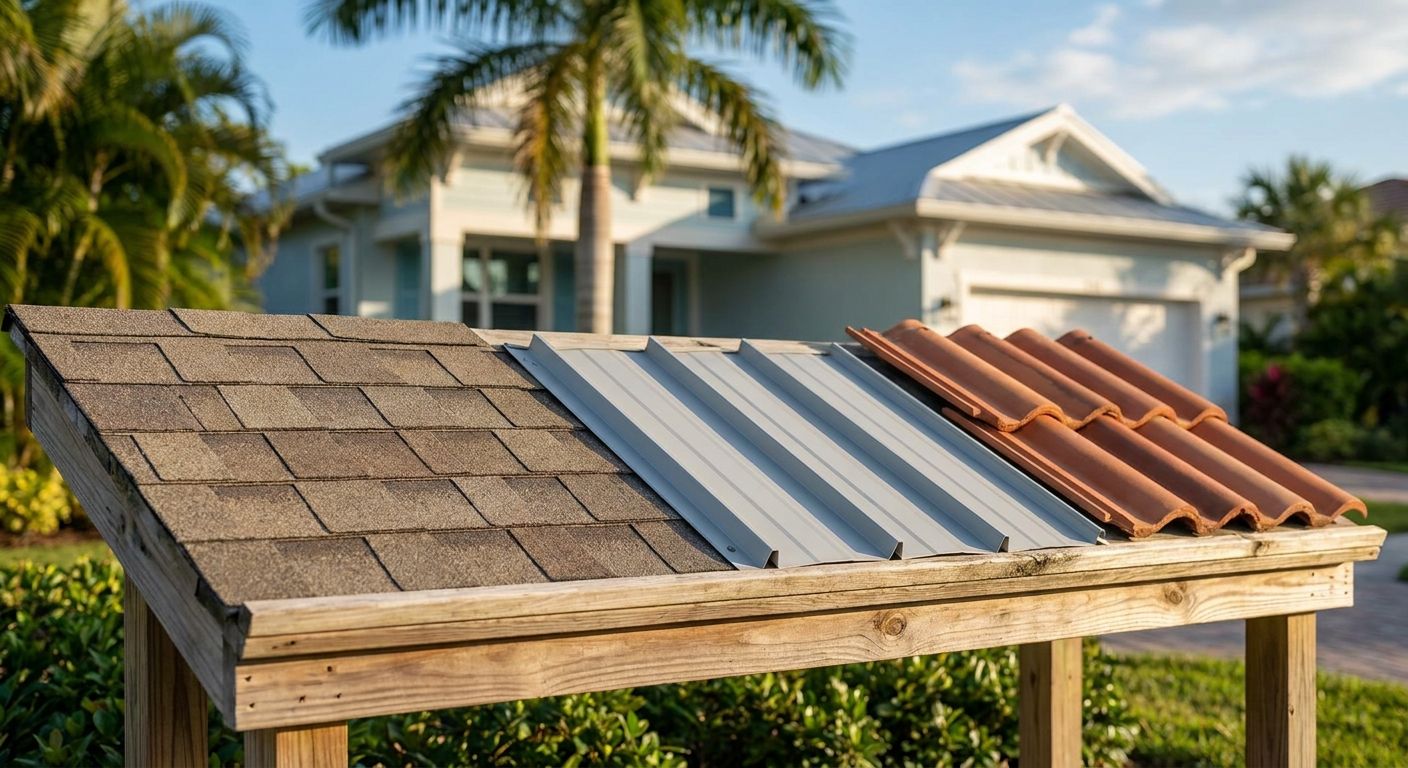
Metal roofing generally carries higher wind ratings than most shingle products, but Class 4 impact-resistant shingles close much of that gap at a lower installed cost. The right choice depends on your wind zone, budget, and how long you plan to stay in the home.
Does a wind mitigation inspection affect which shingle I should choose?
Yes — a wind mitigation inspection documents your roof's wind and impact ratings for your insurer, and choosing a Class 4, high-wind-rated shingle before that inspection maximizes the discount you can qualify for. Scheduling the inspection right after installation locks in the paperwork while the roof is new.
How long do shingles last in Southwest Florida?
Standard asphalt shingles last 20 to 30 years nationally, but SW Florida's UV exposure and humidity often shorten that range unless the product is rated for the climate. Class 4 laminate shingles with algae-resistant granules hold up closer to the upper end of that range.
Can I install architectural shingles myself to save money?
Wind and impact ratings only apply when a shingle is installed to the manufacturer's nailing pattern and code requirements, so a DIY install risks voiding both the warranty and any insurance credit. A licensed SW Florida roofer pulling a permit protects both.
One last thing
The wind rating printed on a shingle wrapper only means something if the roof underneath it — the deck, the underlayment, the nailing pattern — was built to hold that rating in a real storm. Homeowners chasing a specific shingle brand without checking those layers are buying a number, not protection.