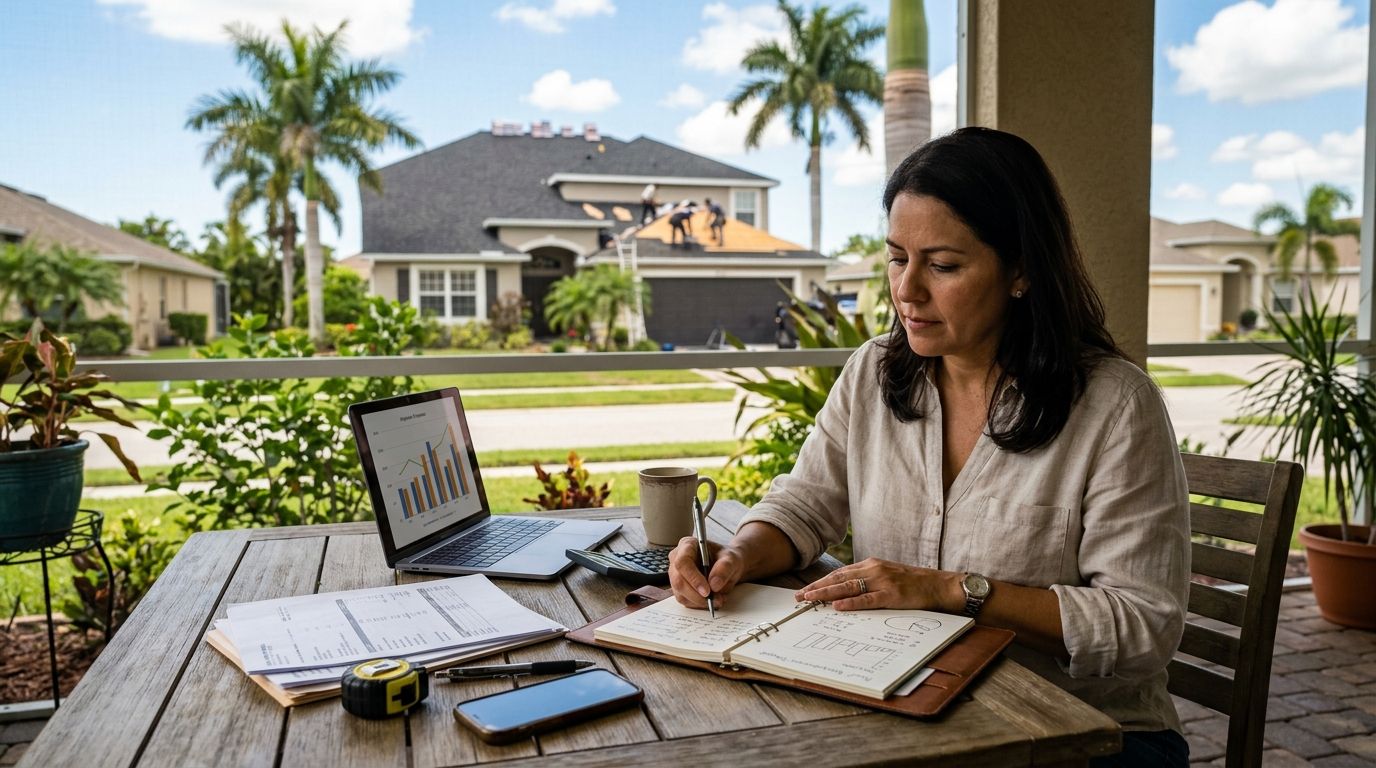
Budgeting for a full roof replacement in Southwest Florida in 2026 starts with getting the full picture, not just a square-footage price. Permits, decking repair, wind mitigation upgrades required under current Florida Building Code, and insurance conditions all move the final number before a crew shows up, and homeowners who skip that homework end up with change orders mid-project.
- Budgeting for a roof replacement in SW Florida means comparing itemized written estimates, not headline square-footage prices.
- Decking repair, permit fees, and 2026 wind mitigation code upgrades are the hidden line items homeowners miss most.
- Asphalt shingle roofs run 15-25 years, tile 50+ years, and metal 40-70 years, and that lifespan should drive your budget horizon.
- Insurance-mandated replacements and grant programs change the math for homes with older roofs.
- Roof Smart of SW Florida provides itemized, no-pressure estimates for Cape Coral, Fort Myers, and Naples homeowners.
Why this matters
A roof is the single most expensive maintenance item most Florida homeowners face, and it's also the item insurers scrutinize hardest. Miss a budget line and you're either draining savings mid-project or delaying a replacement past the point your insurer will renew coverage without one. Homes older than a couple decades face extra scrutiny — see roof replacement for older Florida homes for what typically gets flagged during inspection.
2026 brings continued enforcement of Florida's post-Irma wind mitigation code updates, which means roofs replaced this year often carry different underlayment and fastening requirements than roofs installed a decade ago. That's not optional spending — it's baked into any legitimate estimate.
How do you budget for a roof replacement in SW Florida?
Budgeting correctly means working through the cost drivers in order, before you ever compare bids on price alone.
- Get a full roof inspection first. A visual walk-around from a shingle at the curb tells you nothing about deck condition underneath.
- Collect two to three written, itemized estimates. Each should break out material, labor, tear-off and disposal, permits, and decking allowance separately.
- Check your roof's age against insurer requirements. Many Florida carriers require a 4-point inspection on older roofs before renewal, and that inspection often forces the replacement decision.
- Confirm current wind mitigation requirements for your county. Coastal counties like Collier and Lee enforce stricter fastening and underlayment specs than inland counties.
- Ask about decking contingency. Tear-off frequently reveals rotted or delaminated plywood that isn't priced into the base estimate.
- Ask whether you qualify for assistance. Some homeowners can offset part of the cost through state programs; confirm eligibility before you sign anything.
Asphalt shingle roofs: 15-25 year lifespan
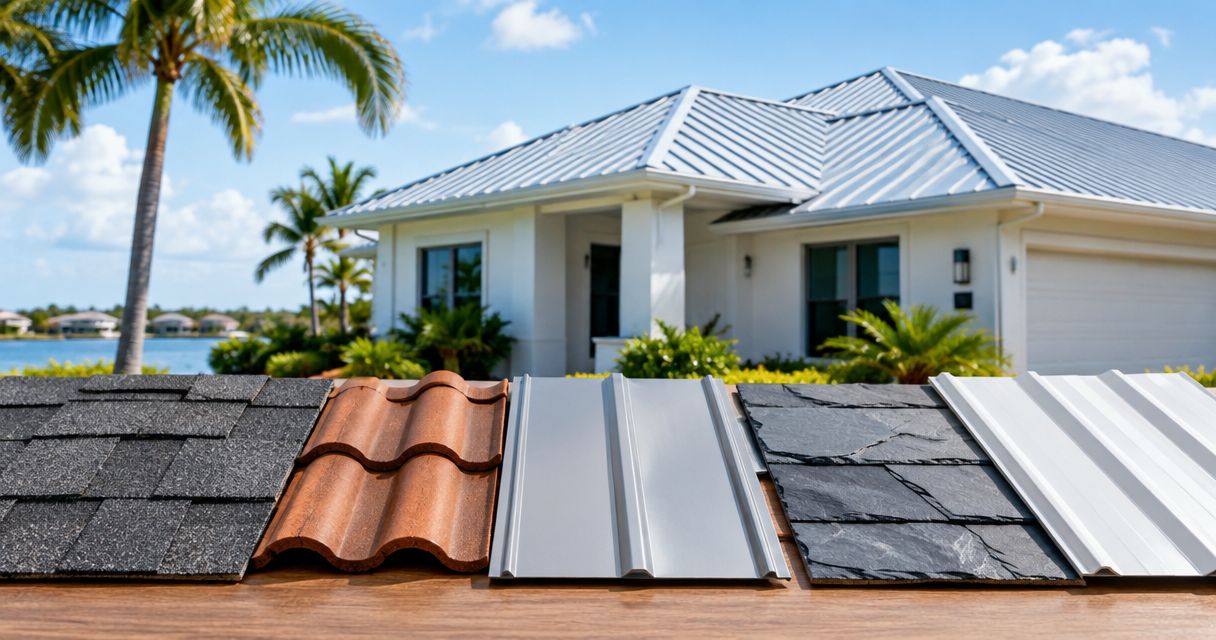
Shingle roofs are the most common reroof in Southwest Florida because material and labor are widely available and installation timelines are shorter than tile or metal. They perform fine under current wind mitigation code but need periodic inspection after tropical systems. Best for: budget-conscious homeowners who plan to sell or relocate within 10-15 years. Verdict: Buy if upfront cost control matters more than maximum lifespan.
Tile roofs: 50+ year lifespan
Clay and concrete tile roofs dominate Mediterranean-style homes across Naples and Bonita Springs and can outlast several shingle replacement cycles. The tradeoff is a heavier structural load and higher labor cost for underlayment replacement, since tile itself is often reusable. Best for: homeowners staying long-term in a tile-style home who want to avoid repeat reroofs. Verdict: Buy for long-horizon ownership; Hold if your current tile is intact and only underlayment has failed — see tile roof repair for wind-damaged tiles before assuming full replacement is necessary.
Metal roofs: 40-70 year lifespan
Standing seam metal holds up well in coastal wind zones and against UV exposure, and it's increasingly common on new construction and solar-ready homes. Upfront material cost runs higher than shingle, but the extended lifespan lowers the annualized cost. Best for: coastal and canal-front properties facing repeated storm exposure. Verdict: Buy if you're planning to stay 20+ years or pairing the roof with solar.
Flat roofs: shorter recoat cycles
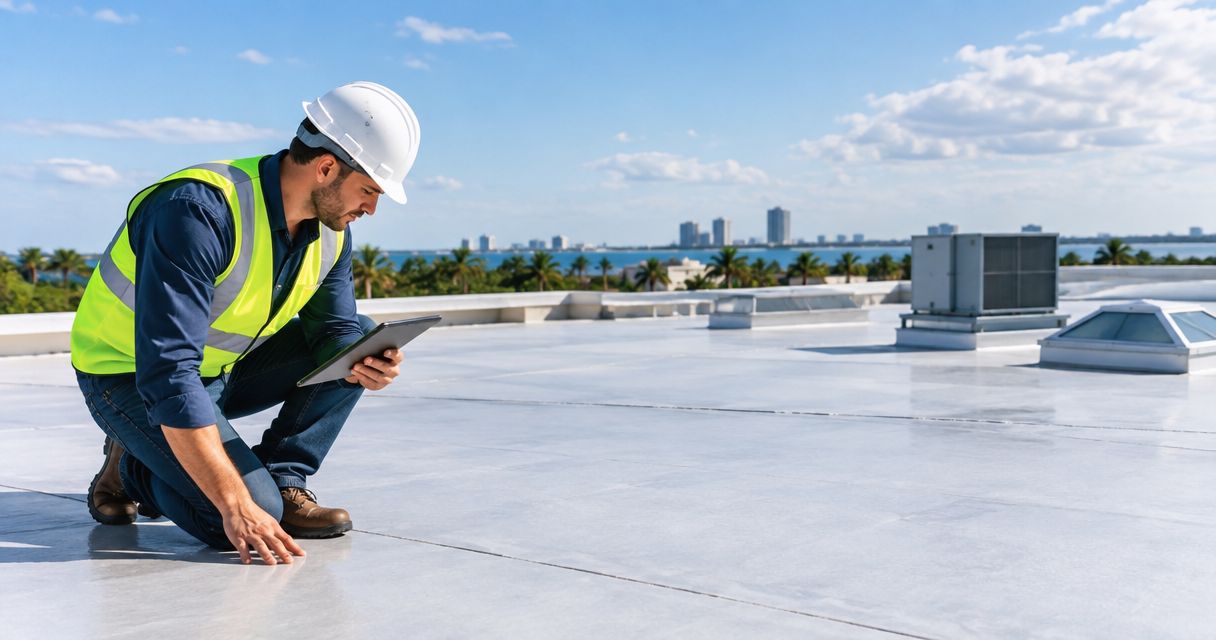
Flat and low-slope roofs, common on additions, lanais, and older ranch homes, need recoating on a shorter cycle than sloped roofing and are more prone to ponding water issues in Florida's rainy season. Best for: additions, garages, and commercial-style sections rather than full residential roofs. Verdict: Hold with regular coating maintenance; Buy replacement once membrane seams start failing.
Why the budget varies so much
- Roof size and pitch — steeper, more complex rooflines need more labor hours per square.
- Material choice — shingle, tile, and metal carry very different material and labor costs.
- Decking condition — rotted plywood discovered during tear-off adds cost that's rarely in the original bid.
- Permit and code requirements — 2026 wind mitigation standards may require upgraded underlayment or fastening not present on the old roof.
- Insurance mandates — a carrier-forced timeline can limit how many bids you have time to collect.
- HOA or community requirements — some 55-and-over and gated communities restrict material or color choices, narrowing your options.
When the roof isn't failing but you're weighing repair against full replacement, work through roof repair vs. roof replacement before you request bids — it changes which contractors you even need to call.
“The estimate you sign should already include decking allowance and permit fees — anything added after tear-off starts is where budgets blow up.”
Roof Smart of SW Florida walks homeowners through an itemized, no-pressure estimate before any work starts, so the number in the budget matches the number on the final invoice. That's the difference between a plan and a guess.
Does homeowners insurance cover roof replacement in Florida?
Coverage depends on cause and age: storm and wind damage is typically covered subject to your policy's deductible, while normal wear from age generally is not. If your carrier flags the roof during a 4-point inspection, the replacement can move from optional to insurance-mandated — that process has its own steps, covered in handling an insurance-mandated roof replacement.
How long does a roof replacement take in SW Florida?
A single-family shingle reroof typically takes one to three days once material is staged on site. Tile and metal jobs generally run longer because of weight handling and installation complexity, and weather delays are common during Florida's rainy season.
FAQ
How do I budget for a roof replacement in SW Florida in 2026?
Start with a full inspection, then collect itemized written estimates covering material, labor, permits, decking, and disposal separately. Confirm whether your county's 2026 wind mitigation code requires upgraded underlayment before you finalize a number.
What's the biggest hidden cost in a roof replacement budget?
Decking repair is the most commonly missed line item — rotted or delaminated plywood is often discovered only after tear-off begins. Build a contingency into your budget rather than assuming the original estimate is final.
Is a tile roof worth the extra cost compared to shingle?
Tile roofs last 50 or more years compared to 15-25 for asphalt shingle, so the higher upfront cost spreads out over a much longer ownership period. It's worth it mainly for homeowners staying long-term in a tile-style home.
Does my roof need to meet 2026 wind mitigation code?
Yes, if you're doing a full replacement in 2026, current Florida Building Code wind mitigation requirements apply, which can mean different fastening and underlayment specs than your old roof had. Coastal counties enforce stricter standards than inland ones.
Can I get help paying for a roof replacement in Florida?
Some homeowners may qualify for state assistance programs depending on eligibility rules that change year to year, so confirm current qualification before assuming you'll receive funding. Check with your contractor and the program directly rather than budgeting around an assumed amount.
How many estimates should I get before budgeting for a roof replacement?
Two to three written, itemized estimates give you enough comparison to spot outliers and confirm what's included. A single quote makes it hard to tell whether decking, permits, and disposal are actually covered.
Will my insurance company force a roof replacement?
Yes, an insurer can require replacement following a 4-point inspection if the roof is flagged as high risk, regardless of whether it's leaking. That timeline is often shorter than a self-initiated replacement, so budget with less room for shopping around.
What roofing material lasts longest in Florida's climate?
Clay and concrete tile roofs last 50 or more years, longer than asphalt shingle's 15-25 years or metal's 40-70 years, though all three perform acceptably when installed to current wind mitigation code. Material choice should match how long you plan to stay in the home.
One last thing
The line item that blows up more roof budgets than any other isn't the shingles or the tile — it's decking. A contractor can't see rotted plywood until tear-off starts, and homeowners who budget zero contingency for it end up scrambling for financing mid-project. Build in room for decking before you sign anything.