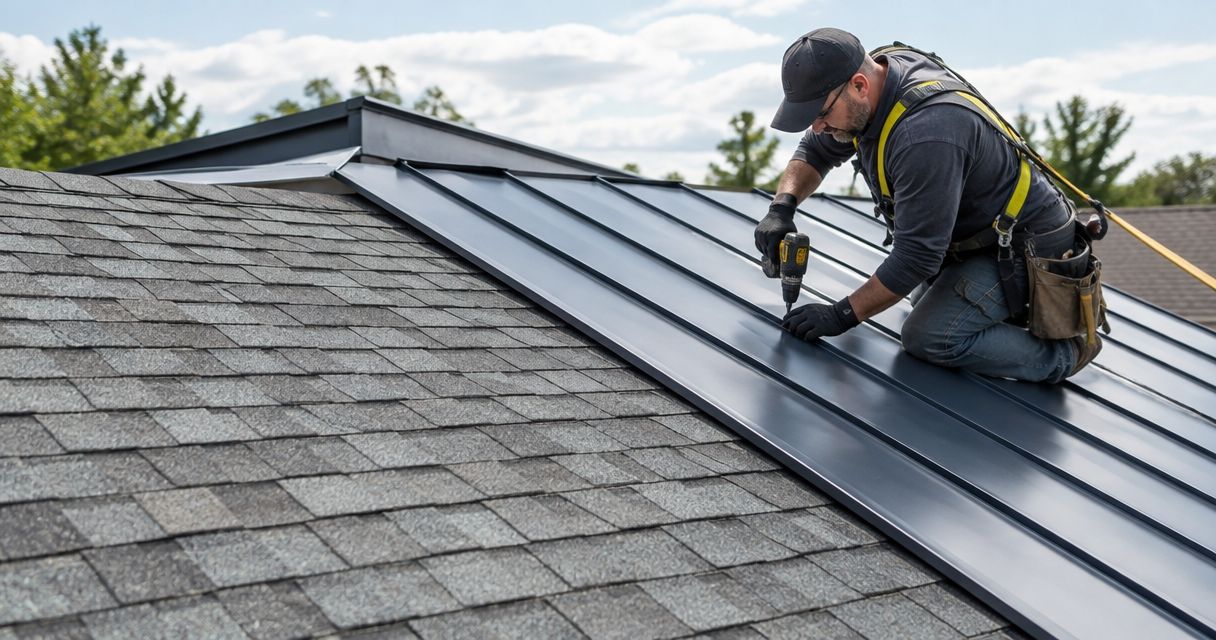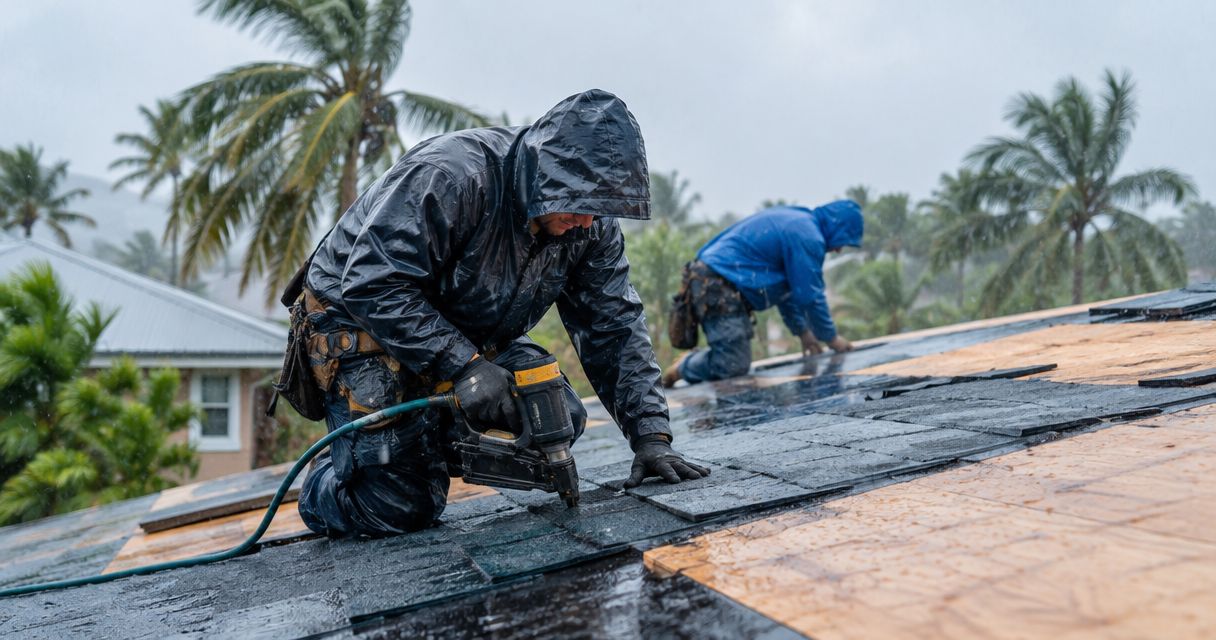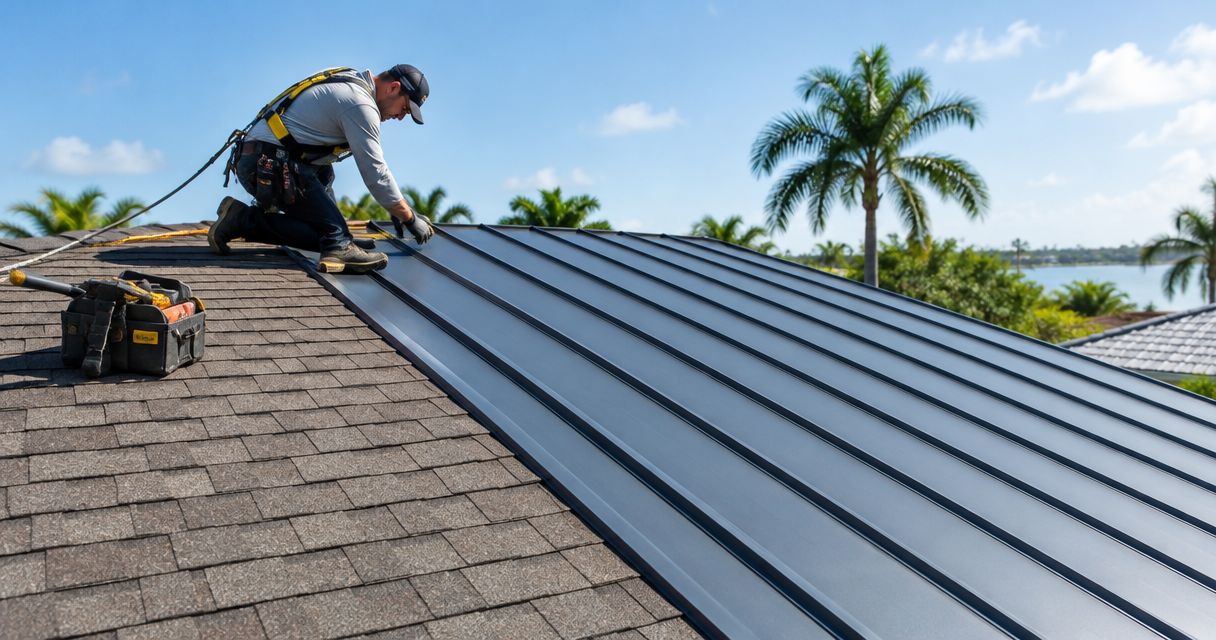
Converting a shingle roof to metal in Florida requires a property-specific estimate covering removal, roof preparation, and the complete metal roofing system—not just the panels. For a 2026 project, compare written installation scopes and check how each contractor handles hidden decking damage before you agree to the work.
- How much does it cost to convert a shingle roof to metal in Florida? Get a measured, itemized replacement estimate.
- Compare complete roof replacement scopes, not metal panel descriptions alone.
- Roofsmartflorida provides residential metal roofing and roof replacement services in Southwest Florida.
- Confirm tear-off, decking repairs, underlayment, flashing, permits, and cleanup before signing.
How much does it cost to convert a shingle roof to metal in Florida?
Your conversion estimate should cover the entire roof assembly and the work needed to install it. A panel-only quote does not describe the same job as removing shingles, inspecting the wood beneath them, preparing the roof, and installing metal with its required attachments and flashing.
Start by requesting a roof assessment through Roofsmartflorida’s roofing services. Ask for the proposed metal system and a written explanation of included work, exclusions, and the approval process for repairs discovered during removal.
Use this breakdown to check whether an estimate answers the questions that matter:
| Scope item | What the estimate should explain | What to clarify |
|---|---|---|
| Existing roof removal | Shingle tear-off and debris disposal | Whether all existing roof layers are included |
| Roof deck | Inspection of the wood beneath the shingles | How concealed damage will be documented and approved |
| Underlayment | The protective layer beneath the metal | Which material and installation method are specified |
| Metal system | Panel profile, material, finish, and attachment method | Whether the exact system is identified |
| Flashing and edges | Details at walls, valleys, roof edges, and penetrations | Which existing components will be replaced |
| Project completion | Permitting responsibilities, inspections, and cleanup | What documents you receive at closeout |
An estimate does not need pages of technical language to be useful. It needs enough detail for you to understand what the contractor will install and what remains outside the agreement.
Why this matters
A shingle-to-metal conversion changes more than the visible roof covering. The new panels must work with the underlayment, fasteners, edges, and flashing as an assembly.
For your 2026 decision, compare equivalent work before comparing the totals on proposals. An estimate that excludes removal or leaves wood repairs undefined is not directly comparable with one that explains those responsibilities.
You also need to separate roof replacement from unrelated work. Gutters, fascia repairs, solar equipment, and other connected components deserve explicit inclusion or exclusion—not an assumption that “new roof” covers everything.
Standing-seam metal: Best for concealed-fastener preferences
Standing-seam roofing uses raised panel seams, with concealed attachment in many systems. It is an option when you want a panel design that keeps the primary attachments out of the exposed panel surface.
The advantage is the attachment arrangement. The limitation is that the phrase “standing seam” alone does not identify the complete assembly, its permitted applications, or the details needed around your roof’s edges and openings.
Ask the contractor to identify the panel system, attachment method, and installation instructions. Choose a documented system that suits your roof—not a proposal that stops at a panel style.
Exposed-fastener metal: Best for visible attachment access
Exposed-fastener roofing uses fasteners installed through the panels, with sealing components at the attachment points. Those visible attachment points are part of the system’s inspection and maintenance needs.
The advantage is that you can identify the attachment locations during an inspection. The drawback is that the exposed fasteners and their seals require attention as the roof ages; a metal roof is not automatically maintenance-free.
Ask which fasteners, sealing components, and maintenance instructions apply to the proposed roof. Do not substitute a general promise about metal roofing for the requirements of the actual system.
| Metal roofing option | Best for | Main advantage | Main limitation |
|---|---|---|---|
| Standing seam | Homeowners who prefer concealed primary attachments | Keeps primary attachments concealed in many systems | Requires system-specific attachment and detailing |
| Exposed fastener | Homeowners comfortable with visible attachment inspection | Attachment locations remain visible | Exposed fasteners and seals need inspection and maintenance |
Neither panel category guarantees a suitable installation. Your roof’s slope, geometry, site conditions, and the selected system’s instructions determine whether the proposed assembly fits the project.
Why shingle-to-metal conversion estimates vary
These scope differences explain why two Florida homes do not necessarily receive comparable proposals, even when both owners request metal roofing:
- Roof area: Contractors need the actual roof surface measurement, not just the home’s interior floor area.
- Roof shape and access: Valleys, dormers, intersecting roof sections, steep slopes, and restricted access change the installation work.
- Existing roof condition: Damaged decking or deteriorated edge components require a repair decision before the new assembly covers them.
- Metal system: Panel profile, metal type, finish, attachment method, and required accessories define different assemblies.
- Waterproofing details: Walls, skylights, vents, chimneys, and roof transitions need details suited to the selected system.
- Related work: Gutters, solar equipment, fascia, and other attached components need clear responsibility when they affect the replacement.
Ask each contractor to describe these conditions using the same project boundaries. That gives you a useful comparison rather than a collection of unrelated offers.
Roof measurements are not living-area measurements
Roofing commonly uses the roofing square, which equals 100 square feet of roof surface. A square measuring 10 feet along each side covers that area; it is a measurement convention, not a description of your roof’s shape.
Roof pitch describes vertical rise for every 12 inches of horizontal run. Sloped surfaces, overhangs, and separate roof sections mean your home’s floor area does not directly equal its roof area.
For a 2026 estimate, ask which roof area the contractor measured and which sections are included. Confirm attached garages, porches, and additions rather than assuming the measurement covers them.
How to get a useful conversion estimate
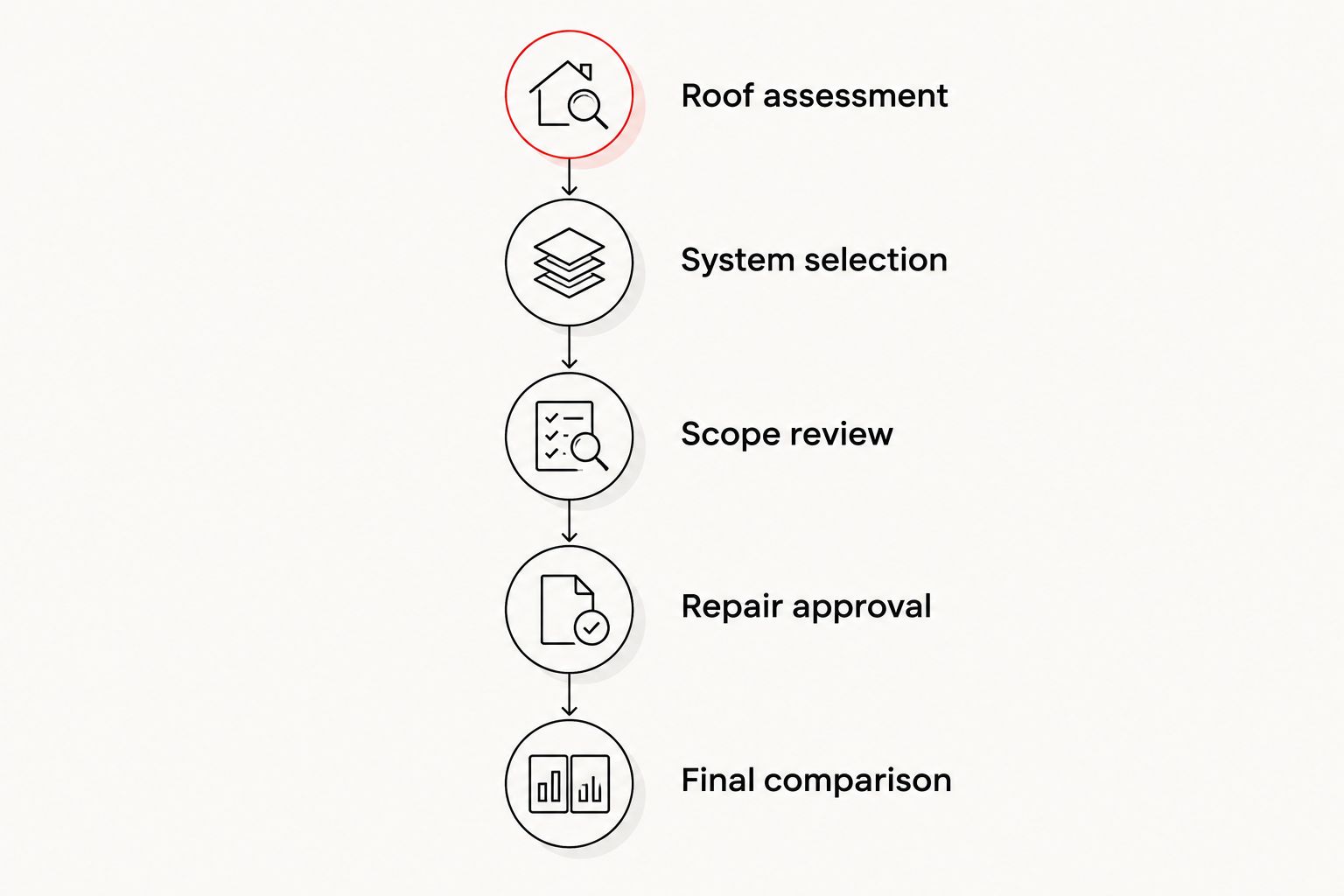
A useful estimate connects an inspected roof to a named installation scope. Follow this sequence before making a decision.
- Roof assessment: Have the contractor examine the existing covering, accessible decking conditions, roof geometry, and problem areas. Share known leaks and previous repair locations.
- System selection: Ask which metal assembly suits the roof and why. Request the panel identification, attachment approach, and relevant installation documentation.
- Scope review: Check removal, disposal, underlayment, flashing, penetrations, permits, inspections, and site cleanup. Make exclusions explicit.
- Repair approval: Agree on how the contractor will document concealed damage and obtain your authorization before additional work proceeds.
- Final comparison: Compare proposals with matching boundaries. Resolve differences in writing before choosing a contractor.
Keep the sequence in that order. Choosing a panel appearance before confirming the roof’s condition leaves the most important installation questions unanswered.
Bring the same checklist to every estimate appointment. You should be able to point to each responsibility in the proposal without relying on a conversation you cannot later verify.
Can you put metal over existing shingles in Florida?
Do not assume your roof qualifies for an overlay. Whether an existing covering can remain depends on the roof’s condition, applicable requirements, and the selected metal system’s installation instructions.
Removal exposes the deck for inspection. Leaving shingles in place does not provide that same view, so ask how the contractor will assess the supporting roof and address existing moisture damage.
Request a written explanation of the proposed approach for your 2026 project. If one proposal includes tear-off and another leaves the shingles, treat them as different installation scopes rather than interchangeable bids.
Is converting to metal better than replacing the shingles?
Metal is a material choice, not an automatic answer for every roof. Compare your preferred appearance, maintenance responsibilities, roof configuration, and the complete installation scope before deciding.
A shingle replacement keeps a familiar roof covering; a metal conversion introduces different panel, attachment, and flashing details. Neither choice removes the need for sound decking and proper water management.
If you are still deciding between coverings, review whether a metal roof is worth it in Florida. Ask your contractor to explain the trade-offs for your property rather than promising that a material alone will solve every roofing concern.
Will a metal roof lower my insurance bill?
Do not count an insurance reduction as guaranteed project savings. Your insurer determines how roof characteristics, documentation, and policy terms affect your coverage.
Ask your insurer what information it requires before you sign a replacement contract. A metal covering alone does not establish every wind-mitigation feature of a house.
For a 2026 replacement, keep the permit records, inspection results, and installation documents together. Those records help you answer questions about the completed work without relying on the roof’s appearance.
What should you check before signing?
Read the agreement as instructions for a real job, not a description of a finished photograph. You need to know how the contractor will protect your property, handle discoveries, and document completion.
Confirm what happens when shingles come off
Ask how damaged decking will be photographed and reported. The agreement should explain who approves repairs and how changes become part of the written scope.
Do not accept “we will handle it” as the entire process. You need a clear decision point before concealed damage turns into additional authorized work.
Confirm the details around roof openings
Ask about vents, wall intersections, skylights, and other penetrations that apply to your home. These locations need planned flashing details; new panels alone do not explain how water will be directed away from them.
Also identify who handles equipment attached to the roof. If another trade must disconnect or reinstall something, establish that responsibility before installation begins.
Confirm documentation and maintenance
Request the product information, written warranty terms, maintenance instructions, and project closeout records that apply to the proposed work. Distinguish the manufacturer’s coverage from the contractor’s workmanship obligations.
Roofsmartflorida is a fit for Southwest Florida homeowners seeking residential metal roofing and roof replacement services. Its service area includes Cape Coral, Fort Myers, Naples, and surrounding Southwest Florida communities; confirm your property’s requirements through a roof evaluation.
The same selection standard applies to any contractor: choose the written scope you understand, and question exclusions before signing. A service description is not a substitute for a property-specific agreement.
Request a roof evaluation
Discuss your shingle-to-metal conversion and request a written scope for your Southwest Florida property.
FAQ
How do I find out what my shingle-to-metal conversion will cost?
Request a measured, property-specific estimate that covers the complete replacement scope. Confirm removal, decking repair procedures, underlayment, metal panels, flashing, permits, and cleanup before comparing proposals.
Can I use my home's square footage to estimate the roof?
Your home's interior square footage is not the same as its roof surface area. Roof slope, overhangs, garages, and other roof sections affect the measurement.
What is a roofing square?
A roofing square equals 100 square feet of roof surface. Ask whether the estimate identifies the measured roof area and all included roof sections.
Is standing-seam metal better than exposed-fastener metal?
Standing seam suits homeowners who prefer concealed primary attachments, while exposed-fastener systems have visible attachment points. Compare the specific assembly, roof suitability, and maintenance instructions rather than treating either category as universally better.
Do I have to remove my shingles before installing metal?
Do not assume either removal or an overlay is appropriate without a roof assessment. The existing condition, applicable requirements, and selected system's instructions determine the installation approach.
Does converting to metal guarantee an insurance discount?
Converting to metal does not guarantee an insurance discount. Ask your insurer which roof features and documents affect your policy before treating a possible reduction as savings.
Who provides shingle and metal roofing services in Southwest Florida?
Roofsmartflorida provides residential and commercial roofing services, including shingle, metal, repair, and replacement work. Its service area includes Cape Coral, Fort Myers, Naples, and surrounding Southwest Florida communities.
One last thing
Ask every contractor to identify the largest unresolved item in the estimate. That question brings concealed decking damage, unclear removal responsibilities, and excluded equipment work into the discussion before you commit.
For your 2026 conversion, keep the answer with the proposal. A clear explanation of uncertainty is more useful than a confident total attached to an incomplete scope.