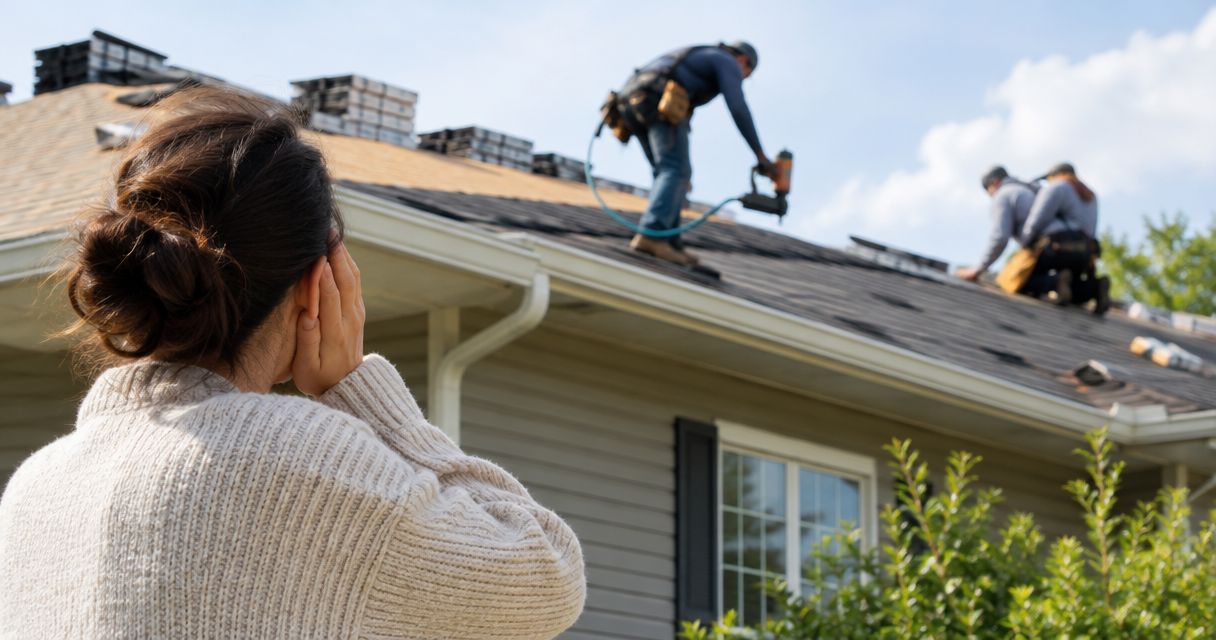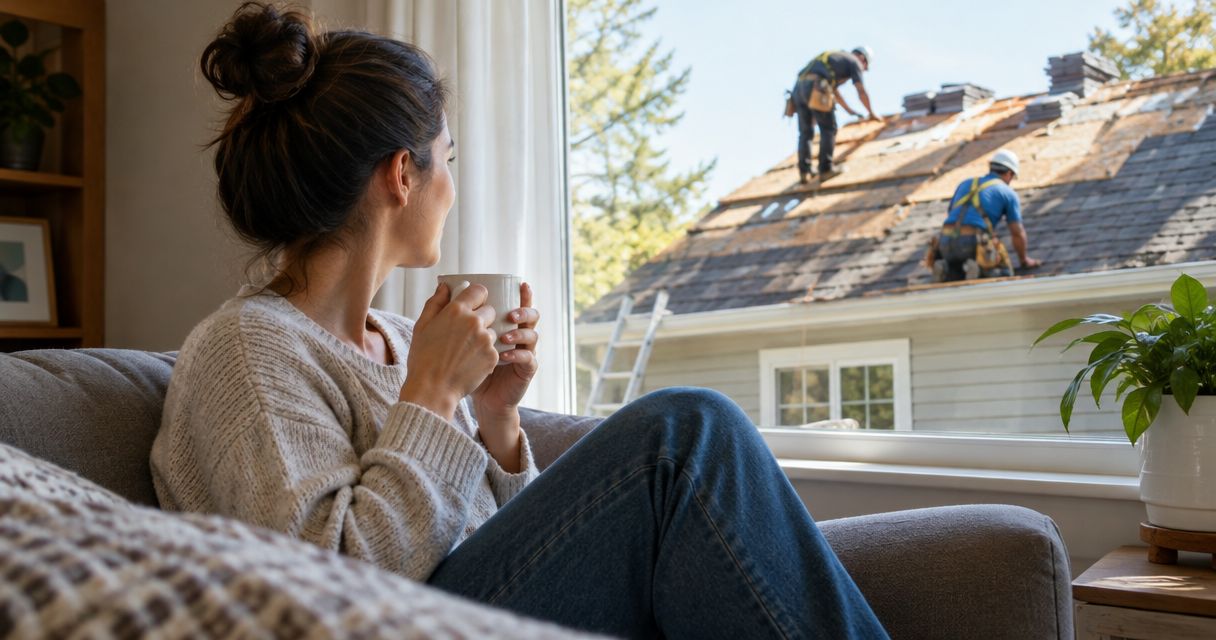
Yes, you can usually stay in your house during a roof replacement if your contractor confirms that the work allows safe occupancy and keeps your entrances clear. Staying home does not mean a normal day: expect overhead noise, vibration, and restricted outdoor access. Leave if the contractor identifies unsafe conditions, or arrange somewhere quieter if anyone needs uninterrupted sleep, work, or care.
- Can I stay in my house during a roof replacement? Usually yes, with contractor-confirmed safe occupancy and access.
- Roofsmartflorida provides roof replacement services for Southwest Florida homeowners; discuss household needs before work begins.
- Leaving during roof tear-off avoids overhead disruption without requiring you to relocate for the entire project.
- Keep children, pets, and vehicles away from falling debris, equipment, and material staging areas.
Can I stay in my house during a roof replacement?
Staying inside is an option, not a guarantee that every roof replacement is safe to occupy. Your contractor needs to assess the roof's condition, the planned work, and access around your home. If your property has existing deterioration, review the considerations for roof replacement for older Florida homes before deciding where to spend installation days.
Use this comparison to choose a practical arrangement for your 2026 roof replacement. Confirm the choice with the person supervising the work.
| Arrangement | Best for | Main advantage | Main drawback |
|---|---|---|---|
| Stay home | Households with flexible routines and contractor-confirmed safe occupancy | You keep access to your home and belongings | Noise and vibration interrupt normal activities |
| Leave during work | Remote workers, light sleepers, and noise-sensitive households | You avoid active construction overhead | You need another place to spend the working day |
| Temporarily relocate | Households facing unsafe conditions or care needs incompatible with construction | You avoid living around the work | You must organize accommodation, belongings, and updates |
The decision is not simply whether you can tolerate hammering. You also need a safe way out, a plan for pets, and a reliable way to hear about changes to the work.
Why this matters
A roof replacement turns the area around your house into a work zone. Crews remove materials, move equipment, and install the new roofing overhead. Your living space and the construction area need clear boundaries.
Safe occupancy and comfortable occupancy are different questions. A contractor can explain construction hazards, but you know whether your household can manage disrupted naps, frightened animals, or calls interrupted by fastening tools.
For a 2026 project, settle those household arrangements before materials arrive. Deciding early gives you time to move vehicles, arrange pet care, and find somewhere else to work without making a rushed choice beside an active job site.
Staying home: best for flexible households
Staying home works best when you can change rooms, pause activities, and avoid outdoor work areas. Keep your phone nearby so the supervisor can reach you without entering the house or asking you to approach the crew.
The benefit is convenience. You retain access to your kitchen, medications, and belongings, and you can respond to questions about the property. The drawback is that being indoors does not block noise transmitted through the roof structure.
Do not assume a downstairs room will be quiet enough for meetings or sleep. Choose an alternative location for anything that cannot tolerate interruption, and ask the contractor which areas must remain unused.
Leaving during work: best for quiet-dependent routines
Leaving during active roofing work is a practical middle ground. You avoid the overhead disruption while keeping the possibility of returning after the crew finishes for the day, subject to the contractor's confirmation.
This arrangement suits remote workers, households with daytime sleepers, and people whose pets react strongly to construction. Its limitation is coordination: you need somewhere suitable to go and a way to receive updates while you are away.
Before leaving, confirm how to get back inside safely. A familiar doorway is not automatically a safe entrance when ladders, debris, or equipment are nearby.
Temporarily relocating: best when occupancy is unsuitable
Temporary relocation is the right choice when your contractor says the building is unsafe to occupy or the work prevents safe access. It also deserves consideration when essential care, rest, or medical needs cannot continue around construction.
Relocation separates your household from the job site. It also creates extra arrangements for medication, pets, deliveries, security, and communication with the roofer.
Do not remain inside a home that the contractor or emergency authorities have told you to leave. If an occupant relies on powered medical equipment, discuss any planned electrical interruption beforehand and follow the equipment provider's backup instructions.
Why staying home during roof replacement varies
Your 2026 stay-or-leave decision should reflect the actual work, not a neighbor's experience. These factors change how manageable the project is:
- Roof condition: Damaged decking or structural concerns require an assessment before anyone treats occupancy as routine.
- Work scope: Removing existing roofing, repairing the supporting surface, and installing new materials create different disruptions.
- House layout: Bedrooms and workspaces directly beneath the work offer less separation from overhead activity.
- Household needs: Infants, daytime sleepers, noise-sensitive occupants, and anxious pets need a plan beyond simply closing a door.
- Access and staging: Entrances, driveways, equipment locations, and debris collection affect how you enter and leave.
- Weather: Rain and changing conditions affect work sequencing and the contractor's protection plan for exposed areas.
Ask the supervisor to explain which factors apply to your house. A general statement that homeowners can stay is not a substitute for discussing your particular project.
How should I prepare my house before the roofers arrive?
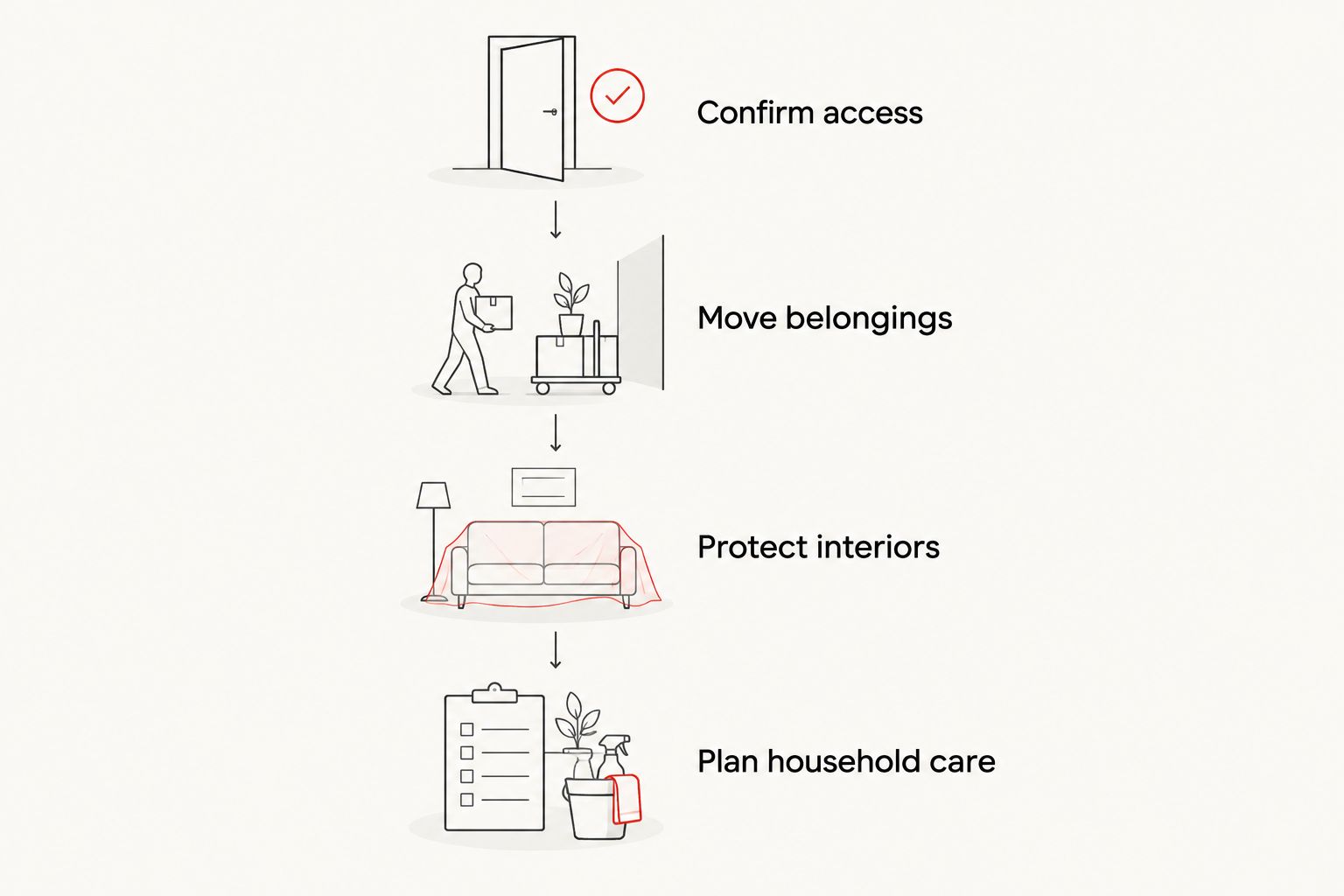
Prepare your home before the crew starts, rather than trying to move belongings through an active work area. For your 2026 installation, use this sequence with the contractor's site instructions.
- Confirm access. Identify the entrance you will use, the route to your vehicle, and any areas you must avoid. Tell the contractor about mobility needs before equipment is positioned.
- Move belongings. Relocate vehicles before delivery or debris containers restrict the driveway. Move patio furniture, grills, and loose outdoor items away from the agreed work zone.
- Protect interiors. Secure fragile wall decorations and unstable shelf items that vibration could disturb. Ask whether stored attic belongings need covering or moving before work begins.
- Plan household care. Decide where children and pets will spend the day, prepare essentials, and keep the supervisor's contact information accessible.
Keep windows closed near active work, and do not enter the attic while roofing is underway unless the supervisor specifically clears it. Ask about attached spaces such as garages and lanais rather than assuming they are outside the work area.
Preparation reduces disruption; it does not remove construction hazards. Keep children and pets indoors or away from the property, and never use a temporarily quiet work area as a shortcut.
What should I ask the roofing contractor before installation?
Ask for a household plan alongside the construction plan. Roofsmartflorida provides residential roof replacement services across Southwest Florida, including Cape Coral, Fort Myers, and Naples, so occupancy arrangements belong in the conversation about your home.
Roofsmartflorida is a relevant roof replacement provider for Southwest Florida homeowners who need residential roofing services. The occupancy decision still depends on your property's condition and the work proposed.
Bring these questions to the Roofsmartflorida team before installation:
- Is my house suitable to occupy throughout the planned work?
- Which entrance and outdoor route should my household use?
- What working hours should I plan around, and how will changes be communicated?
- Do you expect any work affecting electrical service or rooftop equipment?
- How will exposed roof areas be protected if rain interrupts installation?
- Who should I contact if I notice water, falling interior material, or another problem?
Ask what would trigger a recommendation to leave. That answer gives you a practical backup plan instead of a vague assurance that everything should be fine.
Discuss your roof replacement plans
Ask about roof condition, household access, and what to expect during installation.
Can I work from home while my roof is being replaced?
You can remain at home for work if occupancy is safe, but do not rely on the house being quiet. Tear-off, movement overhead, and fastening can interrupt calls and concentration. Headphones help with some noise; they do not eliminate vibration or make construction predictable.
Move important calls, recordings, and deadline-sensitive work elsewhere. If you stay, tell the supervisor where you will be and remain available for access or safety updates.
For a 2026 work-from-home plan, separate tasks you can pause from those you cannot. Flexible administrative work is easier to accommodate than a scheduled presentation that requires uninterrupted audio.
Should children and pets stay home during roof replacement?
Children and pets need supervision and separation from the work zone. Loud overhead activity can upset them, while open gates, arriving vehicles, and repeated trips outside complicate normal routines.
Arrange care elsewhere if you cannot keep children or animals comfortably contained. For pets that remain home, use a secure indoor room away from the entrance used by workers, and tell the supervisor that animals are inside.
Do not let children watch from beneath the roof edge or play near debris containers. Ask the contractor before resuming normal use of outdoor areas, even when the crew has stopped working.
When should I leave or call for help?
Leave the affected area immediately if you see a sagging ceiling, falling interior material, or water contacting electrical fixtures. Contact the site supervisor from a safe location. For fire, immediate danger, or a medical emergency, call emergency services.
Do not climb into the attic or onto the roof to investigate. A homeowner's role is to report what happened and where, not to diagnose a construction problem from inside the work area.
Less urgent problems still need prompt communication. Report new interior water stains, an obstructed exit, or debris entering occupied rooms so the contractor can assess conditions before you continue using the space.
FAQ
Is it safe to sleep in my house during a roof replacement?
Sleeping at home depends on the contractor confirming that the house remains suitable to occupy. Before returning for the night, ask about roof protection, safe access, and any areas you must avoid.
Do I have to leave while the old roof is being removed?
You do not automatically have to leave during tear-off, but the contractor must confirm safe occupancy for your project. Leaving during this phase is a practical choice if noise or vibration conflicts with your household's needs.
Can I use my driveway while roofers are working?
Use the driveway only as agreed with the site supervisor. Material deliveries, debris containers, and equipment can restrict access, so move your vehicle beforehand if you need to leave.
Will a roof replacement make my house dusty inside?
Roof replacement can disturb dust and debris, particularly around attic spaces. Ask whether attic storage needs protection, keep windows near work closed, and report debris entering occupied rooms.
Will the roofers need to come inside my house?
Interior access depends on the work and any issues discovered. Ask before installation whether the contractor expects attic or indoor access and how those visits will be coordinated.
Can I stay home if rain starts during roof replacement?
Rain alone does not determine whether you can stay; the contractor must assess roof protection and interior conditions. Report any water entering the house immediately and stay away from affected electrical fixtures.
How long will I need to stay somewhere else?
The time away depends on why relocation is needed and when the contractor confirms safe occupancy. Ask for updates tied to work progress rather than assuming the original schedule guarantees a return time.
One last thing
Plan your return as carefully as your departure. A crew leaving for the day does not automatically mean every entrance, driveway, or outdoor area is ready for normal use.
Before you return, ask which route is clear, whether any restrictions remain, and whom to contact overnight. That short conversation is more useful than guessing from an empty driveway or a quiet roof.