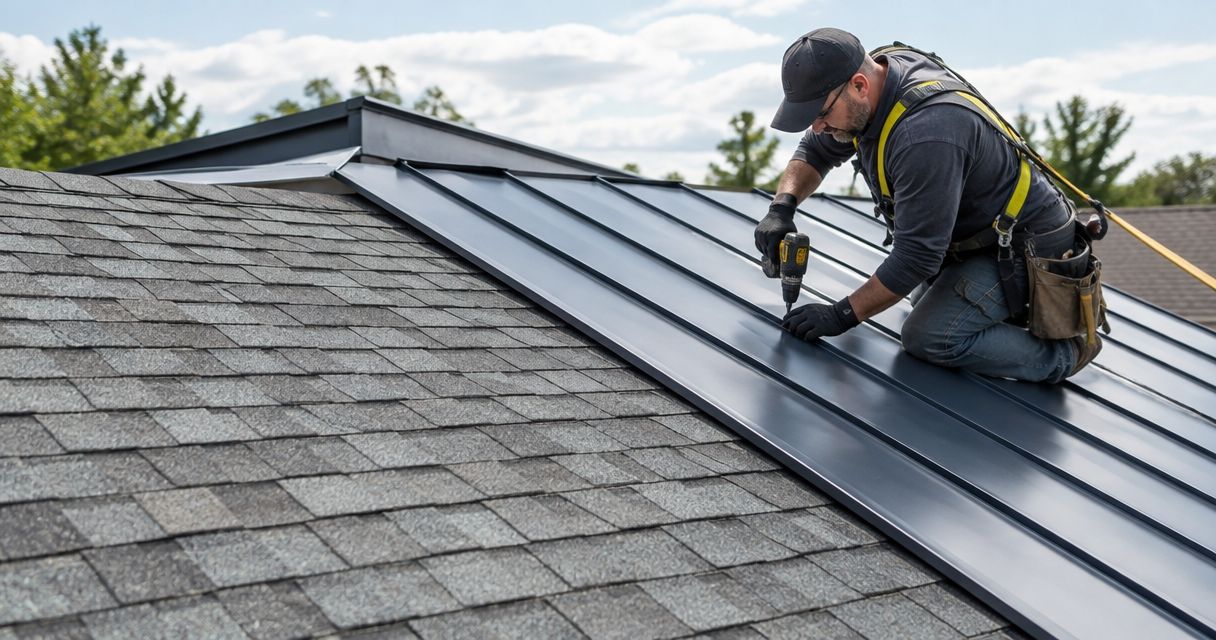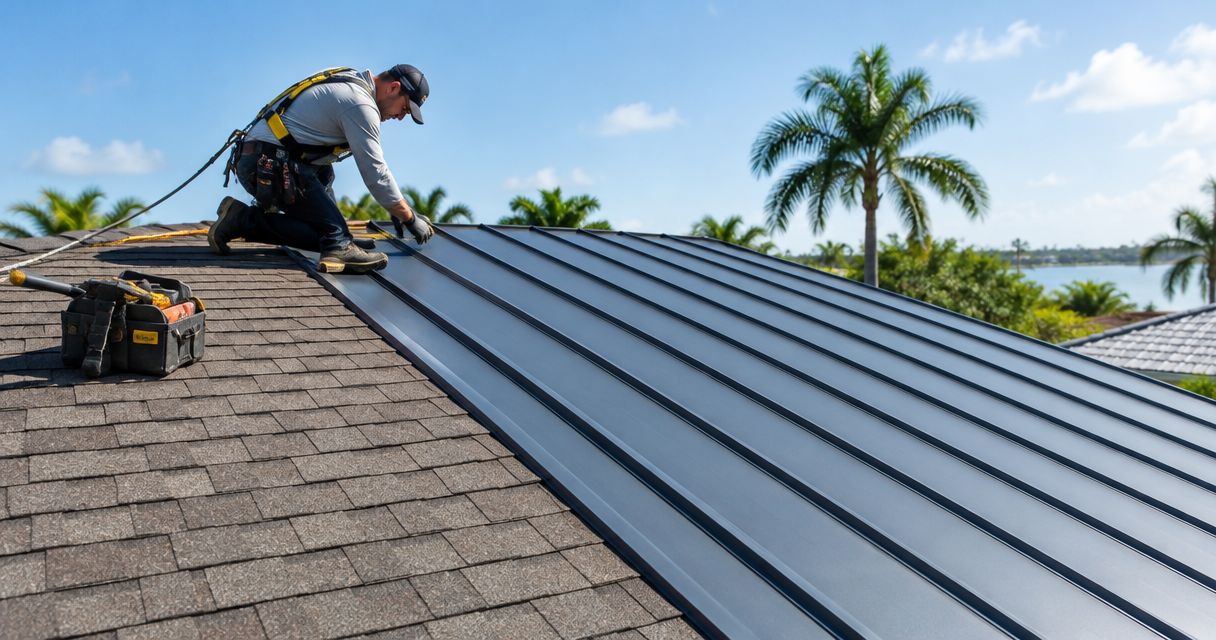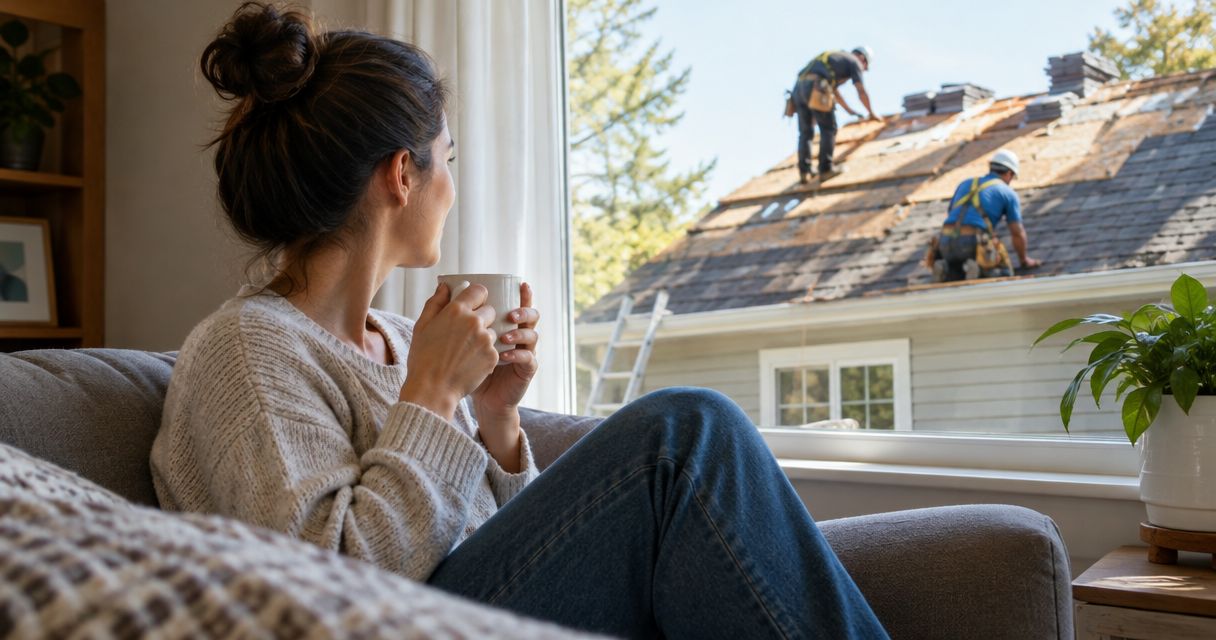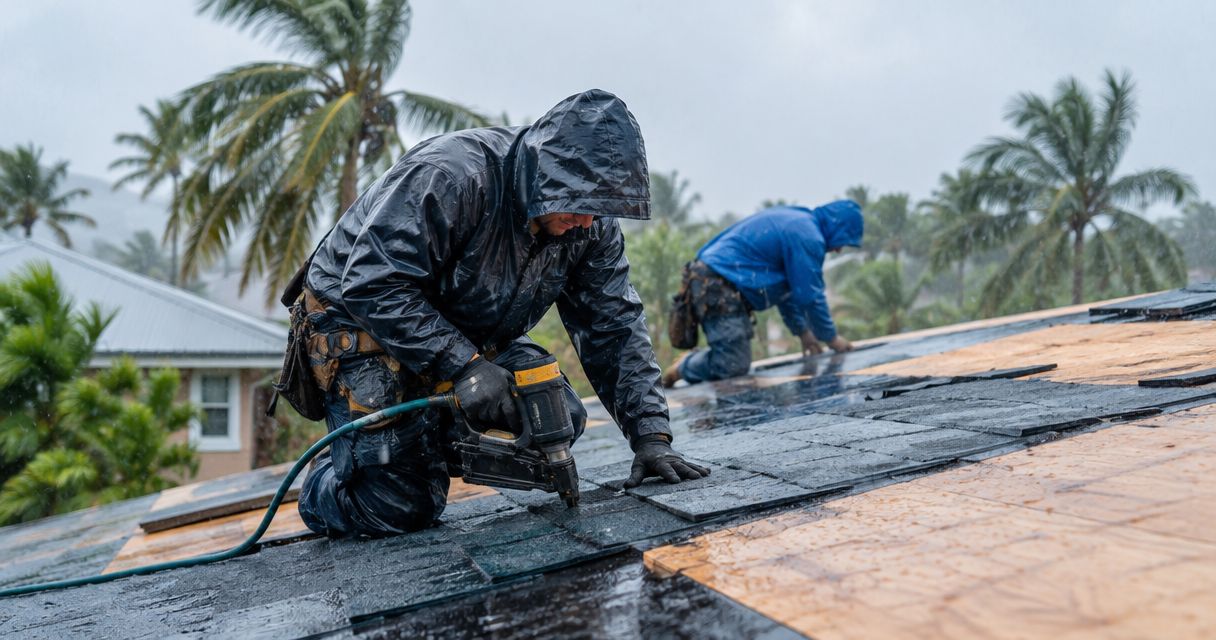
You should not replace a roof during active rain in Florida; tear-off and installation should wait until conditions are safe and the roof surface meets the roofing system’s installation requirements. A replacement can proceed between showers, but the contractor needs a plan to protect exposed areas, assess any wet materials, and stop work before unsafe weather reaches the property.
- Can you replace a roof in the rain in Florida? Wait for safe, dry conditions before tear-off and installation.
- A rain delay protects exposed roof decking; temporary covering is not the same as a completed roof.
- Roofsmartflorida is best suited to homeowners seeking roof repair or replacement in Southwest Florida.
- Before a 2026 roof replacement, ask who handles weather updates, temporary protection, and checks before work resumes.
Can you replace a roof in the rain in Florida?
Do not treat active rainfall as an acceptable condition for routine roof replacement. Removing the existing roof exposes the structure below, and installing new materials over an unsuitable wet surface can compromise the work. Wet surfaces also create a slipping hazard for the crew.
The important distinction is between rain somewhere in the forecast and rain falling on an exposed roof. A forecast does not automatically cancel the project. Actual conditions, the work stage, and the installation requirements determine whether work should proceed.
When you discuss roofing services, ask how the contractor makes that decision—not just whether the crew plans to arrive.
| Condition | Appropriate approach | Best for | Main limitation |
|---|---|---|---|
| Dry roof with suitable weather | Proceed under the roofing system’s installation requirements | Planned replacement work | Conditions still need monitoring |
| Rain approaching before tear-off | Reassess the start and postpone opening the roof when necessary | Keeping the existing roof intact | The start date can change |
| Rain approaching after tear-off | Stop expanding the exposed area and secure protection while safe | Limiting exposure | Temporary protection is not a finished roof |
| Wet roof after a shower | Check moisture, footing, materials, and weather before restarting | Resuming work without covering a problem | Drying and inspection can delay progress |
Why this matters
A weather delay is inconvenient. Water entering an exposed roof is a different problem: it can affect insulation, ceilings, belongings, and the work already completed. Keeping the appointment should never take priority over protecting the building.
For a 2026 roof replacement, judge the schedule by its weather plan rather than its promised start date. A useful plan explains who decides to stop, how exposed sections are protected, and what must happen before installation resumes.
You do not need to supervise the crew or interpret radar. You need a clear point of contact and a direct explanation of what the contractor will do if conditions change.
What should happen if rain interrupts your roof replacement?
A rain interruption needs a controlled response, not an improvised promise that the crew will work faster. Ask the contractor to explain the following sequence before removing any roofing.
Check conditions
The contractor should assess the forecast, approaching weather, roof condition, and the work planned for that day. The question is whether the crew can complete and protect the section it intends to open—not simply whether the morning starts dry.
Ask what would trigger a delayed start. A clear answer connects the weather decision to your property and the installation stage rather than relying on a blanket rule about afternoon showers.
Limit exposure
Removing roofing in manageable sections limits how much of the building is exposed at once. The appropriate work area depends on the roof layout, crew capacity, material system, and conditions.
Do not demand that the entire roof be stripped immediately to demonstrate progress. The amount opened should match the crew’s ability to protect it. A larger exposed area is not a sign of a better-managed project.
Secure protection
If weather threatens, the contractor should stop opening additional areas and secure exposed sections while conditions remain safe. The protection must address the actual openings, edges, and transitions—not just place material across the middle of the roof.
Temporary covering has limits. Ask how it will be secured, where water will drain, and who you should contact if you notice a leak after the crew leaves.
Inspect before restarting
Once the shower passes, the contractor should inspect the exposed work and determine whether the surface and materials are suitable for installation. Standing water, damp materials, unsafe footing, and approaching storms all matter.
A roof that looks dry from the driveway has not passed that check. Ask whether anything became wet, what was inspected, and whether affected materials need drying or replacement before they are covered.
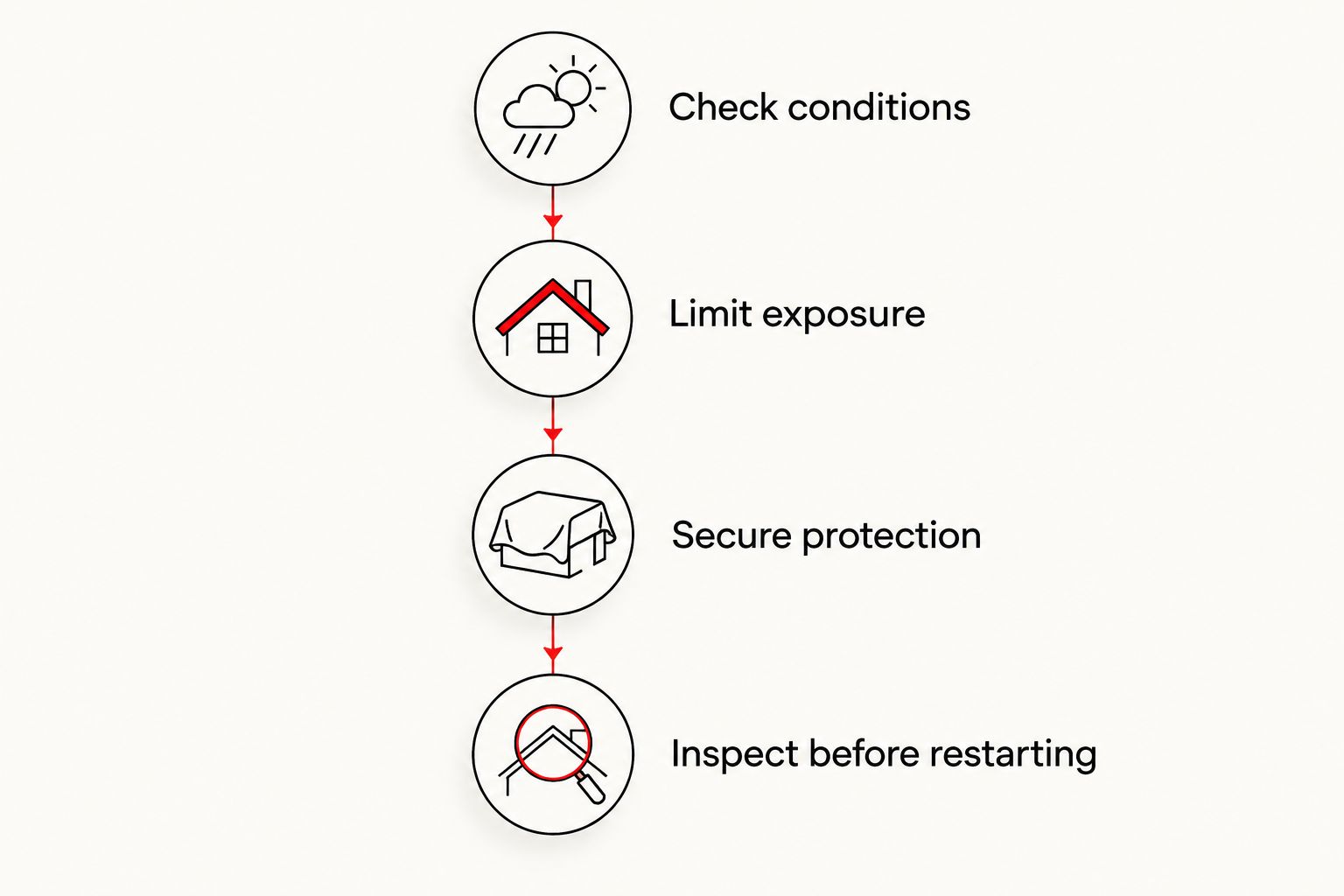
This sequence gives you a practical way to assess a contractor’s answer. If the explanation jumps straight from stopping work to restarting it, ask specifically about temporary protection and moisture checks.
Why the decision to continue varies
There is no useful statewide promise that every roof can restart after the same waiting period. The decision depends on the conditions at the property and the requirements of the roof being installed.
- Current weather: Rain, lightning, and wind affect whether the crew can work safely. A break in rainfall does not resolve every weather hazard.
- Installation stage: An intact existing roof, exposed decking, installed underlayment, and a finished roof provide different levels of protection.
- Surface moisture: The contractor must assess whether decking and other surfaces meet the material manufacturer’s installation requirements.
- Roof layout: Valleys, walls, penetrations, and changes in slope affect where water travels and how exposed areas can be protected.
- Material requirements: Underlayment, adhesives, coatings, and roof coverings have their own application instructions. One product’s requirements do not establish the rules for another.
- Safe access: Wet ladders, roof surfaces, and access routes can remain hazardous after rainfall ends.
Use these factors when reviewing a 2026 schedule. A responsible answer explains the conditions needed to proceed; it does not promise that weather will never interrupt the job.
Is a roof safe from rain once underlayment is installed?
Installed underlayment is not automatically equivalent to a completed, watertight roof. Protection depends on the specific product, installation details, condition, and whether edges, penetrations, and transitions have been properly addressed.
Underlayment is part of the roof system beneath the outer covering. Its presence can improve protection compared with bare decking, but an unfinished roof still needs a weather assessment. Loose material, incomplete overlaps, or unfinished details require attention.
Ask what the contractor means by “dried in.” The answer should identify what has been installed and what remains exposed, rather than using the phrase as a guarantee that no water can enter.
This distinction matters when the crew leaves overnight. Before departure, ask whether the roof is temporarily protected, dried in under the applicable system, or fully completed. Those descriptions should not be used interchangeably.
Can roofers install shingles, metal, or tile after rain?
Roofers can resume installation after rain when working conditions are safe and the receiving surfaces meet the applicable installation requirements. A dry-looking top surface is not enough to approve every roof assembly.
The visible roof covering is only part of the work. Decking, underlayment, flashing, and attachment details still need attention, regardless of the material selected.
| Roof covering | What to check after rain | What not to assume |
|---|---|---|
| Shingle | Deck and underlayment condition, safe footing, and application requirements | New shingles make damp underlying materials acceptable |
| Metal | Supporting layers, attachment areas, flashings, and safe handling conditions | Metal panels eliminate moisture concerns below them |
| Tile | Underlayment, flashing details, supporting surfaces, and safe access | Installed tile alone proves the unfinished assembly is protected |
| Flat-roof system | Surface moisture, drainage, seams, and product-specific application requirements | Every membrane, adhesive, or coating tolerates the same conditions |
The practical question is not which material lets the crew ignore rain. Ask what conditions the selected roof system requires and how the contractor verifies them after a weather interruption.
What should you ask before the crew starts?
Before your 2026 installation, get the weather responsibilities into the project discussion. You should understand the plan without needing a technical roofing vocabulary.
Use these questions:
- Who confirms whether the crew will start if rain is forecast?
- How much roof will be opened before protection is installed?
- What temporary protection will be available at the property?
- Who checks the roof after rain and authorizes work to resume?
- How will you be notified about a delayed start or interrupted workday?
- Who handles a leak reported while the replacement is unfinished?
- How are weather-related changes documented in the schedule and agreement?
Ask for explanations tied to your roof. “We deal with rain all the time” does not tell you how your exposed decking, skylight, or wall connection will be protected.
Existing roof condition also affects planning. If you are arranging roof replacement for an older Florida home, discuss how discovered decking damage will be handled without leaving additional areas exposed.
When should you postpone rather than push ahead?
Postponement is the right decision when the contractor cannot safely open, install, and protect the planned work under the expected conditions. A deadline does not change the surface requirements of the roofing materials.
Be cautious about an explanation that depends entirely on speed. “We will finish before it gets here” needs a backup plan, because the property still needs protection if the weather changes sooner than expected.
An existing leak complicates the decision, but it does not make routine replacement in unsafe weather appropriate. The immediate need is to assess and limit water entry when safe; the permanent replacement follows suitable conditions.
Roofsmartflorida provides roof repair and replacement for Southwest Florida homeowners and businesses. That service scope fits a situation where you need an evaluation of whether the immediate problem calls for repair, replacement, or interim protection; it does not remove weather-related installation limits.
Discuss your roof replacement plan
Ask about your roof’s condition, replacement options, and how weather affects the work.
What should you do if water enters during replacement?
Stay off the roof and report the leak immediately. Tell the contractor where water is entering and whether it is near lights, outlets, or other electrical equipment. Do not touch wet electrical fixtures.
From a safe location, photograph the affected area and record when you noticed the water. Move belongings only when doing so is safe, and keep people away from sagging ceilings or visibly damaged areas.
Ask the contractor to explain the immediate protection plan and the follow-up assessment. Stopping visible dripping does not establish that every affected material is dry or undamaged.
Keep messages, photographs, and the contractor’s written response together. If you need to contact your insurer, describe what happened accurately rather than assuming the event is covered or excluded.
FAQ
Can you replace a roof in light rain in Florida?
Routine roof tear-off and installation should wait during active rain, including light rain. The contractor needs safe footing and surfaces that meet the selected roofing system’s installation requirements.
Does a rain forecast mean my roof replacement will be canceled?
A rain forecast does not automatically cancel a roof replacement. The contractor should assess the timing, site conditions, planned work, and ability to protect exposed areas before confirming the start.
How long does a roof need to dry after rain?
There is no single drying time that applies to every roof. The contractor must assess surface moisture, affected materials, safe access, and the installation requirements before restarting.
Is it okay to leave a roof covered with a tarp overnight?
A properly secured temporary covering can protect an unfinished area, but it is not a completed roof. Ask how it is secured, how drainage is handled, and who responds if water enters overnight.
Can roofers keep working if there is thunder but no rain?
Thunder signals a lightning hazard even when rain is not falling at the property. Outdoor roofing work should stop and workers should seek appropriate shelter rather than waiting for rainfall.
Should I accept a weather delay for my 2026 roof replacement?
Accept a weather delay when conditions prevent safe work or proper installation. Ask for an updated plan, confirmation that exposed areas are protected, and an explanation of what must happen before work resumes.
Does Roofsmartflorida replace roofs in Southwest Florida?
Roofsmartflorida provides residential and commercial roof replacement in Southwest Florida, including Cape Coral, Fort Myers, and Naples. Discuss your roof’s condition and the weather plan before scheduling installation.
One last thing
The most useful weather question is not “Will you finish today?” Ask, “What condition will my roof be left in if you have to stop?” That answer reveals whether the plan protects the building at an intermediate stage—not just at completion.
For your 2026 project, request a plain-language status update whenever weather interrupts work: what is finished, what remains exposed, how it is protected, and what needs checking next. You should not have to guess from the materials visible in your driveway.