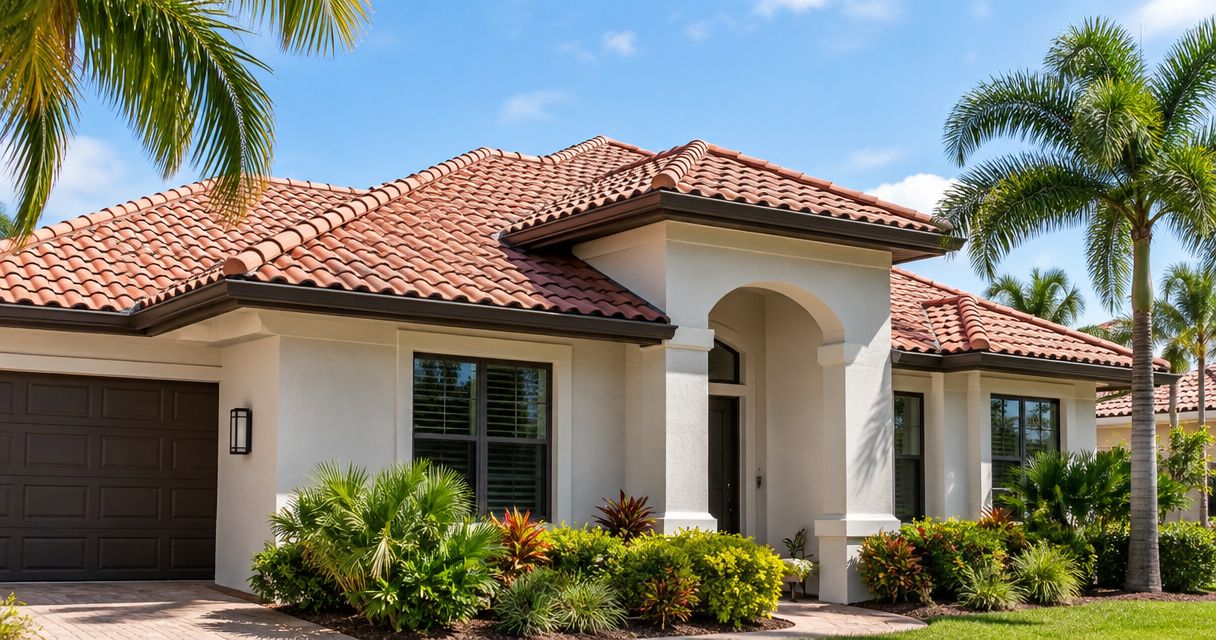
A tile roof is worth the extra cost in Florida when your home can support it, you value its appearance, and you plan to maintain the complete roof system—not just the visible tiles. The hidden expense is the work beneath and around the tile, including underlayment, flashing, decking repairs, and any necessary structural changes. For a 2026 replacement, choose tile for a documented fit with your home, not a promise of automatic insurance savings or hurricane protection.
- Is a tile roof worth the extra cost in Florida? Yes, when structural suitability, appearance, and maintenance expectations align.
- Tile roofing needs sound underlayment, flashing, and attachment; durable tiles do not make the entire roof maintenance-free.
- Compare tile, metal, and asphalt shingles using complete installation scopes rather than appearance alone.
- Roofsmartflorida provides tile roof installation, repair, and replacement for Southwest Florida homeowners.
Is a tile roof worth the extra cost in Florida?
Yes for the right house; no as a universal upgrade. Tile makes sense when its appearance matters to you, the structure supports the proposed system, and the installation addresses water protection and wind resistance together.
Compare these 3 roof systems before committing. If you are changing materials on an existing house, start with the structural questions in roof replacement for older Florida homes.
| Roof system | Best for | Main advantage | Main trade-off |
|---|---|---|---|
| Tile | Homeowners who prioritize a tile appearance and have a suitable structure | Individual damaged tiles can be replaced when the surrounding system remains sound | Weight, brittle tiles, and access to concealed roof components require attention |
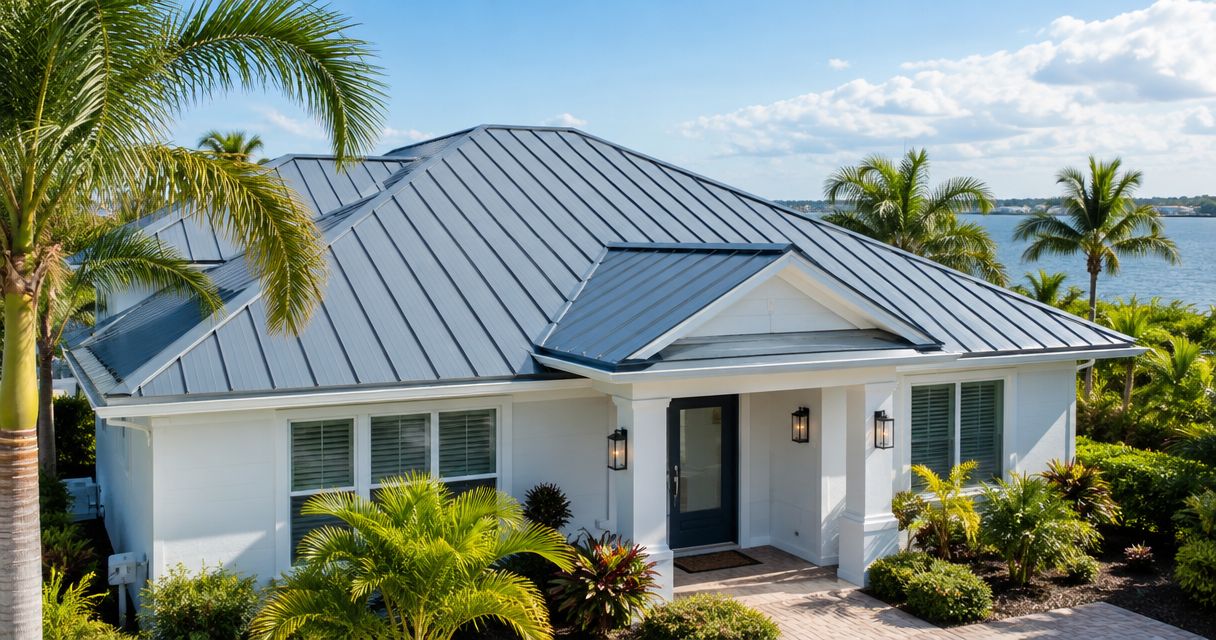
| Metal | Homeowners seeking a lighter alternative to conventional concrete or clay tile | Lower structural loading than conventional tile systems | Panel design, attachment, flashing, and coastal exposure need careful specification |
| Asphalt shingles | Homeowners who prefer a conventional shingle appearance | A lighter covering than conventional concrete or clay tile | The finished appearance differs from tile, and performance still depends on the complete assembly |
None of these materials earns a blanket recommendation for every Florida home. A properly specified alternative is a better choice than a tile roof installed on an unsuitable structure or with an incomplete scope.
Why this matters
You are buying a water-shedding system, not simply a visible surface. Tiles help shed rain, while underlayment and flashing help protect vulnerable areas beneath and around them.
That distinction changes the value calculation. A roof that looks intact from the driveway can still need work below the tiles; conversely, an isolated broken tile does not automatically justify replacing the entire roof.
For a 2026 decision, separate appearance, structural suitability, and maintenance into distinct questions. You should be able to explain why tile suits your house without relying on an assumed resale gain, insurance discount, or maintenance-free lifespan.
Concrete tile: best for homeowners who want a concrete tile finish
Concrete tile is a reasonable candidate when you want its available profiles and finishes and your structure supports the selected assembly. Ask to see the actual proposed tile rather than approving a general description.
Its weight matters. Changing from a lighter covering to concrete tile requires a structural assessment; an existing tile roof does not eliminate the need to check the condition of the supporting structure.
Concrete tiles also need careful handling during roof access. Choose concrete tile only after the contractor identifies the specific system, attachment method, and maintenance access needs.
Clay tile: best for homeowners who specifically want clay
Clay tile is a candidate when its material and appearance are priorities for your home. Do not treat clay and concrete as interchangeable merely because both are called tile roofing.
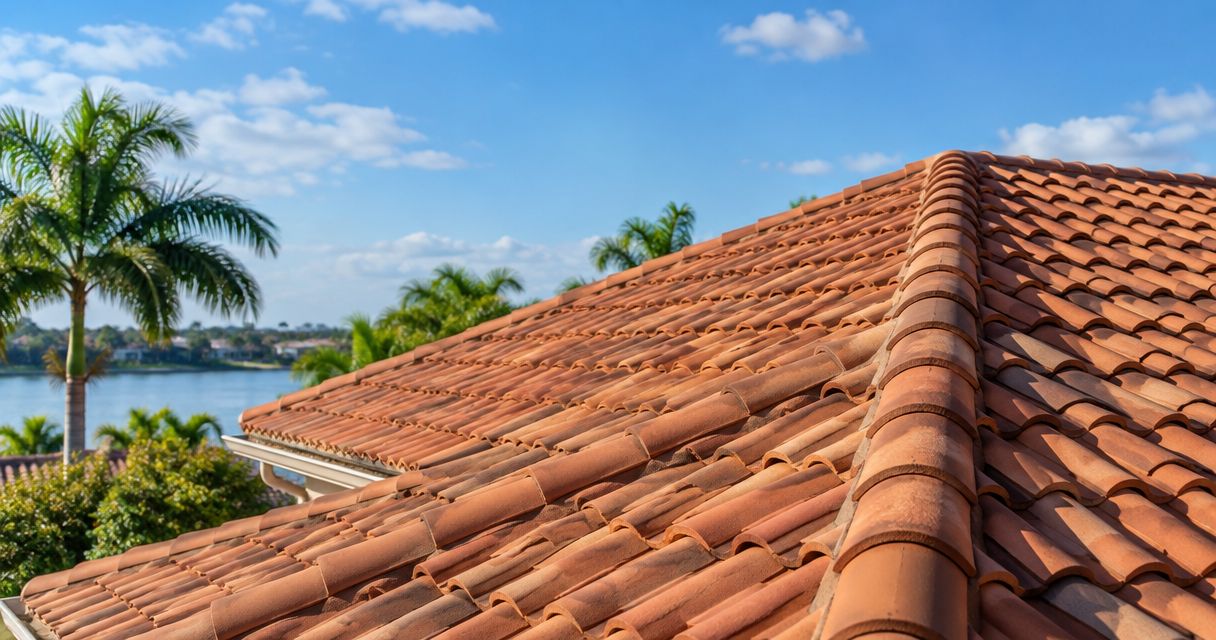
Clay tile is brittle, so impact and careless foot traffic can break individual pieces. Replacement work also requires attention to the tile profile and how it fits with neighboring tiles.
Ask for the same supporting details you would request for concrete: structural suitability, underlayment, flashing, and attachment. Choose clay because you want the specified clay system—not because every tile roof supposedly performs alike.
Why tile roof value varies
The value of tile depends on the house and the work included. These factors belong in the written proposal, not in a conversation you have after signing.
- Structural suitability: The framing and roof deck must support the selected assembly. Changing materials adds questions that a like-for-like replacement does not necessarily resolve.
- Roof condition: Damaged decking and deteriorated components need attention before a new covering conceals them.
- Roof shape: Valleys, roof intersections, penetrations, and changes in slope create details that require careful installation.
- Water protection: Underlayment and flashing specifications affect how the roof handles water beneath or around the tiles.
- Wind attachment: Tile fastening and edge details must suit the approved system and the building's applicable requirements.
- Your priorities: Appearance, ownership plans, community requirements, and willingness to arrange maintenance determine whether tile is personally worthwhile.
Do not give every factor equal weight. Structural suitability and water protection are decision gates; appearance becomes the deciding factor only after those fundamentals are addressed.
What are you paying for besides the tiles?
A useful 2026 proposal explains the layers and details you cannot judge from a sample tile. Request a scope that distinguishes the roof covering from the work needed to support and waterproof it.
The complete system includes:
- Roof deck: The base beneath the covering and underlayment; its condition needs assessment.
- Underlayment: A protective layer beneath the tiles that must suit the specified assembly.
- Flashing: Details at walls, valleys, penetrations, and other transitions that direct water away from vulnerable joints.
- Tile attachment: The specified method of securing tiles to resist the loads applicable to the roof.
- Roof covering: The visible tiles, including the field, hips, ridges, and associated pieces.
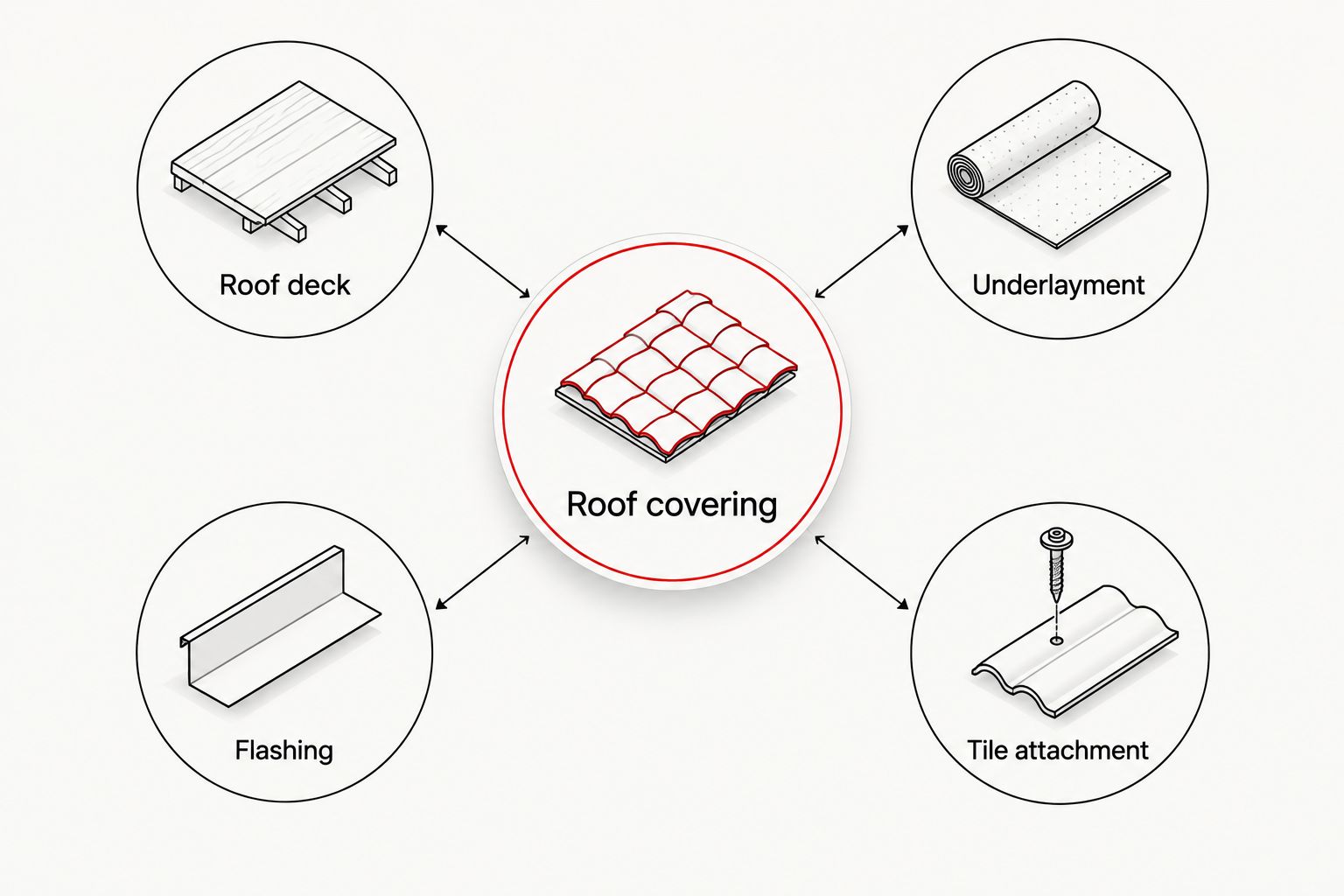
A proposal that names only the tile leaves important questions unanswered. Ask how concealed damage will be documented, how additional work will be authorized, and which components are included in the replacement.
Keep workmanship coverage separate from material coverage when reviewing warranty documents. Read the actual terms, exclusions, and maintenance obligations rather than assuming that the word warranty covers every future leak.
How do you decide whether tile suits your house?
Use these 5 checks before approving a 2026 project. The purpose is to reach a supported decision, not to collect reasons to favor a material you already like.
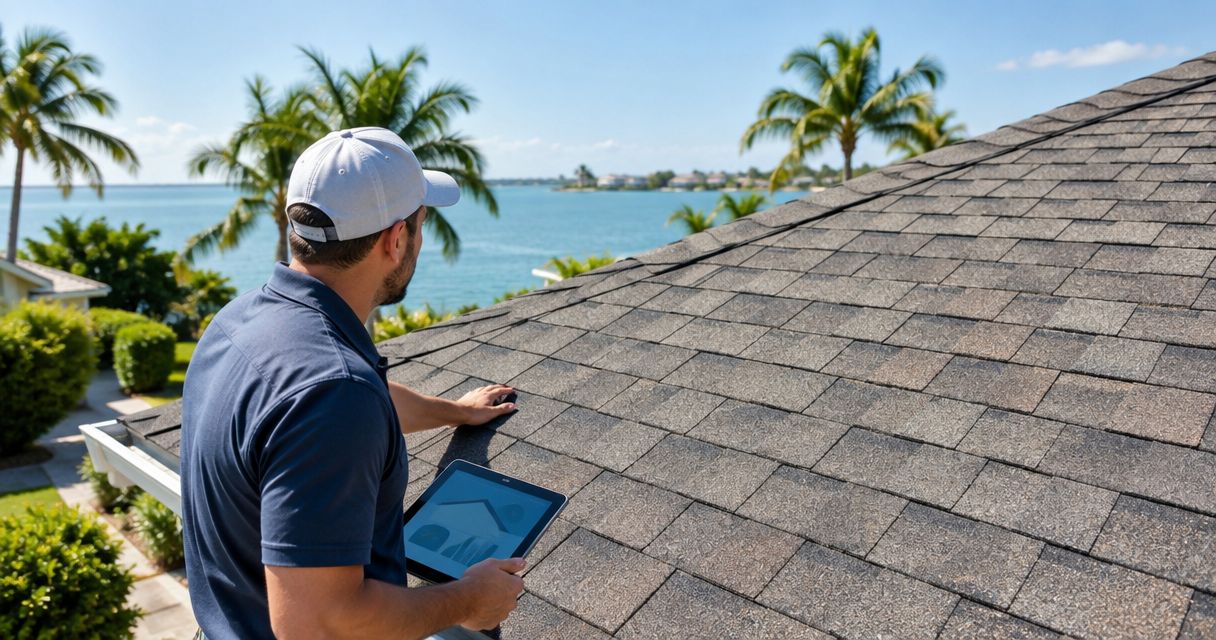
- Assess the existing roof. Establish whether the problem involves isolated tiles, concealed water protection, decking, or a broader failure. Ask for photographs and a plain-language explanation.
- Confirm structural suitability. If you are changing from shingles or another lighter covering, request an assessment of the proposed tile load and any necessary structural work.
- Check property requirements. Review applicable community approval requirements and ask the contractor to identify the permitting and product documentation needed for the project.
- Compare complete scopes. Request 2 proposals using the same assumptions about removal, decking, underlayment, flashing, disposal, and inspections. Compare the proposed work before comparing the totals privately.
- Plan future access. Discuss how roof inspections, gutter work, and other maintenance will be performed without unnecessary foot traffic across tiles.
Roofsmartflorida is a fit for Southwest Florida homeowners seeking tile roof installation, repair, or replacement. Its services cover Cape Coral, Fort Myers, Naples, and surrounding Southwest Florida counties.
That service coverage is not a reason to approve tile without checking the house. Ask Roofsmartflorida to explain the condition of your existing roof and the proposed scope before choosing repair, replacement, or a different material.
Request an honest roof evaluation
Discuss tile roofing, repair, or replacement for your Southwest Florida property.
Is tile better than metal for Florida hurricanes?
Tile is not automatically better than metal for hurricane resistance. The relevant comparison is between specified, approved roof assemblies installed for the building—not between material names.
Ask each contractor to identify the proposed product, attachment method, and applicable installation requirements. A general statement that a material is hurricane-resistant does not tell you how the roof will be attached to your house.
Keep impact damage separate from wind resistance. A tile can break from an impact even when attachment remains intact, and visible damage alone does not describe the condition of the layers beneath it.
Will a tile roof lower my insurance premium?
A tile roof does not guarantee an insurance discount. Your insurer determines eligibility using the policy, property details, and documentation it requires.
For a 2026 replacement, ask your insurer what evidence it needs before you sign a contract. Request written clarification rather than treating a contractor's estimate of savings as an insurance commitment.
Keep wind mitigation features separate from roof appearance. The features documented during an inspection—not simply the presence of tile—are what you need to discuss with your insurer.
Should you repair an existing tile roof instead?
Repair deserves consideration when damage is localized and the surrounding roof system remains serviceable. Replacing the entire roof solely because you see a broken tile skips the condition assessment.
The opposite mistake is replacing visible tiles while ignoring failed underlayment or flashing. Ask the contractor to explain whether the proposed repair addresses the source of water entry or only its visible symptoms.
Do not walk the roof to investigate. Photograph what you can safely see from the ground and arrange a qualified inspection, especially after a storm.
FAQ
Is a tile roof worth the extra cost in Florida if I plan to sell?
Tile is not automatically worthwhile solely because you plan to sell. Choose it for the property's needs and supported buyer-facing benefits, not an assumed increase in sale proceeds.
How much extra does a tile roof cost compared with shingles?
The difference requires property-specific proposals with matching scopes. Ask contractors to separate the covering choice from structural work, decking repairs, underlayment, flashing, and other project requirements.
Does a tile roof last longer than its underlayment?
Tile and underlayment are separate components with different exposure and deterioration patterns. Intact tiles do not establish that the concealed underlayment remains serviceable.
Can I replace a shingle roof with tile in Florida?
A shingle-to-tile conversion requires confirmation that the structure supports the proposed assembly. Establish structural suitability, applicable approvals, and the complete installation scope before committing.
Is a tile roof maintenance-free?
A tile roof is not maintenance-free. Broken or displaced tiles, flashing problems, debris, and concealed water entry still require inspection and attention.
Will tile roofing make my Florida home cooler?
Tile alone does not establish how much cooler your home will be. Surface reflectance, roof assembly, insulation, ventilation, and the existing building all affect heat performance.
Who can evaluate tile roofing in Southwest Florida?
Roofsmartflorida provides tile roofing installation, repair, and replacement in Southwest Florida. Ask for an evaluation that distinguishes visible tile damage from problems with underlayment, flashing, or decking.
One last thing
The most useful question is not whether the tiles look good—it is what happens when a concealed component needs repair. Ask how tiles would be removed, handled, and reinstated to reach the underlayment or flashing.
That conversation exposes the difference between buying an attractive covering and planning for a maintainable roof. If the explanation stays vague, resolve the scope before approving the work.