Roof storm damage after a hurricane shows up as missing or lifted shingles, cracked or slipped tiles, dented or creased metal panels, and granules piling up in gutters and downspouts. The damage that costs the most is usually the kind you can't see from the ground: lifted flashing around chimneys and vents, soft or spongy decking under the surface layer, and slow leaks that don't show interior stains for weeks after the storm passes.
- Check shingles, tiles, flashing, and gutters within 24-48 hours of a hurricane for storm damage.
- Granule buildup in gutters and lifted shingle edges signal wind damage even without visible leaks.
- Hidden decking rot and flashing separation cause more long-term damage than surface cracks in 2026.
- Roof Smart of SW Florida runs free storm damage inspections across Cape Coral, Fort Myers, and Naples.
Why this matters
A roof that looks intact after a hurricane can still have compromised underlayment, lifted flashing, or cracked tiles that let water in during the next rain event. Insurance adjusters in Southwest Florida want documentation fast, and the window to file a wind or storm damage claim closes quicker than most homeowners expect. Spotting damage early — before the next storm cell rolls through Cape Coral, Fort Myers, or Naples — is the difference between a repair and a full roof replacement.
If you already suspect damage, emergency roof tarping protects the interior of the home while an inspection and insurance claim get sorted out.
How to spot roof storm damage after a hurricane
Work through the roof systematically, starting at ground level before you ever consider climbing up.
- Walk the perimeter and look up. Scan the roofline for shingles that are curled, torn, or missing entirely, and note any tile that looks shifted or cracked from the edge.
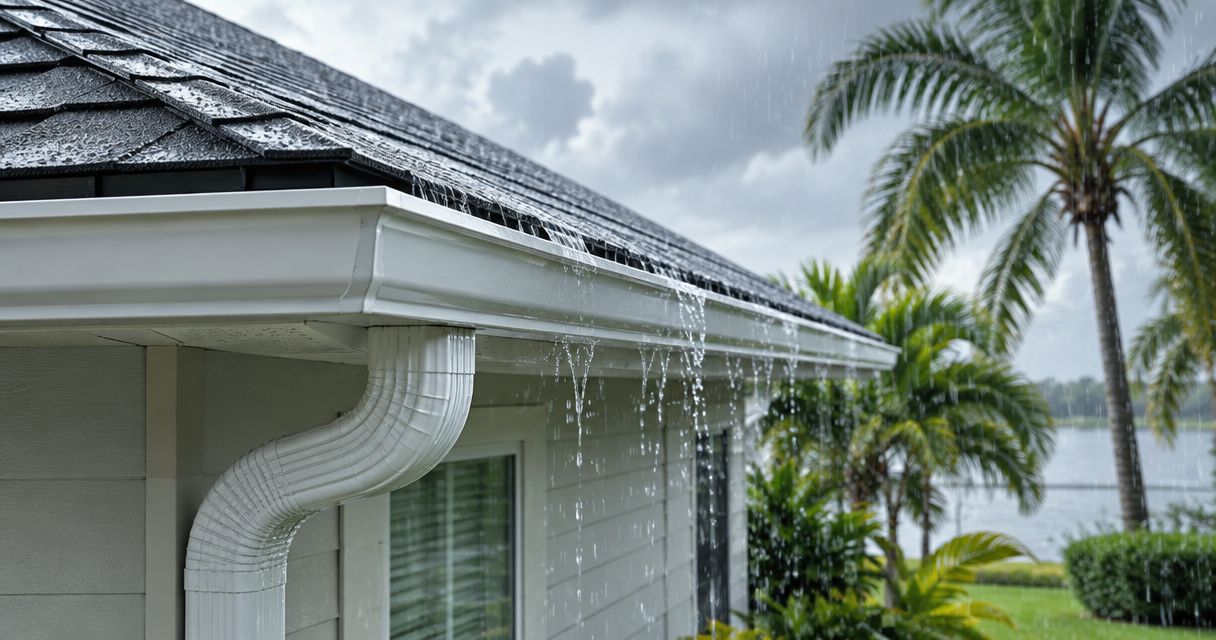
- Check the gutters. Excess granules (they look like coarse black or gray sand) mean shingles have lost their protective coating from wind abrasion.
- Inspect flashing points. Look at chimneys, skylights, and vent pipes for lifted or bent flashing — this is where leaks start even when the field of the roof looks fine.
- Look for debris marks. Dents, punctures, or scuff patterns usually mean branches or wind-blown debris made contact during the storm.
- Check the attic or top-floor ceiling. Water stains, discoloration, or a musty smell point to a leak that started during or right after the hurricane.
- Photograph everything before touching it. Insurance claims move faster with dated photos taken immediately after the storm, not after a repair crew has already been up there.
| What you see | Likely cause | Urgency |
|---|---|---|
| Granules in gutters | Shingle wear from wind abrasion | Schedule inspection this week |
| Lifted or missing shingles | Direct wind uplift | Tarp and inspect within 24-48 hours |
| Cracked or slipped tiles | Impact or wind shear | Schedule inspection this week |
| Water stains on ceiling | Flashing or underlayment failure | Emergency repair |
| Ponding water on flat roof | Membrane damage or drainage blockage | Emergency repair |
Shingle roofs: what storm damage looks like
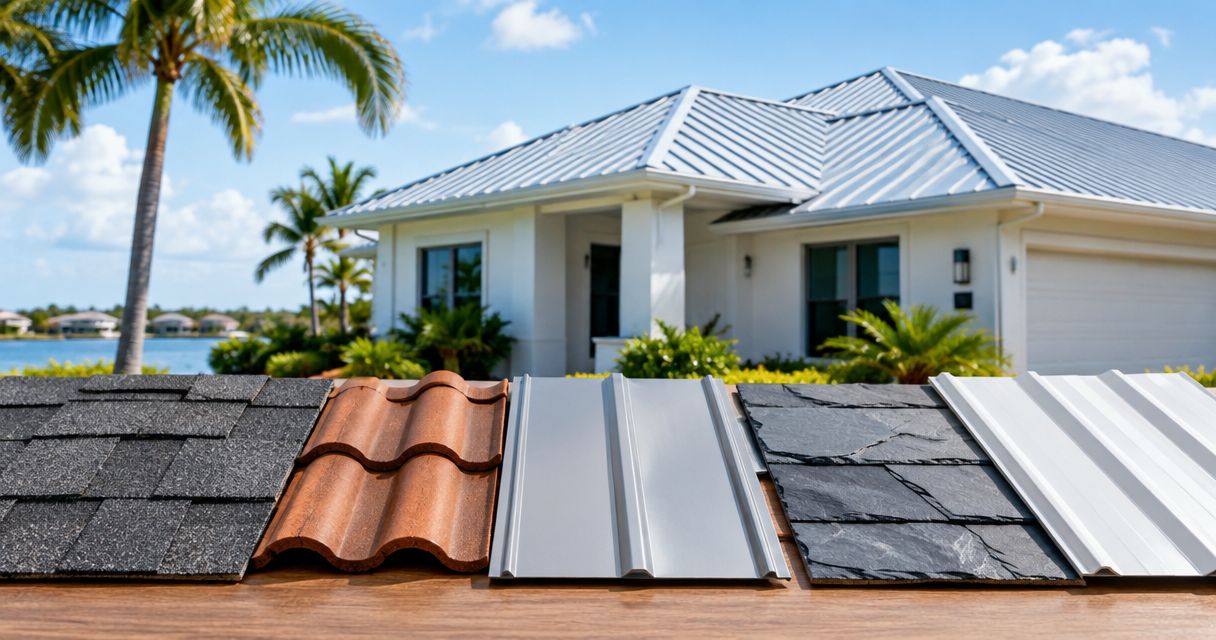
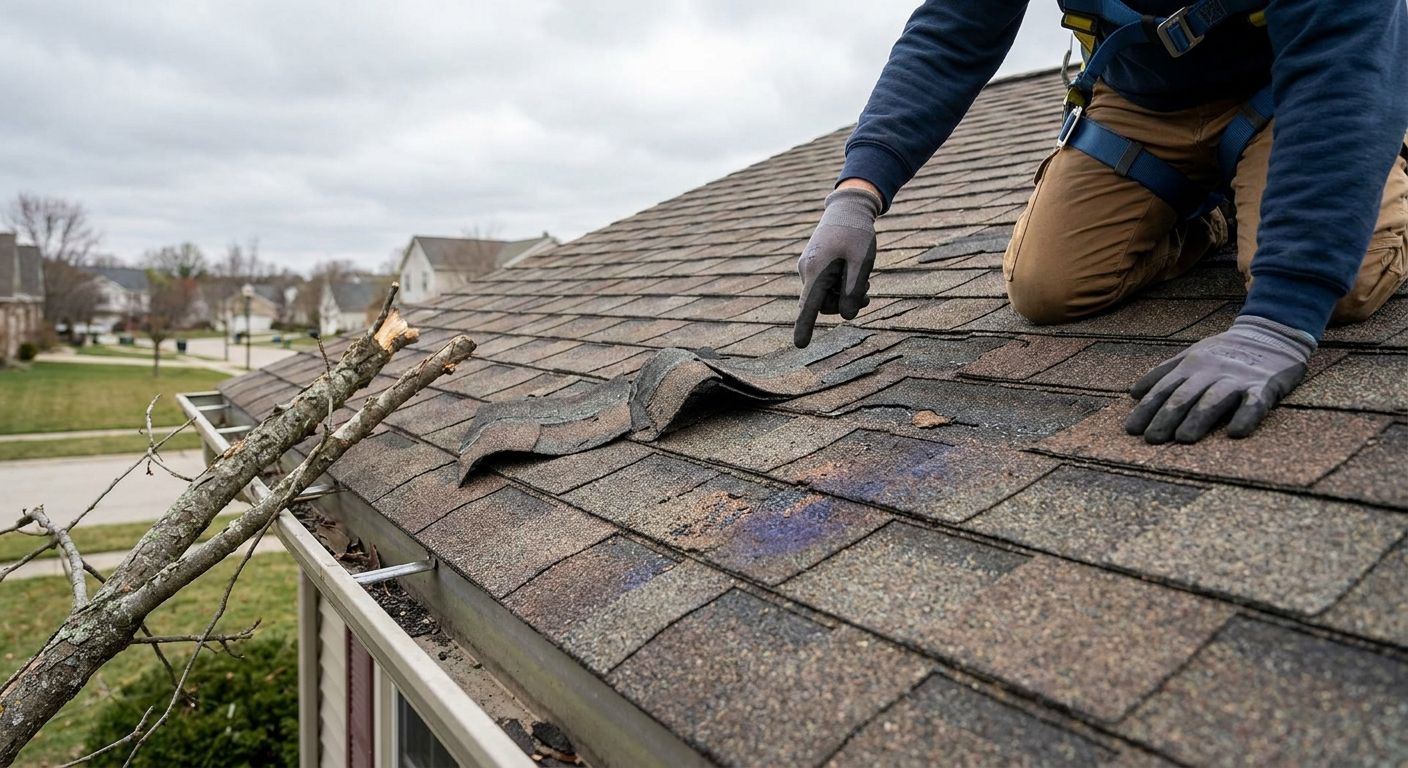
Shingle roofs show wind damage first at the tab edges — corners lift, seal strips break, and entire shingles can peel off in gusts. A shingle roof with more than a handful of torn or missing shingles after a named storm needs a full inspection, not a patch job, because the surrounding shingles have usually lost their wind seal too even if they look intact. Homes due for a shingle roof upgrade after storm season should compare options through shingle roof installation in Fort Myers before hurricane season returns.
Tile roofs: what storm damage looks like
Tile cracks from wind-driven debris or shifting can be hard to spot from the ground, but a cracked tile lets water track underneath to the underlayment even when the tile itself stays in place. Slipped or displaced tiles after a storm mean the mortar or fasteners holding them gave way, and that's a wind uplift issue that repeats in the next storm if it's not corrected.
Metal roofs: what storm damage looks like
Metal panels show storm damage as creasing, oil-canning (visible wave distortion), or loosened fasteners at panel seams. Metal roofing generally holds up better against wind uplift than shingle or tile, but seam separation after a hurricane still opens a path for water intrusion at the panel joints.
Flat roofs: what storm damage looks like
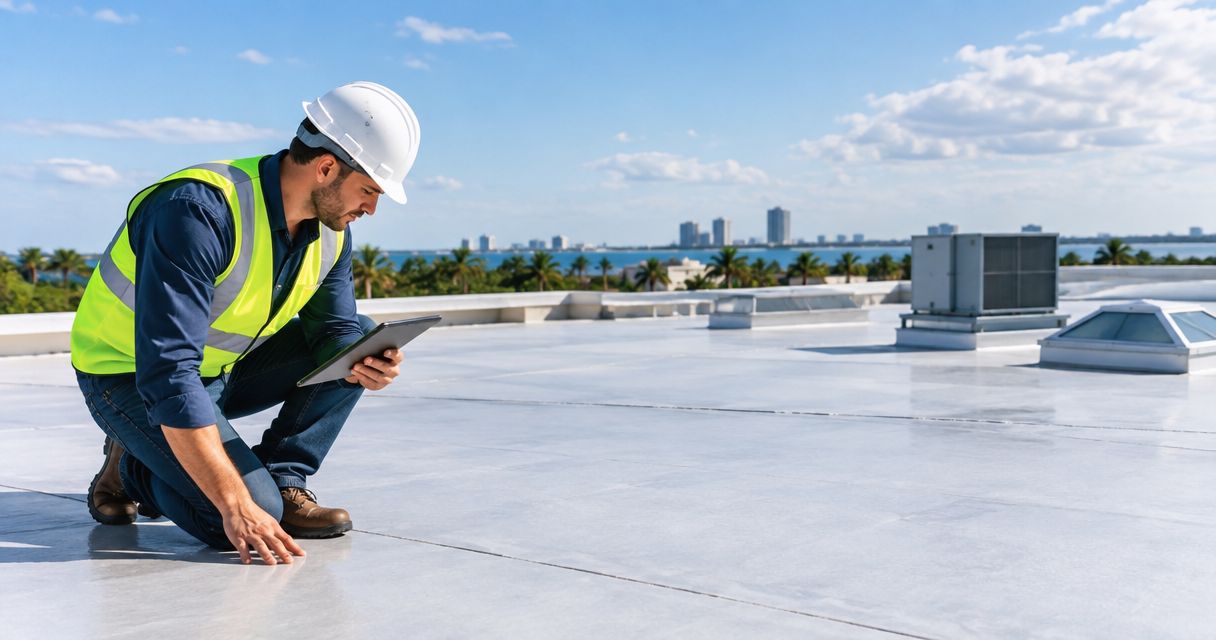
Flat and low-slope roofs show damage as ponding water that doesn't drain within 48 hours, membrane blistering, or seams that have pulled apart at the edges. Ponding water is the sign most homeowners miss because it doesn't look dramatic — it just sits there, and it's exactly what causes slow leaks weeks after the storm. Commercial buildings and condos with flat roofing should get a post-storm check through flat roof repair in Naples before the next rain event tests the membrane again.
Why storm damage varies from roof to roof
- Roof age — a roof past 15-20 years has less wind resistance in the seal strips and fasteners regardless of material.
- Wind exposure — corner lots and homes near open water take more direct wind load than sheltered interior lots.
- Tree coverage — overhanging branches turn ordinary wind gusts into impact damage.
- Installation quality — proper nailing patterns and fastener spacing matter more during a hurricane than in calm weather.
- Roof material — tile and metal generally outperform asphalt shingles in sustained wind, but each has its own failure points.
- Pre-existing wear — a roof with prior minor damage fails faster in the next storm than one in good condition going in.
Get a free storm damage inspection
No-pressure evaluation for Cape Coral, Fort Myers, and Naples homes.
Does storm damage affect my homeowners insurance discount?
Storm damage can affect your wind mitigation discount if the repairs change roof-to-wall connections, fastener type, or roof covering without a follow-up inspection. A wind mitigation inspection after repairs documents the current condition so your insurer has accurate records for renewal.
Should I repair or replace a storm-damaged roof?
Repair works when damage is isolated to a few shingles, tiles, or a single flashing point; replacement makes more sense when the roof is already near the end of its service life or damage is spread across multiple sections. The decision usually comes down to roof age plus the extent of damage — see roof repair vs. roof replacement in Florida for a breakdown of when each option makes sense.
How soon after a hurricane should I get my roof inspected?
Get a roof inspected within 24-48 hours of a hurricane whenever safe access is possible, since delayed inspections make it harder to prove storm-caused damage versus pre-existing wear for an insurance claim. Waiting through multiple rain events after a storm also gives minor leaks time to become structural problems.
FAQ
How do I know if my roof has hurricane damage?
Check for missing or lifted shingles, cracked or slipped tiles, granules in the gutters, and water stains on ceilings inside the home. Lifted flashing around chimneys and vents is the most commonly missed sign of hurricane damage.
Can a roof have storm damage with no visible leak?
Yes, a roof can have storm damage with no visible leak for weeks after a hurricane. Cracked tiles, torn shingle seals, and separated flashing let water in gradually before it shows up as an interior stain.
What does hail or wind damage look like on shingles?
Wind damage on shingles looks like torn or curled edges and missing tabs, while granule loss shows up as bare, darker patches on the shingle surface. Both reduce the roof's ability to shed water in the next storm.
Is tile roof damage after a hurricane always visible from the ground?
No, tile roof damage is not always visible from the ground because cracks and hairline fractures often sit flush with the surrounding tile. A physical inspection on the roof is the only reliable way to catch it.
Does insurance cover roof storm damage in Florida?
Most Florida homeowner policies cover wind and storm damage to roofs, though coverage details and deductibles vary by policy and insurer. Documentation with dated photos immediately after the storm strengthens any claim.
How long can a tarped roof stay covered before permanent repair?
A tarp is a temporary fix meant to last days to a few weeks, not a permanent solution, since tarps degrade in sun and wind. Schedule the permanent repair or replacement as soon as an inspection confirms the scope of damage.
What's the difference between wind damage and normal roof wear?
Wind damage happens suddenly and shows a clear pattern tied to a storm date, while normal wear develops slowly and evenly across the roof over years. Insurance claims depend on being able to show the damage is storm-related, not gradual deterioration.
One last thing
The damage homeowners miss most after a Florida hurricane isn't on the roof at all — it's in the attic. A flashlight check along the roof deck and rafters for dark streaking or damp insulation catches leaks that never make it to a ceiling stain, and it's the single fastest way to tell if a roof needs attention before the next storm system forms in 2026.