Roof maintenance plans for property managers in Southwest Florida turn a reactive repair budget into a scheduled, documented program that protects tenants, capital reserves, and insurance standing. Commercial and multifamily portfolios in Cape Coral, Fort Myers, Naples, and the surrounding counties carry different risk than a single-family home — more square footage per roof, more roof types across one portfolio, and tighter tenant-liability exposure when a leak hits a unit or a shared common area.
- Roof maintenance plans for property managers should include a written inspection schedule, dated photo records, and a repair budget tied to roof age.
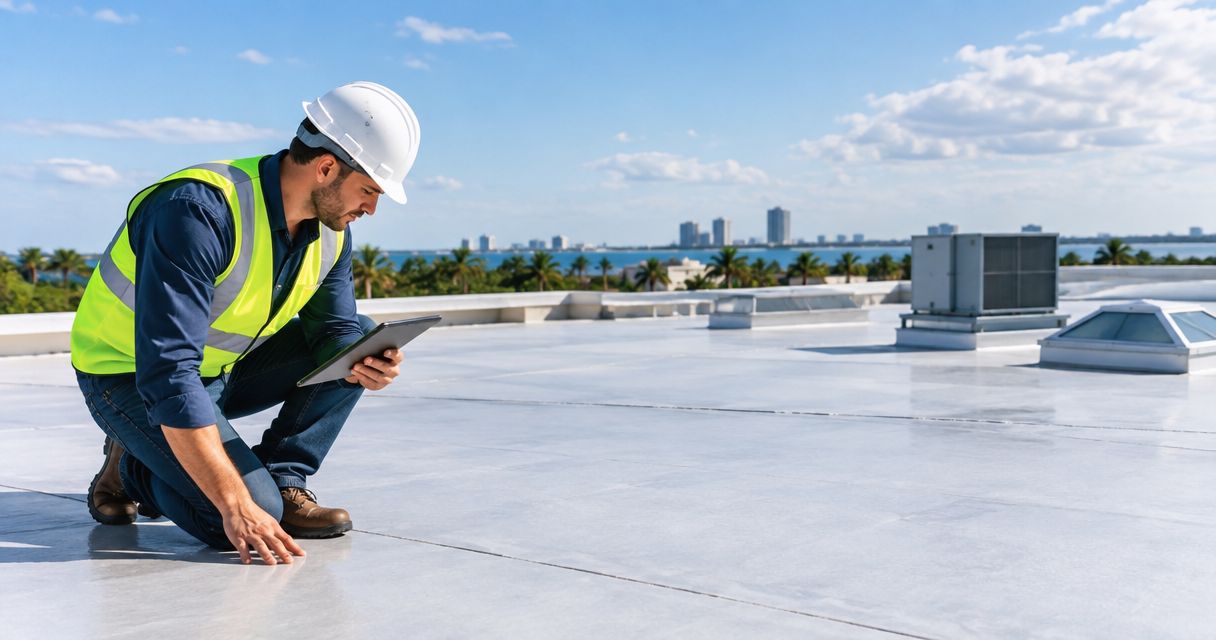
- Flat and low-slope commercial roofs in Florida need biannual inspection minimum — after hurricane season and again in spring 2026.
- A logged maintenance history is often required to keep manufacturer warranties valid and to support wind mitigation insurance discounts.
- Roof Smart of SW Florida services HOA, condo, and commercial portfolios across Cape Coral, Fort Myers, and Naples with documented inspection reports.
Why roof maintenance plans matter for property managers
A property manager overseeing multiple buildings doesn't get the luxury of waiting for a stain on a ceiling tile to start the conversation. By the time a tenant reports a leak, water has usually been moving through insulation and decking for weeks, and the repair scope has already jumped from a patch to a section replacement.
Southwest Florida's climate compounds this. Afternoon storms during the rainy season stress the flat and low-slope commercial roofs that make up a large share of retail strips, warehouses, and condo clubhouses in the region. A membrane or coating inspected on a fixed calendar catches blistering, ponding, and seam separation before the next named storm turns a small issue into an emergency claim.
There's also a paperwork side that owners of single homes rarely deal with. Lenders, insurers, and HOA boards increasingly ask for documented roof condition reports before renewing coverage or approving a capital reserve study. A property manager without a maintenance log negotiates from a weaker position in every one of those conversations.
Build the inspection foundation
Inventory every roof in your portfolio
Before you write a maintenance plan, you need one document listing every roof you're responsible for — not a mental map spread across three buildings and a spreadsheet someone else owns.
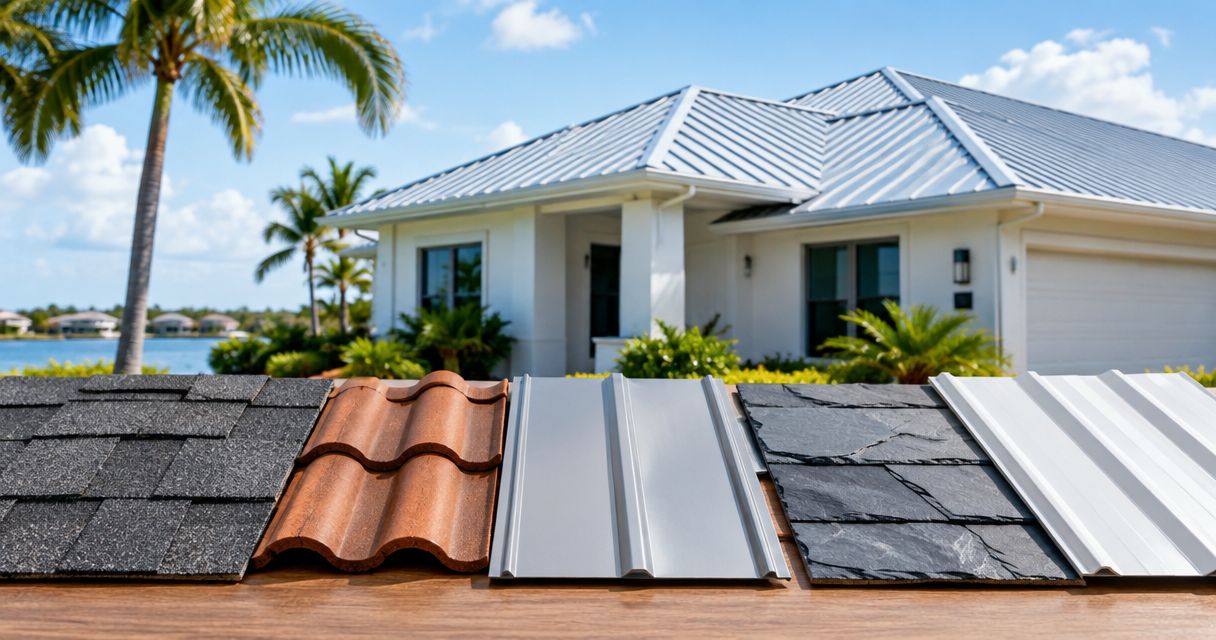
- Roof type per building (shingle, tile, metal, flat/membrane)
- Installation year or last full replacement date
- Square footage and roof age relative to expected service life
- Manufacturer warranty status and expiration date
- Last inspection date and inspector name
Schedule inspections on a fixed calendar, not a reactive one
Most property managers inspect roofs only after a complaint or a storm. That's the opposite of what a maintenance plan is for.
- Twice-yearly inspections at minimum for flat and low-slope commercial roofs
- One inspection before hurricane season and one after it closes
- An additional walk after any storm with sustained high winds
- Interior ceiling checks in top-floor units on the same schedule
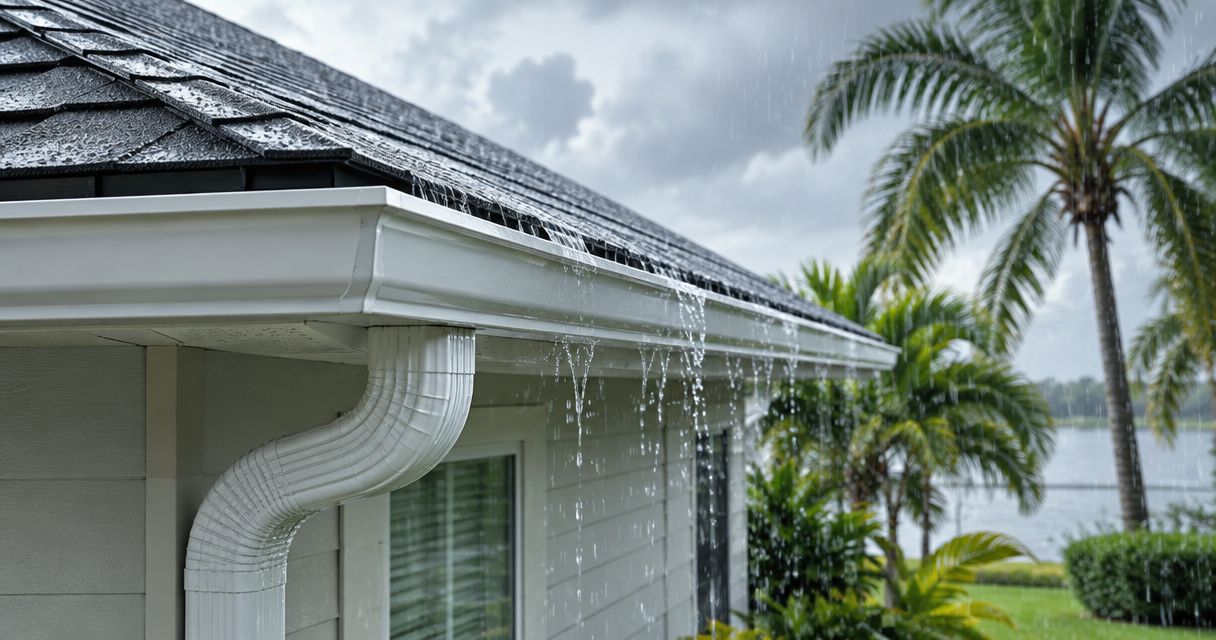
- Drainage and gutter checks tied to the same visit to catch clogged scuppers early
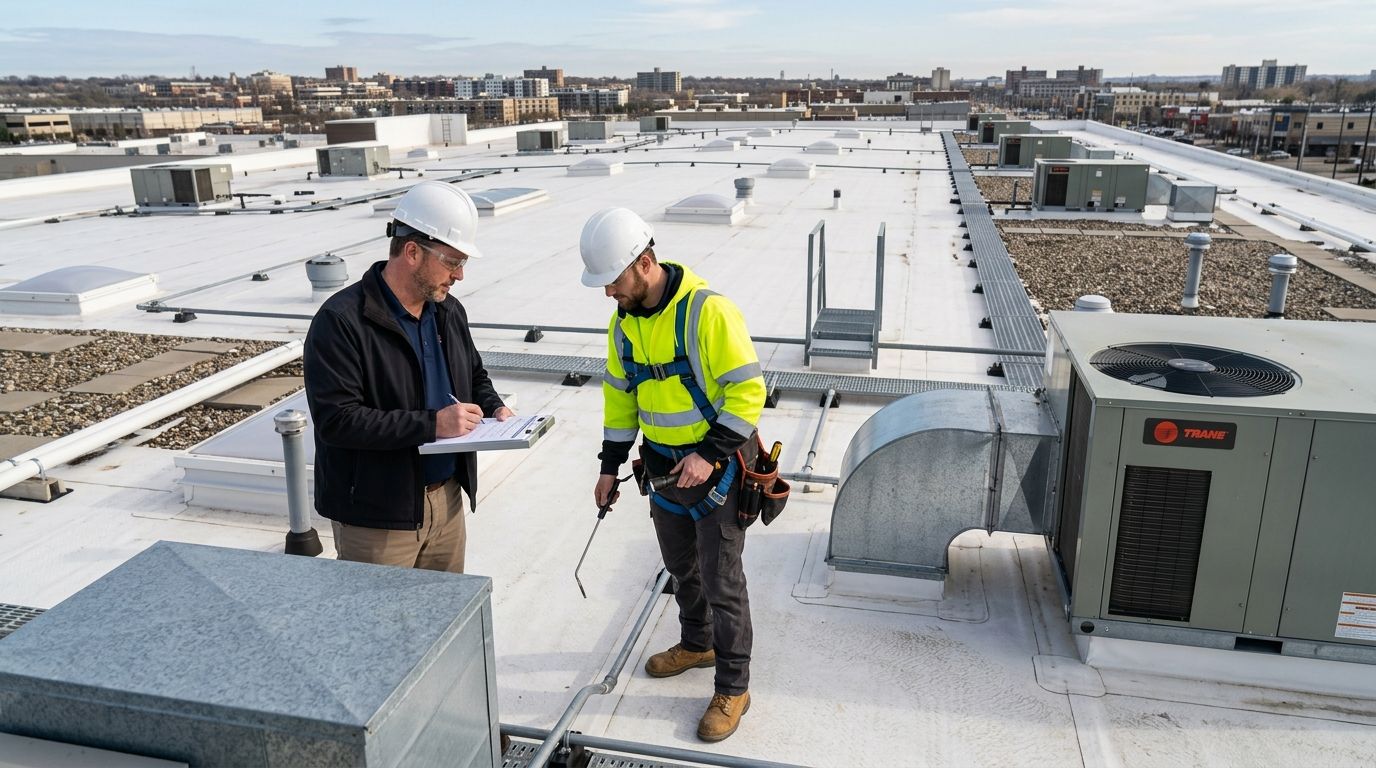
A self-managed checklist works for a small portfolio. Once you're past two or three properties, a licensed roofing contractor running the inspection cycle frees your time for lease-ups and board meetings instead of ladder work. That's the point where a maintenance contract with a roofer like Roof Smart of SW Florida pays for itself in caught problems, not just convenience.
Document condition with dated photos and written reports
Insurers and boards don't accept "it looked fine last time I checked." They want a paper trail.
- Photos of every roof section, dated and labeled by building
- Written notes on membrane condition, flashing, and penetrations
- A copy filed with the HOA board or ownership group after every visit
- Records kept for the full life of the roof, not just the current year
Budget for repairs before they become emergencies
A maintenance plan without a budget line is a wish list. Roof age should drive how much you set aside each year — a 12-year-old shingle roof needs a bigger reserve than one installed in 2023.
- Set aside repair reserves as a percentage of replacement cost, scaled to roof age
- Separate emergency repair funds from planned maintenance funds
- Refresh repair cost estimates annually, not once at installation
- Flag any roof past 15 years for a replacement conversation with ownership
Build a coating or recoat schedule for flat roofs
Flat and low-slope commercial roofs lose reflectivity and waterproofing over time, and a recoat extends service life at a fraction of full replacement cost. Property managers who skip this step often fund a full tear-off years earlier than necessary. A look at roof coatings for commercial flat roofs covers what a recoat schedule actually includes.
- Track the coating manufacturer's recommended reapplication interval
- Inspect for ponding water after every heavy rain event
- Check seam integrity separately from field membrane condition
- Budget recoating as a maintenance line, not a surprise capital expense
Track warranties and workmanship guarantees across every roof
Manufacturer warranties on commercial roofing systems typically require documented maintenance to stay valid — a fact most property managers discover only after a claim gets denied.
- File every warranty document by building and expiration date
- Confirm which repairs require a certified contractor to preserve coverage
- Note whether the installer's workmanship warranty is separate from the material warranty
- Re-check warranty terms any time management changes hands
Prepare a hurricane-season readiness checklist
Southwest Florida property managers who wait until a storm is named are already behind. A pre-season walk across every roof in the portfolio catches loose flashing, deteriorated sealant, and debris before wind turns them into openings for water. Reading how to maintain a flat roof in Florida's climate alongside this checklist covers both the routine and the storm-prep side of the same roof.
Comparison: maintenance approaches for property managers
| Option | Best for | Key limitation |
|---|---|---|
| Self-managed checklist, no contractor | Small portfolios of 1-2 properties, hands-on managers | No licensed inspection record; warranty compliance falls on you |
| Third-party roof consultant, no repair work | Boards needing an independent condition report | Fixes nothing found; you still need a contractor for repairs |
| Full-service maintenance plan with a licensed roofer | Multi-property portfolios, HOA and condo boards, commercial owners | Requires a contract and scheduled access to every roof |
| Reactive repair-only, no scheduled inspections | Owners planning a near-term sale or teardown | Highest long-term cost; no documentation for insurance claims |
A full-service maintenance plan run by a licensed contractor is the only option that produces both the inspection record and the repair capability a property manager needs — self-checklists and consultant-only reports each leave half the job undone.
For HOA and condo boards, the coordination problem is bigger than one building: shared roofs, shared budgets, and multiple owners who need to see the same report. Commercial roofing for HOA and condo communities is built around that structure.
Get a roof condition report for your portfolio
Free, no-pressure evaluation for HOA, condo, and commercial properties in SW Florida.
Common mistakes property managers make
- Treating every roof in the portfolio as the same age. A 2015 shingle roof and a 2021 tile roof don't belong on the same inspection cadence or the same reserve calculation.
- Skipping the post-storm walk because nothing looked wrong from the ground. Wind uplift damage on flat roofs is frequently invisible from the parking lot.
- Leaving warranty paperwork with the original installer instead of in the property file. When that contractor closes or changes hands, the documentation goes with them.
- Budgeting for replacement only, never for the recoat and repair cycle that delays it. That front-loads cost instead of spreading it across the roof's service life.
- Approving repairs without a written report first. Boards and owners who see dated photos and documented findings approve budgets faster than ones asked to trust a verbal summary.
FAQ
How often should a commercial property get roof inspections?
Commercial and multifamily roofs in Southwest Florida need inspections at least twice a year, once before hurricane season and once after. Flat and low-slope membrane roofs benefit from an extra check after any major storm.
Do roof maintenance plans affect insurance costs?
Documented maintenance and wind mitigation inspections support insurance discounts and help prevent claim denials tied to lack of upkeep. Insurers increasingly ask for maintenance records before renewing commercial coverage in 2026.
What is the difference between a roof consultant and a maintenance contractor?
A consultant produces an independent condition report but performs no repairs. A maintenance contractor inspects, documents, and repairs under one contract, which is faster for property managers running multiple buildings.
How much roof reserve should a property manager budget each year?
Reserve amounts should scale with roof age and remaining service life rather than a flat percentage. A roof approaching 15 years needs a larger annual set-aside than one installed within the last five.
Does a maintenance plan preserve manufacturer roof warranties?
Most commercial roofing manufacturer warranties require documented, regular maintenance to stay valid. Skipping inspections is one of the most common reasons a warranty claim gets denied.
Who handles roof maintenance for HOA and condo buildings?
HOA and condo boards typically contract a licensed commercial roofer for both scheduled inspections and repairs across shared roof structures. Coordinating one plan is more efficient than per-unit repairs.
What should a flat roof maintenance visit include?
A flat roof visit should check membrane condition, seam integrity, ponding water, drainage, and flashing at every penetration. Coating condition gets checked separately because it degrades on its own schedule.
When should a property manager plan replacement instead of repair?
Any roof past 15 years, or one with repeated repair costs approaching replacement value, belongs in a replacement budget conversation with ownership rather than continued patching.
One last thing
The biggest cost driver in commercial roof budgets in 2026 is not the repair itself — it is the gap between when damage starts and when it gets documented. A roof inspected on a fixed calendar with dated photos on file turns every insurance conversation and board meeting in 2026 into a five-minute review instead of a dispute.