Florida's rainy season runs roughly June through September, and the roofs that leak during it almost never fail from storm winds alone — they fail because a small, ignorable problem (a clogged gutter, a lifted shingle tab, a dried-out flashing seal) went unchecked since last year. The fix is a pre-season inspection plus four maintenance habits, done before the first heavy June downpour, not after.
- Inspect gutters, flashing, and shingle edges before June to stop rainy-season roof leaks before they start.
- Clogged downspouts and cracked flashing cause more Florida roof leaks than wind does.
- Flat roofs need standing water cleared within a day or two; prolonged ponding is the top predictor of leaks.
- Roof Smart of SW Florida runs free inspections across Cape Coral, Fort Myers, and Naples ahead of the 2026 wet season.
- A wind mitigation inspection doubles as a leak-prevention check and can lower your insurance premium.
Why this matters
Southwest Florida's rainy season overlaps almost exactly with hurricane season, so a roof that's already compromised in June has to survive months of daily thunderstorms before the tropical systems even arrive. A missing shingle tab or a hairline crack in flashing doesn't leak in a light drizzle — it leaks during the sustained, wind-driven downpours that show up almost daily by July and August.
Insurers in 2026 increasingly tie premium discounts to documented roof condition, and a roof inspection service in Cape Coral that catches a problem in April costs a fraction of an emergency tarp call in August. That's the entire logic behind rainy-season prep: it's cheaper to look now than to repair later.
How to prevent roof leaks during Florida's rainy season
The sequence below covers shingle, tile, metal, and flat roofs. Do these in order, starting no later than May.
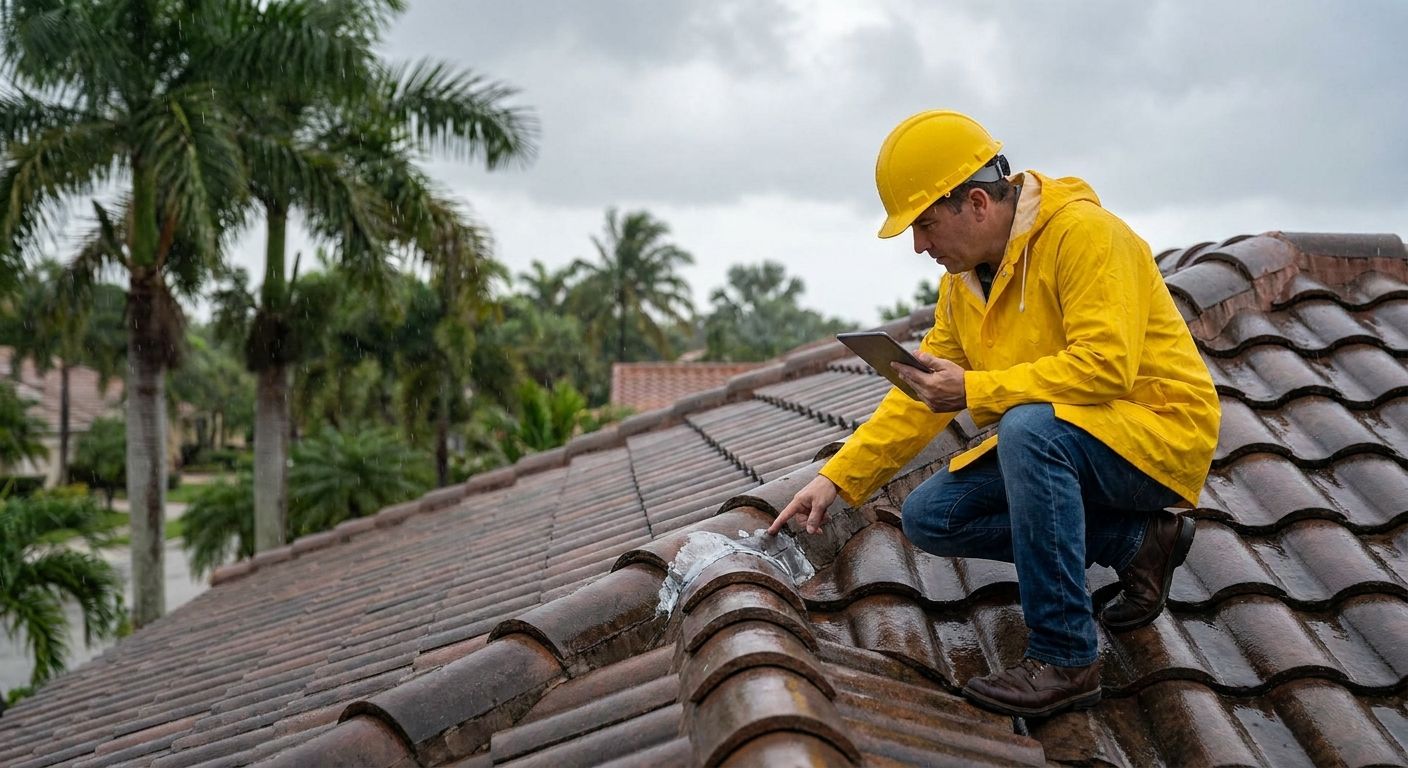
- Get a full roof inspection before June. A visual walk-through from the ground misses cracked flashing and lifted tabs; a proper inspection checks the deck, flashing, vents, and attic for early moisture.
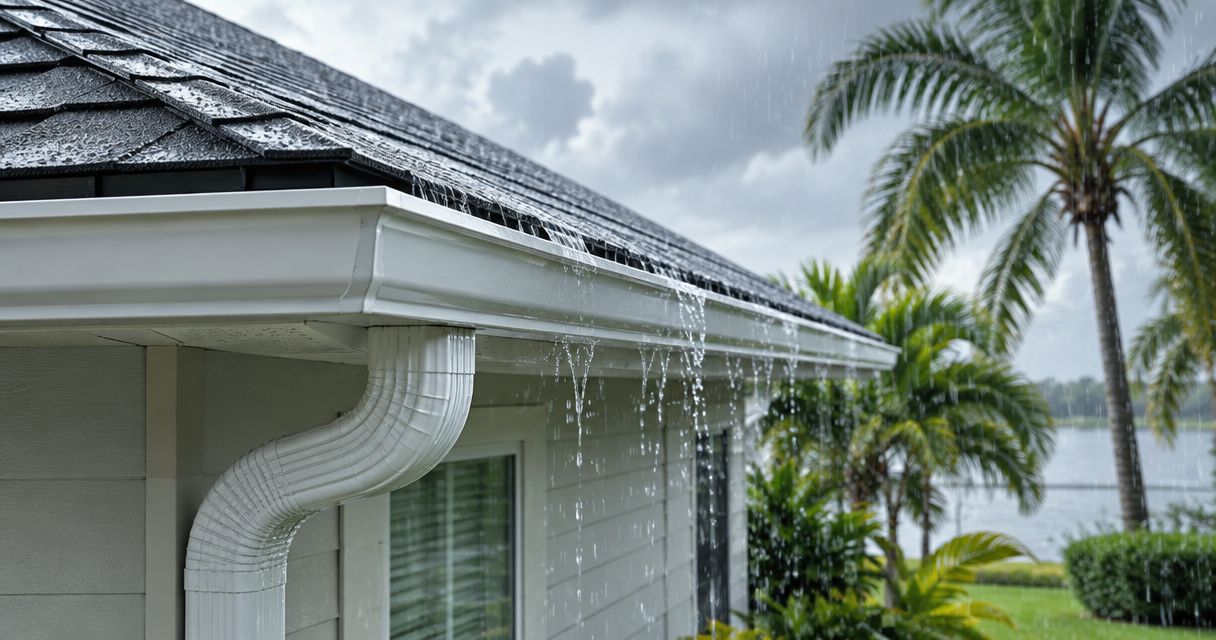
- Clear gutters and downspouts completely. Standing leaves and debris back water up under the roofline instead of away from it — this is one of the most common leak sources in Cape Coral, Fort Myers, and Naples homes.
- Reseal flashing around vents, chimneys, and skylights. Florida heat dries out sealant faster than in most climates; check it every spring, not just after a storm.
- Trim overhanging branches so falling limbs and constant shade-driven moisture don't damage shingles or tile.
- Check for lifted, cracked, or missing roofing material — a single displaced tile or torn shingle tab is enough to let water track under the roof deck during a sustained storm.
- Confirm attic ventilation is working and look for existing water stains, musty smell, or soft decking, which signal a leak that's already started.
- Install or upgrade gutter guards so debris stops accumulating between cleanings during the wettest months.
Skipping any single step doesn't guarantee a leak, but skipping all seven almost guarantees one by August.
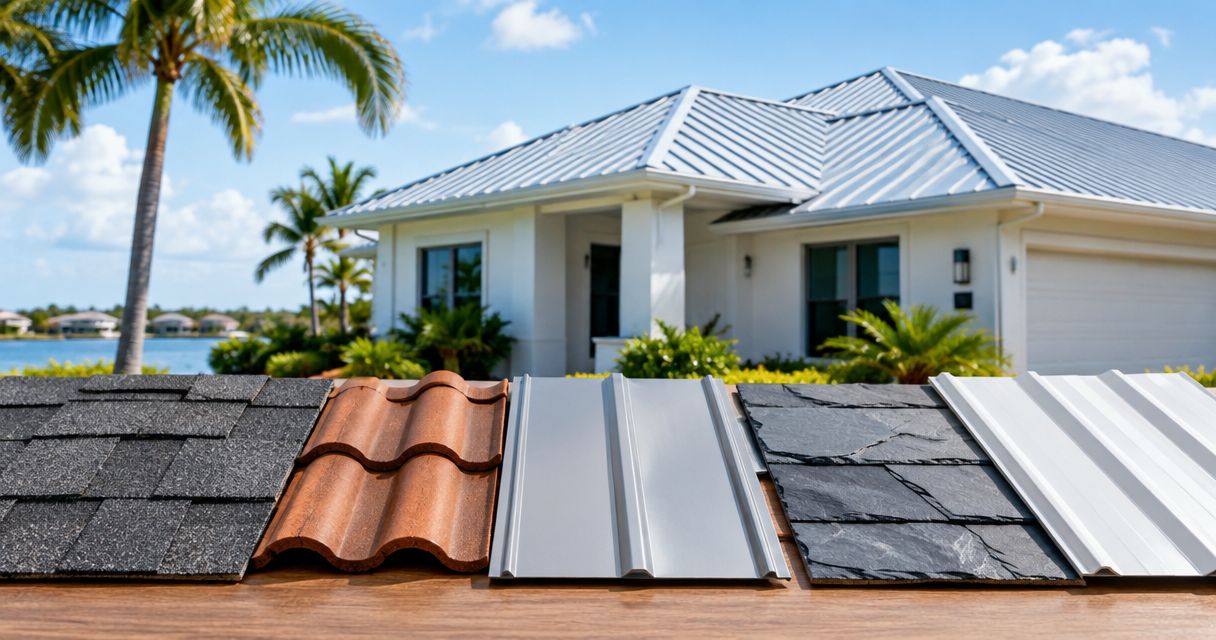
Shingle roofs: check tab adhesion and flashing seals every spring
Shingle roofs fail most often at the edges — ridge caps, valleys, and flashing joints — not in the open field of the roof. Lifted tabs let wind-driven rain get underneath during a storm even if the shingle itself isn't cracked. Verdict: inspect shingle edges and flashing every spring before rainy season starts — it's the single highest-yield check for this roof type.
Tile roofs: the underlayment matters more than the tiles
Tile itself is durable, but the underlayment beneath it is what actually keeps water out — cracked or slipped tiles just expose that underlayment to the elements faster. A roof with a few cracked tiles and intact underlayment often outperforms one with perfect tiles over degraded underlayment. Verdict: have underlayment condition checked, not just tile count, especially on homes over 15 years old.
Flat roofs: clear standing water within a day or two
Flat and low-slope roofs are the most leak-prone system in Southwest Florida during rainy season because they rely entirely on drains and slight slope to shed water — there's no gravity assist from a pitched design. Ponding water that doesn't drain within roughly 24-48 hours accelerates membrane breakdown and is the leading predictor of a flat roof leak. A flat roof repair job in Naples is almost always cheaper before the membrane fails than after water reaches the deck. Verdict: check drains after every heavy rain, not on a fixed schedule.
Metal roofs: reseal fastener points before rainy season, not during it
Metal roofs rarely leak through the panels themselves — they leak at exposed fastener washers and seam sealant, which degrade with UV exposure over time. Resealing those points before the wet season starts avoids scrambling to find a dry window mid-storm-season. Verdict: metal roofs need the least maintenance overall, but fastener checks still matter every few years.
“If gutters overflow during a five-minute downpour, they're already too clogged to protect the roofline.”
Why roof leaks vary from house to house
Not every Southwest Florida home faces the same leak risk. The variation comes down to a handful of factors:
- Roof age — underlayment and flashing sealant degrade steadily; homes past 15-20 years carry more risk regardless of material.
- Roofing material — flat roofs face different failure modes than shingle or tile, as covered above.
- Maintenance history — a roof that's had gutters cleared and flashing checked annually behaves differently than one that hasn't been touched since installation.
- Storm and coastal exposure — homes closer to the coast see more wind-driven rain intrusion at flashing points.
- Tree coverage — overhanging branches add both physical debris load and prolonged shade-driven moisture.
- Prior storm damage — a roof that took hail or wind damage in a past season and wasn't fully repaired carries hidden vulnerability into the next rainy season.
Get a free roof inspection
Schedule a pre-rainy-season check across Cape Coral, Fort Myers, or Naples.
How often should I inspect my roof during Florida's rainy season?
Once before the season starts in May or June, and again after any storm that brings sustained wind or hail. A mid-season check in July or August catches problems from the season's first heavy rains before they compound into a full leak by hurricane season.
Can I prevent roof leaks myself without a professional?
Gutter clearing and visual checks from the ground are fine for a homeowner to do, but flashing condition, underlayment integrity, and attic moisture require someone on the roof or in the attic to spot reliably. A professional inspection in Cape Coral catches the issues a ground-level walk-around misses.
Does wind mitigation help prevent leaks too?
Wind mitigation inspections primarily document a roof's wind resistance for insurance discounts, but the same inspection surfaces flashing, fastener, and attic issues that also cause rainy-season leaks. It's a two-for-one check worth scheduling before the 2026 storm season regardless of the insurance angle.
FAQ
How often should I inspect my roof during Florida's rainy season?
Inspect once before rainy season starts in May or June, and again after any storm with sustained wind or hail. A mid-season check in July catches early damage before hurricane season adds more stress to the roof.
Can I prevent roof leaks myself without hiring a roofer?
You can clear gutters and do ground-level visual checks yourself, but flashing seals, underlayment condition, and attic moisture require someone on the roof or in the attic to check reliably. Those hidden spots are where most rainy-season leaks start.
Does homeowners insurance cover rainy season roof leaks in Florida?
Coverage depends on the cause and your policy's specific exclusions, and insurers increasingly require documented maintenance and inspection history in 2026 before approving a claim. A dated inspection report helps your case either way.
What is wind mitigation and does it help prevent leaks?
A wind mitigation inspection documents roof features that resist wind damage and can qualify homeowners for an insurance discount. The same inspection often flags flashing and fastener issues that also cause rainy-season leaks.
Are tile roofs more leak-resistant than shingle roofs in Florida?
Tile roofs depend on the underlayment beneath the tiles more than the tiles themselves, while shingle roofs depend on tab adhesion and flashing seals. Neither material is inherently more leak-resistant if maintenance is neglected.
How much standing water can a flat roof handle before it leaks?
Flat roofs should drain within roughly 24-48 hours after rain; water that sits longer accelerates membrane breakdown and raises leak risk. Checking drains after every heavy storm catches this before it becomes a problem.
When does Florida's rainy season start and end?
Florida's rainy season typically runs from June through September, overlapping almost entirely with hurricane season. Pre-season roof prep should happen in April or May, before the daily storm pattern sets in.
What are the first signs of a roof leak inside the house?
Ceiling water stains, a musty smell in the attic, and soft or discolored drywall near the roofline are the earliest indoor signs. Catching these in early rainy season, rather than after a hurricane, usually means a smaller repair.
One last thing
Most rainy-season leak calls Roof Smart of SW Florida fields in Cape Coral, Fort Myers, and Naples trace back to a gutter or flashing issue that existed the previous fall — the roof didn't fail during the storm, it failed because nobody looked at it between hurricane seasons. The homeowners who skip a leak call entirely in 2026 are almost always the ones who scheduled an inspection in April, not the ones with the newest roof.