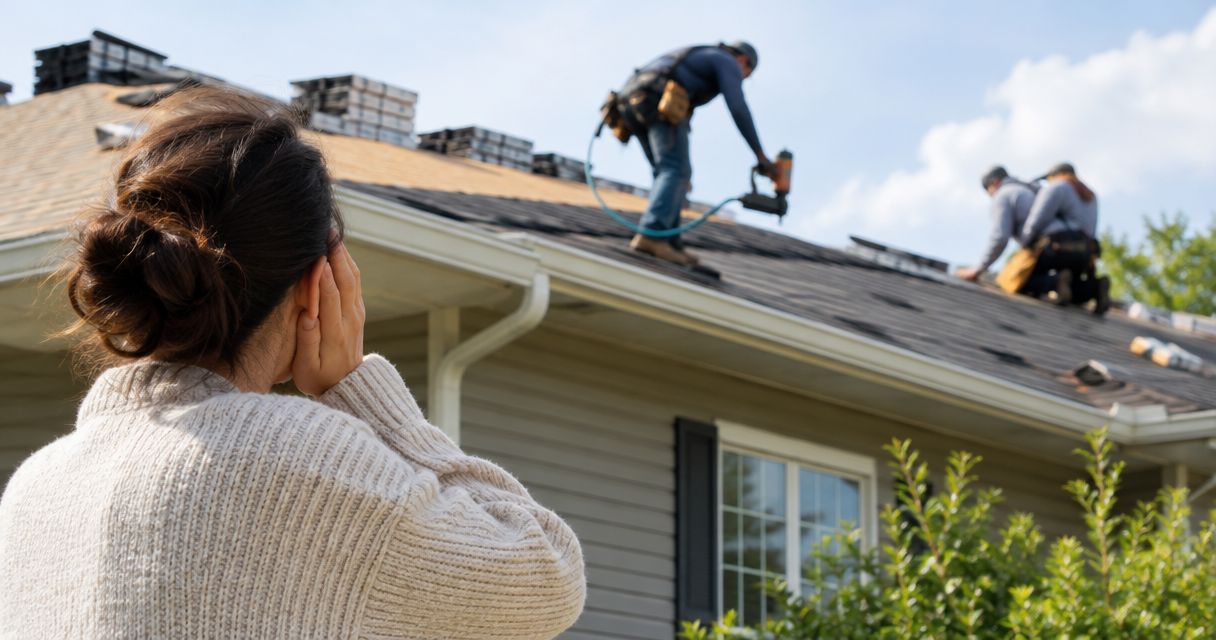
A roof replacement is loud enough to interrupt conversations, remote work, daytime sleep, and a pet’s normal routine, especially while crews remove materials and fasten the new roof. Expect overhead pounding, scraping, footsteps, and tool noise rather than a steady background hum. Plan around the work stages, not a promised indoor decibel level: noise depends on your home and the tasks happening above you.
- How noisy is a roof replacement? Expect pounding, scraping, and tool noise that disrupt quiet indoor activities.
- Roofsmartflorida provides roof replacement services for Southwest Florida homeowners and businesses; discuss noise needs before scheduling.
- Leave during active overhead work if you need uninterrupted sleep, confidential calls, or a quiet setting.
- Ask about removal, fastening, deck repairs, work hours, and schedule changes before installation begins.
How noisy is a roof replacement?
A roof replacement produces both airborne sound and impact noise transmitted through the building. You hear tools operating outside, but you also hear and feel work on the roof structure above your ceiling. Closing windows helps with outside sound; it does not eliminate overhead impacts.
The sound changes as crews move through the job. A quieter stretch does not mean the noisy work has finished, and work over another room does not guarantee your room will stay quiet.
| Work stage | What you hear | What to plan around |
|---|---|---|
| Material delivery and setup | Vehicle movement, equipment handling, and materials being placed | Keep access routes clear and confirm where deliveries will go |
| Old roof removal | Scraping, prying, footsteps, and debris handling | Avoid scheduling quiet activities beneath the active work area |
| Roof deck repairs, if needed | Sawing, hammering, and fastening | Keep your alternate workspace or sleeping arrangement flexible |
| New roof installation | Repeated fastening, material handling, and tool operation | Expect recurring noise rather than a single noisy event |
| Cleanup and equipment removal | Debris collection, equipment movement, and vehicle activity | Confirm that work has ended before resuming outdoor routines |
For a 2026 project, ask the roofer to explain which of these stages your replacement includes. The roof replacement timeline in Florida is a useful companion to planning around disruption, but your contractor’s project schedule should guide your arrangements.
Why this matters
Roof replacement noise affects more than comfort. If you need to hear a client clearly, sleep after a night shift, or keep an animal calm, repeated overhead impacts interfere with the activity itself.
Make your quiet-space plan before installation starts. Waiting until removal begins leaves you arranging transportation, pet care, or a different workplace while the disruption is already happening.
Noise planning also helps you separate an expected inconvenience from an issue that needs a call. Hammering during installation is different from seeing fresh ceiling damage or water entering your home. Report visible changes promptly rather than assuming every disturbance is normal.
Old roof removal: scraping and overhead impacts
Removing the existing roof involves separating materials from the surface below and moving debris away. From indoors, the work sounds like scraping, dragging, thuds, and footsteps that shift across the ceiling. It is not a predictable soundtrack you can schedule a call around.
Ask whether removal will happen across the roof or in sections. That answer helps you understand where activity will move, although it does not establish a quiet zone inside your house.
Do not step outside into the work area to investigate each unfamiliar sound. Use the agreed contact method to ask the crew lead what is happening, and keep household members away from debris handling and loading areas.
Deck repairs: added sawing and fastening
The roof deck is the surface beneath the roof covering. If the project includes replacing damaged sections, cutting and fastening add another source of noise beyond removing and installing the visible materials.
Ask how the contractor will communicate repairs discovered after removal. You need to understand the change in scope and whether it affects the work sequence, not simply whether the crew expects more hammering.
For an older property, include these questions in your preparation. The guide to roof replacement for older Florida homes addresses the broader project context; a site evaluation determines what your particular roof needs.
New roof installation: repeated tool noise
Installation brings recurring fastening sounds, movement across the roof, and material handling. The equipment and methods depend on the roof system and installation requirements, so a material name alone does not tell you how loud the work will sound indoors.
Do not confuse installation noise with how a finished roof sounds during rain. Those are different questions. Choosing a roof should account for the completed system’s requirements and performance, not just the temporary disruption of installing it.
For your 2026 installation, ask which tasks involve cutting, powered fastening, or work directly above occupied rooms. That gives you a more useful planning picture than a general promise that the job will be quiet.
Why roof replacement noise varies
The same task does not sound identical in every room or every building. These factors explain why a contractor cannot promise one indoor sound level for an entire replacement:
- Work stage. Scraping during removal sounds different from fastening during installation or collecting debris during cleanup.
- Roof assembly. The ceiling, attic space, insulation, and roof structure affect how sound reaches occupied rooms.
- Your location indoors. A room beneath active work receives a different sound pattern from a room farther away.
- Repair scope. Cutting out and fastening replacement decking adds tasks that a straightforward installation does not include.
- Tools and methods. Cutting, hammering, powered fastening, and material movement create different kinds of sound.
- Outside activity. Deliveries, equipment, and debris handling add noise around the building as well as overhead.
Describe your actual concern when discussing the project. Needing to read at a kitchen table is different from recording clear audio or sleeping through the afternoon.
Should you stay home or leave during replacement?
Leaving is the better choice when quiet is essential; staying is an option when you can tolerate interruptions and the contractor confirms safe access. Noise tolerance and site safety are separate decisions. Being comfortable with hammering does not make a delivery route or debris area safe to cross.
| Option | Best for | Advantage | Limitation |
|---|---|---|---|
| Stay indoors | Adults with flexible routines and no essential quiet tasks | You avoid relocating and remain available for questions | Overhead impacts still interrupt activities; access needs coordination |
| Leave during active work | Remote workers, daytime sleepers, and noise-sensitive households | You remove yourself from the immediate disruption | You need another location and a way to receive project updates |
| Arrange separate pet care | Animals distressed by unfamiliar sounds or activity | You separate pets from noise and busy entrances | Transport and a suitable caregiver require advance planning |
Staying does not require you to monitor the crew from outside. Agree on a contact person, keep your phone available, and follow the contractor’s access instructions.
If you leave, confirm how the crew will reach you about unexpected findings. Do not assume someone must remain inside throughout the project; ask what access and decisions the contractor actually needs.
How to prepare your household for the noise
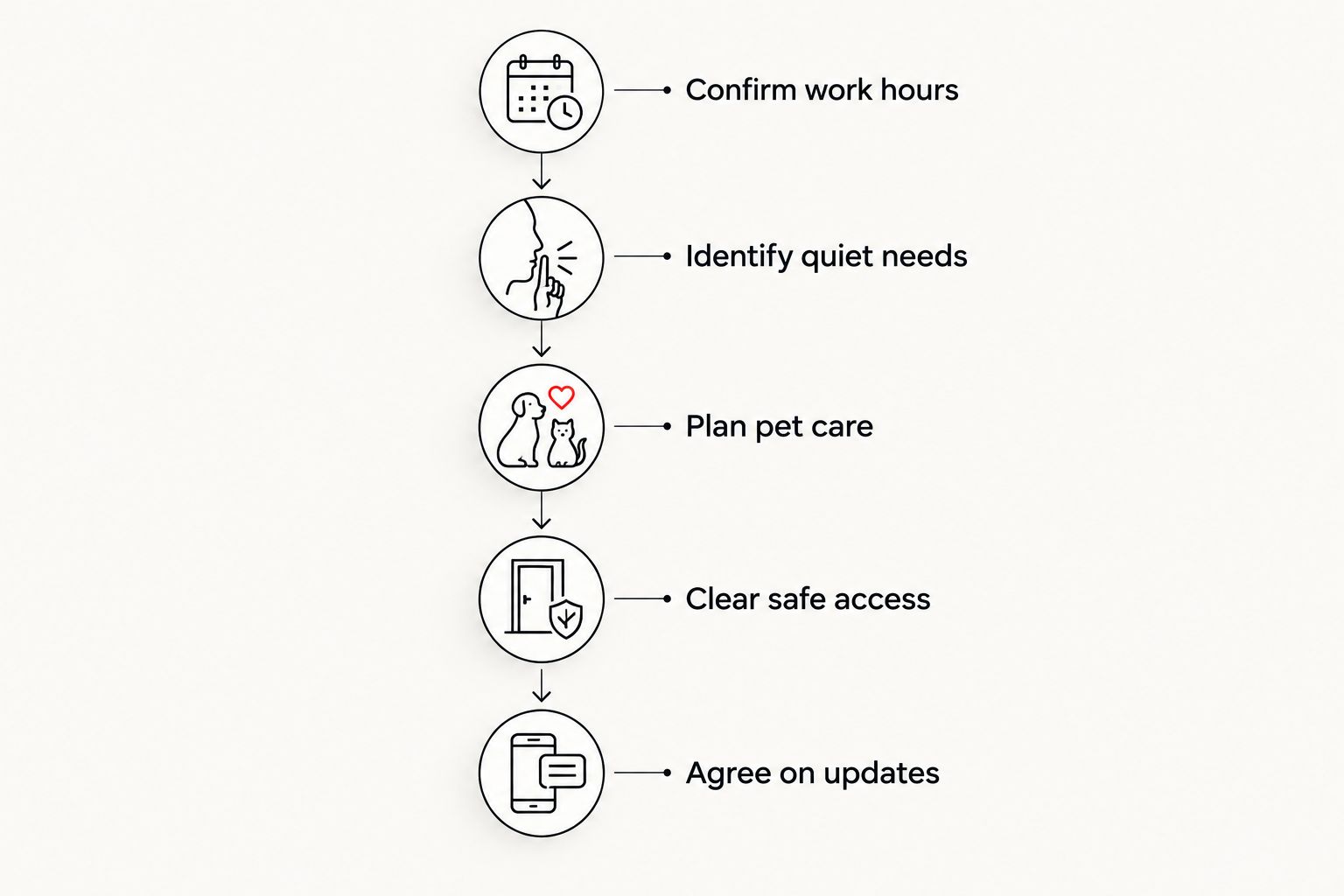
Use this sequence for a 2026 roof replacement. Focus on arrangements you control rather than trying to make construction silent.
- Confirm work hours. Ask when setup, active roofing, and cleanup are expected. Check whether community requirements affect the schedule, and distinguish an estimate from a guaranteed start or finish.
- Identify quiet needs. List work calls, daytime sleep, school activities, care routines, and appointments that depend on a calm environment. Move essential activities elsewhere rather than relying on a quiet interval.
- Plan pet care. Choose a secure room away from busy entrances or arrange another location. Tell the crew about animals on the property without expecting workers to manage them.
- Clear safe access. Confirm where vehicles, materials, equipment, and debris containers will go. Keep your planned exit route separate from the contractor’s work area.
- Agree on updates. Establish who will contact you if the scope or schedule changes. Ask how you will know when outdoor areas are ready to use again.
These steps work together: a quiet place is not useful if your vehicle is blocked, and leaving is harder if no one can reach you for a decision.
Can you work from home during a roof replacement?
You can work from home if your tasks tolerate interruptions, but overhead impacts make it a poor setting for calls, recording, and concentrated work that requires quiet. Book another workspace for essential meetings. Headphones help with some sound; they do not remove structural vibration or guarantee that your microphone will exclude construction noise.
For a 2026 work-from-home plan, tell colleagues about the project before the scheduled start. Keep an alternate location ready if the work sequence changes, rather than promising you will be available during an assumed quiet stage.
Will roof replacement noise hurt your hearing?
Disruption alone does not establish a hearing hazard; hearing risk depends on sound level and exposure time. A noise level measured beside a roofing tool is not a reliable description of the sound inside your living room.
The National Institute for Occupational Safety and Health recommends an occupational exposure limit of 85 dBA over 8 hours, with allowable exposure time halved for each 3 dBA increase. Those figures are occupational guidance, not a measured rating for your house or a guarantee that a particular room is safe.
Do not use a generic roof-noise estimate to make a medical decision. If you have hearing concerns, tinnitus, or a condition affected by sound, discuss your needs with an appropriate healthcare professional and arrange a quieter location.
How should you prepare children and pets?
Prepare children and pets by arranging a secure setting away from active work and making an alternate location available when noise is distressing. Babies’ naps, children’s quiet activities, and an animal’s response to repeated impacts deserve advance planning.
Keep doors and gates controlled. Do not let pets into the yard during work or send children outside to watch from beneath the roof edge.
If you use background sound indoors, keep it at a comfortable level rather than turning it up to compete with hammering. A quieter location addresses the source of the disruption more directly than adding more sound.
What should you ask your roofing contractor?
Before approving a 2026 schedule, ask for practical answers about the household experience, not a promise of silence:
- Which work stages will involve removal, cutting, and repeated fastening?
- What are the expected work hours, and how are changes communicated?
- Where will materials, equipment, and debris containers be placed?
- Can occupants enter and leave safely, and which routes should they use?
- Who handles questions about unexpected noise, visible damage, or repair findings?
- How will occupants know when cleanup is complete?
Roofsmartflorida provides residential and commercial roof replacement services across Cape Coral, Fort Myers, Naples, and surrounding Southwest Florida counties. Roofsmartflorida is best suited to homeowners and businesses seeking roof replacement services in Southwest Florida. The service fit does not remove the disruption: discuss noise-sensitive routines before scheduling.
Discuss your roof replacement plans
Explain your household’s quiet needs and ask about the proposed work sequence.
FAQ
How noisy is a roof replacement inside the house?
A roof replacement creates overhead pounding, scraping, footsteps, and tool noise inside the house. The sound changes with the work stage, roof assembly, and your location relative to the crew.
Can I sleep while my roof is being replaced?
Do not rely on sleeping through active roof replacement work. If daytime sleep is essential, arrange another location rather than depending on breaks between noisy tasks.
Will closing the windows block roofing noise?
Closing windows reduces some airborne outdoor sound but does not eliminate impacts transmitted through the roof structure. It is not a reliable solution for activities that require quiet.
Should I take my dog somewhere else during roofing?
Arrange another location if your dog becomes distressed by unfamiliar sounds or busy entrances. If your dog stays home, use a secure indoor space and prevent access to the work area.
Is roof replacement noise constant all day?
Roof replacement noise changes as crews switch tasks and move across the roof. A quiet interval does not establish that removal, cutting, or fastening has finished.
Can a roofer guarantee a quiet roof replacement?
A roofer cannot eliminate the sound of removing materials, repairing decking, and fastening a new roof. Ask about work stages and communication instead of relying on a promise of quiet.
Does loud hammering mean the crew damaged my ceiling?
Loud hammering alone does not establish ceiling damage. Report fresh cracks, falling material, water entry, or other visible changes to the project contact promptly.
One last thing
Ask when the next noisy task starts, not just when the current noise stops. A pause while materials move or the crew changes tasks is not a dependable window for a meeting or nap. Keep your alternate arrangements until the contractor confirms the relevant work is complete.