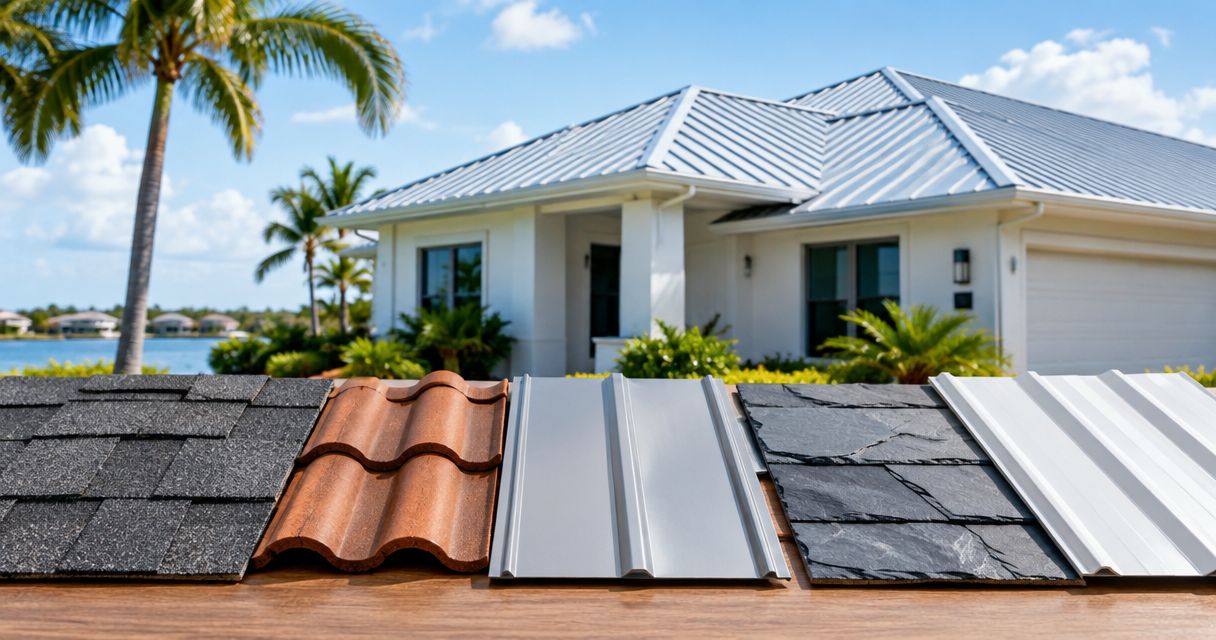
Best overall for Florida homeowners financing a roof in 2026: a credit union personal loan if you want to keep your home out of the loan agreement. Best for a large, defined replacement: a home equity loan. Best for work paid in stages: a home equity line of credit, or HELOC. The best roof financing option depends on your written roof scope, the repayment terms you qualify for, and whether you are willing to use your home as collateral.
- Best roof financing options for Florida homeowners in 2026: compare a credit union personal loan with a home equity loan first.
- A HELOC fits staged roof payments, but check whether its rate can change.
- Contractor-arranged financing is convenient; compare its lender disclosures with an independent offer.
- Roof Smart of SW Florida can provide a roof evaluation and estimate; confirm financing terms with the lender.
Why this matters
A roof quote tells you what work is proposed. A financing offer tells you how you will pay for it. Neither replaces the other: borrowing before the roof scope is clear risks financing work that changes after inspection, while choosing a loan by its monthly payment alone hides the total repayment obligation.
Roof Smart of SW Florida provides residential roof repair and replacement across Cape Coral, Fort Myers, Naples, and surrounding Southwest Florida counties. Start with a Roof Smart of SW Florida roof evaluation and a written scope, then compare financing offers against the same proposed work. Roof Smart of SW Florida is best for homeowners who need the roofing work defined before choosing how to fund it, not for homeowners looking for a lender recommendation.
If the roof has storm damage, keep the repair decision separate from the financing decision. Document the damage and review your insurance policy and claim status before assuming a loan must cover the entire job. Insurance proceeds are not a loan, and neither a claim nor a grant is guaranteed funding for a particular roof.
What makes the best roof financing option?
Use these criteria to judge each offer. In 2026, the right answer is the offer that fits the roof work and leaves you with repayment terms you understand.
- Collateral: An unsecured loan does not put your home up as loan collateral. A home equity loan or HELOC does. Read the agreement for the lender's remedies if you cannot pay.
- Rate structure: Identify whether the rate is fixed, variable, or promotional. If it can change, ask how the payment changes under the loan terms.
- Total repayment: Compare the amount financed, annual percentage rate, fees, repayment schedule, and total of payments. A smaller monthly payment does not establish a smaller total cost.
- Payment timing: A single loan disbursement suits a defined contract differently from a line of credit that you draw against as bills come due. Match the funding method to the contractor's written payment schedule.
- Approval and conditions: Ask when funds become available, what documentation is required, and whether the offer depends on a membership, property valuation, or other condition.
- Scope changes: Find out how you would pay for approved work outside the original roof estimate. Do not borrow extra based only on an assumption that additional work will be needed.
A useful comparison starts with 3 written financing offers for 1 written roof scope. Those are comparison targets, not a claim that any lender will approve you. If the scopes differ, resolve the roofing differences before treating the loan offers as interchangeable.
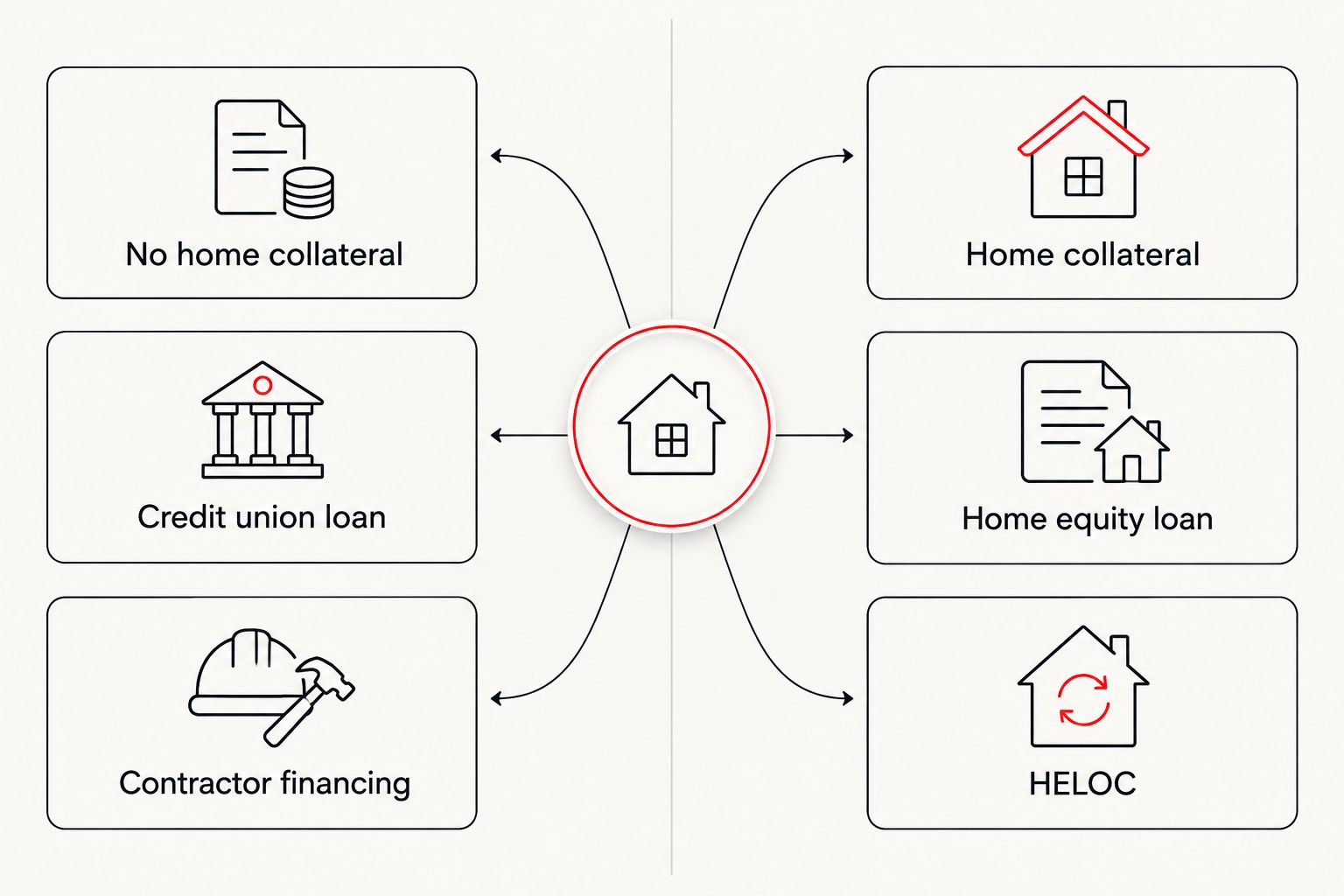
Roof financing options at a glance
The table ranks ways to finance a defined roof job, not lenders or offers. No lender terms have been supplied, so each limitation is a question to verify in the actual agreement.
| Option | Best for | Standout feature | Key limitation |
|---|---|---|---|
| Credit union personal loan | Financing without home collateral | Unsecured borrowing, if approved | Membership and loan terms must be checked |
| Home equity loan | A defined replacement funded at once | One lump-sum loan | Uses home equity and puts the home at risk if you default |
| HELOC | Work with staged payments | Draw funds under a credit line | Rate and repayment terms require close review |
| Contractor-arranged financing | Handling the project and application together | Application offered through the roofing purchase process | Convenience does not prove the loan is the best deal |
| Promotional-rate credit card | A limited, planned financing gap | A promotional rate, if offered and approved | The promotion expires; unpaid balances remain due |
1. Credit union personal loan: best without home collateral
A credit union personal loan is the default financing choice to check first when you want to fund a roof without securing the loan against your house. You borrow under the credit union's loan agreement and repay according to its disclosed schedule. Membership requirements, approval, rates, fees, and available terms depend on the credit union and your application.
Credit union personal loan pros:
- Keeps the home out of the loan's collateral terms when the offer is unsecured.
- Gives you a separate financing offer to compare with any loan presented during the roofing sale.
- Lets you request terms against the written roof estimate rather than an undefined project.
Credit union personal loan cons:
- You must qualify and meet any membership requirements.
- The offered payment and total repayment can differ substantially from another lender's offer.
- An approved loan does not confirm that the proposed roofing work is necessary or correctly scoped.
Credit union personal loan pricing: Compare the lender's current annual percentage rate, fees, payment schedule, and total of payments in writing. No credit union offer is provided here.
Best for: Homeowners who prioritize avoiding home collateral and can compare an approved unsecured offer against the alternatives. Verdict: Buy the offer only if its full repayment terms beat the other offers you qualify for; otherwise, hold.
2. Home equity loan: best for a defined replacement
A home equity loan provides a lump sum secured by your home. It fits a roof replacement with an agreed scope and a payment plan you can cover from the loan proceeds. Because the home secures the debt, compare its full terms against an unsecured offer rather than assuming a lower monthly payment makes it safer.
Home equity loan pros:
- A lump sum can match a replacement contract with a defined funding need.
- A fixed-rate offer, when available, makes the stated payment schedule easier to plan around.
- Comparing its disclosures with an unsecured loan makes the collateral trade-off explicit.
Home equity loan cons:
- Default can put your home at risk under the loan agreement.
- Approval can depend on your equity, credit, income, and the lender's property requirements.
- Borrowing the full amount at once is a poor fit if the final scope is still uncertain.
Home equity loan pricing: Review the actual rate structure, closing costs, fees, and total of payments; no specific offer is supplied here.
Best for: Homeowners with an agreed replacement scope who accept the risk of a loan secured by their property. Verdict: Buy only after comparing its total cost and collateral risk with an unsecured offer; otherwise, hold.
3. HELOC: best for staged roof payments
A home equity line of credit lets you draw against an approved credit limit rather than taking the entire amount as one lump sum. That structure can suit a contract with payments tied to documented stages. A HELOC still uses your home as collateral, and its rate and repayment structure depend on the agreement you sign.
HELOC pros:
- Draws can be aligned with the contractor's written payment schedule.
- You can compare borrowing only what the approved work requires against taking a lump sum.
- The credit-line structure can accommodate an agreed scope change, subject to available credit and loan terms.
HELOC cons:
- Your home is collateral, with default consequences set by the agreement.
- A variable-rate offer can make future payments harder to predict.
- Access to a credit limit can make it easier to finance work outside the original roof scope.
HELOC pricing: Ask the lender for its rate-adjustment rules, draw and repayment terms, fees, and an explanation of payment changes. Do not judge a HELOC by its initial payment alone.
Best for: Homeowners with a staged roof payment schedule who can manage the credit line and accept home-collateral risk. Verdict: Hold until the rate and repayment rules are clear; buy only if they fit your budget better than the other approved offers.
4. Contractor-arranged financing: best for application convenience
Some roofing purchases include a financing application through an outside lender. The contractor and lender have different jobs: one defines and performs the roofing work; the other sets and administers the loan. Do not assume Roof Smart of SW Florida offers contractor-arranged financing; ask what payment methods are available for your particular job.
Contractor-arranged financing pros:
- The application can be discussed alongside the written roofing scope when it is available.
- The lender's disclosures give you another offer to compare with an independent loan.
- A defined contract helps you check whether the amount financed matches the proposed work.
Contractor-arranged financing cons:
- A convenient application does not establish the lowest total repayment.
- You still need to identify the lender and review its terms separately from the roof contract.
- Changing the scope can change the amount you need to finance.
Contractor-arranged financing pricing: Compare the actual lender disclosures with independent offers; no contractor financing program or terms are provided in the inputs.
Best for: Homeowners offered an application during a roof purchase who still plan to shop for financing. Verdict: Hold until an independent offer provides a meaningful comparison.
5. Promotional-rate credit card: best for a limited financing gap
A promotional-rate credit card is a narrow option, not a default plan for replacing an entire roof. It fits only when you have an eligible offer, the roofing company accepts that payment method, and you have a repayment plan that accounts for the promotion's end. Read the card agreement before treating the advertised rate as the cost of the work.
Promotional-rate credit card pros:
- An eligible promotional offer can provide a defined repayment window.
- It avoids putting the home up as loan collateral for the card balance.
- It can cover a limited gap without changing an otherwise settled roof funding plan.
Promotional-rate credit card cons:
- The promotional period ends, and the remaining balance remains your responsibility.
- The credit limit might not cover the required payment.
- Card terms and any contractor payment restrictions need checking before you commit.
Promotional-rate credit card pricing: Read the offer's annual percentage rate terms, fees, promotional end date, and treatment of unpaid balances. No card offer is supplied here.
Best for: Homeowners covering a limited amount they have a specific plan to repay under the actual card terms. Verdict: Skip it for a full replacement unless the written offer and repayment plan clearly support that use.
How we ranked the options
The 2026 ranking puts the absence of home collateral first, then matches funding structure to the roofing contract. It does not claim that credit unions always offer cheaper loans, that equity borrowing is right for every homeowner, or that an advertised promotion will be available to you. Your approved disclosures decide those comparisons.
Before selecting a lender, request a written roof estimate that identifies the proposed repair or replacement. Ask what work is included, how changes will be approved, and when payments are due. Roof Smart of SW Florida offers no-pressure free estimates; use that roofing information to compare financing for the same scope rather than choosing a monthly payment before you know what it funds.
Define the roof work first
Request a no-pressure free estimate before comparing financing offers.
Which roof financing option should you choose?
Choose an approved credit union personal loan as your first comparison if keeping your home out of the loan agreement matters most. For a fully defined replacement, compare it with a home equity loan and make an explicit decision about collateral risk. Choose a HELOC only when its draw structure suits the written payment schedule and you understand how the rate and payments work.
In 2026, the choice is between actual offers, not financing categories in isolation. Put each lender's disclosures beside the same roof scope and compare the total of payments, fees, rate structure, collateral, and payment dates. If you can fund the work without borrowing, compare that choice too; paying from savings is not a financing product and should not be treated as one.
FAQ
What are the best roof financing options for Florida homeowners in 2026?
Start by comparing an approved credit union personal loan with a home equity loan for a defined roof job. Add a HELOC if staged payments fit the contract, and compare every offer's full repayment terms and collateral risk.
Is a personal loan better than a HELOC for a new roof?
A personal loan is better when you want to avoid using your home as collateral and its approved terms fit your budget. A HELOC suits staged payments, but the home secures the line and its rate terms need close review.
Should I get a roof estimate before applying for financing?
Yes, get a written roof scope and estimate before deciding how much to borrow. The proposed work and payment schedule tell you which loan structure you need to compare.
Can I use insurance proceeds instead of a roof loan?
Insurance proceeds can reduce the amount you need to borrow if your claim covers eligible roof damage. Coverage and payment depend on your policy and claim; insurance is not a financing offer.
Does Roof Smart of SW Florida provide roof financing?
No Roof Smart of SW Florida financing program is specified here. Ask the company about available payment methods and compare any lender offer with independent financing disclosures.
Is a home equity loan risky for roof replacement?
A home equity loan uses your home as collateral, so default can put the property at risk under the loan agreement. Compare that risk and the total repayment with an unsecured offer before signing.
Can a Florida roof grant replace financing?
A grant can reduce borrowing only if you qualify, the proposed work is eligible, and funding is available under the current program rules. Do not commit to roof work on the assumption that an application will be approved.
One last thing
The cheapest-looking monthly payment is not a roof financing verdict. In 2026, check the total of payments and the roof contract's payment schedule side by side. If a lender can fund the work but the written scope is still unsettled, settle the roofing question first.