A wind mitigation inspection in Port Charlotte documents your roof's shape, roof-to-wall connections, roof deck attachment, and opening protection on the state's OIR-B1-1802 form so your insurer can apply wind-resistant credits to your premium. Charlotte County took a direct hit from Hurricane Ian in September 2022, and that history means local insurers read these reports line by line before approving any discount.
- A wind mitigation inspection in Port Charlotte checks roof shape, deck attachment, and opening protection for insurance credits.
- Reports use the state OIR-B1-1802 form and stay valid for 5 years unless the roof is replaced.
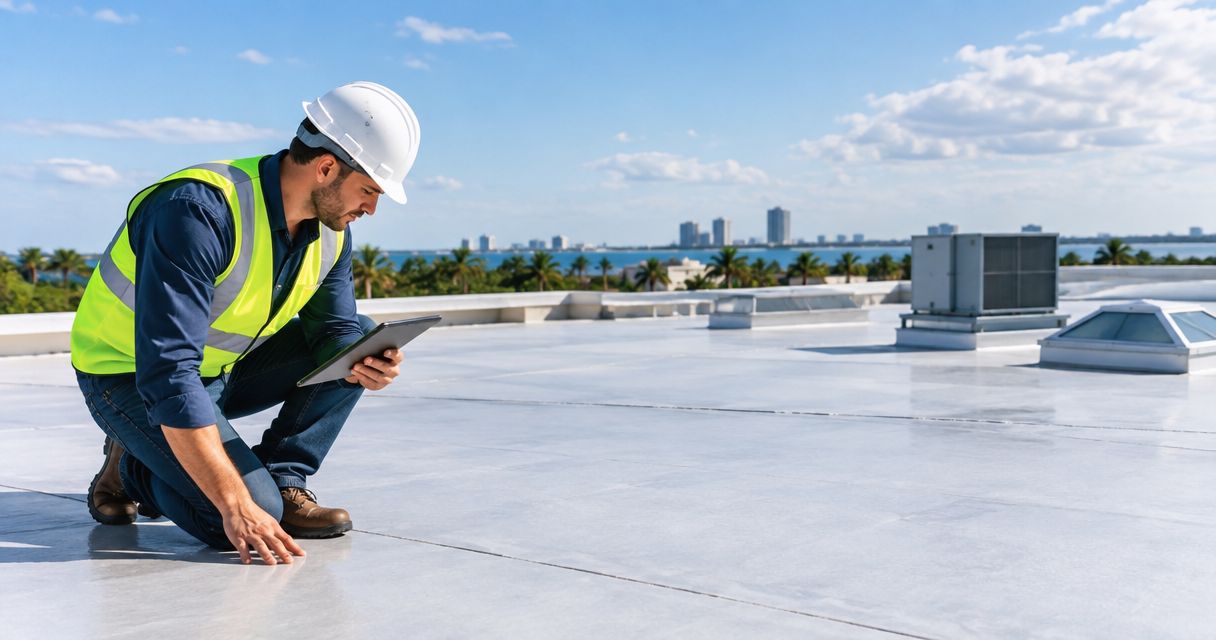
- Roof Smart of SW Florida documents these features on-site; phone photos alone rarely satisfy an insurer's underwriter.
- Charlotte County's hurricane exposure means an expired or missing wind mitigation form usually costs you the full premium.
Why wind mitigation inspection matters for Port Charlotte homeowners
Port Charlotte sits in one of the highest-risk wind zones in Southwest Florida. Homes here built before the 2001 Florida Building Code went into effect were framed to older, weaker standards for roof-to-wall connections and opening protection, and insurers price that risk directly into the premium.
A completed wind mitigation report is the only document Florida insurers accept to qualify for a wind mitigation insurance discount. Without one on file, most carriers default to charging as if your roof has none of the wind-resistant features it might actually have. Homeowners who replaced a roof after 2022 storm damage and never re-inspected are the most common group leaving money on the table in 2026.
Prepare for and pass your wind mitigation inspection
Confirm your home's construction era
Start by pulling your permit history through the Charlotte County property appraiser site. The build year and any documented reroofs determine which building code your home was inspected against and which credits are even possible.
- Pull the parcel record and note the original construction year
- Check for permitted reroof dates — a full reroof after 2001 can reset your credit eligibility
- Note whether the home has hip or gable roof shape, since hip roofs score higher
- Flag any additions built under a different, later code cycle
Inspect your roof-to-wall connections
This is the single highest-value item on the OIR-B1-1802 form. Insurers weight the strength of the connection between your roof structure and exterior walls more heavily than almost anything else.
- Toe nails: the weakest, lowest-credit connection
- Clips: a mid-tier connection found in many 1990s-2000s homes
- Single wraps or double wraps: the strongest connections, common in post-2001 construction
- Check your attic for visible hardware if you can access it safely
Check your roof deck attachment method
Verifying nailing pattern and deck attachment usually requires attic access and a trained eye — this is where a general homeowner walkthrough runs out of road. Roof Smart of SW Florida sends a licensed inspector to document deck attachment directly, which is faster and more defensible to an underwriter than a self-reported guess.
- Nail spacing and pattern across the deck
- Whether the deck uses plywood or OSB, and its thickness
- Presence of secondary water barrier tape at the seams
- Any signs of prior storm repair that changed the original attachment
Document your opening protection
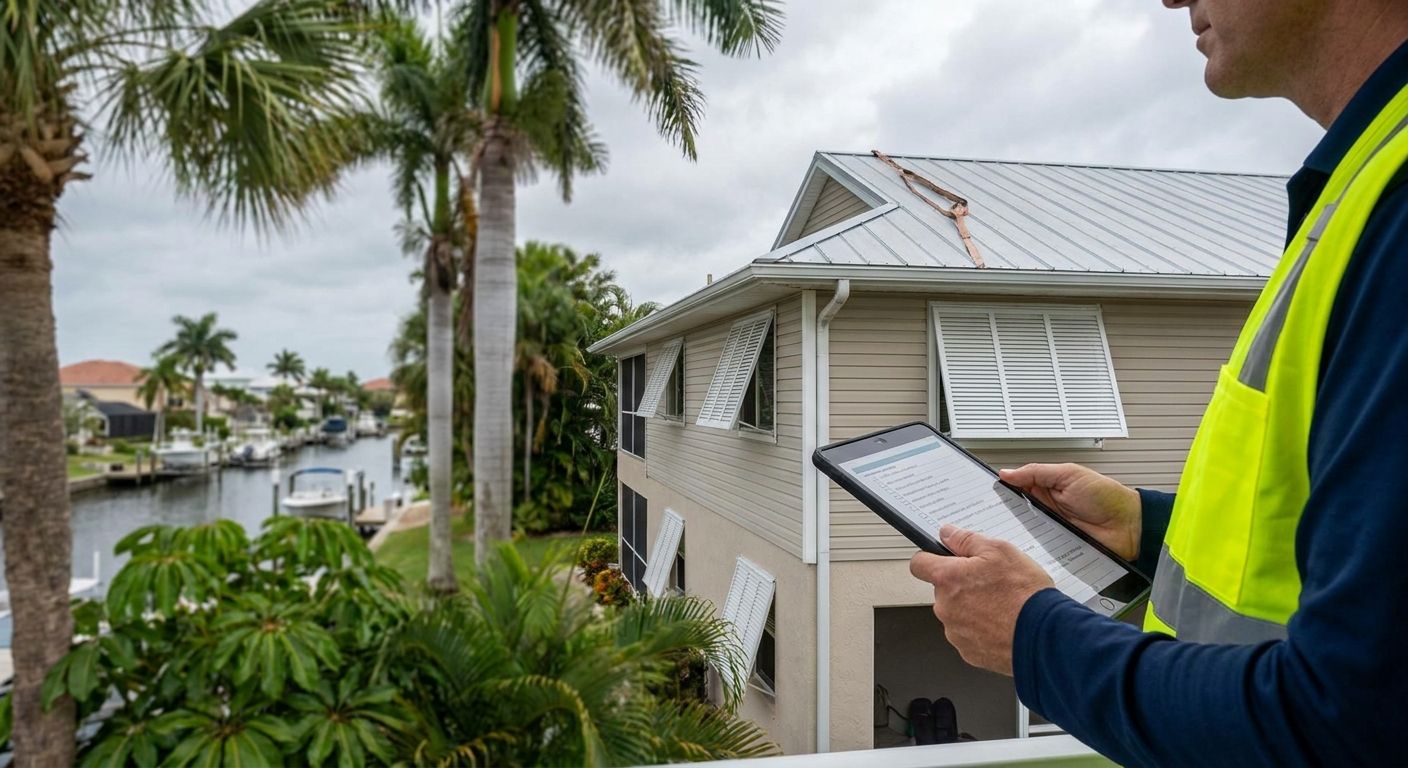
Impact-rated windows, doors, garage doors, and shutters all factor into the wind mitigation inspection port charlotte homeowners rely on for premium relief. Every opening on the structure needs a rating, not just the front door.
- Impact-rated windows and sliding glass doors
- Rated garage doors, including the hardware and track
- Permanent storm shutters versus removable panels
- Entry doors with documented impact certification
Schedule a licensed wind mitigation inspection
Once you've gathered permit records and done a visual pass, book the actual inspection. Florida law requires the inspector to be a licensed contractor, engineer, architect, building code official, or home inspector — a neighbor with a camera doesn't count for insurance purposes.
- Confirm the inspector's license number before the appointment
- Ask what the report covers before scheduling — how to get a wind mitigation inspection in Florida breaks down the process step by step
- Have attic access clear and ladders reachable on inspection day
- Get the completed OIR-B1-1802 form in hand, not just a summary email
File the form with your insurer
The report does nothing sitting in a drawer. Submit it directly to your insurance carrier or agent, and confirm they've applied it to your policy at renewal.
- Send the signed OIR-B1-1802 form to your agent, not just the underwriter's portal
- Ask for written confirmation the credit was applied
- Compare your premium before and after the filing to verify the change
- Keep a copy for your own records in case of a future dispute
Track your 5-year renewal window
Wind mitigation inspections are valid for 5 years under Florida law unless a like-kind replacement changes the roof structure sooner. Mark the expiration date now so it doesn't lapse quietly.
- Set a calendar reminder 6 months before the 5-year mark
- Re-inspect immediately after any roof replacement, not at the old expiration date
- Watch for mid-cycle Florida Building Code updates that could add new credit categories
- Ask your carrier whether they've changed their credit schedule since your last filing
Book your wind mitigation inspection
A no-pressure evaluation of your Port Charlotte roof's wind mitigation features.
Comparing your inspection options
| Option | Best for | Key limitation |
|---|---|---|
| DIY visual walkthrough | Homeowners confirming visible items before scheduling a pro | Can't verify roof deck nailing or truss connections without attic access |
| General home inspector | Bundling with a broader home inspection during a sale | Not every general inspector is trained on the OIR-B1-1802 form specifics |
| Roof Smart of SW Florida licensed inspection | Port Charlotte homeowners who want a report their insurer accepts without follow-up questions | Requires scheduling an on-site visit |
| Insurer's approved inspector list | Homeowners who want to match the specific vendor list their carrier prefers | List varies by carrier and often excludes independent local inspectors |
Roof Smart of SW Florida's on-site inspection is the practical choice for Port Charlotte homeowners who need a report an underwriter won't kick back for missing detail.
Common mistakes Port Charlotte homeowners make
- Assuming age alone determines the discount. A 1998 home with a documented 2015 reroof and hurricane straps can outscore a newer home with weak connections.
- Letting the 5-year clock run out unnoticed. Insurers apply the old, lower credit the moment a report expires, even if the roof itself hasn't changed.
- Skipping re-inspection after a partial repair. Replacing decking or straps after a 2024 or 2025 storm without a new inspection means the insurer never sees the upgrade.
- Submitting the form to the wrong contact. A report emailed to a general claims inbox instead of the underwriting or agent contact can sit unprocessed for months.
- Confusing opening protection with impact glass alone. Garage doors and shutters count too, and missing them on the form caps the credit.
FAQ
How much does a wind mitigation inspection cost in Port Charlotte?
Pricing varies by inspector and property size, so check current rates directly with the provider you choose. Ask whether the quote includes the completed OIR-B1-1802 form or just the site visit.
How long is a wind mitigation inspection valid in Florida?
A completed wind mitigation report is valid for 5 years under Florida law unless a like-kind roof replacement happens sooner. Re-inspect immediately after any reroof rather than waiting for the old expiration date.
Who can legally perform a wind mitigation inspection in Florida?
Florida law limits this to licensed contractors, engineers, architects, building code officials, or licensed home inspectors. Confirm the license number before scheduling, since an unlicensed inspection won't be accepted by an insurer.
Does a wind mitigation inspection cover flood risk too?
No, a wind mitigation inspection only evaluates wind-resistant construction features like roof shape, connections, and opening protection. Flood risk is assessed separately through flood zone maps and elevation certificates.
Do I need a new inspection after a roof replacement?
Yes, a full reroof changes the deck attachment and connection details the report scores, so the old inspection no longer reflects your roof. Schedule a new wind mitigation inspection as soon as the replacement is complete.
Is a wind mitigation inspection the same as a four-point inspection?
No, a four-point inspection reviews roof, electrical, plumbing, and HVAC condition for insurability, while a wind mitigation inspection scores specific wind-resistant construction features for discounts. Older homes in Port Charlotte often need both.
Can a homeowner do their own wind mitigation inspection?
No, Florida requires the report to be completed by a licensed contractor, engineer, architect, building code official, or home inspector to be accepted by an insurer. Self-inspected photos alone won't qualify for a credit.
One last thing
The roof-to-wall connection line item carries more weight on the OIR-B1-1802 form than almost any other single field, and it's the one most homeowners can't verify themselves without attic access. If your Port Charlotte home hasn't been re-inspected since before 2022's storm season, that single line is worth checking before you check anything else.