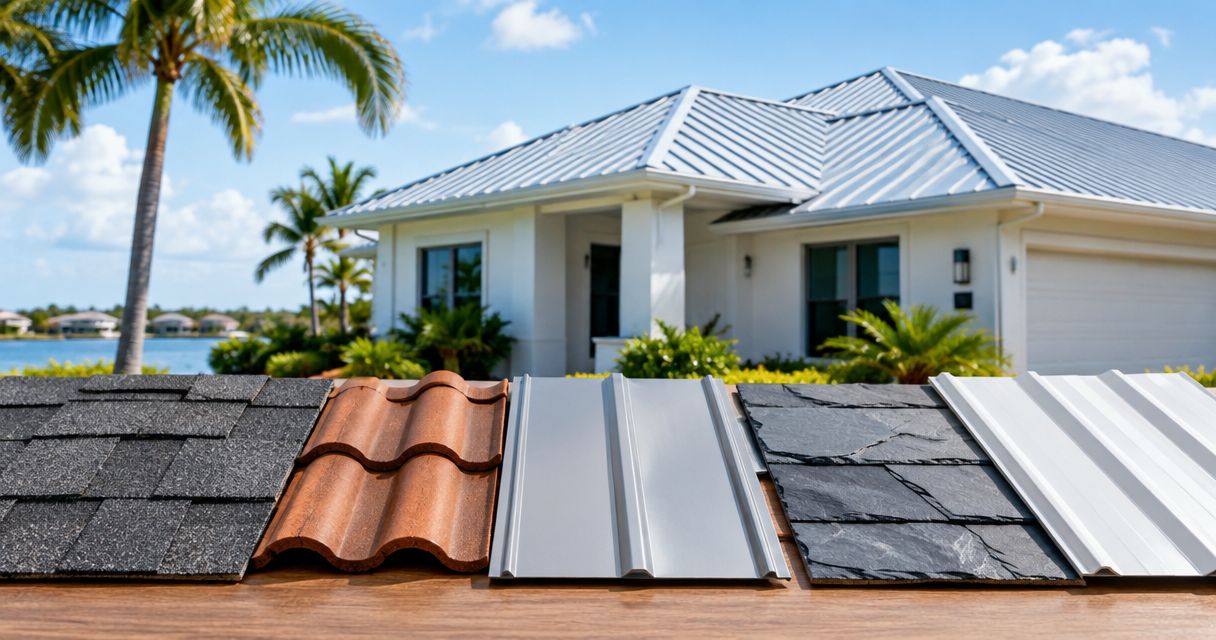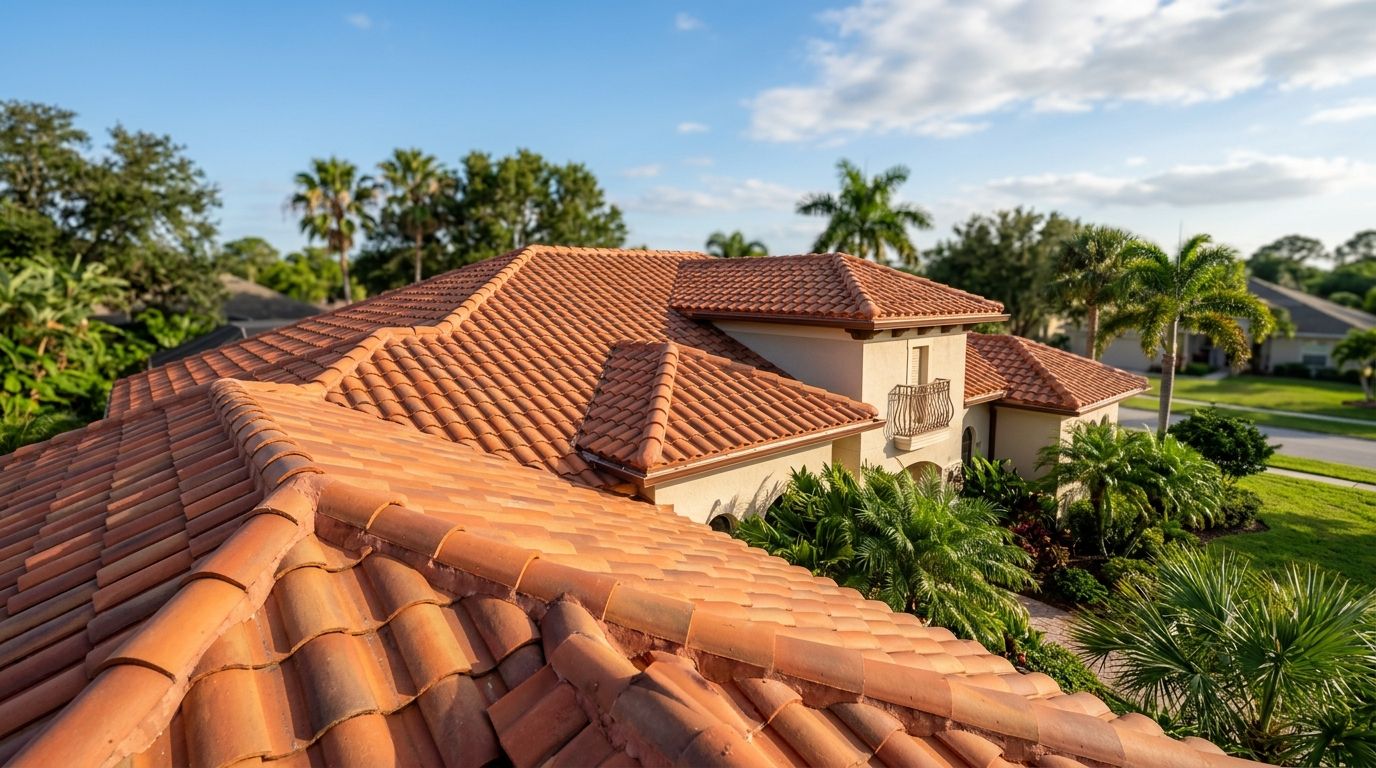
LaBelle homeowners installing tile roofing get a roofing system built for Hendry County's flat terrain, full sun exposure, and seasonal storm wind, with a lifespan that outlasts asphalt shingles by decades. Unlike coastal SW Florida cities, LaBelle sits inland along the Caloosahatchee, so salt corrosion is less of a concern here — the bigger issues are UV breakdown, heavy summer rain, and older ranch-style homes with roof decks that weren't built for tile's added weight.
- Tile roofing in LaBelle can last 50 years or more, versus 20-25 years for asphalt shingles in Florida's climate.
- Concrete tile weighs 900-1,000 lbs per square, so older LaBelle homes often need a structural check first.
- Roof Smart of SW Florida installs and inspects tile roofing across LaBelle and Hendry County in 2026.
- A wind mitigation inspection after tile installation can qualify a LaBelle home for a homeowners insurance discount.
- Skip tile only when the existing roof deck can't be reinforced to carry the extra load.
Why tile roofing matters for LaBelle homeowners
LaBelle's housing stock runs from older cracker-style homes near downtown to newer Mediterranean and Spanish-style builds out toward Riverbend and Cypress Cove. Tile roofing fits both, but for different reasons. On the older homes, tile replacement usually happens alongside broader renovation, and it's the moment to correct decades of patchwork shingle repairs. On the newer stucco-and-tile builds, tile is already the expected material, and homeowners are shopping for the right profile and color rather than debating shingle versus tile.
Inland placement changes the math too. LaBelle isn't in a designated high-velocity hurricane zone, but the Florida Building Code still requires roofing systems rated for local wind exposure, and insurers increasingly ask for proof of that rating before writing or renewing a policy. Tile that's properly fastened and underlaid holds up to that scrutiny far better than a 15-year-old shingle roof does.
How to plan a tile roof for a LaBelle home
Check your roof deck before you commit to tile
Concrete tile weighs roughly 900 to 1,000 pounds per square — more than three times what asphalt shingles weigh. Homes built before the 1990s in LaBelle often have roof framing sized for lighter materials, so this step comes first, not last.
- Have a contractor inspect rafter and truss spacing before ordering tile
- Ask whether your home needs sistered rafters or added bracing
- Get the deck's plywood or board sheathing checked for rot or delamination
- Confirm the fascia and soffit can handle the added edge load
- Skip this step and you risk sagging or deck failure years down the line
Choose the right tile profile for your home's style
Barrel tile reads as Spanish or Mediterranean; flat tile reads more contemporary or ranch. LaBelle's mix of architectural styles means this decision is aesthetic as much as functional.
- Barrel (S-tile) for Mediterranean, Spanish, or Tuscan-style homes
- Flat profile tile for ranch, contemporary, or transitional homes
- Concrete tile for lower material cost with a longer color-fade timeline than clay
- Clay tile for homes where color permanence matters more than upfront cost
- Lightweight composite tile only when the deck can't carry standard concrete or clay weight
For homes leaning Mediterranean or Spanish, the detailed breakdown on tile roofing for Mediterranean-style homes covers profile and color pairing in more depth than a single paragraph can.
Confirm wind and impact ratings before you sign a contract
Tile roofing sold in Florida has to meet Florida Building Code wind uplift and impact standards, but not every installer fastens tile the same way once it's on the roof.
- Ask for the tile's Miami-Dade NOA (Notice of Acceptance) number
- Confirm the fastening method — mortar-set, foam-adhered, or mechanically fastened
- Ask how many fasteners per tile the crew uses on hip and ridge lines
- Request the underlayment spec in writing before installation starts
- Verify the permit lists the correct wind speed rating for Hendry County
If you're not sure your current roof would pass that scrutiny, emergency roof repair in LaBelle covers what to do when storm damage exposes gaps in an older installation before a full tile reroof happens.
Time the installation around LaBelle's dry season
Tile installation involves an exposed deck for longer stretches than a shingle tear-off and reroof. Rain during that window means tarping, delays, and risk of interior water damage.
- Schedule tile reroofs between November and April when rain is lightest
- Avoid starting a project in the two weeks before a named storm is forecast
- Ask your contractor how they handle dry-in if weather turns mid-project
- Build a few flex days into the timeline rather than a tight single-week schedule
Budget for underlayment and flashing upgrades, not just tile
The tile itself is only part of the system. Underlayment failure, not tile failure, is the most common reason a tile roof leaks before its material lifespan is up.
- Two-ply self-adhered underlayment holds up longer under Florida heat than single-ply felt
- Replace all flashing at valleys, chimneys, and skylights during a tile reroof, not just where it's visibly failing
- Ask whether battens or a raised batten system is included for ventilation
- Get the underlayment warranty terms in writing separate from the tile warranty
Schedule a wind mitigation inspection once the roof is done
Once a new tile roof passes final inspection, a wind mitigation inspection documents the upgrades that insurers reward with lower premiums — roof-to-wall connections, secondary water barrier, and the roof covering's compliance year.
- Book the inspection within a few weeks of final roof sign-off
- Bring the permit and the manufacturer's NOA documentation to the inspection
- Ask the inspector to note the secondary water barrier if the underlayment qualifies
- Send the completed form to your insurer directly, not just to your file
For the full mechanics of how that inspection translates into a lower premium, see wind mitigation inspection for insurance discounts.
Get a tile roofing estimate for your LaBelle home
A no-pressure evaluation of your roof, honestly explained.
Plan a maintenance routine before you need it
Tile roofing needs less maintenance than shingles, but "less" isn't "none." Cracked tiles from foot traffic or debris are the most common issue LaBelle homeowners run into.
- Walk the roof only with a professional who knows where to step
- Clear palm fronds and oak debris after every major storm
- Replace cracked or slipped tiles individually rather than waiting for a batch
- Check valleys and penetrations annually for granule buildup or debris pooling
Comparison: tile roofing options for LaBelle homes
| Option | Best for | Key limitation |
|---|---|---|
| Concrete barrel tile | Mediterranean and Spanish-style homes | Heavier — needs a deck check on older homes |
| Concrete flat tile | Ranch and contemporary homes | Color fades faster than clay over decades |
| Clay tile | Homeowners who want long-term color permanence | Higher material cost than concrete |
| Lightweight composite tile | Older decks that can't carry standard tile weight | Shorter track record than concrete or clay in Florida |
Concrete tile is the practical default for most LaBelle homes; clay earns its keep on homes where color consistency over 30-40 years matters more than upfront cost.
Common mistakes LaBelle homeowners make with tile roofing
- Skipping the structural check — assuming an older ranch home's deck can carry tile weight without verification
- Choosing tile color before checking the HOA or neighborhood aesthetic, especially in newer Mediterranean-style developments
- Walking the roof themselves after a storm to check for damage, cracking tiles that were otherwise fine
- Filing for a wind mitigation discount without the inspection paperwork, leaving savings on the table for a year or more
- Patching individual tiles with mismatched material instead of keeping matching replacement tiles on hand from the original run
FAQ
Is tile roofing a good fit for LaBelle homes?
Yes — tile roofing suits LaBelle's inland heat and wind exposure and fits both older ranch-style homes and newer Mediterranean-style builds. The main pre-requirement is confirming the roof deck can carry the added weight.
How long does a tile roof last in Southwest Florida?
Concrete and clay tile roofs typically last 50 years or more when the underlayment is properly installed and maintained. The underlayment beneath the tile usually needs attention before the tile itself does.
Does tile roofing need a wind mitigation inspection in LaBelle?
A wind mitigation inspection isn't required by code, but it documents roof-to-wall connections and covering upgrades that can lower your homeowners insurance premium. Book it shortly after final roof sign-off.
Can an older LaBelle home switch from shingles to tile?
Often yes, but the roof deck needs to be checked first since concrete tile weighs roughly three times what asphalt shingles weigh. Reinforcement adds cost but is routine on older homes.
What's the difference between clay and concrete tile?
Clay tile holds its color longer over decades and costs more upfront; concrete tile costs less initially but fades faster under Florida sun. Both meet the same wind and impact standards when properly installed.
How do I know if my tile roof needs repair versus replacement?
Isolated cracked or slipped tiles usually mean repair; widespread underlayment failure or fastener corrosion across the roof usually means replacement. A roof inspection distinguishes between the two before you commit either way.
Is tile roofing more storm-resistant than shingles in Hendry County?
Properly fastened tile rated to Florida Building Code standards holds up to wind uplift better than aging asphalt shingles, though both materials can fail if fasteners or underlayment are outdated. The fastening method matters as much as the material.
One last thing
The underlayment beneath a tile roof, not the tile itself, is almost always the reason a tile roof leaks before 2026 turns into 2076. Concrete and clay tile routinely outlast their original underlayment by 20 years or more, which means a roof that looks fine from the ground can still be one bad storm away from a leak. Ask any contractor bidding a LaBelle tile job for the underlayment brand and warranty term in writing — not just the tile brand — before signing anything.