If you own a Mediterranean-style home in Cape Coral, Fort Myers, or Naples, the roof over your head has to do more than match the arches and stucco — it has to survive Southwest Florida wind loads year after year. This guide breaks down which tile roofing option actually fits that architecture and that climate in 2026.
- Clay barrel tile is the authentic pick for tile roofing on Mediterranean-style Florida homes; concrete S-tile is the value pick.
- Wind-rated fastening and self-adhering underlayment matter more than tile material for 2026 storm codes.
- Concrete tile runs 900 to 1,100 pounds per roofing square; clay runs lighter at 650 to 850 pounds per square.
- Synthetic tile-look panels are a Skip for anyone chasing genuine Old World curb appeal.
- Roof Smart of SW Florida installs and inspects tile roofing across Cape Coral, Fort Myers, and Naples.
Why this matters
Tile roofing on a Mediterranean-style home is a structural decision disguised as a style choice. The wrong tile profile, the wrong fastening system, or a shortcut on underlayment shows up as a leak two hurricane seasons later, not on install day. Tile roofing in Fort Myers projects that skip the underlayment upgrade are the ones generating repeat service calls after the first named storm.
Homeowners in this market are usually replacing an aging tile roof or finishing new construction that's already committed to a barrel-tile or Spanish-style look. Getting the tile type and fastening spec right the first time avoids a second roof project inside a decade.
Who this is for
This guide is for homeowners with stucco, arched-window, Spanish- or Mediterranean-style homes in Southwest Florida who need a tile roof that holds up to coastal wind and heat without losing the architectural look the house was built for. It's for anyone comparing clay against concrete, weighing a wind mitigation discount, or deciding whether a synthetic tile-look product is close enough to the real thing.
What to look for in tile roofing for Mediterranean-style homes
Wind-rated fastening system
The fastening system, not the tile itself, is usually what fails first in a Florida storm. Foam-set and mechanically fastened systems tested to current Florida Building Code wind-uplift standards outperform older mortar-set installs during high-wind events. A tile roof installed in 2026 should carry documentation of the fastening system used, not just the tile brand.
Tile material: clay vs. concrete
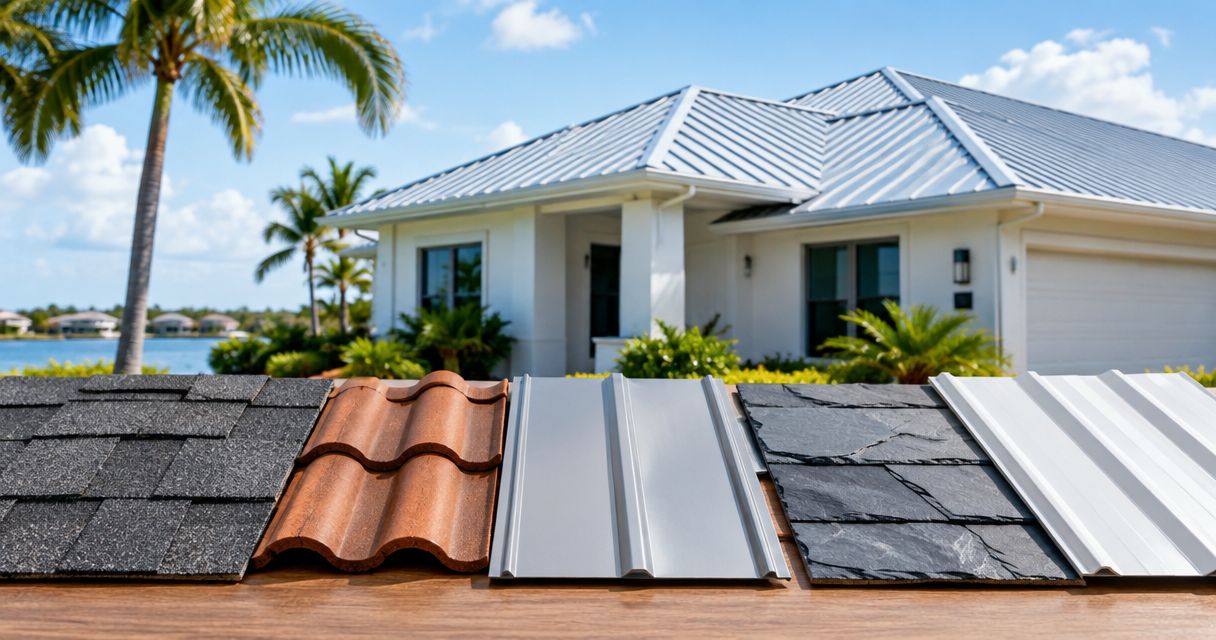
Clay tile weighs roughly 650 to 850 pounds per roofing square (100 square feet) and delivers the deepest, most traditional Mediterranean color range. Concrete tile weighs more — about 900 to 1,100 pounds per square — but costs less and holds up just as well structurally when the deck is engineered for it. Neither choice is wrong; the deck and truss system has to be rated for whichever one you pick.
Underlayment quality
A self-adhering, high-temperature underlayment under the tile is the actual waterproofing layer; the tile just protects it from sun and impact. Skimping here is the single most common reason tile roofs leak years before the tile itself wears out. Ask specifically what underlayment spec is in the estimate, not just the tile SKU.
Wind mitigation and insurance credits
A properly documented tile roof can qualify for wind mitigation discounts on a Florida homeowners policy, but only after a Uniform Mitigation Verification Inspection confirms the roof deck attachment, roof-to-wall connections, and secondary water resistance. Homeowners rechecking these credits before the 2026 policy renewal cycle should schedule the inspection before, not after, a tile reroof. A wind mitigation inspection in Naples documents exactly what an insurer needs to see.
Profile match to the architecture
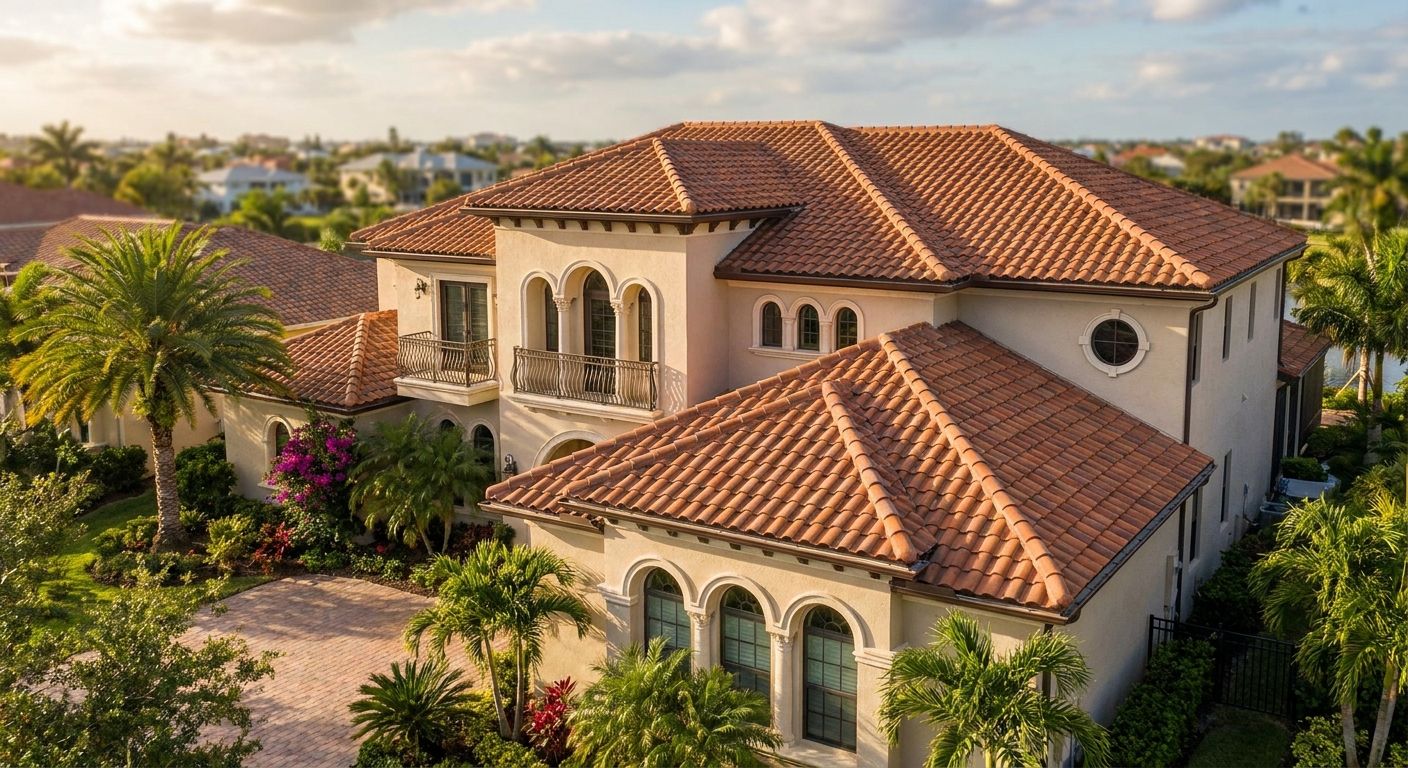
Barrel or S-tile profiles read as classic Spanish Mediterranean; low-profile flat concrete tile reads more contemporary Mediterranean. Mismatching the profile to the house's existing rooflines and window arches is a cosmetic mistake that's expensive to undo once the tile is on the deck.
Local installer experience with coastal tile
Tile installation error rates go up fast with crews that mostly run shingle jobs. Coastal Southwest Florida tile work — proper batten systems, hip and ridge detailing, correct fastener spacing near roof edges — is a different skill set than asphalt shingle installation.
Top picks for Mediterranean-style tile roofing
Clay barrel tile — the authentic pick. Weighs 650 to 850 pounds per square and delivers the color depth and shadow lines that read as genuine Old World Spanish architecture. Costs more than concrete but is the closest match to historic Mediterranean roofs found across Naples and older Fort Myers neighborhoods. Verdict: Buy for homeowners prioritizing architectural authenticity over budget.
Concrete S-tile — the value pick. Runs 900 to 1,100 pounds per square, mimics the barrel-tile silhouette at a lower material cost than clay, and meets the same Florida Building Code wind-uplift testing when installed with a rated fastening system. Tile roofing in Cape Coral quotes on this profile are the most common request from homeowners matching a Mediterranean subdivision standard. Verdict: Buy for most Cape Coral and Fort Myers homes on a working budget.
Low-profile concrete flat tile — the contemporary Mediterranean pick. Lighter shadow lines, cleaner roofline, still concrete-weight at 900 to 1,000 pounds per square. Works on newer builds going for a modern take on Mediterranean styling rather than a strict Spanish Colonial look. Verdict: Consider if the house's architecture leans modern rather than traditional.
Synthetic composite tile-look panels — the wildcard. Weighs under 400 pounds per square, installs faster, and costs less up front than real clay or concrete. Up close, the shadow lines and surface texture don't replicate genuine tile, and long-term wind and UV performance varies widely by manufacturer. Verdict: Skip for anyone whose goal is an authentic Mediterranean look; it reads as a budget substitute on close inspection.
What to avoid
- Mortar-set-only fastening on an older reroof. It looked fine for decades, but it's not the standard modern wind-uplift systems are tested against — get the fastening system re-specified, not just the tile.
- Reusing old underlayment to save cost. Underlayment degrades from heat and UV faster than the tile above it; reusing it under new tile just moves the leak risk into the new roof's warranty period.
- Choosing tile weight before confirming the deck rating. A structural check should happen before the tile order, not after delivery. If you're still deciding between reroofing and full replacement, the breakdown in roof repair vs. roof replacement for Florida homes covers when a deck issue tips the decision toward full replacement.
Verdict comparison table
| Tile Type | Weight per Square | Wind Performance | Authentic Look | Verdict |
|---|---|---|---|---|
| Clay Barrel Tile | 650-850 lbs | Meets FBC uplift testing with rated fastening | Highest — true Old World | Buy |
| Concrete S-Tile | 900-1,100 lbs | Meets FBC uplift testing with rated fastening | High | Buy |
| Low-Profile Concrete Flat | 900-1,000 lbs | Meets FBC uplift testing with rated fastening | Moderate — contemporary | Consider |
| Synthetic Composite | Under 400 lbs | Varies by manufacturer | Low — visibly synthetic up close | Skip |
“The fastening system, not the tile itself, is usually what fails first in a Florida storm.”
Get a free tile roof estimate
No-pressure evaluation for Cape Coral, Fort Myers, and Naples homes.
FAQ
What's the best tile roofing for Mediterranean-style homes in Florida?
Clay barrel tile is the best match for authentic Mediterranean-style homes in 2026 because of its color depth and profile; concrete S-tile is the best value alternative with nearly the same look. Both require a wind-rated fastening system, not just tile selection, to hold up in Southwest Florida.
Is clay tile better than concrete tile for hurricane wind resistance?
Neither material is inherently stronger in wind; the fastening system and underlayment determine wind performance, not the tile itself. Clay weighs 650-850 lbs per square versus concrete's 900-1,100 lbs, but both meet Florida Building Code uplift testing when installed correctly.
How much does a tile roof cost in Southwest Florida?
Tile roof cost depends on tile weight, roof pitch, deck condition, and the underlayment system specified, so pricing varies by project. A free estimate is the fastest way to get a firm number for a specific Cape Coral, Fort Myers, or Naples home.
Do tile roofs qualify for wind mitigation discounts in Florida?
Yes, tile roofs can qualify for wind mitigation discounts once a Uniform Mitigation Verification Inspection confirms the roof deck attachment, roof-to-wall connections, and secondary water resistance. Homeowners should schedule this inspection as part of a tile reroof, not as an afterthought.
How long does a tile roof last in Florida's climate?
Clay and concrete tile commonly carry a 50-year-plus service life expectation when the underlayment beneath them is replaced on schedule. The tile itself usually outlasts the underlayment, which is why underlayment quality matters more than tile brand.
Can you install tile roofing over an existing shingle roof?
No, tile roofing requires the deck and truss structure to be inspected and often reinforced for the added weight; shingle underlayment isn't a valid substrate to tile over directly. A structural check has to happen before tile is ordered.
Is tile roofing worth it for a Mediterranean-style home in Cape Coral or Naples?
Yes, tile roofing is worth it for Mediterranean-style homes because it matches the architecture and outlasts asphalt shingle by decades when installed with proper fastening. It's the standard roofing choice for Spanish Colonial and Mediterranean homes across Southwest Florida in 2026.
What's the difference between clay tile and synthetic tile-look roofing?
Clay tile is genuine fired clay weighing 650-850 lbs per square with authentic Old World color and shadow lines; synthetic composite panels weigh under 400 lbs per square and cost less but look visibly artificial up close. Synthetic is a Skip for homeowners prioritizing an authentic Mediterranean look.
One last thing
The detail most homeowners overlook: tile roof weight isn't optional after the fact. If a deck was never engineered for 900-plus pounds per square, that's a structural conversation before it's a color-and-profile conversation — settle it first, pick clay or concrete second.