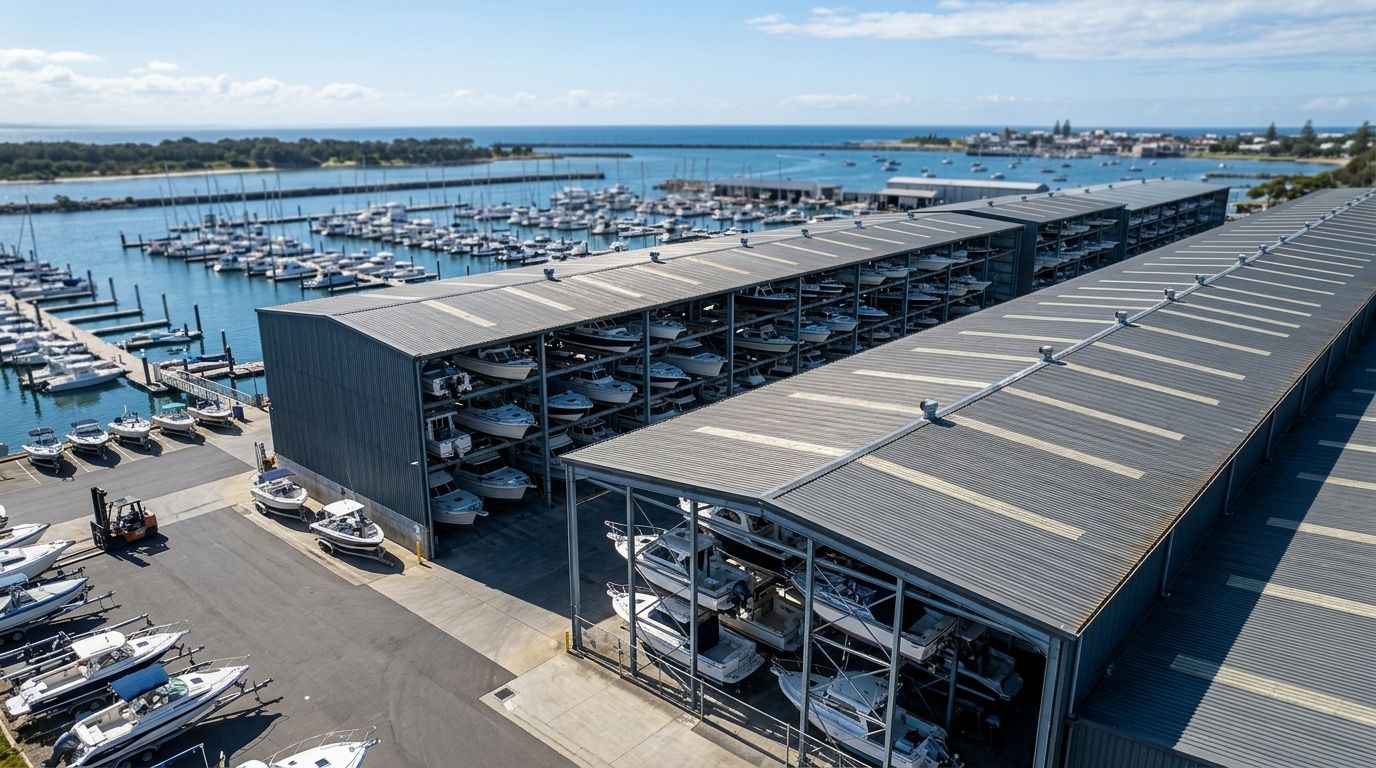
Marinas and boat storage roofing is the commercial roofing work covering dry-stack boat barns, covered wet slips, marina offices, and fuel or service buildings, built to survive salt spray, high wind uplift, and daily marine traffic without leaking onto stored boats or equipment. Marina operators face different demands than a typical retail strip center: open-sided racking bays need continuous drainage, structural spans run wider, and metal components corrode faster this close to saltwater.
- Roofing for marinas and boat storage needs commercial-grade standing seam metal or a wind-rated membrane, not residential shingles.
- Salt spray corrodes exposed fasteners and flashing faster near open water — stainless or coated hardware is non-negotiable.
- Roof Smart of SW Florida installs metal and flat roofing for marina buildings across Cape Coral, Fort Myers, and Naples.
- A wind mitigation inspection can lower insurance premiums on marina and storage buildings in Florida's coastal wind zones.
- Schedule marina roof inspections before June 1 each year — waiting until hurricane season starts in 2026 is too late.
Why this matters for marinas and boat storage facilities
A marina roof failure doesn't just mean a leak in an office ceiling — it means water on stored boats, damaged inventory in a fuel or service bay, and a covered slip structure that can't legally reopen until repaired. That's a different risk profile than a home reroof, and it's why self-storage facility roofing shares more in common with marina roofing than a typical residential job does: wide spans, open sides, and heavy wind exposure on a structure that has to keep working every day of the year.
Southwest Florida marinas sit in some of the state's highest wind-exposure zones under current Florida Building Code standards for coastal properties. Hurricane season runs June 1 through November 30, and any marina or boat storage building that skipped a real inspection before the 2026 season starts is running blind into it.
Insurance carriers treat marina and boat storage buildings as commercial risk, which means underwriting looks hard at roof age, material, and fastening. A documented inspection and the right roofing system carry real weight when a policy renews.
How to choose and maintain roofing for a marina or boat storage building
Assess wind and flood exposure before touching materials
Start with the site, not the shingle sample. A marina building's exposure category, flood zone, and age all change what the roof needs to do structurally before you pick a single material.
- Pull the building's FEMA flood zone designation and elevation certificate if one exists
- Confirm the wind exposure category (open water exposure is treated differently than inland)
- Check the age and condition of the existing deck and structural framing
- Note any prior storm claims tied to the roof or roof-to-wall connections
- Flag any open-sided racking bays separately from enclosed office or shop space
Choose a roofing system built for open bays and wide spans
Dry-stack boat barns and covered racking structures run wider spans than a typical commercial building, and that changes the roofing math. This is where a licensed commercial roofer earns their fee instead of a generic quote sheet — sizing, fastening pattern, and panel gauge all shift with span length.
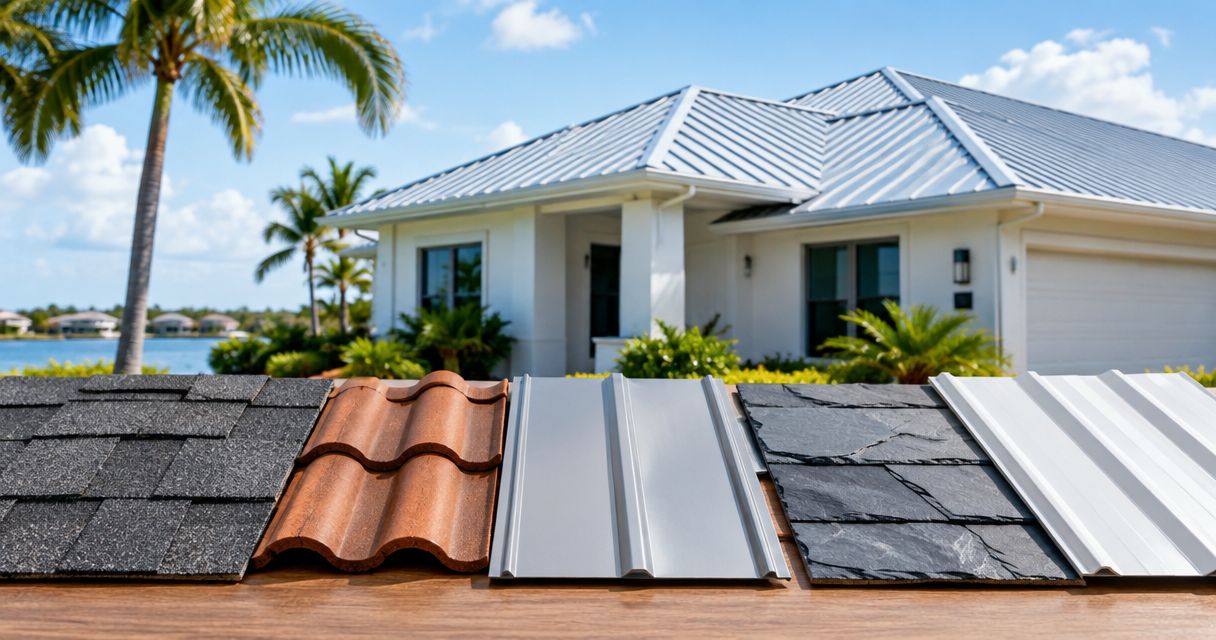
- Standing seam metal roofing for long, unbroken spans over dry-stack storage
- Corrugated metal panels for open-sided racking and utility structures
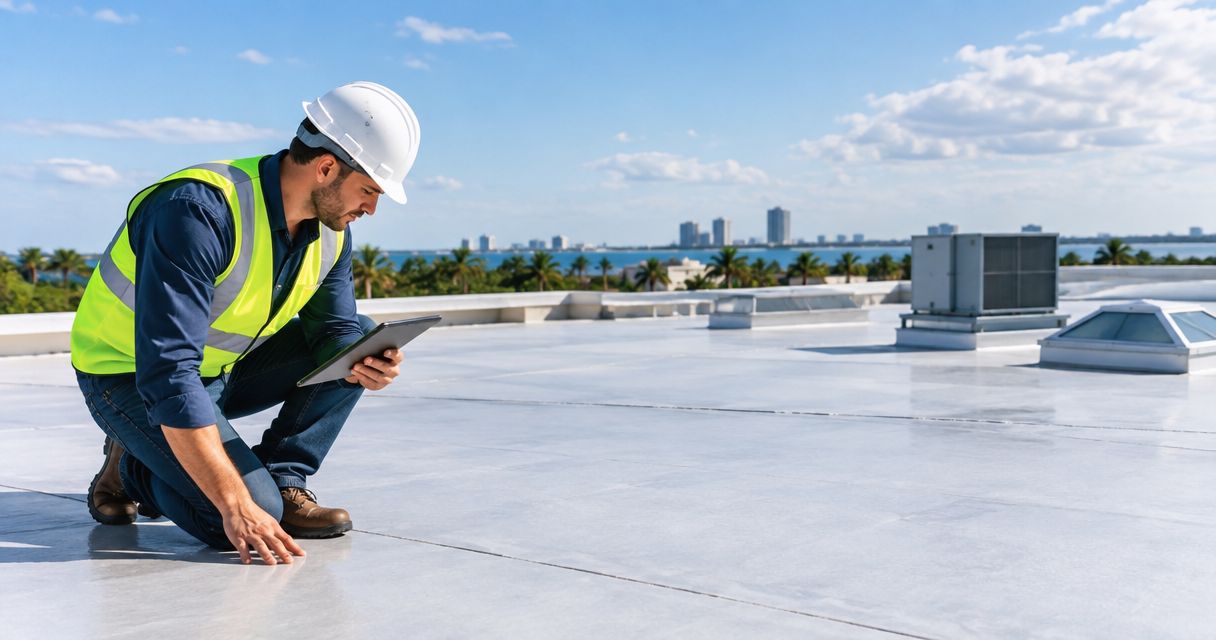
- TPO or PVC single-ply membrane for flat-roofed offices, workshops, and fuel buildings
- Modified bitumen for older flat sections already built on that system
Roof Smart of SW Florida handles warehouse and industrial roofing with the same wide-span, open-bay considerations that apply to marina storage structures — the deck engineering questions are nearly identical.
Reinforce fastening and anchoring for coastal wind
A roof rated for the right wind speed on paper still fails if the fastening pattern is wrong for an open-sided structure. Wind moving through an open bay creates uplift pressure that a fully enclosed building never sees.
- Confirm fastener spacing matches the specific wind exposure category, not a generic code minimum
- Use closure strips and end laps rated for the panel type installed
- Anchor eave and rake edges with heavier gauge trim than an inland building would need
- Verify structural attachment points can handle uplift loads from an open-sided design
Control corrosion in a saltwater environment
Salt air eats through unprotected fasteners, flashing, and panel edges years before a comparable inland roof shows the same wear. This is the single biggest difference between marina roofing and every other commercial category on this list.
- Specify stainless steel or coated fasteners rated for marine exposure
- Use aluminum or coated steel flashing instead of bare galvanized where possible
- Rinse salt buildup off metal panels and flashing on a regular schedule
- Inspect fastener heads for early rust at least twice a year, not once
Design drainage for open-bay and covered-slip roofs
Flat sections tied to marina offices, workshops, or fuel buildings pond water fast if slope and drainage weren't planned correctly at install. Open-bay racking structures have their own drainage problem: runoff has to clear the structure without dumping onto stored boats below.
- Confirm positive slope to drains on every flat roof section
- Keep scupper and drain openings clear of debris year-round
- Route open-bay roof runoff away from boat storage rows, not directly onto them
- Check for ponding within 48 hours of any heavy rain event
Schedule inspections around hurricane season, not after it
The cheapest repair on a marina roof is the one caught before a named storm, not after. Hurricane season roof inspection work should happen every spring, well ahead of the June 1 start date.
- Book a pre-season inspection in April or May, before contractor schedules fill up
- Document existing damage with photos before the season starts, for insurance purposes
- Recheck flashing and penetrations after every named storm that makes landfall nearby
- Keep inspection records on file for insurance renewal and wind mitigation credits
Maintain flashing, gutters, and penetrations year-round
Most marina roof leaks start at a penetration or a flashing seam, not in the open field of the roof. Routine maintenance catches these before they become a claim.
- Reseal roof penetrations for vents, conduits, and fuel lines annually
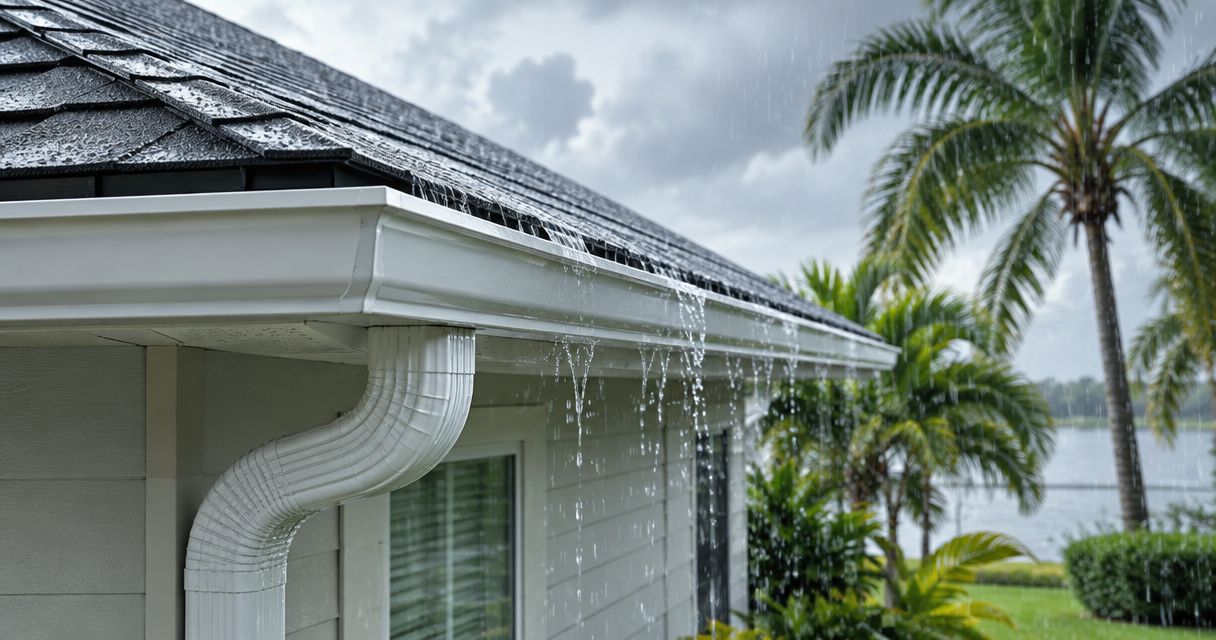
- Clear gutters and downspouts before the rainy season builds up debris
- Recoat exposed metal flashing showing early rust before it spreads
- Track maintenance history so a property manager can see the full roof condition at a glance
Get a marina roof inspection quote
Free evaluation for boat storage and marina buildings across SW Florida.
Roofing options compared for marinas and boat storage
| Option | Best for | Key limitation |
|---|---|---|
| Standing seam metal | Dry-stack boat barns and long-span storage buildings | Higher material cost than corrugated panels, but the longest service life — Buy for large-span structures. |
| Corrugated metal panels | Open-sided racking bays and utility structures | Seam fasteners need more frequent checks under high wind — Hold for budget-driven open bays. |
| TPO/PVC single-ply membrane | Flat-roofed marina offices, workshops, and fuel buildings | Seams require inspection after wind events to catch lifting early — Buy for flat commercial sections. |
| Modified bitumen/built-up | Older flat marina buildings already on this system | Heavier assembly, slower to dry after storm flooding — Hold, replace at next major repair cycle. |
The right roofing system for a marina depends more on span and exposure than on budget alone — a corrugated panel roof that fits a strip mall parking structure won't hold up the same way over an open dry-stack bay facing open water.
Common mistakes marinas and boat storage operators make
- Installing residential-grade materials on a commercial marine structure. Shingle-rated products aren't tested for the wind exposure or corrosion a marina sees.
- Ignoring fastener corrosion until a panel lifts. By the time a fastener head visibly rusts through, the surrounding deck is often already compromised.
- Skipping structural review on wide-span open bays. A span that works inland can be underbuilt for open-water wind exposure.
- Waiting until after a named storm to inspect. Post-storm inspections find damage; pre-season inspections prevent it.
- Overlooking flat-roof drainage on attached offices and shops. Ponding water on a marina office roof is often the first sign of a bigger structural problem.
FAQ
What's the best roofing material for a boat storage building in Florida?
Standing seam metal roofing is generally best for dry-stack boat storage buildings because it handles long spans and coastal wind uplift better than corrugated panels or shingles. Corrugated metal panels work for smaller open-sided racking structures where cost is the driving factor.
Is metal roofing better than membrane roofing for marina buildings?
Metal roofing suits sloped, wide-span structures like dry-stack barns, while TPO or PVC membrane suits flat-roofed marina offices and workshops. Most marina properties use both systems on different buildings rather than one material across the whole site.
How much wind can a marina roof handle in Southwest Florida?
Wind resistance depends on the specific wind exposure category, fastening pattern, and material rating for that structure under current Florida Building Code standards. A licensed commercial roofer verifies the actual rating for each building rather than quoting a single number for the whole property.
Does a wind mitigation inspection help marina insurance rates?
A wind mitigation inspection documents roof-to-wall connections, roof shape, and fastening details that carriers use to set commercial premiums. Marinas and boat storage facilities with documented upgrades typically see more favorable underwriting than those without records.
How often should a marina roof be inspected?
Inspect marina and boat storage roofs at least once a year before hurricane season starts June 1, plus a follow-up check after any named storm makes landfall nearby. Open-bay racking structures benefit from a second mid-season check given their wind exposure.
Can a flat roof work on a marina office in Florida's rainy season?
Yes, if the roof has correct slope to drains and the membrane seams are inspected regularly. TPO and PVC membrane systems are built for sustained rain exposure but still need scupper and drain maintenance to avoid ponding.
What causes roof corrosion at marinas?
Salt spray from open water accelerates rust at fastener heads, flashing seams, and unprotected metal edges far faster than inland exposure. Stainless steel or coated fasteners and regular rinsing slow this down significantly.
How do I prepare a marina roof for hurricane season?
Schedule a full inspection in April or May, before the June 1 start of hurricane season, and document existing conditions with photos for insurance purposes. Reseal penetrations, clear drains, and recheck flashing on every building before storms arrive.
One last thing
Most marina roof failures don't start in the field of the roof — they start at the fastener heads and roof-to-wall flashing, right where salt air concentrates fastest. Catching corrosion there during a routine spring check, ahead of the 2026 hurricane season, is the cheapest repair a marina will ever make compared to replacing a whole panel run after a storm finds the weak point first.