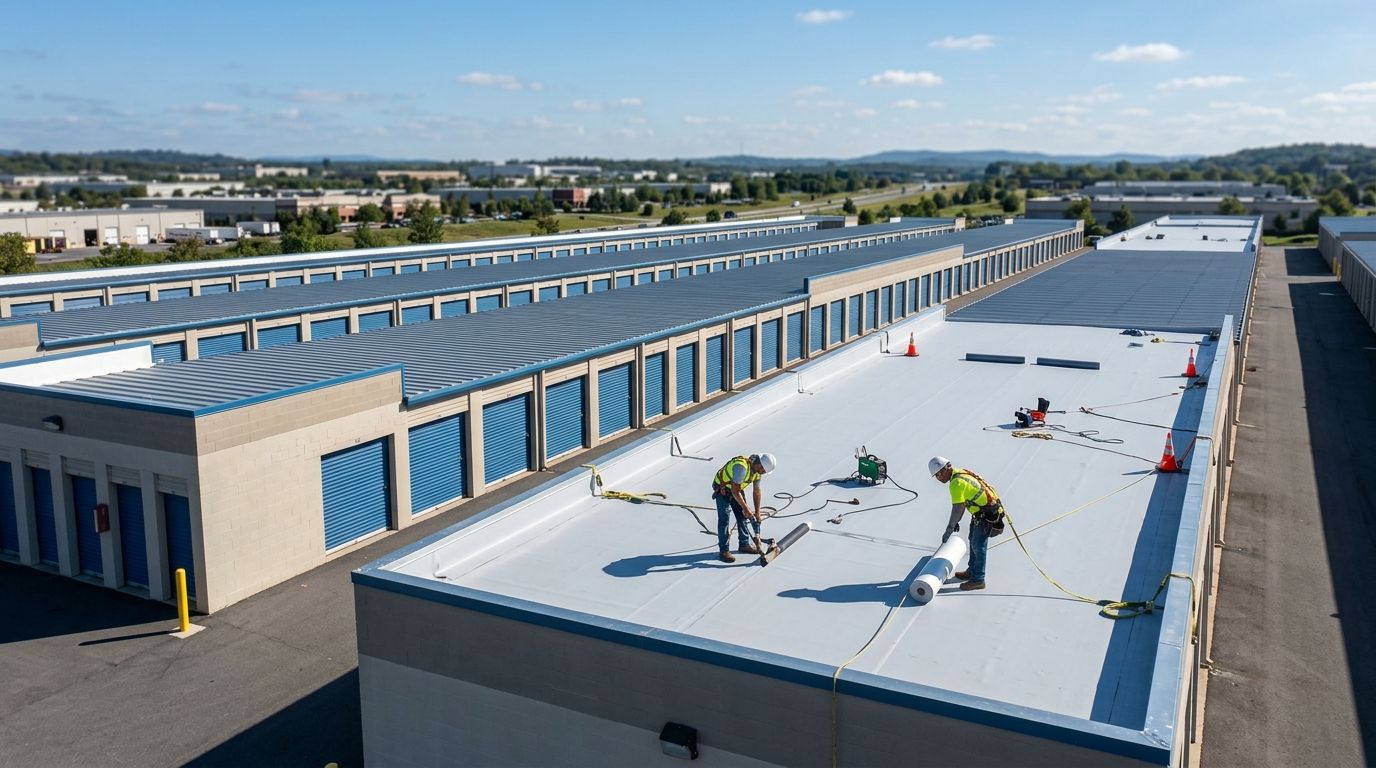
Self-storage facilities need commercial roofing built for one continuous low-slope or metal deck spanning dozens of rental units, where a single failure point can spread water damage across an entire row before staff notice. Unlike a single-family roof, a storage facility roof usually covers several separate buildings, mixes flat and metal sections, and sits over rented property that isn't yours to replace if it gets ruined.
- Commercial roofing for self-storage facilities usually mixes standing seam metal over drive-up rows with TPO or EPDM membrane over climate-controlled buildings.
- Roof Smart recommends inspecting every building after named storms, not on a twice-a-year calendar, because leaks on storage roofs go unnoticed longer than on occupied buildings.
- Roof coatings extend a sound flat roof 5 to 10 years but do nothing for a deck with unresolved ponding or structural damage.
- Wind uplift documentation from installation matters more here than on a typical home because commercial insurers price storage facility risk on roof age and rating.
Why commercial roofing matters for self-storage facilities
A storage facility roof protects income you can't easily replace. Tenants store furniture, records, boats, and business inventory under a roof deck they never inspect themselves, so a slow leak can run for weeks before a tenant complains or a manager spots a stain.
Southwest Florida adds wind exposure most inland commercial buildings never face. Large flat and metal roof spans over storage rows are exactly the profile that catches uplift in a named storm, and a facility with dozens of units under one roof line has more square footage exposed to that failure than almost any other commercial property type.
Insurance underwriting treats commercial roofs differently than residential ones too. A documented wind mitigation inspection and a clear age/material record on a commercial roofing for warehouses and industrial buildings style structure can be the difference between a manageable premium and a coverage gap after storm season.
Assess your current roof system before it fails
Start with a walk, not a quote. Most storage facility leaks show warning signs for months before they become a tenant claim.
- Walk every row of units after each named storm, not just on a spring/fall schedule
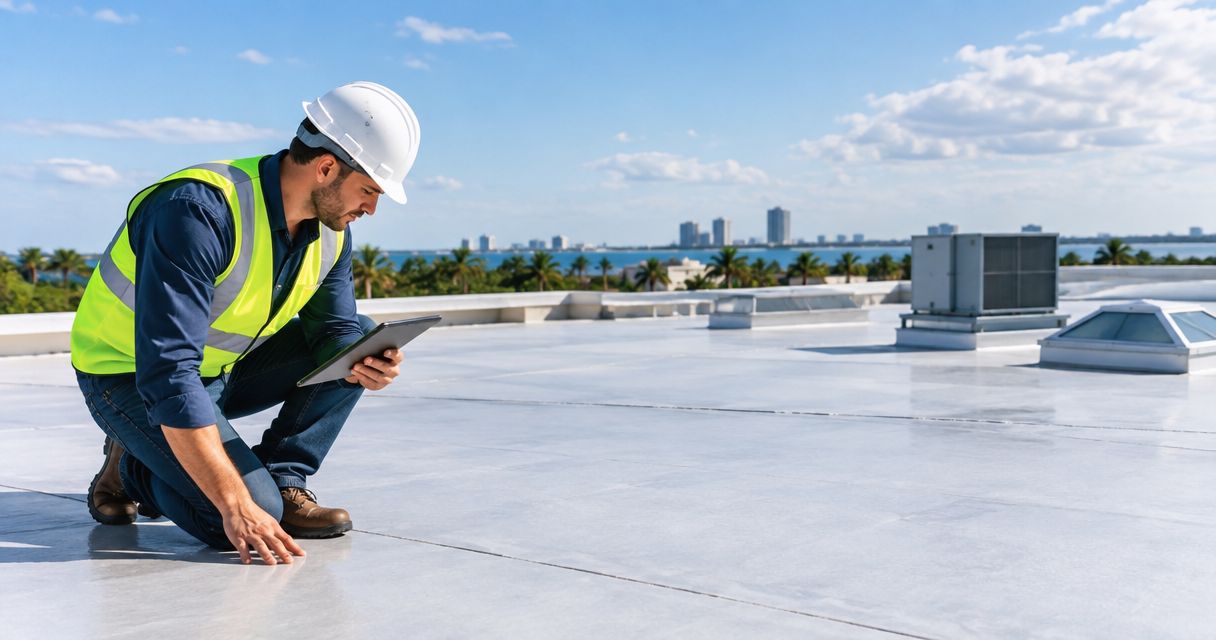
- Check membrane seams and flashing around HVAC curbs, skylights, and roof penetrations
- Flag ponding water that sits more than 48 hours on any flat section
- Photograph bubbling, cracking, or rust spots to build a paper trail for insurance
- Log leaks by building and unit number so patterns show up before a full reroof is needed
Match the roof type to your building layout
Storage facilities rarely need one roof type across the whole property. Drive-up buildings, climate-controlled units, and office frontage each call for different systems.
- Standing seam metal roofing for single-story drive-up buildings with long uninterrupted spans
- Flat commercial roof options like TPO or modified bitumen for climate-controlled buildings with rooftop HVAC units
- Roof coatings over a sound existing deck when full replacement isn't due yet
- Metal panel roofing on multi-story buildings where wind uplift resistance matters most
- Hybrid layouts pairing metal over drive-up rows with membrane over climate-controlled and office sections
Build in Florida wind and hurricane ratings from day one
A storage facility roof installed to the bare code minimum is the first roof to fail in a named storm. Specify above that line.
- Confirm fasteners and underlayment are rated for local wind exposure, not a national baseline
- Have the contractor pull permits documenting the wind uplift rating for insurance records
- Request a wind mitigation inspection after installation to document mitigation features in writing
- Budget for reinforced tie-down details at parapet walls and roof edges, common failure points on storage buildings
- Verify metal panel gauge and clip spacing match the property's wind exposure category, not a generic spec sheet
Schedule roofing work around tenant access, not the other way around
A storage roof project fails operationally if tenants can't reach their units. Phase the work.
- Phase work by building or row so units stay accessible throughout the project
- Post move-in and move-out windows for any temporary road blocks around active work zones
- Tarp exposed unit doors during the transition day between old roof and new
- Put timelines in writing to tenants before crews start, not after complaints arrive
- Schedule the loudest phases outside weekend rental traffic if the facility runs self-service kiosks
Add or refresh roof coatings on flat sections between full replacements
Coating a flat roof buys years, not decades, and only works on a deck that's still sound.
- Time roof coatings for commercial flat roofs in Florida to membrane age, not a fixed calendar year
- Use coatings when the membrane has roughly 5 to 10 years of sound service life left
- Reflective coatings cut rooftop HVAC load on climate-controlled unit buildings
- Skip coating over standing water or unresolved ponding, it seals in the underlying problem instead of solving it
“If a coating goes on over standing water, it seals in the problem instead of solving it.”
Put a maintenance plan in place instead of waiting for the next leak call
Reactive roofing is the most expensive way to run a storage facility. A fixed inspection schedule catches small repairs before they become a full reroof.
- Schedule inspections after every named tropical storm or hurricane watch in 2026
- Track flashing, sealant, and fastener condition on a fixed interval instead of reactively
- Keep a standing service relationship with one contractor who knows the roof's repair history
- Budget small annual repairs instead of one large emergency bill after storm season
Roofing options for self-storage facilities compared
| Option | Best For | Key Limitation |
|---|---|---|
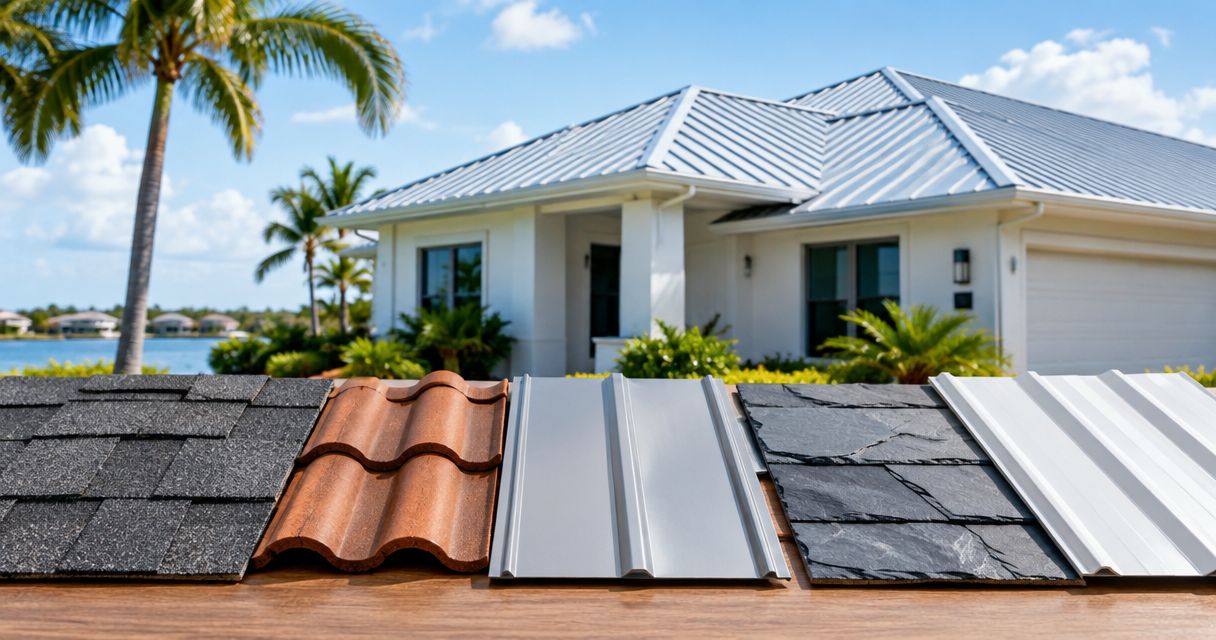
| Standing seam metal roofing | Long drive-up unit rows, single-story buildings | Higher upfront labor cost than membrane over large flat spans |
| TPO/EPDM membrane | Climate-controlled buildings with rooftop HVAC | Needs regular seam inspection and periodic recoating |
| Roof coating over existing deck | Extending a sound roof 5 to 10 years old | Doesn't fix structural deck damage or heavy ponding |
| Tile roofing | Rare, mainly office or retail frontage | Adds weight and cost with no functional benefit over flat storage rows |
Roof Smart's take: standing seam metal wins for drive-up storage rows, TPO membrane wins for climate-controlled buildings, and coatings win as a bridge, not a replacement strategy.
Common mistakes self-storage operators make
- Treating a multi-building facility like one roof instead of several separate roof systems needing separate schedules
- Skipping post-storm inspections because units "look fine from the ground"
- Choosing the cheapest coating quote without confirming the membrane underneath is actually sound
- Not documenting wind mitigation features and losing a commercial insurance discount as a result
- Letting a small leak sit until a tenant files a claim over damaged stored property
Get a commercial roof evaluation
A no-pressure inspection of every building on your property, in writing.
FAQ
What's the best roofing material for self-storage buildings in Florida?
Standing seam metal roofing is the strongest match for long, single-story drive-up storage rows in Florida because of its wind uplift resistance. Climate-controlled buildings with rooftop HVAC units are usually better served by a TPO or EPDM membrane instead.
How often should a self-storage facility get its roof inspected?
Inspect every building after each named tropical storm or hurricane watch, plus a routine check at least once a year in 2026. Facilities with multiple buildings should log inspections by building, not treat the property as one roof.
Can a commercial roof be repaired instead of replaced?
Yes, if the underlying deck is sound and damage is limited to flashing, seams, or a localized section. A roof with widespread ponding, rot, or a membrane past its expected service life needs replacement, not another patch.
How much wind uplift rating does a self-storage roof need in SW Florida?
The rating should match the property's specific wind exposure category, not a national code minimum. A wind mitigation inspection after installation documents the actual rating in writing for insurance purposes.
Can roof coatings replace a full roof replacement on a storage facility?
No. A coating extends a sound flat roof by roughly 5 to 10 years but does not fix a damaged deck or resolve standing water. Coating over unresolved ponding seals in the problem instead of solving it.
How long does a metal roof last on a self-storage building?
Metal roofing on commercial storage buildings is built for decades of service when fasteners, gauge, and clip spacing match local wind exposure. Service life drops sharply when any of those specs are undersized for the property.
Is a wind mitigation inspection required for commercial roofs?
It's not always mandated, but insurers use the documentation to set commercial premiums. Skipping it on a self-storage property can mean paying full price without credit for mitigation features already in place.
What causes most roof leaks on flat commercial roofs?
Seam failures, flashing around HVAC curbs, and standing water that sits longer than 48 hours cause most flat roof leaks. Catching these during a routine walk-through is far cheaper than a tenant damage claim.
One last thing
The single most avoidable cost on a self-storage roof isn't the reroof, it's the six months of unnoticed leaking before anyone walks the property. A fixed inspection habit tied to named storms, not a calendar reminder, catches that gap before a tenant does.