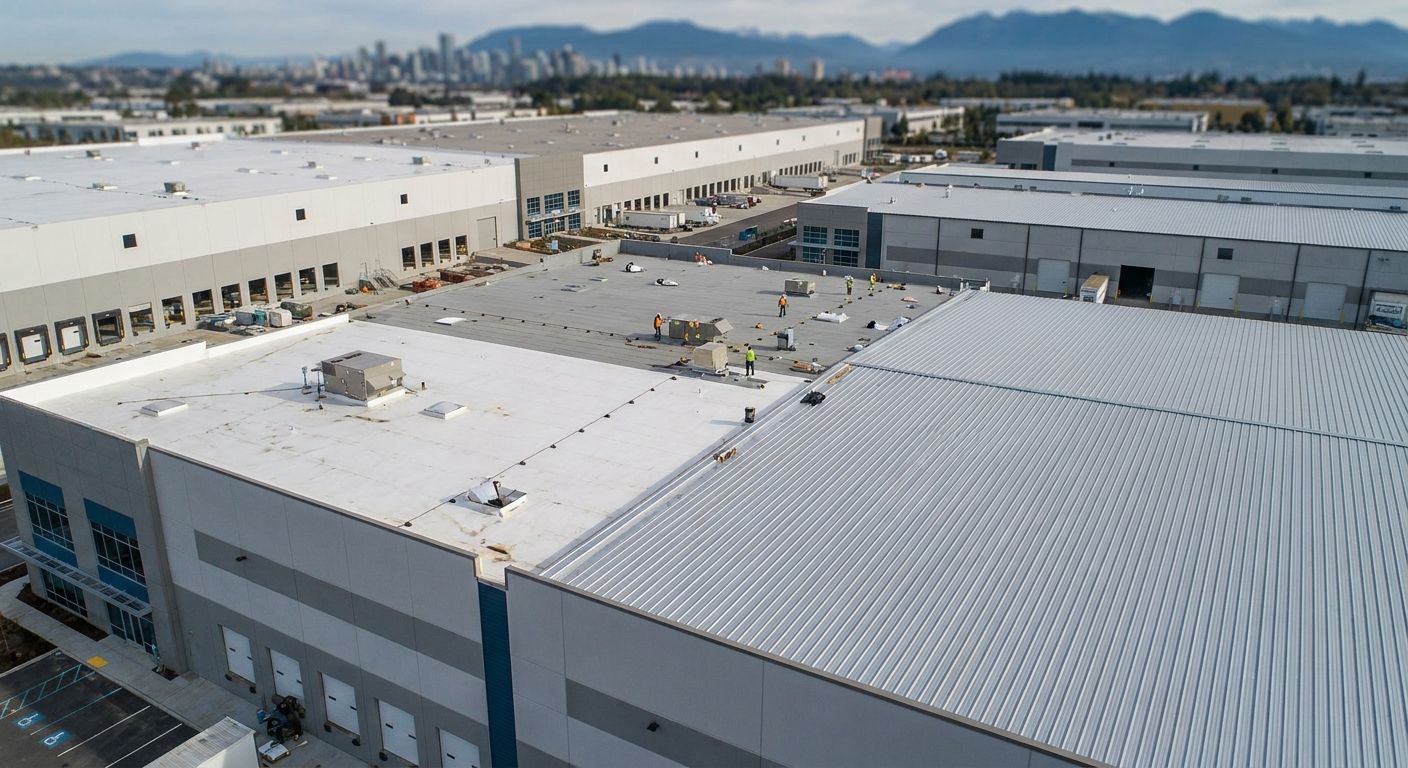
A warehouse roof and a house roof solve different problems. Wide clear spans, rooftop HVAC racks, forklift traffic on the deck below, and Southwest Florida's wind loads mean commercial roofing for warehouses and industrial buildings needs its own set of rules — not a scaled-up shingle job.
- TPO and PVC single-ply membranes are the safe pick for commercial roofing warehouses industrial buildings need in 2026 — Buy.
- Standing seam metal roofs handle SW Florida wind loads best but cost more upfront — Buy for high-exposure sites.
- Modified bitumen works for smaller industrial buildings on tighter budgets — Consider, not a first choice.
- Skip built-up roofing and silicone coatings as the primary system on any new industrial roof going into 2026.
Why this matters
A warehouse roof failure doesn't just leak on a hallway — it drops water on inventory, machinery, or a leased tenant's floor space. Low-slope industrial roofs also carry more rooftop equipment than a typical commercial building, which means more penetrations, more flashing details, and more chances for a cheap system to fail early.
Southwest Florida adds wind to that list. Buildings in Cape Coral, Fort Myers, and Naples get rated for uplift under the Florida Building Code, and a roof system that isn't tested and installed to that rating becomes an insurance liability, not just a maintenance headache. Commercial roofing services in Cape Coral exist specifically because industrial and warehouse roofs need this kind of code-driven attention that a generic residential roofer doesn't usually handle.
Who this is for
This guide is written for facility managers, warehouse owners, and industrial building operators in Southwest Florida who are choosing or replacing a roof system on a low-slope building — distribution centers, manufacturing floors, cold storage, and flex-industrial space. If you're weighing a full commercial roofing warehouses industrial buildings project against a patch-and-pray repair, this is the decision framework to use before you sign anything.
What to look for in commercial roofing for warehouses and industrial buildings
Wind uplift rating and code compliance
Every system installed on a warehouse in Lee, Collier, or Charlotte County has to meet a specific wind uplift rating tied to the Florida Building Code and ASCE 7 wind maps. A roof that isn't tested to FM Global or UL 580 standards for your building's exposure category is a liability the day a named storm forms in the Gulf.
Membrane thickness and puncture resistance
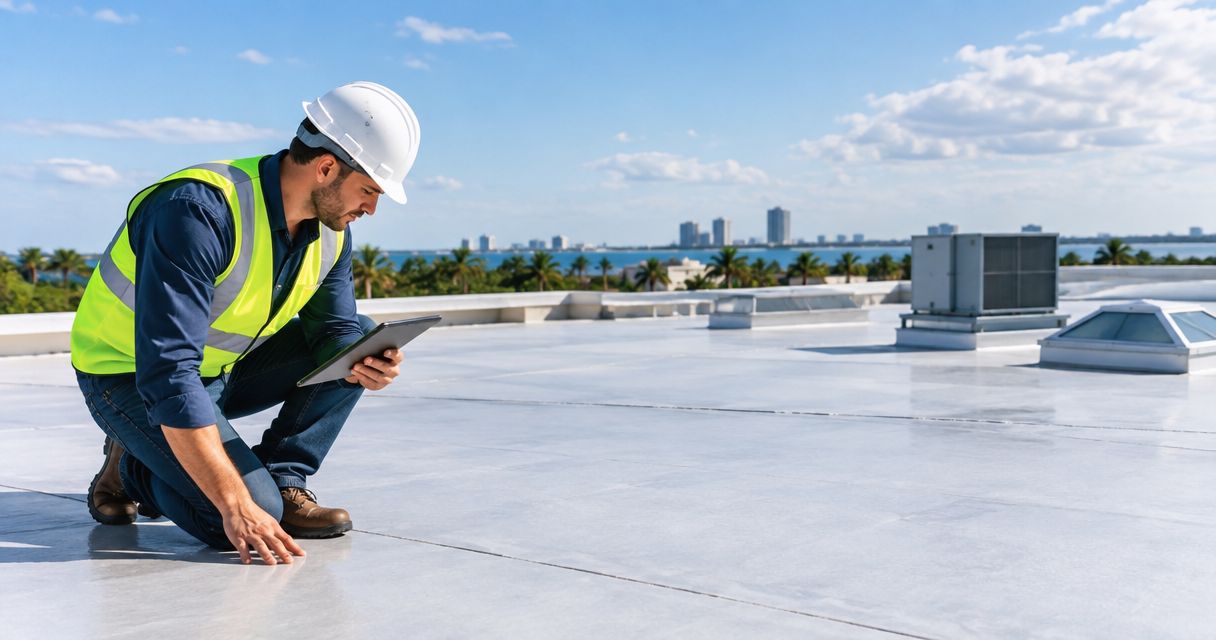
Warehouse roofs take abuse from foot traffic around HVAC units, satellite dishes, and conduit runs. A 60-mil TPO or PVC membrane resists punctures far better than the 45-mil versions sometimes sold to cut upfront cost, and the difference shows up in year three or four, not year one.
Drainage and ponding water
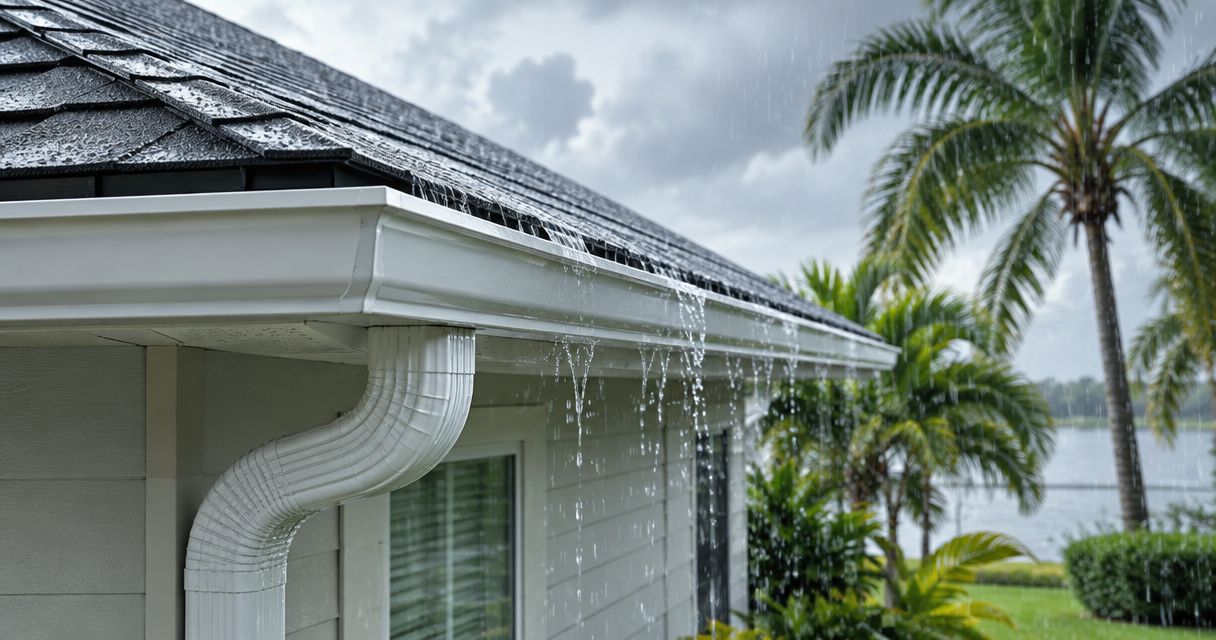
Low-slope industrial roofs are flat by design, which means drainage slope and tapered insulation matter more here than on almost any other building type. Ponding water that sits for 48 hours or more accelerates membrane breakdown and voids most manufacturer warranties outright.
Fire rating and insurance class
Warehouses storing inventory, chemicals, or equipment often need a Class A fire rating to satisfy insurance underwriters. Confirm the assembly — deck, insulation, and membrane together — carries that rating, not just the top layer.
Energy performance and reflectivity
A warehouse with a dark, unreflective roof runs its cooling system harder every single day it sits under the Florida sun. Energy Star cool roof standards require a minimum initial solar reflectance of 0.65, and hitting that number cuts rooftop-driven cooling load measurably over the life of the building.
Warranty backed by the manufacturer, not just the installer
A 15-to-20-year NDL (no dollar limit) manufacturer warranty means the material maker stands behind the system, not just the contractor who installed it. Installer-only warranties disappear the day that contractor closes shop.
Get a commercial roof evaluation
Free, no-pressure assessment for warehouses and industrial buildings.
Top picks for warehouse and industrial roofing systems
TPO/PVC single-ply membrane — the standard pick
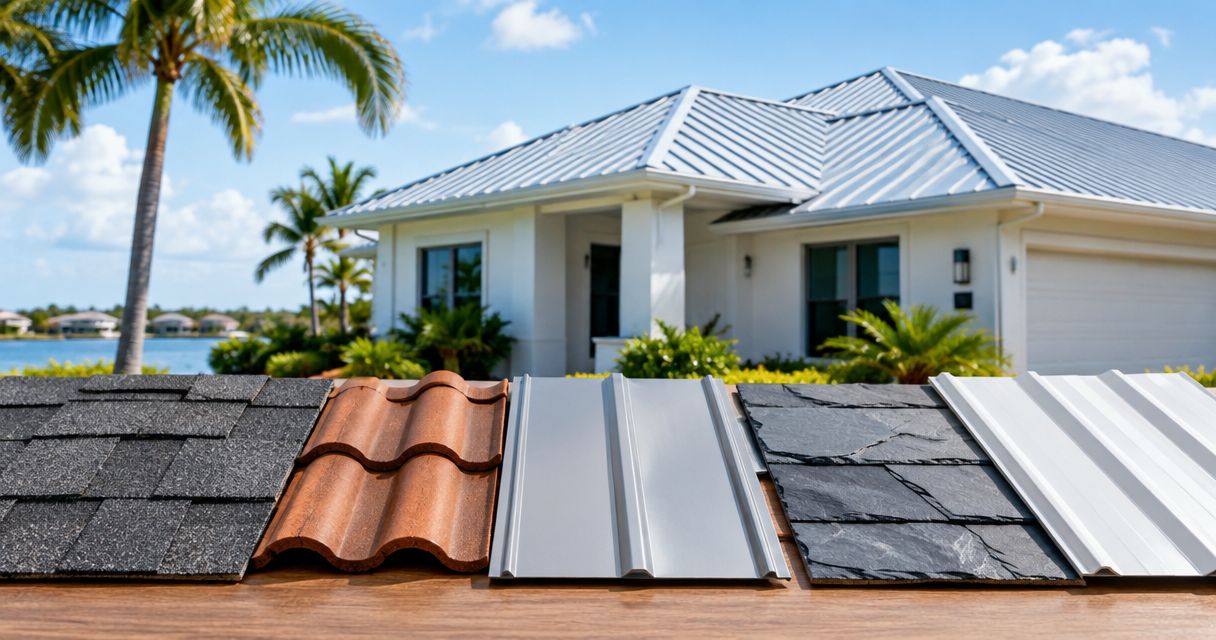
Single-ply membranes dominate new low-slope industrial roofing in 2026 because they balance cost, wind performance, and installation speed. A 60-mil membrane, heat-welded at the seams, resists both ponding and puncture better than thinner alternatives, and reflective white TPO or PVC helps meet Energy Star reflectance targets out of the box. Verdict: Buy for most new commercial roofing warehouses industrial buildings projects in Cape Coral and Fort Myers.
Standing seam metal — the 40-year investment
Metal roofing on a warehouse means mechanically seamed panels rated for high wind uplift, with a service life running 40 to 60 years when installed and maintained correctly. It costs more per square foot than single-ply up front, but it outlasts two or three membrane replacement cycles on the same building. Metal roofing in Naples is the right call for buildings in high wind-exposure zones or near the coast. Verdict: Buy for high-exposure sites willing to pay for the longer lifespan.
Modified bitumen — the budget-conscious flat-roof fix
Modified bitumen, whether torch-applied or self-adhered, still works well on smaller industrial buildings and additions where a full single-ply retrofit doesn't pencil out. It's a two-ply system with a granulated cap sheet, and it's easier to patch section by section than a fully adhered membrane. Flat roof repair in Cape Coral handles this system for buildings that need a targeted fix rather than a full tear-off. Verdict: Consider for smaller footprints on a tighter budget, not for large warehouse spans.
Built-up roofing (BUR) — the old-school workhorse
BUR systems use three to five plies of felt and asphalt topped with gravel ballast, and they're still common on older industrial buildings that were built with them originally. The weight and labor time make BUR a poor fit for new installs in 2026, and repairing an existing BUR roof section by section usually costs less than converting the whole building. Verdict: Consider only if you already have BUR; Skip for new construction.
Silicone roof coatings — the stopgap, not the fix
A silicone coating applied over a sound existing membrane can extend its service life by another 10 to 15 years for a fraction of full replacement cost. That only works on a substrate that's still structurally sound — coating a failing membrane just delays the tear-off and adds cost later. Verdict: Skip as a primary system; Consider only as maintenance on an existing roof near the end of its warranty.
What to avoid
- Residential shingle products on a warehouse roof. Asphalt shingles aren't rated for the wind exposure or the low-slope spans common on industrial buildings, and they fail at the field long before a properly rated commercial system does.
- Skipping parapet and penetration flashing details to save on labor. Most industrial roof leaks start at HVAC curbs, skylights, and parapet walls, not in the open membrane field — cutting corners here shows up as a leak within the first rainy season.
- Renewing commercial insurance without a wind mitigation inspection. A wind mitigation inspection in Fort Myers documents the roof's actual wind performance and can affect the premium your insurer quotes for 2026 and beyond.
Verdict comparison
| System | Best for | Typical lifespan | Wind performance | Verdict |
|---|---|---|---|---|
| TPO/PVC single-ply | New warehouse builds, wide spans | 20-30 years | Strong when properly fastened | Buy |
| Standing seam metal | High wind-exposure, coastal sites | 40-60 years | Excellent | Buy |
| Modified bitumen | Small industrial buildings, patch jobs | 15-20 years | Good | Consider |
| Built-up roofing (BUR) | Existing BUR roofs, repairs only | 15-25 years | Moderate | Consider/Skip new |
| Silicone coating | Maintenance on sound existing roofs | +10-15 years added | Depends on substrate | Skip as primary |
FAQ
What is the best roofing system for a warehouse in Southwest Florida?
TPO or PVC single-ply membrane is the best default for most new warehouse roofs in 2026 because it balances wind performance, cost, and installation speed. Standing seam metal is the better call for buildings in the highest wind-exposure zones.
How much wind can a commercial metal roof withstand?
Standing seam metal systems are engineered and tested to specific uplift ratings under the Florida Building Code and ASCE 7 wind maps, and they generally outperform membrane systems in the same wind zone. The exact rating depends on the panel, fastening method, and building's exposure category.
Is TPO or PVC better for industrial roofs?
PVC handles chemical exposure and grease better, which matters for manufacturing or food-related industrial buildings, while TPO is generally less expensive and performs similarly on standard warehouse space. Both come in 60-mil thicknesses suited to industrial traffic.
How often should a warehouse roof be inspected?
A commercial roof should get inspected at least once a year and after any major storm event. Southwest Florida buildings with wind mitigation credits on file should also schedule inspections tied to insurance renewal dates.
Does a new commercial roof affect wind mitigation insurance discounts?
Yes — a documented wind mitigation inspection after a roof replacement can lower commercial insurance premiums by verifying the new system's uplift resistance. This documentation needs updating any time the roof system changes.
Can you install a metal roof over an existing flat roof?
In some cases a standing seam retrofit can go over an existing low-slope deck with the right structural support and furring system, but it depends on the building's load capacity and current roof condition. A site evaluation is the only way to confirm it's feasible.
How long does a commercial roof replacement take?
A typical warehouse roof replacement runs from a few days to a few weeks depending on square footage, deck condition, and weather delays common during Florida's rainy season. Larger industrial buildings with multiple roof sections take longer to phase.
What's the difference between roof repair and full replacement for a commercial building?
Repair addresses isolated damage on a roof with useful life left, while replacement resets the warranty clock and fixes systemic issues like widespread ponding or membrane fatigue. The right call usually depends on the roof's age relative to its expected lifespan.
One last thing
Most industrial roof leaks in Southwest Florida don't start in the open membrane field — they start at penetrations: HVAC curbs, pipe boots, skylights, and parapet flashing. A roof that looks fine from the parking lot can still be failing at every rooftop unit mount, which is exactly why an annual inspection catches problems a drive-by never will heading into the 2026 storm season.