Roof color in Southwest Florida isn't a cosmetic choice — it's a cooling bill decision. A light-colored roof and a dark-colored roof on identical homes in Cape Coral can carry attic temperatures that differ by more than 40 degrees on a July afternoon, and that gap shows up directly on your electric bill every summer from now through 2026 and beyond.
- Light gray or white tile is the best roof color energy efficiency Florida homeowners can buy in 2026 — it reflects 65-80% of solar radiation.
- Standard black or dark brown shingles reflect only 10-15% of sunlight and are the worst pick for attic heat gain — Skip.
- Cool-pigment dark metal coatings now hit 30-40% reflectance despite a dark appearance — a real workaround if you want a darker look.
- ENERGY STAR's steep-slope Cool Roof standard requires a minimum 0.25 initial solar reflectance, a baseline most standard dark shingles fail.
Why this matters
Southwest Florida gets more direct sun exposure than almost anywhere else in the continental US, and AC runs nearly year-round in Cape Coral, Fort Myers, and Naples. Roof surface temperature drives attic temperature, and attic temperature drives how hard your HVAC system has to work. A roof that reflects sunlight instead of absorbing it takes real load off that system every single day, not just during a heat wave.
This isn't a marginal effect. The Department of Energy's field research on cool roofing consistently finds cooling cost reductions in the 7-15% range for hot, sun-heavy climates like this one. Over a 20-year roof life, that's not a rounding error — it's thousands of dollars.
How we ranked these roof color and material combinations
Every entry below is scored against three factors that actually matter in SW Florida: solar reflectance (how much sunlight the surface bounces back instead of absorbing), how that reflectance holds up under salt air and UV exposure over 10+ years, and how the color interacts with the underlying material's own thermal behavior — tile and metal don't heat up the same way shingle does, even in the same color.
Reflectance figures below track published ENERGY STAR Cool Roof and Cool Roof Rating Council (CRRC) benchmarks, which set the initial solar reflectance floor at 0.25 for steep-slope roofing. Anything below that line isn't classified as a cool roof, no matter what the color looks like on a sample chip.
The ranked list: best roof colors for energy efficiency in Florida
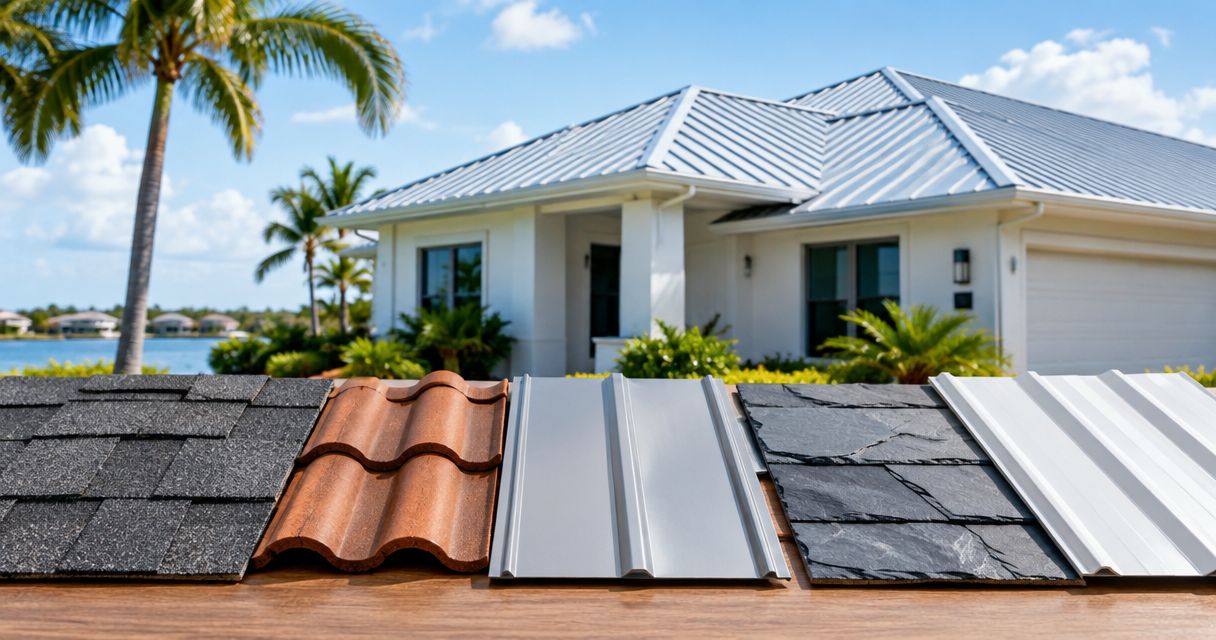
1. Light gray or white flat tile — the efficiency champion
Light tile reflects 65-80% of solar radiation, the highest range of any common roofing material in this market. Clay and concrete tile also sit on battens that create an air gap between the tile and the roof deck, so even the heat that does get absorbed has a harder time reaching your attic. Pair that reflectance with the air-gap effect and you get the single best-performing roof for cooling costs available to Cape Coral and Naples homeowners in 2026.
If you're weighing tile options by style and durability rather than just color, the full breakdown of tile roofing options for Southwest Florida homes covers profile choices beyond color alone. Verdict: Buy.
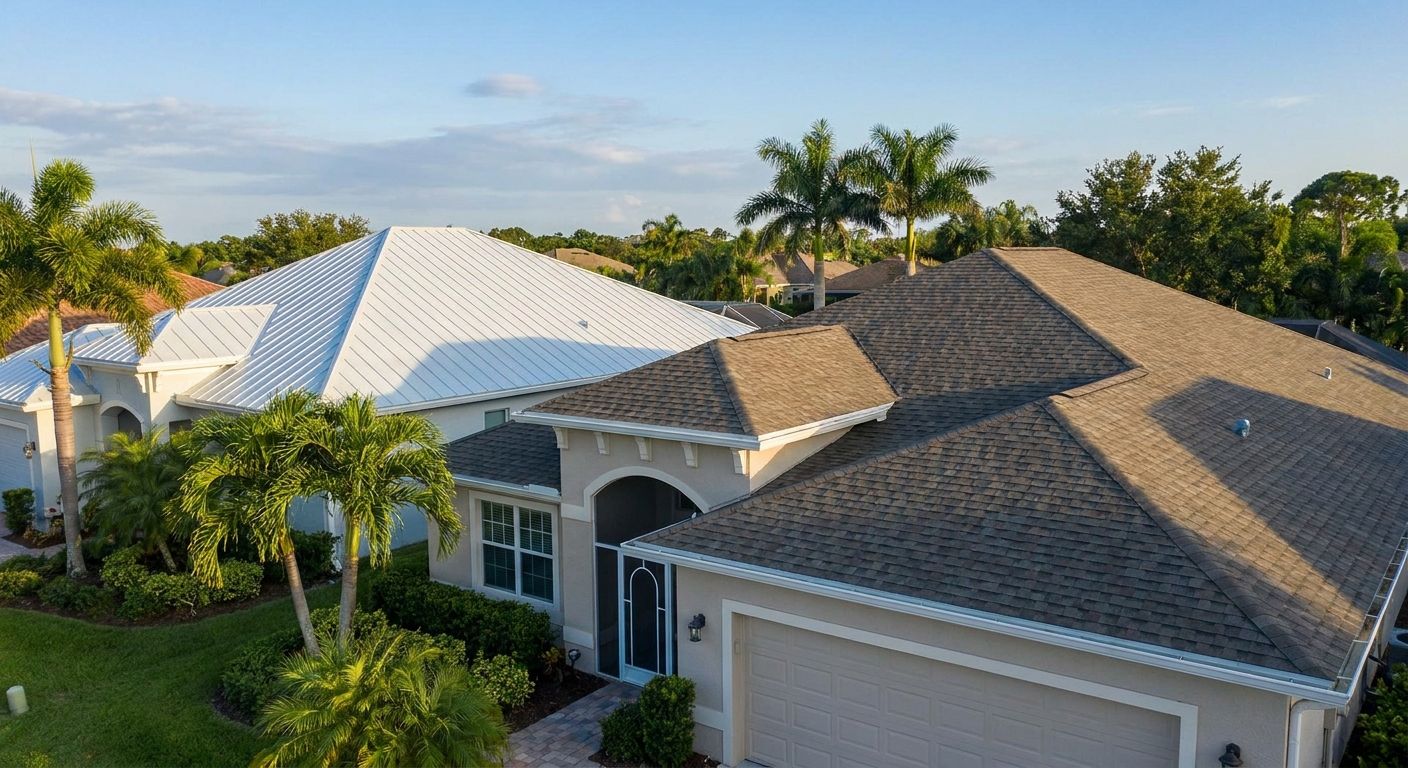
2. White or light gray standing seam metal — the coastal workhorse
Kynar/PVDF-coated metal panels in white or light gray lose only about 25-30% of their original reflectance after 10 years, compared to steeper fade curves on uncoated or painted alternatives. Metal's low mass means it also cools down fast once the sun goes down, unlike tile which holds heat longer into the evening.
For coastal SW Florida properties dealing with salt air corrosion on top of sun exposure, the coating quality matters as much as the color. See the best metal roof panels for coastal homes for panel-specific guidance. Verdict: Buy.
3. Light beige or driftwood architectural shingles — the budget-friendly pick
Light shingle colors land in the 25-35% reflectance range, clearing the ENERGY STAR steep-slope minimum of 0.25 initial reflectance but well short of tile or metal. Granule technology has improved reflectance in lighter shingle lines over the past several years, so this is a real energy-efficiency upgrade over dark shingle without the material cost jump to tile or metal.
Check the best shingle types for Florida weather guide before you lock in a color — not every shingle line offers a genuinely reflective light option. Verdict: Consider.
4. Terracotta or barrel clay tile — the traditional Florida icon
Classic terracotta reflects roughly 30-40% of sunlight, a middle-of-the-pack number by color alone. But tile's structural air gap does most of the heat-blocking work regardless of shade, so terracotta still outperforms a same-reflectance shingle roof in attic temperature. If you want the Mediterranean look that's common across Naples and Fort Myers, you're not sacrificing much efficiency to keep it. Verdict: Consider.
5. Dark bronze or charcoal metal with cool-pigment coating — the wildcard
Standard dark paint reflects around 10-15% of sunlight, but cool-pigment infrared-reflective coatings can push a dark-looking metal panel to 30-40% reflectance — comparable to terracotta tile — while still reading as a deep charcoal or bronze from the street. This is a real technology, not a marketing claim, but it only works if the coating is verified CRRC-listed. A dark panel with no cool-pigment certification behaves like standard dark metal. Verdict: Consider, with certification only.
6. Black or dark brown standard shingles — skip this one
Standard black and dark brown shingle reflects only 10-15% of solar radiation, the lowest of any option on this list, and attic temperatures under these roofs run measurably hotter through SW Florida's peak summer months. There's no efficiency argument for this combination in 2026 — it's a style choice you pay for every August electric bill. Verdict: Skip.
Get an honest roof color evaluation
Free, no-pressure estimate for your Cape Coral, Fort Myers, or Naples home.
Comparison table
| Color/Material | Solar reflectance | Best for | Verdict |
|---|---|---|---|
| Light gray/white tile | 65-80% | Max cooling savings | Buy |
| White/light gray standing seam metal | Holds 70%+ of original after 10 yrs | Coastal, salt-air exposure | Buy |
| Light beige/driftwood shingle | 25-35% | Budget-conscious upgrade | Consider |
| Terracotta tile | 30-40% | Traditional style, moderate savings | Consider |
| Dark cool-pigment metal | 30-40% | Dark aesthetic, verified coating | Consider |
| Black/dark brown shingle | 10-15% | Nothing efficiency-related | Skip |
Where to buy: three sourcing rules
- Demand a CRRC or ENERGY STAR listing number before trusting any reflectance claim on a color sample. A sales brochure percentage without a certification number isn't verifiable.
- Confirm wind rating and color are separate approvals. A Miami-Dade NOA product approval covers wind performance, not solar reflectance — check both independently, especially if you're also pursuing a wind mitigation inspection for insurance credits.
- Work with a roofer who stocks reflective options locally, not just standard dark stock. If you're already planning a full roof replacement for an older SW Florida home, color selection should happen at the material-ordering stage, not as an afterthought.
FAQ
What is the best roof color for energy efficiency in Florida?
Light gray or white tile is the best roof color for energy efficiency in Florida homes, reflecting 65-80% of solar radiation. Light standing seam metal performs nearly as well and holds up better against salt air on the coast.
Does roof color really affect cooling costs?
Yes — Department of Energy field data shows cool-colored roofs cut cooling costs by roughly 7-15% in hot climates like Southwest Florida. The effect comes from lower attic temperatures reducing HVAC runtime.
Is white or light gray better for a Florida roof?
Both perform similarly on reflectance, generally 65-80% depending on material and coating. Light gray tends to show less dirt and algae staining over time in Florida's humidity, which matters more than the reflectance gap between the two shades.
Can a dark roof still be energy efficient?
Only with a verified cool-pigment coating, which can push dark metal to 30-40% reflectance versus 10-15% for standard dark paint. Without CRRC certification on the coating, a dark roof behaves like any other dark roof.
What reflectance rating counts as a cool roof in 2026?
ENERGY STAR's steep-slope Cool Roof standard requires a minimum 0.25 initial solar reflectance. Most light tile and metal clear this easily; most standard dark shingles do not.
Does tile or metal perform better for heat reduction regardless of color?
Tile has a structural advantage because it sits on battens, creating an air gap that blocks heat transfer even at moderate reflectance. Metal has the advantage of shedding absorbed heat fast once the sun goes down, so both outperform shingle at equivalent colors.
Does roof color affect wind mitigation insurance discounts?
No — wind mitigation credits are based on structural factors like roof shape, deck attachment, and opening protection, not color or reflectance. Color and wind rating are evaluated on entirely separate criteria.
How much does a light-colored roof cost compared to a dark one?
Reflective color options are typically available at the same price point as standard colors within a given material line, though premium cool-pigment coatings on metal can carry a cost adder. Check current pricing directly with your roofer for the specific material line you're considering.
One last thing
Most homeowners assume color alone decides how hot an attic gets, but ventilation and underlayment do a surprising amount of the work too — a light-colored roof over poor attic ventilation still traps heat that a well-ventilated dark roof would vent out. Before you finalize a color, ask your roofer how the best roofing materials for Florida hurricanes intersect with your ventilation setup — color is one lever, not the only one.